Plot Explained Spoilers guaranteed!
Plot Explained

Browse by genre

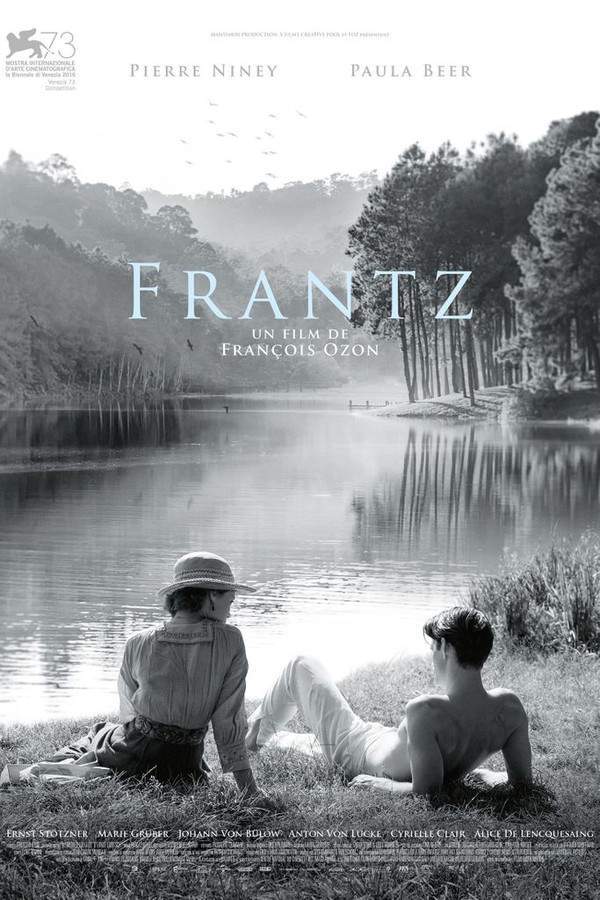
Frantz (2017) movie poster

Plot Summary

Frantz (2017) Plot Summary Explained

Release, runtime and language
2017 · 113 min · French
JustWatch #29,992 1
Directed by
François Ozon

Following World War I, a German woman named Anna is struggling with immense grief. She finds an unexpected connection with Adrien, a French soldier grappling with his own painful memories of a fallen comrade, Frantz. As they share stories and confront their loss, a bond forms between them, transcending cultural differences and highlighting the possibility of healing and understanding in the wake of widespread devastation.

On this page (6)
  1. 1 Where to watch
  2. 2 What happens: full plot
  3. 3 Plot questions answered
  4. 4 Movie threads
  5. 5 Movies like Frantz
  6. 6 Every angle

Where to watch

Where to Watch Frantz (2017)

Where can you watch Frantz? Stream, rent or buy it in the US, including on Amazon Prime Video, Brew and fuboTV: current JustWatch availability with up-to-date prices.

Streaming availability powered by JustWatch

Full plot summary · contains spoilers

What Happens in Frantz: Full Plot Summary

The whole story of Frantz (2017) explained, from the opening scene to the final frame: every key event, every twist and what it all adds up to. Read it as a quick recap before the sequel, to check a scene you missed, or to finally understand what really happened.

In the quiet town of Quedlinburg, Germany, in 1919, the first stirrings of spring bring a heavy memory to Anna, a young German woman still mourning her fiancé, Frantz Hoffmeister, who fell during World War I. She tends Frantz’s grave with care and sorrow, laying fresh flowers each day. One morning she notices that the blossoms are new—clearly placed by someone else. It is Adrien, a young Frenchman she has never met, who keeps returning to the grave. His presence unsettles the town and unsettles Anna, who would rather forget the war’s ruin than confront the possibility of reconciliation across a boundary that still aches.

Hans Hoffmeister, Frantz’s father, and Magda Hoffmeister, his mother, are shaken by Adrien’s arrival. When Hans learns Adrien is French, his grief hardens into suspicion and blame, and he throws Adrien out with the painful charge that France took his son’s life. Adrien accepts the insult with quiet dignity and declares, “You are right. I am a murderer,” an admission that shatters the already delicate façade of peace. The scene establishes a tense atmosphere where memory and guilt mingle, casting a long shadow over every future encounter.

Anna, meanwhile, resists the advances of an older suitor, Mr. Kreutz, clinging to the memory of Frantz even as she begins to see Adrien at the grave and, cautiously, invites him into the Hoffmeister home. She confesses that Adrien was leaving flowers, and the family loosens its stern stance. Adrien explains that he and Frantz were students together in Paris before the war, a revelation that starts to reconstruct the vanished life Anna once shared with Frantz. He recounts their last day together, including a visit to the Louvre, and Anna leads him to the places they once frequented—the mountaintop where Frantz had proposed—and the memories begin to recover their grip on the present.

Adrien’s demeanor—a mix of gentleness and a weariness born of war—brings a surprising uplift to the Hoffmeisters as they search for a way to hold onto Frantz’s memory. They learn that Adrien used to be a violinist, and though his hearing was damaged in the war, he is asked to play Frantz’s violin for them, a moment that becomes a fragile bridge between past and present. The family slowly allows Adrien to become part of their world, and he accepts their invitation to accompany Anna to a local ball. The sight of a Frenchman at the dance triggers uneasy reactions among the locals, especially Kreutz, who embodies the bitterness that lingers after the war.

As the circle of trust around Adrien widens, the weight of the lie grows heavier. Adrien confesses to Anna that his story was not true: he and Frantz had not been friends in Paris before the war. In fact, they had met as enemies on the battlefield, facing one another in a trench where Adrien killed Frantz. Frantz’s death remains a seal of peace that never quite closes, for his gun was unloaded and his pacifist beliefs stood in stark contrast to the violence around them. Adrien found Frantz’s last letter to Anna on his body and, tormented by guilt, came to Germany seeking forgiveness. The revelation shatters the fragile trust that Anna had begun to place in him, and she grapples with the choice of whether to reveal the truth to the Hoffmeister parents or protect Adrien by keeping the lie alive.

Anna’s dilemma tests the boundaries between truth and mercy. She chooses to shield Adrien for a time, collaborating with Magda to preserve the fragile bond they have formed. Adrien returns to Paris, and Anna’s heart sinks into despair as he leaves. She ignores his letters and even destroys one that would have confessed his true role to the Hoffmeisters. In a dramatic shift, Anna is gently revived by the Hoffmeisters’ tenderness, and slowly a resolve begins to take root: to reclaim her life and to find some measure of healing beyond the memory of Frantz.

Months pass, and Anna eventually musters the courage to seek Adrien again. She writes to him, and her letter is answered—only to be returned with no forwarding address. Magda Hoffmeister, whose quiet warmth had once stoked a rumor of romance between Anna and Adrien, encourages her to go to Paris and search for him. The journey is more than a physical trek; it becomes a test of hope, forgiveness, and the possibility of new beginnings.

In Paris, Anna finds Adrien at his mother’s estate. She forgives him, though he carries a heavy burden of guilt and says he will never forgive himself. Yet the truth of Adrien’s life extends beyond their clash of memories: he is about to enter an arranged marriage with a childhood friend, Fanny. Anna realizes that what she imagined as a future romance with Adrien existed primarily in her own heart and memories; he did not want what she wanted in the way she hoped. He had come to seek forgiveness, and that was all he could offer to their shared past. The moment is tender and painful, as she understands that their love was more a reflection of her own longing than a shared present.

With a final kiss at the railway station, Anna says goodbye to Adrien and accepts a new path. She continues to write to the Hoffmeisters as if she and Adrien are together, but in truth she is beginning to live again, choosing to make a life for herself in Paris—an existence that Frantz once urged her to pursue in his last letter. The narrative arc closes on a note of quiet resilience: Anna has learned to carry grief without letting it define every choice, and she moves forward with a sense that life, even after loss, can still be meaningful and hopeful.

In the end, the story remains a delicate meditation on memory, forgiveness, and the ways love can help heal wounds that history cannot erase. The characters navigate a yard-wide boundary between truth and mercy, between what is spoken and what must be left unsaid, and they discover that living fully sometimes means choosing one’s own path even when it diverges from the memories that once held them together.
Last updated: October 09, 2025 at 16:24

Was this helpful?

Plot questions answered

Frantz Plot Explained: Your Questions Answered

The questions people ask most about Frantz (2017): what happens in the confusing scenes, why the characters do what they do, the twists, hidden details and what the ending means. Each answer contains spoilers.

Q1

Why does Adrien keep visiting Frantz's grave?

Adrien visits Frantz's grave because he is the soldier who killed him during World War I. Overcome with guilt, he came to Quedlinburg seeking forgiveness for taking Frantz's life. The flowers are his way of honoring the man he died and attempting to find some measure of peace.

Foreshadowing: Early in the film, Anna notices fresh flowers at the grave, hinting at someone else mourning Frantz before she learns Adrien's identity.

  • adrien
  • frantz
  • grave
  • flowers
  • guilt
  • ww1
Q2

Why does Adrien lie about being friends with Frantz in Paris?

Adrien invents a story about being students together in Paris to gain access to the Hoffmeister family without revealing the traumatic truth. He knows that admitting he killed Frantz on the battlefield would immediately drive them away, so he uses the false friendship as a way to slowly earn their trust and ultimately seek forgiveness.

Foreshadowing: When Adrien first arrives, he offers no explanation for his presence, creating mystery about his true intentions.

  • adrien
  • frantz
  • paris
  • lie
  • forgiveness
Q3

What is the truth about Frantz's death in the war?

Frantz was a pacifist who refused to fire his weapon, leaving his gun unloaded. During a trench confrontation, Adrien encountered him and, despite Frantz's peaceful stance, killed him. Adrien later found Frantz's last letter to Anna on his body, which is what drove him to seek out the Hoffmeisters in Germany.

Foreshadowing: Adrien's initial confession that he is a murderer sets up the revelation that he literally took Frantz's life.

  • frantz
  • pacifist
  • unloaded gun
  • ww1
  • battlefield
Q4

Why does Anna decide not to tell the Hoffmeisters the truth about Adrien?

Anna chooses mercy over truth. Though she initially intends to reveal that Adrien killed Frantz, she realizes the Hoffmeisters have grown to love him as a connection to their son. She decides to let them keep their beautiful false memory rather than destroy it with the painful reality of fratricide.

Foreshadowing: The moment Anna tells Adrien she will tell the truth, then changes her mind, shows her internal struggle between honesty and compassion.

  • anna
  • adrien
  • truth
  • mercy
  • hoffmeisters
Q5

Why does Anna attempt to drown herself after Adrien leaves?

Anna sinks into despair when Adrien returns to Paris, destroying his letters including one meant to confess his true role to the Hoffmeisters. The weight of the lie, her guilt for protecting a killer, and the loss of her imagined future with Adrien prove overwhelming, leading her to attempt suicide.

Foreshadowing: Anna's withdrawal from the Hoffmeisters and her refusal to read Adrien's letters signal her emotional unraveling.

  • anna
  • suicide
  • despair
  • adrien
  • letters
Q6

What does Frantz ask Anna to do in his final letter?

In his last letter, found on Frantz's body by Adrien, Frantz urged Anna to live her life fully and find happiness rather than mourn him indefinitely. This becomes the thematic foundation for Anna's eventual journey to Paris and her decision to move forward with her own life.

Foreshadowing: Adrien mentions carrying Frantz's final words, which motivates his entire journey to Germany.

  • frantz
  • letter
  • anna
  • live
  • happiness
Q7

Why doesn't Anna end up with Adrien in the end?

When Anna travels to Paris to find Adrien, she discovers he is about to enter an arranged marriage with his childhood friend Fanny. Adrien came to Germany seeking forgiveness, not romance, he could only offer her closure, not a future together. Anna had projected her hopes onto him, but his intentions were solely about guilt and reconciliation.

Foreshadowing: Adrien's repeated statements that he came only to ask for forgiveness hint that his visit was not romantic in nature.

  • anna
  • adrien
  • paris
  • fanny
  • engagement
  • rejection
Q8

Why is Adrien playing Frantz's violin significant?

The Hoffmeisters ask Adrien, a former violinist whose hearing was damaged in the war, to play Frantz's violin. This moment serves as a bridge between past and present, Adrien uses the instrument connected to the man he killed to create something beautiful, symbolizing healing and the possibility of reconciliation through art and shared memory.

Foreshadowing: Earlier, the family learns Adrien was a musician, setting up this emotional performance.

  • adrien
  • violin
  • frantz
  • music
  • healing
Q9

Why does Adrien admit to being a murderer?

When Hans Hoffmeister confronts Adrien with anger and accuses all French of being murderers, Adrien quietly accepts the accusation. He acknowledges his own guilt directly because he genuinely did kill Frantz, a man who was unarmed and pacifist. His acceptance establishes his sincere desire for forgiveness rather than defensiveness.

Foreshadowing: This early scene with Hans plant seeds that Adrien's guilt runs deeper than simple national enmity.

  • adrien
  • murderer
  • confession
  • guilt
  • hoffmeister
Q10

What does the ending of Frantz mean?

The ending is bittersweet: Anna moves to Paris and begins a new life, finally heeding Frantz's last wish for her to live fully. However, she does not achieve the romantic future she imagined with Adrien. Instead, she constructs a fiction in her letters to the Hoffmeisters, maintaining the peaceful lie while forging her own path forward with quiet resilience.

Foreshadowing: Magda's encouragement for Anna to go to Paris represents the final blessing for Anna to reclaim her life.

  • ending
  • anna
  • paris
  • move on
  • resolution

Movie threads

More Movies Like Frantz, by Mood & Story

Curated lists built around what makes Frantz tick: the same mood, the same kind of story or the same emotional payoff. Each list explains why these movies belong together.

Movies about post-war grief and connection like Frantz

Stories of personal healing and tentative bonds in the shadow of national conflict. If you appreciated the quiet exploration of loss in Frantz, this thread gathers similar movies that deal with the aftermath of war. These dramas focus on personal healing, survivor's guilt, and the fragile bonds that can form in times of widespread devastation, offering a thoughtful viewing experience.

  • somber
  • contemplative
  • grieving
  • resilient
  • forgiving
  • quiet
  • Tone: melancholic, contemplative
  • Pacing: slow, deliberate
Why these movies?

The story pattern: Stories in this thread typically follow characters grappling with the personal fallout of a larger conflict. The central journey involves confronting grief, guilt, or trauma, often through an unlikely relationship that transcends cultural or political divides. The plot revolves around emotional revelation and the slow, difficult process of finding meaning or forgiveness.

Why they belong together: These films are grouped by their shared focus on the emotional weight of war's aftermath, a melancholic tone, and a slow, introspective pacing that allows for deep character study. They prioritize emotional truth and moral ambiguity over action, creating a coherent, reflective vibe.

Movies about healing through difficult truths like Frantz

Emotional journeys where confronting a painful lie leads to a complex resolution. For viewers who liked how Frantz used a central lie to explore grief and redemption, this section finds similar films. These stories feature characters who must face a painful reality to move forward, resulting in endings that are bittersweet but ultimately focused on resilience and understanding.

  • introspective
  • guilt-ridden
  • truth-seeking
  • bittersweet
  • redemptive
  • morally complex
  • Tone: bittersweet, melancholic
  • Pacing: slow, character-driven
Why these movies?

The story pattern: The narrative pattern involves a character living with or uncovering a significant lie that is central to their grief or identity. The story arc is about the gradual and painful process of revealing and accepting this truth. The climax is often a moment of emotional reckoning, leading to an ending that embraces complexity and acceptance over simple happiness.

Why they belong together: These films share a focus on moral complexity, the weight of secrets, and a bittersweet emotional trajectory. They are united by a moderate narrative complexity driven by revelation, a heavy emotional weight centered on guilt or loss, and a conclusion that prioritizes emotional authenticity over neat resolutions.

If you liked this

Movies Like Frantz

Similar movies to Frantz: the same genre, themes or kind of story. Each one comes with its own plot summary, timeline and ending explained.

Browse all movie summaries

Every angle

Frantz (2017) Explained: Plot, Timeline & Characters

Everything about Frantz in one place: what happens in the plot summary, the timeline in chronological order, the characters and meaning and a spoiler-free summary. What's After the Movie adds the cast, box office and post-credit scenes.

Coming soon on iOS and Android

The Plot Explained Movie Summary App

Plot summaries, endings explained and timelines on your phone. Catch up on any movie in minutes, save your favorites and never miss a twist again.

Be the first to know when we launch. Your email stays private, always.

Learn more about the app