







Plot Explained Spoilers guaranteed!
Plot Explained

Browse by genre

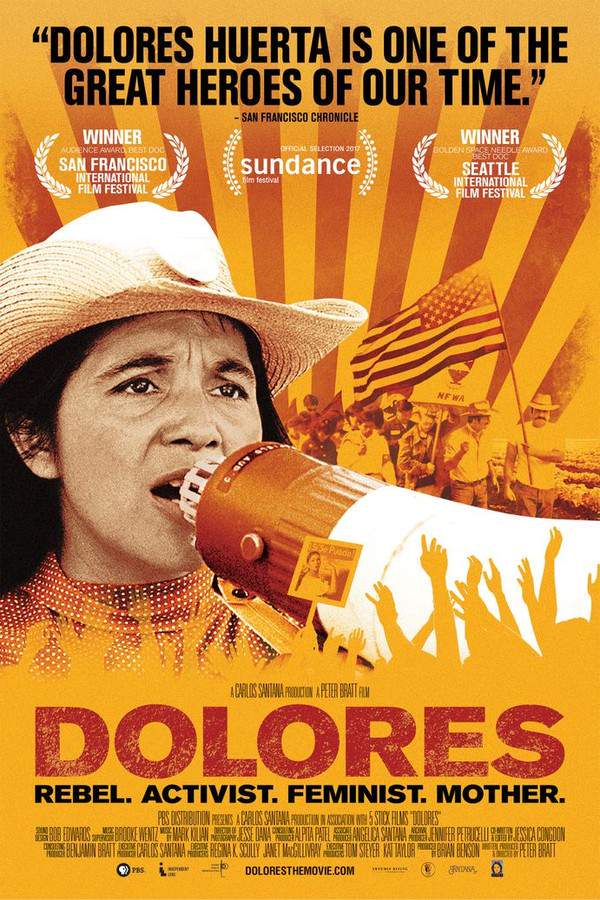
Dolores (2017) movie poster

Timeline

Dolores (2017) Timeline Explained – Every Event in Order

Release, runtime and language
2017 · 95 min · English
Echo score 85
JustWatch #26,564 1
Directed by
Peter Bratt
Starring
Angela Davis, Dolores Huerta, Gloria Steinem, Hillary Rodham Clinton

This documentary explores the life and activism of Dolores Huerta, who, alongside Cesar Chavez, co-founded the United Farm Workers union. The film chronicles her fight for labor rights and racial equality, while also highlighting her struggle for gender justice within the movement. Through a remarkable career marked by perseverance, three marriages, and eleven children, Huerta becomes a vital figure in interconnected social justice movements, leaving an enduring legacy.

On this page (6)
  1. 1 Where to watch
  2. 2 Events in order (12)
  3. 3 Timeline questions answered
  4. 4 Movie threads
  5. 5 Movies like Dolores
  6. 6 Every angle

Where to watch

Where to Watch Dolores (2017)

Where can you watch Dolores? Stream, rent or buy it in the US, including on Kanopy, Amazon Video and Apple TV Store: current JustWatch availability with up-to-date prices.

Streaming availability powered by JustWatch

12 events in order · contains spoilers

Dolores Timeline: Events in Chronological Order

Every key event of Dolores (2017) in order, scene by scene, with when and where it takes place. Use it to untangle flashbacks, time jumps and parallel storylines, to refresh your memory before the sequel or to find the exact scene you are thinking of.

  1. Childhood awakening to injustice

    Dolores Huerta grows up as a Chicano in the 1940s and 1950s, witnessing police brutality and social inequity that leave a lasting impression. She feels unsatisfied with the life of a young mother and begins to sense that real change requires action. These early experiences plant the seed for her future activism.

    When
    1940s–1950s
  2. Search for purpose amid personal upheaval

    Her marriages and eventual divorce frame a period of self-discovery as she searches for meaning beyond conventional roles. She yearns for a cause that can uplift her community. This quest steers her toward activism and public life.

    When
    1950s
  3. Meets community organizer Fred Ross

    In California, Fred Ross mentors her in organizing communities to confront injustice, with a particular focus on police brutality. His approach resonates with her experiences and ambitions. Their growing alliance sets the stage for her future leadership.

    When
    early 1950s
    Where
    California
  4. Leads Stockton Chapter of the CSO

    Under Ross's guidance, Huerta rises to head the Stockton Chapter of the Community Service Organization by 1959. She mobilizes people and resources to push legislators toward change. This period showcases her talent for large-scale community action.

    When
    1959
    Where
    Stockton, California
  5. Advocacy through lobbying and mass action

    Huerta becomes a formidable lobbyist and organizer, directing hundreds of people to pack legislators’ offices until they support key legislation. The tactic blends direct action with political engagement. Her effectiveness cements her reputation as a powerful advocate.

    When
    late 1950s
    Where
    California
  6. Introduction to Cesar Chavez

    Fred Ross introduces her to Cesar Chavez, a partner who shares a vision of empowering farm workers. They recognize complementary strengths and begin exploring a collaborative path. This connection foreshadows a major labor movement.

    When
    late 1950s
    Where
    California
  7. Birth of the United Farm Workers of America

    Together with Chavez, Huerta helps birth the United Farm Workers of America. The effort marks a shift from broader community organizing to targeted labor organizing for farm workers. Her involvement signals a pivotal expansion of her activism.

    When
    early 1960s
    Where
    California
  8. Relocation to Delano to connect with farms

    To stay close to agricultural communities, she relocates her family to Delano, California. The move demonstrates her commitment, even as it strains her personal life. It anchors the UFW’s reach in farming regions.

    When
    early 1960s
    Where
    Delano, California
  9. Personal sacrifices for the cause

    Huerta makes significant personal sacrifices, including leaving some younger children behind to endure the challenging conditions. She also gives up cherished aspects of her life, such as listening to jazz music. These sacrifices illustrate the cost of long-term activism.

    When
    early 1960s
    Where
    Delano, California
  10. A central leader in the UFW

    Huerta becomes a core leader, organizer, and advocate within the fledgling UFW. The documentary highlights her tireless dedication and strategic lobbying for workers’ rights. Her work anchors the movement’s early campaigns.

    When
    1960s
    Where
    Delano, California
  11. Mobilizing farm workers for action

    The UFW begins to organize farm workers for collective action, using boycotts, negotiations, and strikes to press for better wages and working conditions. Huerta’s leadership sustains and grows these campaigns, expanding the movement’s reach.

    When
    1960s
    Where
    Delano, California
  12. Legacy of early activism

    Huerta’s early work lays the groundwork for the farm workers’ rights movement and the broader labor-rights landscape in California. The documentary frames her as a pivotal figure whose activism catalyzed lasting change. The film emphasizes the enduring impact of her early years.

    When
    1960s

Last updated: October 09, 2025 at 16:24

Was this helpful?

Timeline questions answered

Dolores Timeline Explained: Your Questions Answered

When does it happen, and why in that order? The questions people ask about the chronology of Dolores (2017): time jumps, flashbacks, cause and effect between scenes and the correct order of events, each answered with spoilers.

Q1

Why did Dolores Huerta become an activist?

Dolores Huerta became an activist after witnessing police brutality and social inequity throughout her childhood in the 1940s and 1950s. As a young Chicana mother, she felt unsatisfied with conventional expectations and sensed that meaningful change required direct action. Her encounters with systemic injustice, combined with the mentorship of community organizer Fred Ross, motivated her to dedicate her life to fighting for labor rights and racial equality.

Foreshadowing: The film opens with her early experiences of injustice, which plant the seed for her future activism.

  • dolores huerta
  • activism
  • police brutality
  • social justice
  • fred ross
Q2

How did Fred Ross influence Dolores Huerta's career?

Fred Ross mentored Huerta in community organizing techniques, teaching her how to build power from within communities and address issues like police brutality. His pragmatic approach resonated with her personal experiences and ambitions. Under his guidance, she rose to lead the Stockton Chapter of the Community Service Organization in 1959, developing the leadership and persuasion skills that would define her future work.

Foreshadowing: Their meeting in the early 1950s sets the stage for her transformation from a dissatisfied young mother into a skilled organizer.

  • fred ross
  • mentor
  • community organizing
  • stockton
  • leadership
Q3

How did Dolores Huerta meet Cesar Chavez?

Fred Ross introduced Huerta to Cesar Chavez in the late 1950s. Both shared a vision of empowering farm workers and recognized complementary strengths, Huerta's talents in lobbying and mobilization paired with Chavez's strategic approach. This meeting foreshadowed the birth of the United Farm Workers of America, as they began exploring a collaborative path to unite farm workers and secure their rights.

Foreshadowing: The documentary frames their meeting as a pivotal moment that would reshape labor history.

  • cesar chavez
  • united farm workers
  • meeting
  • labor movement
Q4

Why did Dolores Huerta move to Delano, California?

Huerta relocated her family to Delano in the early 1960s to stay connected with the agricultural communities she served. The move demonstrated her commitment to the farm workers' cause, allowing her to be physically present in the farming regions where the United Farm Workers were organizing. This proximity was essential for building trust and sustaining the movement's momentum.

Foreshadowing: Her decision to move reflects the sacrifices required to maintain authentic connections with the communities she fought for.

  • delano
  • california
  • farm workers
  • relocation
  • commitment
Q5

What personal sacrifices did Dolores Huerta make for the movement?

Huerta made significant personal sacrifices to sustain the farm workers' movement. She relocated to Delano, leaving some of her younger children behind to shield them from the harsh conditions and demands of organizing work. She also gave up small joys she cherished, such as listening to jazz music, to devote all her energy to the mission. These sacrifices illustrate the heavy personal cost of long-term activism.

Foreshadowing: The documentary highlights how her dedication came at the expense of her private life and family comfort.

  • sacrifice
  • family
  • children
  • jazz
  • activism cost
Q6

What did the United Farm Workers of America achieve?

The United Farm Workers of America, co-founded by Huerta and Chavez in the early 1960s, launched boycotts, negotiations, and strikes to press for better wages and working conditions for farm workers. Huerta's leadership as a core organizer, lobbyist, and advocate helped grow the movement and secure significant labor rights improvements. Their work laid the groundwork for lasting change in California's agricultural labor landscape.

Foreshadowing: The formation of the UFW represents the culmination of years of community organizing and a major expansion of Huerta's activism.

  • united farm workers
  • labor rights
  • boycotts
  • strikes
  • wages
Q7

How did Dolores Huerta balance family life with activism?

Huerta struggled to balance her roles as a mother of eleven children with her demanding public work as an organizer and lobbyist. The documentary shows her moving her family to Delano while sometimes leaving younger children behind to protect them from hardship. Her three marriages also reflected the tension between personal life and public mission. Despite these challenges, she maintained her commitment to both her family and the movement.

Foreshadowing: The tension between her private responsibilities and public duties is a recurring theme throughout the documentary.

  • family
  • children
  • marriage
  • work-life balance
  • mother
Q8

Why did Dolores Huerta choose to organize farm workers specifically?

After her work with the Community Service Organization helping Latino residents navigate local systems, Huerta recognized that farm workers faced some of the most severe labor exploitation and poorest working conditions. Together with Chavez, she saw an opportunity to create targeted change by uniting this vulnerable population. The shift from broader community organizing to focused farm worker advocacy allowed her to address systemic labor injustices more directly.

Foreshadowing: Her introduction to Chavez represents a strategic pivot toward labor-specific organizing.

  • farm workers
  • labor exploitation
  • organizing
  • exploitation
Q9

What lasting impact did Dolores Huerta have on labor rights?

Huerta's early work laid the groundwork for the farm workers' rights movement and transformed California's labor-rights landscape. Her strategic lobbying, community mobilization, and willingness to confront politicians directly helped secure policy changes that improved conditions for countless workers. The documentary emphasizes her role as a pivotal figure whose activism created enduring change in labor rights and inspired future generations of social justice advocates.

Foreshadowing: The film concludes by highlighting how her decades of work produced lasting institutional change.

  • legacy
  • labor rights
  • impact
  • policy
  • inspiration
Q10

Why did Dolores Huerta give up listening to jazz music?

Huerta gave up listening to jazz music as a personal sacrifice to dedicate all her time and energy to the farm workers' movement. This seemingly small detail illustrates the comprehensive nature of her commitment, she relinquished even her cherished personal joys to focus on the mission. The documentary uses this sacrifice to demonstrate how deeply activism consumed her life during the movement's formative years.

Foreshadowing: This sacrifice appears in the later chapters, showing how her identity shifted entirely toward the cause.

  • jazz
  • personal sacrifice
  • dedication
  • lifestyle change
Q11

How did leading the Stockton Chapter of the CSO prepare Huerta for larger activism?

Leading the Stockton Chapter of the Community Service Organization in 1959 gave Huerta hands-on experience in large-scale community action. She learned to mobilize people and resources, rally hundreds of community members, and influence public opinion. This role refined her abilities as a lobbyist and organizer, teaching her the tactical skills, packing legislators' offices and pressing for policy changes, that would define her effectiveness within the United Farm Workers movement.

Foreshadowing: Her success in Stockton directly positioned her for the leadership role she would take in the UFW.

  • stockton
  • cs0
  • community service organization
  • lobbying
  • mobilization

Movie threads

More Movies Like Dolores, by Mood & Story

Curated lists built around what makes Dolores tick: the same mood, the same kind of story or the same emotional payoff. Each list explains why these movies belong together.

Documentaries about Purpose-Driven Courage like Dolores

Intimate portraits of individuals whose unwavering conviction sparks major social movements. If you were inspired by Dolores Huerta's journey, explore other movies like Dolores that profile real-life activists and leaders. These similar documentary stories showcase individuals who dedicated their lives to social justice, labor rights, and civil rights movements with unwavering courage and personal sacrifice.

  • inspiring
  • sobering
  • resilient
  • tireless
  • hopeful
  • reflective
  • Tone: hopeful, sobering, inspiring
  • Pacing: steady, chronological
Why these movies?

The story pattern: Narratives in this thread typically follow a biographical arc, chronicling how a single individual's resilience and moral clarity galvanizes a broader movement. The journey showcases both public triumphs and private struggles, emphasizing the personal cost and enduring legacy of a life devoted to a cause.

Why they belong together: Movies are grouped here because they share a focus on real-world activism, a hopeful yet sobering tone, and a balanced depiction of public victory and personal sacrifice. They inspire through documented historical impact while remaining grounded in the human experience of the activist.
Movies about the Personal Cost of Activism like Dolores

Stories where the fight for a better world comes at a deep personal price. For viewers who appreciated the exploration of sacrifice in Dolores, this list features movies like Dolores that examine the personal cost of political activism. These similar stories, both documentary and fictional, delve into the conflict between public mission and private life, family, and personal happiness.

  • personal sacrifice
  • sobering
  • resilient
  • inspiring
  • reflective
  • bittersweet
  • Tone: bittersweet, hopeful, reflective
  • Pacing: steady, character-driven
Why these movies?

The story pattern: The narrative pattern revolves around a central conflict: the protagonist's devotion to a cause versus their obligations and desires in their personal life. The story often progresses by showing the escalating costs of this devotion, creating a poignant tension between public achievement and private loss.

Why they belong together: These films are connected by their central theme of sacrifice. They share a reflective mood, a medium emotional weight, and a focus on the human stakes behind historical movements. The experience is often bittersweet, celebrating progress while acknowledging its price.

If you liked this

Movies Like Dolores

Similar movies to Dolores: the same genre, themes or kind of story. Each one comes with its own plot summary, timeline and ending explained.

Browse all movie summaries

Every angle

Dolores (2017) Explained: Plot, Timeline & Characters

Everything about Dolores in one place: what happens in the plot summary, the timeline in chronological order, the characters and meaning and a spoiler-free summary. What's After the Movie adds the cast, box office and post-credit scenes.

Coming soon on iOS and Android

The Plot Explained Movie Summary App

Plot summaries, endings explained and timelines on your phone. Catch up on any movie in minutes, save your favorites and never miss a twist again.

Be the first to know when we launch. Your email stays private, always.

Learn more about the app