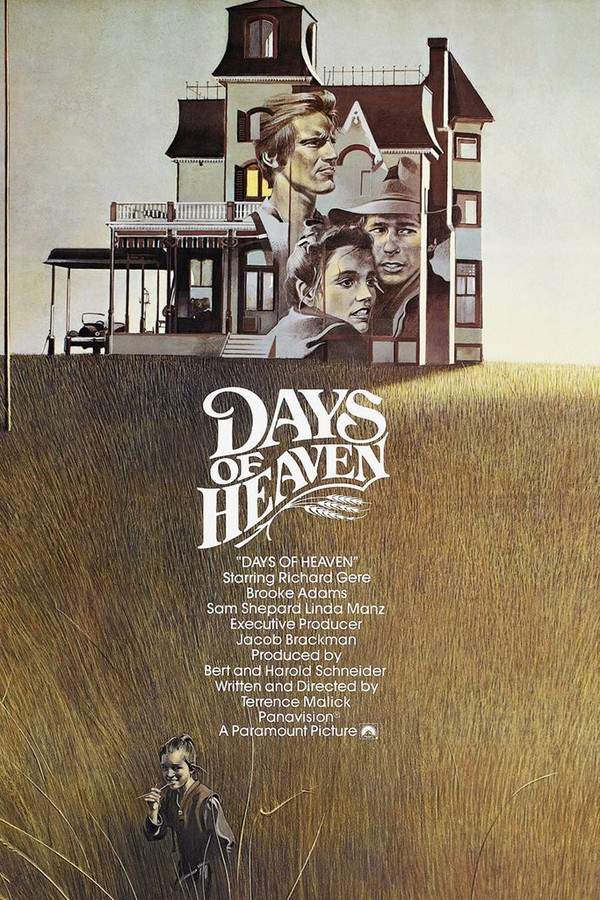
Hailed as one of cinema’s most critically acclaimed works, the film follows a Chicago slum fugitive who falls for Abby and becomes entangled in a rivalry with a shy, wealthy Texan also vying for her affection. Terrence Malick’s direction creates an extraordinary visual and auditory experience, cementing its status as a landmark achievement.
Find where to stream, rent, or buy Days of Heaven (1978) in the US with current JustWatch availability, up-to-date pricing, and platform listings for subscription, rental, and digital purchase options.
Warning: spoilers below!
Haven’t seen Days of Heaven yet? This summary contains major spoilers. Bookmark the page, watch the movie, and come back for the full breakdown. If you're ready, scroll on and relive the story!
Read the complete plot breakdown of Days of Heaven (1978), including all key story events, major twists, and the ending explained in detail. Discover what really happened, and what it all means.
In 1916, Chicago steelworker Bill [Richard Gere] accidentally kills his factory foreman during an argument. He flees to the Texas Panhandle with his girlfriend Abby [Brooke Adams] and his young sister Linda [Linda Manz]. As their train winds across the country, an older Linda mulls over these events in voiceover narration. She recalls that a religious man warned her of a vision of apocalyptic hellfire, and notes that at the Last Judgment, God will rescue the good and turn away the evil.
In Texas, a wealthy farmer [Sam Shepard] suffering from an unspecified malady hires as many seasonal shockers as he can find, including Bill and Abby, who pretend to be siblings to deter gossip. Bill overhears a doctor telling the farmer that he has one year left to live. The farmer's accountant encourages him to sell his farm and enjoy his profits, but the farmer decides on staying.
The terminally ill farmer takes a liking to Abby, and asks her to stay with him after the harvest. Bill encourages Abby to marry the farmer so that they can inherit his money when he dies. Abby questions whether Bill still loves her. Bill confidently predicts that the farmer will die soon and they will be reunited. Abby marries the farmer and persuades him to let Bill and Linda stay at the farmhouse. The farmer's foreman suspects that Abby and Bill are con artists, but the farmer dismisses the suggestion and distances himself from the foreman.
The farmer's health remains stable, foiling Bill's plans. Over time, the shy farmer wins over Abby with his genuine disposition. However, he grows suspicious of Abby's excessively familiar relationship with her "brother." Bill belatedly realizes that Abby has fallen in love with the farmer. He realizes that the only way to salvage the situation is to depart the farm, leaving his little sister with his ex-girlfriend. The farmer tries to be a good father figure to Linda.
Bill returns to the farm during the following year's harvest. He admits to Abby that encouraging her to marry another man was a mistake. Before Abby can make a decision, a locust swarm arrives. To save the harvest, the farmer lights controlled fires to smoke out the locusts. However, when he sees Bill, he loses control of himself and chases after Bill with a gun. He accidentally knocks over one of his own lamps, triggering a blaze that destroys much of the harvest. Bill kills the farmer with a screwdriver the next day during a confrontation where the farmer points a revolver at him.
Once again, Bill, Abby, and Linda are on the run. With the foreman's help, the police shoot Bill while he tries to escape. Seeking a new life, Abby leaves Linda at a boarding school and departs on a train with soldiers headed for World War I. Later, Linda runs away from the school with a friend from the farm.
Last updated: May 05, 2026 at 10:08
Explore frequently asked questions about Days of Heaven (1978) with spoiler-rich answers covering the full plot summary, major story beats, character motivations, hidden details, and ending meaning. This movie summary FAQ helps explain confusing scenes, plot twists, and narrative decisions in clear, searchable detail.
Bill schemes to inherit the farmer's fortune. Knowing the farmer is terminally ill with only a year to live, Bill sees marriage as a quick path to wealth, he calculates that once the farmer dies, he and Abby will claim the inheritance. This reveals Bill's controlling nature and his willingness to manipulate Abby for financial gain.
Earlier, Bill overhears the doctor's prognosis about the farmer's terminal condition, giving him the idea.
Abby grows genuinely attracted to the farmer's shy, kind, and sincere nature, qualities Bill lacks. Over time, she witnesses the farmer's genuine goodness: he tries to be a good father figure to Linda, treats her with respect, and shows authentic emotion. Meanwhile, Bill's manipulation becomes clear to her, making the farmer's honest affection more appealing.
Abby's earlier doubt about whether Bill truly loves her hints at her growing uncertainty.
The farmer's unexpected longevity frustrates Bill's inheritance scheme. The film never explains the discrepancy, it simply shows the farmer living well beyond his one-year prognosis. This delay intensifies Bill's desperation and creates the tension that drives the story toward its violent climax.
A locust swarm threatens the crops, so the farmer lights controlled fires to smoke them out. During this chaotic moment, he spots Bill and chases him in a rage, accidentally knocking over a lamp. The lamp ignites the dry vegetation, sparking a blaze that destroys much of the harvest. The fire becomes the catalyst for the deadly confrontation that follows.
The next day, Bill fatally attacks the farmer with a screwdriver during a confrontation. When the farmer points a revolver at him, Bill strikes with a makeshift weapon, a screwdriver, killing the farmer. This desperate, violent act marks the story's tragic turning point, ending the farmer's life and sealing Bill's fate.
The chaotic fire and chase set the stage for the violent showdown.
After Bill is killed by police during their escape, Abby decides to abandon her past life entirely. She leaves Linda at a boarding school, providing her with stability, and then departs on a train with soldiers heading to World War I. This represents Abby's choice to start a completely new life, leaving behind her troubled relationship with Bill and the farmer's tragic fate.
The farmer loses control when he sees Bill during the crisis. His anger stems from discovering Bill's true relationship with Abby and the realization that he's been deceived. The farmer's jealousy and rage explode in this moment, causing him to pursue Bill recklessly, leading to the accidental fire and setting off the chain of events that ends in murder.
The farmer has previously grown suspicious of Abby's familiar relationship with her 'brother.'
Bill returns during the following year's harvest to reclaim Abby. He admits that encouraging her to marry another man was a mistake, hoping to win her back. This shows Bill's realization that his scheme backfired, he lost Abby to the very man he manipulated her into marrying. His return accelerates the story's tragic climax.
Earlier, Bill departs after realizing Abby has fallen in love with the farmer.
The foreman has suspected Abby and Bill from early on, believing they are con artists posing as siblings. Though the farmer dismissed these suspicions, the foreman's distrust never faded. When Bill, Abby, and Linda flee after the farmer's murder, the foreman aids the police in tracking them down, leading to Bill's fatal shooting.
The foreman grows suspicious early in their stay and questions the sibling act.
Linda's reflective narration frames the entire story with a moral and fatalistic lens. She recalls a religious man's warning about apocalyptic hellfire and the Last Judgment, God rescuing the good while turning away the evil. This sets a tone of impending moral reckoning, foreshadowing the tragic outcomes: the farmer's death, Bill's murder, and the characters' ultimate separation.
Bill accidentally kills his factory foreman during an argument in 1916. The act is portrayed as unintentional, arising from workplace tension and a sudden altercation. This tragedy forces Bill, Abby, and Linda to flee Chicago, setting the entire story in motion as they escape to the Texas Panhandle.
Bill and Abby pose as siblings to avoid gossip and suspicion in the small Texas farming community. Unmarried couples living together would draw attention and potentially ruin their scheme. The ruse allows them to work on the farm while maintaining the appearance of propriety, though the farmer's foreman eventually sees through the act.
Discover curated groups of movies connected by mood, themes, and story style. Browse collections built around emotion, atmosphere, and narrative focus to easily find films that match what you feel like watching right now.
Beautifully filmed stories of love and loss against harsh country landscapes.Discover movies like Days of Heaven that explore love, deception, and tragedy in rural settings. These films share a melancholic tone, slow pacing, and heavy emotional weight, perfect for viewers seeking similar atmospheric dramas.
These stories typically follow characters trapped by their circumstances, often involving love triangles, class divides, and desperate choices that lead to tragic consequences. The narrative unfolds with a sense of inevitable fate, emphasized by the contrast between beautiful natural settings and human suffering.
They are grouped by their shared atmospheric rural settings, melancholic tone, slow pacing, and themes of doomed love and social hardship. The visual poetry and heavy emotional weight create a cohesive viewing experience of beautiful despair.
Stories where characters are powerless against their predetermined tragic fate.If you liked Days of Heaven, explore these slow-paced, fatalistic dramas with heavy emotional weight and melancholic tones. These movies feature characters grappling with destiny, betrayal, and tragic outcomes in similarly contemplative styles.
The narrative pattern involves characters making decisions based on desperation or desire, which set them on a collision course with destiny. Voiceover narration often provides a reflective, philosophical perspective on the unfolding tragedy, emphasizing the inevitability of the outcome rather than suspense.
They share a specific combination of slow pacing, melancholic tone, moderate complexity, and heavy emotional weight centered on themes of fate and doomed choices. The viewing experience is contemplative and emotionally draining rather than thrilling.
Don't stop at just watching - explore Days of Heaven in full detail. From the complete plot summary and scene-by-scene timeline to character breakdowns, thematic analysis, and a deep dive into the ending - every page helps you truly understand what Days of Heaven is all about. Plus, discover what's next after the movie.
Track the full timeline of Days of Heaven with every major event arranged chronologically. Perfect for decoding non-linear storytelling, flashbacks, or parallel narratives with a clear scene-by-scene breakdown.
Discover the characters, locations, and core themes that shape Days of Heaven. Get insights into symbolic elements, setting significance, and deeper narrative meaning - ideal for thematic analysis and movie breakdowns.