Plot Explained Spoilers guaranteed!
Plot Explained

Browse by genre

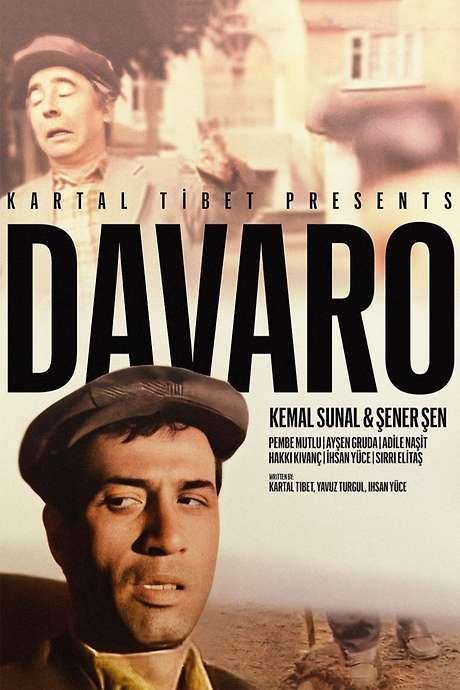
Davaro (1981) movie poster

Timeline

Davaro (1981) Timeline Explained – Every Event in Order

Release, runtime and language
1981 · 94 mins · Turkish
Directed by
Kartal Tibet
Starring
Ayşen Gruda, Şener Şen, Sırrı Elitaş, Kemal Sunal, İhsan Yüce, Ahmet Açan

Memo returns from Germany to marry his beloved, only to learn that Sulo, the man who killed his father, is being released from prison. Village law demands he avenge his father before he can wed. Unwilling to kill, Memo and Sulo stage a fake death, but the ruse soon spirals out of control.

On this page (4)
  1. 1 Events in order (14)
  2. 2 Timeline questions answered
  3. 3 Movie threads
  4. 4 Every angle

14 events in order · contains spoilers

Davaro Timeline: Events in Chronological Order

Every key event of Davaro (1981) in order, scene by scene, with when and where it takes place. Use it to untangle flashbacks, time jumps and parallel storylines, to refresh your memory before the sequel or to find the exact scene you are thinking of.

  1. Memo returns home from Germany

    Memo arrives back in his southeastern Turkish village after years abroad, having saved enough money to marry Cano. The return stirs excitement and worry: the village, especially his mother, Cano, and the village leader Ağa, press him to act on revenge for his father's murder.

    When
    1980s
    Where
    south-eastern Turkey village
  2. Pressure to avenge his father

    With the father’s murder unsolved and Sülo still jailed, the villagers pressure Memo to kill Sülo to avenge his father. Memo argues that killing a man would not restore peace, but the pressure from the village grows. He hesitates, knowing the consequences of failing to act on the verdict.

    When
    1980s
    Where
    village
  3. The killer released on the wedding day

    On the wedding day, Sülo is released from jail. The village expects Memo to fulfill his deadly duty, but Memo hesitates, arguing he does not want to kill a human being, even if it costs his honor. The moment sets the tone for a confrontation between tradition and Memo's conscience.

    When
    1980s
    Where
    village
  4. Staging Sülo's death to fool the village

    Memo and Sülo decide to stage Sülo's death to fool the village. They pretend Sülo dies, but the plan backfires when the villagers believe Memo killed him, and Memo is charged with murder.

    When
    1980s
    Where
    village
  5. Bus stop and the bandit confrontation

    On the way to jail, the two are halted by bandits who rob the bus. Bekiro, the bandit leader, recognizes Memo and takes them to a mountain hideout, while also taking Sülo along to spare Memo from jail. This moment marks Memo's first step into the world of banditry.

    When
    1980s
    Where
    on the road to jail, mountain hideout
  6. Memo becomes a bandit

    In the mountains, Memo evolves into a real bandit as life with Bekiro's crew continues. Sülo stays subservient in the group, doing chores but getting nothing of value. Memo grapples with loyalty, money, and betrayal as his new identity forms.

    When
    months later
    Where
    Bekiro's mountain hideout
  7. The vase of money and the lure of betrayal

    The vase full of money becomes a lure; Bekiro slips money into an almost full vase buried between bushes, and Sülo tries to persuade Memo to steal it. Memo refuses to betray his old friend, choosing loyalty over wealth. Bekiro begins to plot infiltrating the village to reconnect Memo with Cano.

    When
    months later
    Where
    Bekiro's hideout and village
  8. Police strike and Memo is hunted

    A crackdown culminates in the police wiping out the bandit group, leaving Memo to be hunted as the suspect in Sülo's death. He is arrested and taken to jail once again for the murder he didn’t commit. The village's fear and confusion deepen as aftershocks of violence ripple through the community.

    When
    shortly after infiltration
    Where
    mountains/village
  9. Memo and Sülo's jailbreak for the vase

    Sülo engineers a jailbreak, smuggling Memo out of jail so they can retrieve the vase. They travel to Istanbul to escape Memo's pending charges and to claim the money's safety. The escape marks a turning point as trust between them strains under the weight of money.

    When
    after arrest
    Where
    jail to Istanbul
  10. Tension in Istanbul and theft of the money

    Arriving in Istanbul, suspicion grows between Memo and Sülo as greed and fear test their friendship. Sülo steals Memo's money, leaving Memo to fend for himself in the big city. Memo grapples with trust and survival in the new environment.

    When
    soon after arrival
    Where
    Istanbul
  11. Confrontation in a hotel room

    Memo locates Sülo in an establishment and brings him back to a hotel room to settle the betrayal with a punishment—or explanation. The plan backfires as the rifts widen, forcing them to confront what their partnership has become.

    When
    after the money dispute
    Where
    Istanbul, hotel room
  12. Cano's letter and the Ağa's plan

    Memo receives a letter from Cano stating that the Ağa plans to marry Sülo's wife, exploiting the widow's vulnerability. This revelation intensifies Sülo's resolve and hastens his decision to take extreme actions.

    When
    after letter
    Where
    Istanbul
  13. Memo pays debts to free the village

    Memo decides not to escalate violence; instead, he uses the money to pay off the villagers' debts, so the Ağa loses influence over them. This act helps restore balance and marks Memo's shift away from revenge toward protecting his community.

    When
    final act
    Where
    village
  14. Return to the mountains with Cano

    Memo goes back to the mountains, this time together with Cano by his side. The couple begins a quieter life, away from the village's feuds, signaling a fragile but hopeful new beginning.

    When
    end
    Where
    mountains

Last updated: October 09, 2025 at 14:57

Was this helpful?

Timeline questions answered

Davaro Timeline Explained: Your Questions Answered

When does it happen, and why in that order? The questions people ask about the chronology of Davaro (1981): time jumps, flashbacks, cause and effect between scenes and the correct order of events, each answered with spoilers.

Q1

Why does Memo refuse to kill Sülo even though the village demands it?

Memo cannot bring himself to kill Sülo because he believes taking another human life, even a killer, will not restore anything or bring peace. He argues that killing a man would not bring his father back and goes against his moral principles, even though this costs him his honor in the village's eyes.

Foreshadowing: Earlier, Memo pleads that if the killer is freed, he will fulfill his duty, but when faced with the actual moment, his conscience prevents him from acting.

  • memo
  • sulo
  • killing
  • revenge
  • village law
  • moral
Q2

Why does the plan to stage Sülo's death backfire on Memo?

Memo and Sülo stage a fake death to satisfy the village's demand for revenge while sparing Sülo's life. However, the villagers actually believe Memo killed Sülo for real, which leads to Memo being charged with murder rather than being celebrated for fulfilling his duty.

Foreshadowing: The village crowd was waiting for Memo to carry out the revenge, and when they saw what appeared to be a dead body, they assumed the worst.

  • staged death
  • sulo
  • murder charge
  • village
  • plan backfires
Q3

Why does Memo end up joining the bandits after being arrested?

When the bus is stopped by bandits, their leader Bekiro recognizes Memo and takes him to the mountain hideout to protect him from going to jail for the murder charge. Sülo is taken along because Memo shows pity for him. In the mountains, Memo gradually adapts to bandit life.

Foreshadowing: Bekiro pulls Memo away specifically so he won't face jail, which opens the door to Memo's new life in the mountains.

  • bandits
  • bekiro
  • mountain hideout
  • memo joins bandits
Q4

Why does Memo refuse to steal the money from Bekiro despite being in need?

When Bekiro hints about a vase of money hidden in the bushes, Sülo tries to convince Memo to betray their old friend and take the money. Memo refuses because loyalty to Bekiro, who saved him from jail, remains more important to him than wealth.

Foreshadowing: Bekiro warns Memo about the vase, testing whether Memo will stay loyal or succumb to greed.

  • bekiro
  • money vase
  • loyalty
  • betrayal
  • temptation
Q5

Why does Sülo steal all the money from Memo in Istanbul?

After arriving in Istanbul with the money from the vase, Sülo succumbs to greed and spends the entire fortune on lavish dinners, drinks, and company. He betrays Memo by stealing everything, showing that their partnership was really only held together by the money.

Foreshadowing: Earlier in the mountains, Sülo constantly tries to persuade Memo to steal the vase money, foreshadowing his eventual theft.

  • sulo
  • theft
  • money
  • istanbul
  • betrayal
  • greed
Q6

Why does the Ağa want to marry Sülo's wife after the staged death?

The Ağa plans to marry Sülo's wife, who is technically a widow because the village believes Sülo is dead. This exploit reveals the Ağa's opportunistic nature, he sees an advantage in the false death to take another man's wife.

Foreshadowing: Cano's letter reveals the Ağa's plan, showing he has been waiting for any opportunity to increase his control.

  • aga
  • sulo wife
  • marriage
  • village control
  • exploitation
Q7

Why does Memo pay off the villagers' debts instead of seeking revenge?

Memo uses the remaining money to pay off the villagers' debts to the Ağa, which removes the Ağa's power and control over the village. Rather than escalating violence or pursuing personal revenge, Memo chooses to help his community break free from the Ağa's dominance.

Foreshadowing: The Ağa's demand for revenge was really about clearing the path for his own interests, which Memo realizes before making his final decision.

  • village debts
  • aga power
  • free village
  • money resolution
Q8

What happens to Memo and Cano at the end of the movie?

Memo returns to the mountains, but this time he is not alone, he brings Cano with him as his wife. The couple begins a quieter life away from the village's feuds and the Ağa's control, signifying a hopeful new beginning together.

Foreshadowing: Earlier, Bekiro tries to bring Memo and Cano back together by infiltrating the village, hinting at their eventual reunion.

  • cano
  • mountains
  • ending
  • happily ever after
  • resolution
Q9

What does Sülo plan to do when he returns to the village?

After learning about the Ağa's plan to marry his wife, Sülo intends to kidnap her from the village. However, Memo warns him that such an act would reveal that Sülo never actually died, exposing the truth that Memo never killed his father's killer.

Foreshadowing: Sülo's desperation to retrieve his wife drives his decision to risk returning to the village despite the danger.

  • sulo
  • kidnap
  • wife
  • village
  • exposure
Q10

How do Memo and Sülo escape from jail together?

While Memo sits in jail for Sülo's supposed murder, Sülo engineers a breakout to show Memo where the vase of money is hidden. This jailbreak allows both of them to escape and travel to Istanbul, though it further entangles them in crime.

Foreshadowing: The vase of money was introduced earlier as a goal, making Sülo's motivation to break out logical and connected.

  • jailbreak
  • vase money
  • escape
  • istanbul
  • sulo

Movie threads

More Movies Like Davaro, by Mood & Story

Curated lists built around what makes Davaro tick: the same mood, the same kind of story or the same emotional payoff. Each list explains why these movies belong together.

Comedies of escalating deception like Davaro

A simple lie snowballs into hilariously complex chaos for well-meaning characters. If you enjoyed the chaotic fake death plot in Davaro, you'll love these movies where a simple lie spirals into absurdity. This thread gathers fast-paced comedies about well-intentioned deceptions that grow wildly out of control, filled with misunderstandings and frantic cover-ups.

  • absurd
  • mischievous
  • comical chaotic
  • lighthearted
  • fast-paced
  • unlikely allies
  • Tone: lighthearted, comical
  • Pacing: fast, chaotic
Why these movies?

The story pattern: The narrative typically begins with a character facing a social or moral dilemma who opts for a clever, non-confrontational solution. This initial deception requires ever more complicated lies and performances to sustain, pulling in allies and creating new problems. The story builds to a climax where the ruse inevitably collapses, often leading to a resolution that humorously validates the original intent without the need for the deception.

Why they belong together: These films are grouped by their shared comedic structure: a lighthearted tone, fast pacing driven by new complications, and a focus on the chaotic fun of a plan gone awry. They balance medium intensity from the constant risk of exposure with a light emotional weight, ensuring the stakes feel engaging but never truly dire.


Movies that satirize tradition like Davaro

Characters use wit and whimsy to cleverly subvert outdated codes of honor. Fans of Davaro's humorous take on village honor codes will appreciate these satirical comedies. This thread features films where clever characters use wit to subvert serious, outdated traditions, turning potential tragedies into lighthearted adventures of social rebellion.

  • satirical
  • absurd
  • lighthearted
  • clever
  • social rebellion
  • whimsical
  • Tone: satirical, light
  • Pacing: fast, inventive
Why these movies?

The story pattern: The plot revolves around a protagonist confronted with an uncompromising social obligation—like a blood feud or an archaic law—that conflicts with their personal morals. Instead of direct defiance or grim acceptance, they devise a clever, often theatrical, scheme that technically fulfills the obligation while exposing its ridiculousness. The journey involves rallying unlikely allies and navigating the fallout, ultimately leading to a happy ending that affirms friendship and cleverness over blind adherence to tradition.

Why they belong together: This thread unites movies through their specific tone mix: they take a premise that could be dark or dramatic and filter it through a satirical, lighthearted lens. The pacing is fast due to the inventive plotting, and the emotional weight remains light because the focus is on clever problem-solving rather than the gravity of the themes.

Every angle

Davaro (1981) Explained: Plot, Timeline & Characters

Everything about Davaro in one place: what happens in the plot summary, the timeline in chronological order, the characters and meaning and a spoiler-free summary. What's After the Movie adds the cast, box office and post-credit scenes.

Coming soon on iOS and Android

The Plot Explained Movie Summary App

Plot summaries, endings explained and timelines on your phone. Catch up on any movie in minutes, save your favorites and never miss a twist again.

Be the first to know when we launch. Your email stays private, always.

Learn more about the app