Plot Explained Spoilers guaranteed!
Plot Explained

Browse by genre

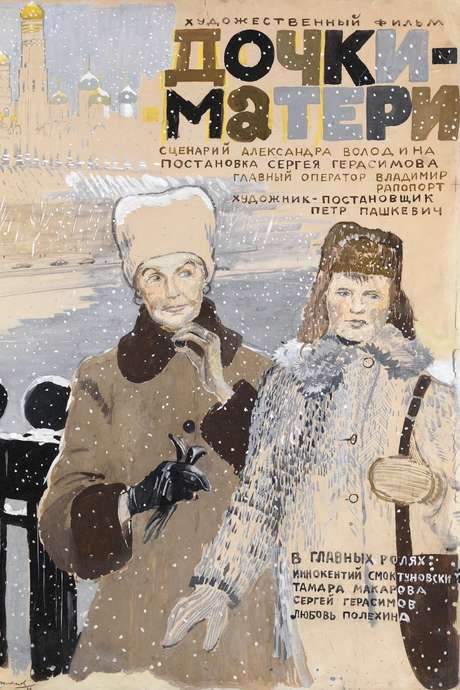
Daughters-Mothers (1975) movie poster

Characters & Themes

Daughters-Mothers (1975) Characters, Setting & Themes Explained

Release, runtime and language
1975 · 96 mins · Russian
Starring
Larisa Udovichenko, Innokentiy Smoktunovskiy, Grigoriy Malikov, Zura Kipshidze, Boris Bachurin, Tatyana Parkina

Orphan Olga Vasilyeva, raised in a Sverdlovsk orphanage, clings to a single clue—a preserved letter from her unknown mother. During a brief factory‑school vacation she journeys to Moscow, following the shaky trail. There she meets Yelena Alekseyevna, a ballet school teacher and wife of a modest senior lecturer at the Moscow Technical Institute. Though Yelena shares Olga’s surname and a similar middle name, she is not her mother, but she kindly offers shelter and assistance in the search.

On this page (7)
  1. 1 Characters explained (5)
  2. 2 Where & when it takes place
  3. 3 Themes & meaning (3)
  4. 4 Character & meaning questions
  5. 5 Movie threads
  6. 6 Movies like Daughters-Mothers
  7. 7 Every angle

5 main characters · contains spoilers

Daughters-Mothers Characters Explained: Who Is Who

The main characters of Daughters-Mothers (1975), heroes and villains: what drives them, how they change over the course of the story and what each of them reveals about the film's bigger ideas.

  • Olga Vasilyeva (Lyubov Polekhina)

    Olga is a young woman raised in an orphanage who is determined to locate the mother she has never met. She is kind-hearted and straightforward, with a resilient spirit that keeps her moving forward. Her blunt honesty creates tension with Elena’s family but also drives the search, highlighting her need for belonging and family.

    • 🎭 determined
    • 🧭 blunt
    • 🏠 orphanage-born
  • Elena Alexeyevna Vasilyeva (Tamara Makarova)

    Elena is a ballet teacher in Moscow who warmly welcomes Olga and offers to help with the search. She is compassionate and patient, balancing her own family tensions with Olga’s quest. Elena’s support reveals a softer, more generous side amid the pressures of her marriage to Vadim. She becomes a pivotal ally in Olga’s journey toward identity.

    • 🎭 supportive
    • 🏙️ urban
    • 🧭 guiding
  • Vadim Antonovich Vasilyev (Innokentiy Smoktunovskiy)

    Vadim is Elena’s husband, a professor whose ambitions have stalled. He is distant at times, caught between professional frustration and family life, which adds strain to Olga’s blunt honesty. His reactions reveal the fault lines between provincial aspiration and urban expectations as Olga’s search unfolds.

    • 🎓 academic
    • 🗺️ ambitious
    • 🕊️ conflicted
  • Galya (Larisa Udovichenko)

    Galya is Elena’s daughter, a spoiled and sometimes disdainful young woman who resents the provincial newcomer. Her social confidence highlights the class gap between Elena’s urban milieu and Olga’s rural background. Galya’s attitude embodies the friction within a privileged city family confronted by a stranger’s arrival.

    • 👗 spoiled
    • 🗨️ disdainful
    • 🧭 urban-aware
  • Anya (Svetlana Smekhnova)

    Anya is Elena’s other daughter, part of the fashionable Moscow household. She contributes to the family dynamic by aligning with the city’s social codes and occasionally clashing with Olga. Her presence helps illustrate the siblings’ contrast and the pressures of elite urban life.

    • 👗 spoiled
    • 🗣️ outspoken
    • 👀 curious

Last updated: February 18, 2026 at 23:33

Was this helpful?

Setting

Where and When Does Daughters-Mothers Take Place?

The setting of Daughters-Mothers (1975): the year and time period, the places and locations, and how they shape the characters, the mood and the tension of the story.

Time period

Location

Sverdlovsk, Moscow, Toropets, Kalinin region

The story unfolds across key Soviet centers. Olga travels from the industrial city of Sverdlovsk to Moscow, following a clue hidden in a letter kept at the orphanage. The search hints at Toropets in the Kalinin region as a potential destination for Olga’s mother. These settings highlight the contrast between provincial life, urban ambition, and the intimate quest for family.

  • 🏙️ Sverdlovsk
  • 🏙️ Moscow
  • 🏘️ Toropets
  • 🏛️ Kalinin region

Last updated: February 18, 2026 at 23:33

Was this helpful?

3 major themes

Daughters-Mothers Meaning: Themes & Message Explained

What is Daughters-Mothers (1975) really about? The emotional, social and philosophical themes the film keeps returning to, its symbolism and the message beneath the surface.

  • Identity

    Olga’s quest to locate her unknown mother drives the drama. The journey contrasts her provincial upbringing with life in Moscow. Her blunt honesty creates friction with Elena’s family but sustains the search’s momentum. The pursuit probes what defines motherhood and belonging.

  • Family

    Family bonds are tested as Olga seeks recognition and care from a potential mother figure. Elena’s warmth and support clash with the daughters’ disdain, revealing class and status tensions. The film explores how love, loyalty, and duty shape choices in the face of uncertainty. Olga’s resilience ties the family threads together, even as her quest unsettles them.

  • Class/City Life

    The contrast between Olga’s provincial origin and Elena’s urban milieu underscores social expectations. Moscow serves as a backdrop for ambition, while Sverdlovsk reflects a working-class upbringing and institutional life. The narrative uses these settings to examine aspirations, privilege, and the cost of urban sophistication. The journey from a dormitory to a city home illuminates how environment shapes identity.

Last updated: February 18, 2026 at 23:33

Was this helpful?

Character & theme questions

Daughters-Mothers Characters & Meaning: Your Questions Answered

The questions people ask about Daughters-Mothers (1975): who the characters really are, their relationships, what the symbols mean, where it takes place and what the movie is really about. Each answer contains spoilers.

Q1

What is Olga Vasilyeva's background in the film?

Olga Vasilyeva is a young woman raised in an orphanage in the industrial city of Sverdlovsk. She has lived her entire life without knowing her mother, keeping only a preserved letter as a clue to her identity. Her upbringing in the provincial orphanage shapes her blunt honesty and resilient spirit as she embarks on a journey to find her biological mother.

  • Olga Vasilyeva
  • orphan
  • Sverdlovsk
  • orphanage
  • mother search
Q2

Where does Olga travel to find her mother?

Olga travels from Sverdlovsk to Moscow following the clue in her letter. Her journey takes her from the provincial orphanage to the Soviet capital, where she seeks answers about her mother's identity. The search also hints at Toropets in the Kalinin region as a potential destination related to her mother.

  • Moscow
  • Sverdlovsk
  • Toropets
  • journey
  • search
Q3

Who is Elena Alexeyevna and what role does she play?

Elena Alexeyevna Vasilyeva is a ballet school teacher in Moscow and wife of professor Vadim Antonovich Vasilyev. Though she shares Olga's surname and similar middle name, she is not Olga's biological mother. However, she becomes a crucial ally, offering Olga shelter and actively helping her search for her real mother.

  • Elena Alexeyevna
  • ballet teacher
  • Moscow
  • supportive character
Q4

What are the main themes explored in the film?

The film explores three interconnected themes: Identity, as Olga searches for her biological mother and discovers who she really is; Family, examining what defines motherhood and belonging when blood ties are uncertain; and Class/City Life, contrasting Olga's provincial upbringing in Sverdlovsk with the urban sophistication of Moscow.

  • identity
  • family
  • class
  • motherhood
  • belonging
Q5

What is the social class dynamic in the film?

The film portrays a clear class divide between Olga's working-class provincial background and Elena's urban Moscow family. Olga's blunt honesty creates friction with Elena's daughters, particularly Galya, who resents the provincial newcomer. This tension highlights the social expectations and privilege associated with city life in Soviet society.

  • class
  • msocial tension
  • Moscow
  • Sverdlovsk
  • privilege
Q6

Who are Elena's family members and how do they react to Olga?

Elena is married to Vadim Antonovich Vasilyev, a professor whose career ambitions have stalled. They have two daughters: Galya, who is spoiled and disdainful of Olga, and Anya, who adheres to Moscow's social codes. The family dynamic becomes strained by Olga's arrival, revealing tensions between warmth and rejection within the household.

  • Vadim Vasilyev
  • Galya
  • Anya
  • family tension
  • daughters
Q7

What are the key locations in the film?

The story unfolds across several Soviet centers: Sverdlovsk (Olga's industrial hometown and orphanage), Moscow (the capital city where she searches for her mother), and Toropets in the Kalinin region (hinted as a possible location of Olga's mother). These settings emphasize the contrast between provincial life and urban ambition.

  • Soviet settings
  • location
  • urban
  • rural
  • Moscow
  • Sverdlovsk
Q8

What does the film say about motherhood and belonging?

The film probes what truly defines motherhood and belonging beyond blood ties. Olga's quest for her biological mother raises questions about whether biological connection or emotional support defines a mother. Elena's compassionate response to Olga, offering shelter and help despite not being her real mother, suggests that choice and care can create family bonds.

  • motherhood
  • belonging
  • family bonds
  • adoption
  • identity search
Q9

Who is Elena's husband and what is his role?

Elena's husband is Vadim Antonovich Vasilyev, a senior lecturer at the Moscow Technical Institute whose professional ambitions have stalled. He appears distant and caught between professional frustration and family life. His reactions to Olga's presence reveal the tensions between provincial aspirations and urban expectations.

  • Vadim Vasilyev
  • professor
  • technical institute
  • husband
Q10

What is the emotional tone of the film?

The film carries a bittersweet tone, blending the sadness of Olga's loneliness and the tension with her host family with the hopefulness of her search. Despite emotional conflicts and themes of abandonment, the narrative maintains a steady pace with moments of warmth through Elena's support, ending on a hopeful note as Olga prepares to potentially reunite with her mother.

  • bittersweet tone
  • emotional
  • hopeful
  • emotional conflict

Movie threads

More Movies Like Daughters-Mothers, by Mood & Story

Curated lists built around what makes Daughters-Mothers tick: the same mood, the same kind of story or the same emotional payoff. Each list explains why these movies belong together.

Movies about a search for belonging like Daughters-Mothers

Heartfelt journeys of characters searching for their place in the world. If you were moved by Olga's quest in Daughters-Mothers, explore these other films about characters searching for their roots and a place to belong. These similar dramas and emotional journeys focus on themes of identity, family, and personal discovery.

  • searching
  • lonely
  • hopeful
  • melancholic
  • resilient
  • introspective
  • Tone: bittersweet, hopeful
  • Pacing: steady, deliberate
Why these movies?

The story pattern: Stories in this thread follow a linear, character-driven arc where the protagonist embarks on a physical or emotional journey to find where they belong. The central conflict often involves overcoming societal barriers or internal doubts, leading to a resolution that offers closure and a renewed sense of self.

Why they belong together: Movies are grouped here because they share a core narrative of a search for identity and connection, a bittersweet tone balancing sadness and hope, and a deliberate, steady pacing that allows for emotional reflection.


Quiet character-driven dramas similar to Daughters-Mothers

Emotionally grounded stories focused on personal growth and internal conflict. For viewers who appreciated the steady, character-focused storytelling of Daughters-Mothers, this list features other films with a similar feel. Discover more emotionally resonant dramas with straightforward plots centered on personal growth and relatable conflicts.

  • contemplative
  • realistic
  • hopeful
  • tense
  • resilient
  • introspective
  • Tone: bittersweet, reflective
  • Pacing: steady, character-driven
Why these movies?

The story pattern: The narrative pattern is straightforward and linear, unfolding through the protagonist's perspective. Conflict arises from interpersonal relationships and internal struggles rather than external action. The resolution is often hopeful or bittersweet, emphasizing the character's personal evolution.

Why they belong together: These movies share a medium intensity and emotional weight, a steady, deliberate pacing, and a focus on realistic characters navigating life's quiet challenges, resulting in a cohesive, reflective viewing experience.

If you liked this

Movies Like Daughters-Mothers

Similar movies to Daughters-Mothers: the same genre, themes or kind of story. Each one comes with its own plot summary, timeline and ending explained.

Browse all movie summaries

Every angle

Daughters-Mothers (1975) Explained: Plot, Timeline & Characters

Everything about Daughters-Mothers in one place: what happens in the plot summary, the timeline in chronological order, the characters and meaning and a spoiler-free summary. What's After the Movie adds the cast, box office and post-credit scenes.

Coming soon on iOS and Android

The Plot Explained Movie Summary App

Plot summaries, endings explained and timelines on your phone. Catch up on any movie in minutes, save your favorites and never miss a twist again.

Be the first to know when we launch. Your email stays private, always.

Learn more about the app