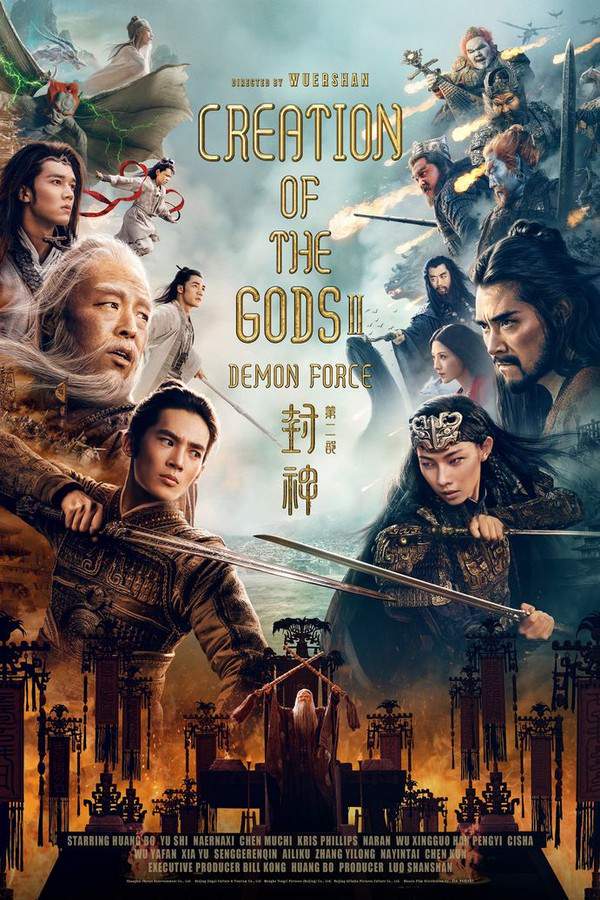
This film continues the Fengshen Trilogy, adapted from the classic 16th-century Chinese novel Investiture of the Gods. Jiang Ziya and Ji Fa, with the support of the Kunlun immortals, lead the defense of Xiqi against the dark forces of the Shang Dynasty. As the struggle for the Fengshen Bang escalates, alliances are tested and secrets are revealed.
Warning: spoilers below!
Haven’t seen Creation of the Gods II: Demon Force yet? This summary contains major spoilers. Bookmark the page, watch the movie, and come back for the full breakdown. If you're ready, scroll on and relive the story!
Trace every key event in Creation of the Gods II: Demon Force (2025) with our detailed, chronological timeline. Perfect for unpacking nonlinear stories, spotting hidden connections, and understanding how each scene builds toward the film’s climax. Whether you're revisiting or decoding for the first time, this timeline gives you the full picture.
Last updated: February 04, 2025 at 09:32
Find frequently asked questions about the Creation of the Gods II: Demon Force (2025) timeline, including chronological order, nonlinear jumps, cause-and-effect links, and scene sequence clarifications. This timeline FAQ helps explain when key events happen, how moments connect, and why the story unfolds in that specific order.
After being resurrected by the Great Saints in the Kunlun Mountains, Yin Jiao's soul is consumed by vengeful hatred. This happens because his death left him with unresolved rage, and when brought back to life, that tumultuous desire for vengeance dominates his personality. Rather than returning as his former self, he becomes a dangerous force that immediately begins siphoning power from the Saints themselves.
The Great Saint becomes weaker, older, and shows streaks of gray hair because Yin Jiao actively drains power from the Saints after resurrection. This is the catastrophic consequence many Saints warned about, the resurrection process itself, combined with Yin Jiao's vengeful soul consuming energy, leaves the Great Saint significantly diminished. This weakens the balance of power among the immortals.
The Saints originally debated whether resurrecting the dead would violate divine destiny, foreshadowing the disastrous outcome.
Wen Zhong, the Grand Perceptor, refuses because he is exhausted after ten years of continuous warfare protecting the kingdom. Having spent a decade fighting, he has grown weary of the endless conflict and decides he wants to retire rather than undertake another dangerous mission. This refusal forces King Yin Shou to turn to Deng Chanyu for the task.
Despite concerns from some Saints about violating divine order and the potential repercussions on destiny, the Great Saint ultimately decides to proceed with the resurrection. Jiang Ziya had instructed Nazha and Yang Jian to bring Yin Jiao's body to the Kunlun Mountains specifically to invoke the Saints' powers to save him. The Great Saint makes the final call to go forward, setting in motion the chain of events that leads to disaster.
The Fengshen Bang (Investiture of the Gods) is the legendary magical artifact at the center of the conflict. Both Jiang Ziya's forces and the Shang dynasty army battle fiercely to control it, as it holds immense power related to the fate of the gods and the mortal world. Whoever possesses the Fengshen Bang gains significant advantage in the struggle between the opposing sides.
After Wen Zhong refuses to lead the mission to capture Ji Fa and Jiang Ziya, Deng Chanyu volunteers to take on the task. Recognizing her bravery and determination, King Yin Shou bestows upon her a magnificent golden armor suit. This armor symbolizes the King's trust in her abilities and empowers her to lead this critical mission against the defenders of Xiqi.
Jiang Ziya and Ji Fa rally the civilians of Xiqi to mount a defense against the ruthless Shang dynasty army assault. They unite their efforts with the powerful Kunlun immortals, combining mortal manpower with supernatural assistance. This alliance prepares for and engages in an intense battle near Xiqi where magic and martial skill are tested against the Shang forces led by General Deng Chanyu.
The film features two mid-credits scenes that allude to future conflicts, introducing new elements that will shape the story in the trilogy's upcoming third installment. A post-credits epilogue also provides a significant reveal indicating the confrontation is far from over. These scenes create anticipation for the climactic showdown expected in the next chapter of the Fengshen Trilogy.
Yin Jiao absorbs power from the Saints because his resurrected soul is consumed by vengeful hatred and a desperate need for strength. This adverse outcome was unforeseen, the resurrection not only fails to restore his original personality but also enables him to drain energy directly from the Great Saint and other Saints, weakening them significantly.
King Yin Shou is frail and recovering because he sustained severe injuries in a prior battle against Ji Fa. Despite these injuries, he must still receive the returning armies of Wen Zhong after ten long years of war. His weakness reflects the deteriorating state of the Zhou dynasty and his diminished ability to lead.
Discover curated groups of movies connected by mood, themes, and story style. Browse collections built around emotion, atmosphere, and narrative focus to easily find films that match what you feel like watching right now.
Stories where ancient magic and large armies clash over the fate of kingdoms.If you enjoyed the grand-scale magical warfare in Creation of the Gods II: Demon Force, explore more movies like it. These films feature similar high-stakes conflicts where mythical powers, vast armies, and the fate of kingdoms collide in epic, action-packed fantasies.
Narratives in this thread typically follow a large-scale confrontation, often between a righteous rebellion and a tyrannical empire, where magical beings and powerful artifacts turn the tide of war. The journey involves rallying allies, securing legendary power, and engaging in climactic battles that decide the future of the world.
Movies are grouped here based on their shared focus on sprawling fantasy conflicts, the integration of supernatural elements into warfare, a high-intensity and fast-paced tone, and the overarching theme of a desperate struggle for survival against a powerful, dark force.
Tales where gods and mortals grapple with destiny, vengeance, and heavy choices.For viewers who appreciated the themes of destiny and moral cost in Creation of the Gods II: Demon Force, this list offers similar movies. Discover films that explore mythological worlds where characters face heavy consequences, political struggles, and complex questions of vengeance and duty.
These narratives often unfold around a central prophecy or a moment of great reckoning. Characters are forced to make difficult choices that challenge their allegiances, with actions having severe, often supernatural, consequences. The journey is emotionally heavy, involving themes of resurrection, vengeance, and the personal sacrifice required to challenge fate.
This grouping is defined by a shared mythological foundation, a focus on political and personal betrayal, themes of vengeance and destiny, and an emotionally heavy tone that explores the moral gray areas within a larger epic conflict.
Don't stop at just watching - explore Creation of the Gods II: Demon Force in full detail. From the complete plot summary and scene-by-scene timeline to character breakdowns, thematic analysis, and a deep dive into the ending - every page helps you truly understand what Creation of the Gods II: Demon Force is all about. Plus, discover what's next after the movie.
Read a complete plot summary of Creation of the Gods II: Demon Force, including all key story points, character arcs, and turning points. This in-depth recap is ideal for understanding the narrative structure or reviewing what happened in the movie.
Discover the characters, locations, and core themes that shape Creation of the Gods II: Demon Force. Get insights into symbolic elements, setting significance, and deeper narrative meaning - ideal for thematic analysis and movie breakdowns.