Plot Explained Spoilers guaranteed!
Plot Explained

Browse by genre

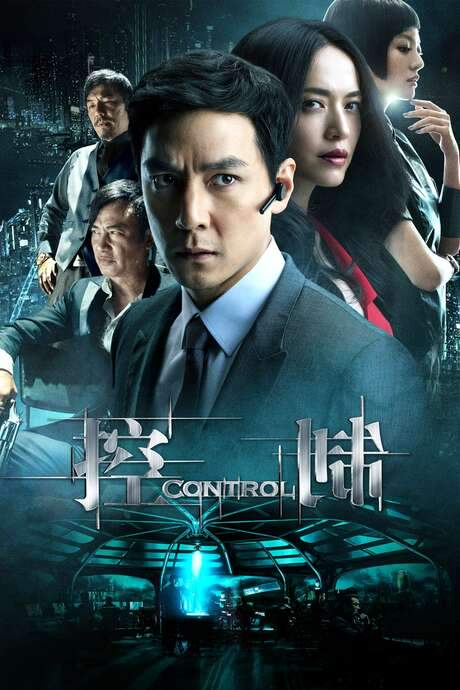
Control (2013) movie poster

Plot Summary

Control (2013) Plot Summary Explained

Release, runtime and language
2013 · 92 mins · Chinese
Loading streaming availability…
Directed by
Kenneth Bi
Starring
Tony Ho, Daniel Wu, Simon Yam, Julius Brian Siswojo, Ghost Style, Conroy Chan Chi-Chung

Mark makes a difficult choice, committing perjury for his company to support his mother. His life takes a dark turn when he encounters a mysterious figure who manipulates him into robbing a bank. This enigmatic person then begins to orchestrate a series of escalating disasters targeting Mark. Determined to regain his freedom and uncover the truth, Mark resolves to break free from this person's influence and expose their identity.

On this page (5)
  1. 1 Where to watch
  2. 2 What happens: full plot
  3. 3 Plot questions answered
  4. 4 Movie threads
  5. 5 Every angle
Loading streaming availability…

Full plot summary · contains spoilers

What Happens in Control: Full Plot Summary

The whole story of Control (2013) explained, from the opening scene to the final frame: every key event, every twist and what it all adds up to. Read it as a quick recap before the sequel, to check a scene you missed, or to finally understand what really happened.

In a futuristic and morally dubious floating city, dedicated insurance agent Mark has been living with his mentally ill mother for many years. His seemingly idyllic routine is unexpectedly disrupted by a mysterious phone call. To generate funds necessary for his mother's medical needs, Mark finds himself compelled to commit perjury in exchange for a substantial reward.

Believing he is smoothly navigating this predicament, Mark quickly realizes that a shadowy figure is aware of his wrongdoings and begins to extort him, demanding he fulfill their sinister requests. Amidst this turmoil, Mark encounters his former high school love, Jessie, who now has a job at a bank. The two decide to break free from the grip of this shadowy manipulator, only to discover that Jessie is intricately connected to the very same dangers that threaten Mark.

As the tension escalates, Mark becomes embroiled in a criminal conspiracy involving the mafia boss Tai Ge and his tainted finances. The complexity of their situation deepens, leading to a shocking revelation about the mysterious figure manipulating their lives. As Mark pursues vengeance against those who have wronged him, he alarmingly realizes he has stepped into a perilous trap that may have dire consequences for both him and Jessie. Through twists and turns, their fates become increasingly intertwined, setting the stage for a dramatic confrontation where the boundaries of trust and betrayal blur amidst the backdrop of a corrupt and technologically driven world.

Last updated: September 22, 2026 at 18:34

Was this helpful?

Plot questions answered

Control Plot Explained: Your Questions Answered

The questions people ask most about Control (2013): what happens in the confusing scenes, why the characters do what they do, the twists, hidden details and what the ending means. Each answer contains spoilers.

Q1

Why does Mark commit perjury in Control?

Mark commits perjury because he is desperate to afford medical care for his schizophrenic mother, whom he has been caring for alone in the floating city. A mysterious phone call offers him a substantial reward in exchange for lying on an insurance claim tied to his company. Believing the act is a one-time, easily hidden crime, Mark agrees, not realizing the decision will pull him into a blackmail trap engineered by the caller.

Foreshadowing: The opening scenes establish Mark's exhaustion and his mother's untreated condition, planting the moral pressure that makes the perjury offer feel unavoidable.

  • mark perjury
  • mother medical care
  • insurance fraud
  • schizophrenic mother
Q2

Who is the mysterious figure manipulating Mark?

The mysterious figure is revealed late in the film to be someone closely tied to both Mark and the broader criminal network around Tai Ge, which is why their blackmail feels so inescapable. The identity reveal shakes Mark because it shows the threat was never a random extortion scheme but a deliberately constructed trap. The film uses the delay of this reveal to keep the audience guessing about who could know enough about Mark's perjury, his job, and his past to orchestrate the entire chain of events.

Foreshadowing: Early clues hint that the caller knows intimate details about Mark's work, his mother's condition, and even his reunion with Jessie, suggesting an insider rather than a stranger.

  • mysterious figure identity
  • blackmailer reveal
  • antagonist twist
Q3

Why does Mark get manipulated into robbing a bank?

After the perjury, the mysterious figure uses the recorded wrongdoing as leverage to force Mark into committing a bank robbery. Mark is targeted specifically because Jessie, his former high school sweetheart, now works inside that bank, making her the unwitting key to the heist. The manipulation works because Mark is told that refusing will expose his perjury, which would cost him his job, his mother's care, and his freedom all at once.

Foreshadowing: Jessie's sudden appearance at the bank is framed as coincidence, but the timing is a quiet sign that the mysterious figure has already arranged the pieces of the robbery.

  • bank robbery
  • jessie bank job
  • mark manipulated
  • heist setup
Q4

How is Jessie connected to the dangers threatening Mark?

Jessie is not a random bystander in the conspiracy; she has been placed inside the bank specifically because the mysterious figure knows about Mark's past with her. Her employment gives the blackmailer direct leverage, since any robbery involving her puts both Mark and Jessie at legal and physical risk. This shared exposure is what binds their fates together and turns her reunion with Mark into a strategic trap rather than a stroke of luck.

Foreshadowing: Jessie's warm reappearance right after Mark's perjury feels too convenient, hinting that the mysterious figure has engineered the timing of their meeting.

  • jessie connection
  • mark jessie reunion
  • bank leverage
  • intertwined fates
Q5

How does the blackmailer know about Mark's perjury?

The mysterious figure knows about the perjury because the initial phone call was itself a setup, with the caller offering the bribe and then recording Mark's involvement to use as future leverage. This is why Mark's crime feels like the start of the trap rather than a lapse in judgment; the blackmail was always the real objective. The film treats the perjury less as a secret and more as bait designed to pull Mark into a larger criminal network.

Foreshadowing: The offer of a suspiciously easy payout should have signaled that the deal was engineered, a detail the story later confirms.

  • blackmail evidence
  • perjury recording
  • phone call setup
  • coercion
Q6

Why does the mysterious figure keep escalating disasters against Mark?

Each new demand is designed to deepen Mark's entrapment so that he cannot walk away without losing everything, making him more useful as an accomplice than as a free man. The escalation is not personal revenge but a calculated effort to turn Mark into a reliable asset for moving Tai Ge's dirty money and executing operations the mafia cannot perform openly. By the time Mark understands the pattern, he has already committed too many crimes to safely go to the authorities.

Foreshadowing: The blackmailer's first demand is small enough to seem manageable, which signals the classic trap of incremental commitment used throughout the story.

  • escalating disasters
  • manipulation
  • criminal entrapment
  • tai ge money laundering
Q7

Why does Mark get drawn into Tai Ge's criminal network?

Mark becomes entangled with Tai Ge because the bank robbery and subsequent demands are designed to launder or move the mafia boss's tainted finances, and Mark's compromised legal position makes him the ideal fall guy. The mysterious figure acts as the bridge between Mark and the mafia, funneling tasks that keep Mark legally exposed while Tai Ge's money stays insulated. Mark's involvement is the price of his continued freedom, which is exactly why the trap works so effectively.

Foreshadowing: Tai Ge's name surfaces only after Mark has already crossed several moral lines, ensuring he has no clean exit when the mafia's gravity finally pulls him in.

  • tai ge
  • mafia involvement
  • dirty money
  • criminal conspiracy
Q8

What trap does Mark fall into when he seeks revenge?

When Mark decides to fight back and expose the mysterious figure, his revolt is anticipated and channeled into actions that actually advance the conspiracy rather than damage it. By the time he realizes this, he has moved deeper into Tai Ge's network and put Jessie in greater danger than before. The trap turns his desire for justice into the very leverage the antagonists need to keep controlling him, leading to the bleak, unresolved finale.

Foreshadowing: Every time Mark appears to gain the upper hand, the mysterious figure already seems to know, suggesting the plan accounts for his defiance.

  • mark revenge
  • revenge trap
  • greater danger
  • bleak ending
Q9

Why can't Mark simply walk away from the mysterious figure's demands?

Walking away is not an option because the blackmailer holds documented proof of Mark's perjury, ties him to the bank robbery, and has already implicated him in Tai Ge's financial crimes. Each new demand adds another layer of legal exposure, so compliance feels safer than exposure at every stage. This stacking of crimes is the core mechanism of control in Control, which is precisely how the conspiracy traps him for the entire runtime.

Foreshadowing: The first compliant act Mark performs after the perjury is small and reversible in his mind, but it sets the pattern that locks him in later.

  • mark trapped
  • cannot escape
  • layered crimes
  • blackmail cycle
Q10

What is the shocking revelation about the mysterious figure?

The climactic reveal exposes the mysterious figure as someone whose connection to Mark is far more personal and strategically engineered than a random blackmailer would ever be, reframing the entire plot as a long con. The revelation forces Mark to confront how his desperate choices, made for his mother, were exploited from the very first phone call. It also retroactively explains how Jessie, Tai Ge, and the bank robbery were always part of a single coordinated design.

Foreshadowing: Subtle clues about how the mysterious figure predicts Mark's moves hint well before the reveal that they have insider knowledge of his life.

  • shocking revelation
  • identity twist
  • long con
  • engineered conspiracy
Q11

Why is the story set in a floating city?

The futuristic floating city functions as a visual metaphor for a society that has literally and morally detached itself from accountability, where insurance fraud, blackmail, and mafia money can flourish unchecked. Its advanced technology creates the illusion of order while hiding the same human corruption found in any noir setting. This environment makes Mark's initial perjury feel less like an aberration and more like a natural response to a system already built on exploitation.

Foreshadowing: The opening shots of pristine towers above the clouds contrast with Mark's hidden desperation, foreshadowing that the city's beauty conceals rot.

  • floating city setting
  • futuristic dystopia
  • moral corruption
  • noir tone
Q12

What role does Mark's mother play in the plot?

Mark's schizophrenic mother is the emotional core of the story and the leverage point the antagonists use to break him, because his love for her makes every criminal compromise feel justified. Her untreated condition creates the financial pressure that drives the perjury, which in turn opens the door to blackmail and the bank robbery. The film's bleak tone rests on this dynamic: Mark is never acting for greed, only for a vulnerable parent, which makes his entrapment feel tragic rather than criminal.

Foreshadowing: Early scenes of Mark caring for his mother alone establish that any threat to her welfare will dictate his choices, a vulnerability the mysterious figure later exploits.

  • mark mother
  • schizophrenic mother
  • emotional leverage
  • family pressure

Movie threads

More Movies Like Control, by Mood & Story

Curated lists built around what makes Control tick: the same mood, the same kind of story or the same emotional payoff. Each list explains why these movies belong together.

Puppet master thrillers like Control

Ordinary people forced into crime by a shadowy mastermind pulling every string. If you liked Control's nightmare of being coerced by a mysterious figure into escalating crimes, these movies capture the same paranoid struggle. Movies like Control in this thread pit an ordinary person against a mastermind who turns small moral slips into a criminal spiral, with bleak, conspiracy-soaked payoffs.

  • paranoid
  • coerced
  • claustrophobic
  • manipulation
  • noir
  • ominous
  • Tone: paranoid, dark
  • Pacing: variable, escalating pressure
Why these movies?

The story pattern: Stories begin with an everyday moral compromise that exposes a vulnerability, which a shadowy figure ruthlessly exploits. The protagonist is forced through escalating crimes, often with family members used as leverage, while chasing answers about who is really in control. The films unfold as a paranoid cat-and-mouse game where freedom only comes at great cost, often ending in ambiguity or further danger.

Why they belong together: Grouped by their shared architecture of coercion: a hidden manipulator exploiting a protagonist's vulnerability and layering manipulation on top of conspiracy. They share noir-suffused paranoia, claustrophobic atmosphere, dark or tense tone, and bleak endings that deny clean resolutions.

Bleak noir thrillers about moral collapse like Control

Heavy thrillers where moral compromise and corruption trap ordinary people in dangerous conspiracies. Searching for movies like Control that layer noir dread over conspiracies and corruption? These films share the same bleak atmosphere of moral decay, where an ordinary person gets swallowed by forces they cannot escape. Similar thriller stories with heavy emotional weight and suffocating, grim payoffs.

  • noir
  • oppressive
  • moral rot
  • conspiracy
  • bleak
  • heavy
  • Tone: dark, bleak
  • Pacing: variable, mounting dread
Why these movies?

The story pattern: A protagonist starts with a small, rationalized compromise such as perjury, bribery, or a secret deal. Soon, shadowy corporate, political, or criminal forces use that compromise as leverage. The conspiracy deepens, family becomes a target, and the film tracks the descent into a moral and physical trap. Pacing often shifts from a quieter opening into accelerating pressure, with endings that lean bleak or ambiguous rather than offering clean resolution.

Why they belong together: They share noir DNA, an oppressive atmosphere, and a thematic obsession with moral rot, blackmail, and conspiracy. Tone stays consistently dark or tense, emotional weight is heavy, and endings trend bleak or ambiguous. They favor flawed protagonists whose ethical lapses open the door to catastrophe they cannot undo.

Every angle

Control (2013) Explained: Plot, Timeline & Characters

Everything about Control in one place: what happens in the plot summary, the timeline in chronological order, the characters and meaning and a spoiler-free summary. What's After the Movie adds the cast, box office and post-credit scenes.

Coming soon on iOS and Android

The Plot Explained Movie Summary App

Plot summaries, endings explained and timelines on your phone. Catch up on any movie in minutes, save your favorites and never miss a twist again.

Be the first to know when we launch. Your email stays private, always.

Learn more about the app