
Plot Explained Spoilers guaranteed!
Plot Explained

Browse by genre

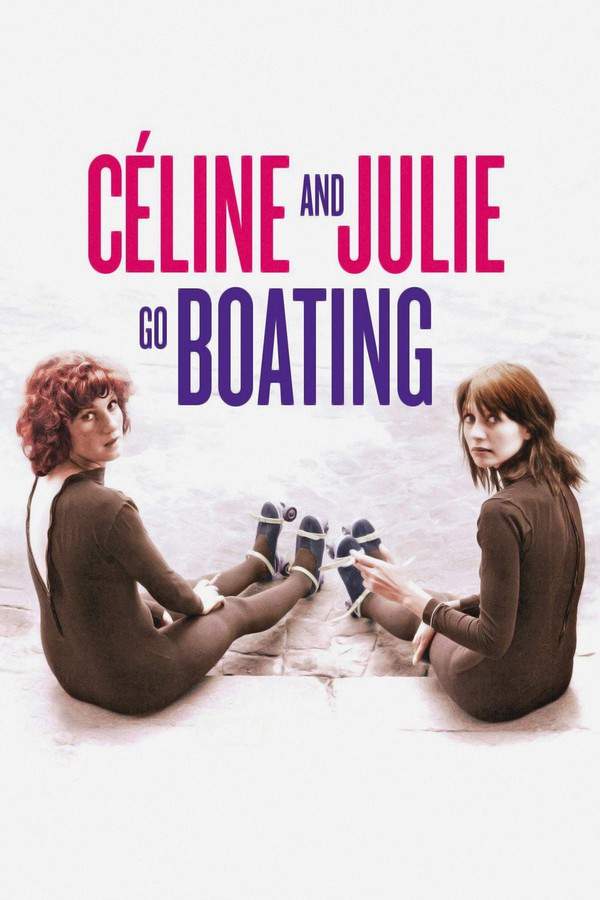
Céline and Julie Go Boating (1974) movie poster

Timeline

Céline and Julie Go Boating (1974) Timeline Explained – Every Event in Order

Release, runtime and language
1974 · 193 mins · French
Directed by
Jacques Rivette
Starring
Barbet Schroeder, Bulle Ogier, Dominique Labourier, Juliet Berto, Jean Eustache, Michael Graham

Julie, a daydreaming librarian, meets Céline, an enigmatic magician, and together they become the heroines of a time‑warping adventure that spirals through a haunted house, psychotropic candy, and a murder‑mystery melodrama. As reality bends around them, they face surreal riddles, uncanny visions and a lingering homicide, forging a quirky partnership that blurs fantasy and danger.

On this page (6)
  1. 1 Where to watch
  2. 2 Events in order (14)
  3. 3 Timeline questions answered
  4. 4 Movie threads
  5. 5 Movies like Céline and Julie Go Boating
  6. 6 Every angle

Where to watch

Where to Watch Céline and Julie Go Boating (1974)

Where can you watch Céline and Julie Go Boating? Stream, rent or buy it in the US: current JustWatch availability with up-to-date prices.

Streaming availability powered by JustWatch

14 events in order · contains spoilers

Céline and Julie Go Boating Timeline: Events in Chronological Order

Every key event of Céline and Julie Go Boating (1974) in order, scene by scene, with when and where it takes place. Use it to untangle flashbacks, time jumps and parallel storylines, to refresh your memory before the sequel or to find the exact scene you are thinking of.

  1. Park bench inciting magic

    Julie is sitting on a park bench reading a book of magic spells when Céline walks by, dropping various possessions along the way. Julie picks up the items and, curious and drawn in, begins to follow Céline as she weaves through the streets of Paris. The moment feels playful yet dreamlike, suggesting the city hides a different story beneath its ordinary bustle.

    When
    present-day afternoon
    Where
    Paris park bench
  2. Chase through Montmartre

    Julie pursues Céline through Paris, sometimes sprinting up the stairs of Rue Foyatier in Montmartre to keep up with Céline's playful, almost magical pace. The pursuit carries them through familiar districts as if the city itself is a stage for a living story. The line between reality and fantasy grows blurrier with every turn.

    When
    present-day afternoon
    Where
    Montmartre, Rue Foyatier
  3. A city of shifting realities

    Their adventures through the Parisian streets feel dreamlike, and at times it seems they might part forever. Yet a bond keeps drawing them back together as they explore with a sense that something bigger is guiding them. The city becomes a labyrinth where each corner hints at a hidden narrative.

    When
    present-day
    Where
    Paris streets
  4. Visiting the House address

    Both Céline and Julie independently visit the mansion at 7 bis rue du Nadir-aux-Pommes, a quiet, walled-off Parisian residence with secrets buried behind its doors. The building appears empty in the present day, yet it exudes a pull that draws them toward a larger mystery. These visits mark the start of their entanglement with the house's fate.

    When
    present-day
    Where
    7 bis rue du Nadir-aux-Pommes, Paris
  5. The nanny and the family

    Inside the house, Céline or Julie discovers she works as a nanny for a family that includes two jealous sisters, a widower, and a sickly child. The atmosphere hints at rivalry and longing that threaten the vulnerable child. The mansion becomes a stage for hidden motives and danger.

    When
    present-day
    Where
    The mansion interior
  6. Pattern of entry and memory loss

    A repetitive pattern unfolds: whichever woman enters the house disappears for a time and is suddenly ejected back to present-day Paris by unseen hands. They return exhausted and with memories erased of what happened inside. The mystery deepens as memories flicker like a fading dream.

    When
    the day
    Where
    Inside the house
  7. The candy as a key

    On each return, a candy is mysteriously lodged in their mouths, and they realize the candy is a key to the other place and time. They meticulously save the candy, recognizing it as a tangible link between realities. The sweet becomes a tool that enables crossing between the two worlds.

    When
    the day
    Where
    In their mouths; inside/outside the house
  8. The house mystery deepens

    They uncover the central mystery: amid jealous scheming over the widower's attentions, a young child in the house is murdered. The pattern of narration repeats like a stage play, with them memorizing exact phrases and joking about the melodrama. The more they eat the candy, the more of the day's events they remember.

    When
    the same day
    Where
    The mansion interior
  9. Agency within the narrative

    Realizing they can enter the narrative itself, they begin to treat the house's events as something they can edit. They insert new dialogues and actions, reshaping the plot as it unfolds. The act of authorship shifts them from spectators to active participants.

    When
    the day
    Where
    Inside the house
  10. Changing the ending

    They seize control of the story and rewrite the ending to prevent the young girl's murder. Their edits alter the sequence of events and demonstrate that fate can be rewritten from within the tale. The atmosphere shifts from tragedy toward possibility as they write themselves into the finale.

    When
    the day
    Where
    Inside the house
  11. Rescue and cross-reality reunion

    The rescue of the young girl, Madlyn, is completed, and the two realities fully conjoin when Madlyn joins Céline and Julie back in Julie's apartment in 1970s Paris. The trio's bond and the rewritten fate anchor them in a shared present. They settle into this new reality as if waking from a long dream.

    When
    1970s Paris
    Where
    The house interior; Julie's apartment
  12. Rowing into a merged world

    Céline, Julie, and Madlyn take a rowboat on a placid river, gliding along as though the two worlds are one. They watch another boat pass by, carrying the house's original protagonists, but the figures are frozen like antique props. The river becomes a quiet witness to their new blended reality.

    When
    after the merge
    Where
    A placid river
  13. The two worlds edge toward convergence

    On the water, the other boat's occupants seem trapped in time, hinting that the boundary between realities is thinning. The protagonists from the house drift as inert props while the present-day trio observes them with a knowing calm. The sense of an ongoing loop lingers.

    When
    after the merge
    Where
    On the river
  14. Cycle restarts on a park bench

    Céline sits on a park bench again while Julie races past and drops her magic book in a White Rabbit moment. Céline calls out, picks up the book, and rushes after Julie, signaling the start of a new chase. The scene closes the arc, hinting that the story will continue to loop.

    When
    present-day
    Where
    Paris park

Last updated: October 09, 2025 at 10:42

Was this helpful?

Timeline questions answered

Céline and Julie Go Boating Timeline Explained: Your Questions Answered

When does it happen, and why in that order? The questions people ask about the chronology of Céline and Julie Go Boating (1974): time jumps, flashbacks, cause and effect between scenes and the correct order of events, each answered with spoilers.

Q1

Why does Céline drop her possessions like the White Rabbit while walking through Paris?

Céline's actions are a playful reference to Lewis Carroll's Alice's Adventures in Wonderland, where the White Rabbit frantically drops items while rushing late. This whimsical gesture signals to Julie, and signals to viewers, that Céline is leading her into a magical, storybook adventure rather than a ordinary pursuit. The moment establishes the film's dreamlike tone and hints that the boundary between reality and fantasy will blur.

Foreshadowing: The White Rabbit motif recurs at the film's end when Julie drops her magic book and Céline chases her, completing the Carroll-inspired cycle.

  • celine
  • white rabbit
  • lewis carroll
  • reference
  • chase
  • montmartre
Q2

How does the candy work as a gateway between the two realities?

After being expelled from the house, both women discover a candy lodged in their mouths during their taxi ride home. This candy serves as a tangible link to the alternate reality within the mansion. When they suck on the candy, they are transported back into the house's timeline, reliving that day's events. The sweet functions like Proust's madeleine, a sensory key that unlocks access to another time and place.

Foreshadowing: The candy first appears mysteriously after their initial ejection from the house, foreshadowing its role as a repeated mechanism for re-entry.

  • candy
  • portal
  • mansion
  • time travel
  • proust
  • memory
Q3

Why do Julie and Céline lose their memories after leaving the mansion?

Each time they are expelled from the house, they return to present-day Paris exhausted and with gaps in their memory of what occurred inside. This memory loss creates a mystery and prevents them from fully understanding the house's narrative until they accumulate more candy and replay the events multiple times. The progressive memory restoration mimics how the characters in the house's melodrama repeat their exact phrases, suggesting the house operates on a loop where participants forget previous iterations.

Foreshadowing: The pattern of memory loss begins immediately after their first entry, suggesting the house has a mechanism to keep its participants confused and dependent on the candy to regain context.

  • memory loss
  • forgetting
  • mansion
  • expulsion
  • time loop
Q4

What is the murder mystery that Julie and Céline uncover inside the house?

Within the mansion's alternate reality, a family drama unfolds featuring two jealous sisters competing for the attention of a widower, with a sickly child caught in the middle. The central tragedy is that the young girl, Madlyn, is murdered, likely by one of the sisters driven by jealousy. The narrative plays out like a staged melodrama with exact dialogue that repeats, which Julie and Céline memorize and eventually learn to manipulate.

Foreshadowing: Céline recognizes the house as a place where she once worked as a nanny, hinting that the family and their tragic story are connected to her past.

  • murder
  • house
  • madlyn
  • sisters
  • widower
  • jealousy
  • melodrama
Q5

How do Julie and Céline gain the ability to change what happens in the house?

As they replay the same day repeatedly, Julie and Céline begin to remember more details with each candy consumption. This accumulating knowledge grants them agency within the narrative. They realize they are not trapped as passive observers, they can insert new dialogue, alter actions, and reshape the plot as it unfolds. This turning point transforms them from spectators into active participants, effectively becoming co-authors of the story.

Foreshadowing: Their early repetitions involve simply memorizing exact phrases and joking about the melodrama, establishing that they are learning the 'script' before attempting to rewrite it.

  • agency
  • authorship
  • rewriting
  • intervention
  • control
  • participation
Q6

What happens when Julie and Céline rewrite the ending to rescue the girl?

After gaining full knowledge of the house's tragic narrative, Julie and Céline seize control of the story's conclusion. They rewrite the ending by altering dialogue and inserting different actions, ultimately preventing the young girl's murder. This act of authorship shifts the atmosphere from tragedy to hope, demonstrating that fate can be rewritten from within the tale. The successful rescue allows the two realities to fully merge when Madlyn joins them in 1970s Paris.

Foreshadowing: Their interventions escalate gradually, starting with small dialogue changes before they attempt to fundamentally alter the outcome.

  • madlyn
  • rescue
  • ending
  • rewrite
  • save
  • altered fate
Q7

What does the final scene on the river represent?

After Madlyn joins them in Julie's apartment, the three women take a rowboat onto a placid river where they watch another boat pass by. This other boat carries the house's original protagonists, the family from the melodrama, but they appear as frozen, antique props rather than living people. The scene symbolizes that the two realities have merged into one, where the characters from the house now exist alongside them in a blended world. The river becomes a liminal space where past and present coexist.

Foreshadowing: Throughout the film, water imagery and the taxi rides between worlds establish rivers and waterways as transitional spaces between realities.

  • river
  • boat
  • convergence
  • merged reality
  • props
  • finale
Q8

Why does the film end with the same park bench scene from the beginning?

The film concludes with Céline sitting on a park bench while Julie rushes past and drops her magic book in another White Rabbit gesture. Céline calls out, picks up the book, and chases after Julie, mirroring the opening scene. This cyclical return suggests that the boundary between story and life remains permanently porous. The loop implies that Julie and Céline will continue their adventures, stepping into new chapters whenever the magical opportunity arises, maintaining the film's theme that storytelling and reality are inseparable.

Foreshadowing: The opening scene already contains the seeds of repetition with the chase and reconciliation, establishing the cycle that the ending confirms.

  • cycle
  • ending
  • loop
  • repetition
  • continue
  • park bench
Q9

Why does Céline recognize the mansion as a place where she worked as a nanny?

When Céline first visits 7 bis rue du Nadir-aux-Pommes, she recognizes it as the location where she once worked as a nanny for the family inside the house. This connection suggests she has a deeper past or repeating role within the house's narrative. Whether this is a literal past job or another layer of the story's reality-blurring mechanics remains ambiguous. The recognition establishes her initial familiarity with the house's dramatic stakes and gives her motivation to investigate its mysteries.

Foreshadowing: Céline's recognition implies she has experienced this loop before, though the full truth of her connection remains mysterious.

  • celine
  • nanny
  • house
  • family
  • past
  • connection
Q10

What forces Julie and Céline out of the house and back to Paris?

Whenever either woman enters the mansion, they eventually disappear for a period and are then forcibly expelled back to present-day Paris by unseen hands. This expulsion happens within the same day, they return with gaps in their memory and find themselves in a taxi with a candy in their mouth. The force ejecting them remains mysterious and unnamed, but it maintains the house's controlled access. The expulsion ensures they cannot stay indefinitely in the alternate timeline, forcing them to use the candy as a return ticket.

Foreshadowing: The unseen hands suggest a sentient or systematic force governing the house's boundaries, hinting at authorship beyond Julie and Céline.

  • expulsion
  • house
  • hands
  • return
  • mechanism
  • force

Movie threads

More Movies Like Céline and Julie Go Boating, by Mood & Story

Curated lists built around what makes Céline and Julie Go Boating tick: the same mood, the same kind of story or the same emotional payoff. Each list explains why these movies belong together.

Movies with playful metanarratives like Céline and Julie Go Boating

Films where characters playfully interact with and rewrite their own narratives. If you enjoyed the imaginative story-within-a-story structure of Céline and Julie Go Boating, you'll like these films. They feature characters who playfully engage with fictional worlds, rewrite melodramatic plots, and explore the boundaries of narrative in a similarly whimsical and inventive way.

  • playful
  • metafictional
  • inventive
  • imaginative
  • quirky
  • curious
  • Tone: whimsical, playful, intellectual
  • Pacing: variable, contemplative bursts
Why these movies?

The story pattern: Stories in this thread often feature a nested or layered structure, where a primary reality contains a secondary, often more dramatic or stylized, fictional world. The protagonists discover a way to enter and manipulate this inner story, treating its events as a game or puzzle to be solved, often with humorous and surreal consequences that challenge conventional storytelling.

Why they belong together: These films are grouped by their shared fascination with narrative form and their lighthearted, intellectual approach to deconstructing stories. They share a tone of curious play rather than heavy existential dread, using metafiction as a tool for joy and discovery, centered on creative collaboration.
Surreal urban adventures with magical friendships like Céline and Julie Go Boating

Whimsical journeys where an unlikely friendship unlocks a hidden magical world. For viewers who loved the quirky partnership and magical-reality-unlocking vibe of Céline and Julie Go Boating, this collection features similar films. Discover stories about imaginative female duos whose bond opens doors to surreal experiences, hidden magic in the city, and delightfully unpredictable adventures.

  • surreal
  • whimsical
  • quirky
  • playful
  • enchanting
  • dreamlike
  • Tone: whimsical, curious, enchanting
  • Pacing: variable, spontaneous
Why these movies?

The story pattern: The narrative pattern follows two contrasting but complementary characters who meet by chance. Their dynamic catalyzes the discovery of a magical, surreal layer to their urban environment. The plot is driven by their collaborative exploration of this strange new world, which often involves solving a puzzle or unraveling a mystery through a series of playful, episodic encounters.

Why they belong together: These movies share a specific mood blend: the infectious energy of a new friendship, the thrill of discovering magic in the mundane, and a tone that is consistently whimsical and enchanting. The pacing often feels spontaneous and variable, mirroring the unpredictable nature of their adventure, while the emotional core remains light and joyful.

If you liked this

Movies Like Céline and Julie Go Boating

Similar movies to Céline and Julie Go Boating: the same genre, themes or kind of story. Each one comes with its own plot summary, timeline and ending explained.

Browse all movie summaries

Every angle

Céline and Julie Go Boating (1974) Explained: Plot, Timeline & Characters

Everything about Céline and Julie Go Boating in one place: what happens in the plot summary, the timeline in chronological order, the characters and meaning and a spoiler-free summary. What's After the Movie adds the cast, box office and post-credit scenes.

Coming soon on iOS and Android

The Plot Explained Movie Summary App

Plot summaries, endings explained and timelines on your phone. Catch up on any movie in minutes, save your favorites and never miss a twist again.

Be the first to know when we launch. Your email stays private, always.

Learn more about the app