Plot Explained Spoilers guaranteed!
Plot Explained

Browse by genre

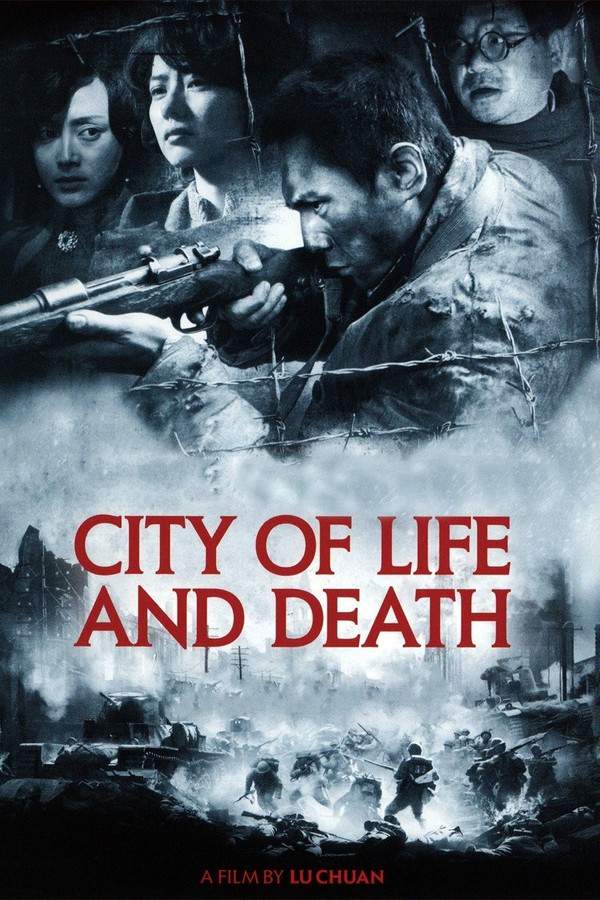
City of Life and Death (2009) movie poster

Timeline

City of Life and Death (2009) Timeline Explained – Every Event in Order

Release, runtime and language
2009 · 132 mins · Chinese
Loading streaming availability…
Directed by
Lu Chuan
Starring
Junichi Kajioka, Sam Voutas, Ryu Kohata, Kai Wang, Liu Ye, Hideo Nakaizumi
Budget
$12M

Set in 1937 during the Second Sino‑Japanese War, it follows the Imperial Japanese Army’s capture of Nanjing, then the capital of the Republic of China. The story depicts the six‑week Nanking Massacre—also called the Rape of Nanking—when tens of thousands of Chinese soldiers and civilians were brutally killed, revealing the horror of the occupation.

On this page (6)
  1. 1 Where to watch
  2. 2 Events in order (15)
  3. 3 Timeline questions answered
  4. 4 Movie threads
  5. 5 Movies like City of Life and Death
  6. 6 Every angle
Loading streaming availability…

15 events in order · contains spoilers

City of Life and Death Timeline: Events in Chronological Order

Every key event of City of Life and Death (2009) in order, scene by scene, with when and where it takes place. Use it to untangle flashbacks, time jumps and parallel storylines, to refresh your memory before the sequel or to find the exact scene you are thinking of.

  1. Japanese Army Takes Over Nanjing

    In 1937, the Imperial Japanese Army launches a devastating attack on Nanjing, the capital of the Republic of China. This event marks the beginning of a horrific chapter known as the Nanjing Massacre, characterized by widespread atrocities against civilians and prisoners of war.

    When
    1937
    Where
    Nanjing
  2. National Revolutionary Army Retreats

    As chaos descends upon the city, many commanders from the National Revolutionary Army abandon Nanjing in a bid to save themselves. Among those left behind are Lieutenant Lu Jianxiong and his comrade Shunzi, who resolve to stay and fight for their city.

    Where
    Nanjing
  3. Ambush and Surrender

    Lieutenant Lu Jianxiong and his soldiers engage in a confrontation with Sergeant Kadokawa Masao and his squad. Despite their valiant efforts, they are overrun and ultimately surrender to the encroaching Japanese forces, marking a tragic turning point for the defenders.

    Where
    Nanjing
  4. Escape to the Safety Zone

    Amidst the violence, Shunzi and young Xiaodouzi successfully evade the gunfire and take refuge in the Nanjing Safety Zone. This area, established by John Rabe and other Westerners, becomes a fleeting sanctuary for many hoping to escape the horrors surrounding them.

    Where
    Nanjing Safety Zone
  5. Harsh Realities in the Safety Zone

    Inside the Safety Zone, thousands of vulnerable individuals gather, including women and children seeking protection. However, the sanctuary is frequently violated by Japanese soldiers, leading to desperate measures such as women disguising themselves as men to avoid assault.

    Where
    Nanjing Safety Zone
  6. Kadokawa's Internal Conflict

    As violence surrounds him, Sergeant Kadokawa grapples with his feelings for Yuriko, a Japanese prostitute. Torn between his duties and his emotions, he tries to maintain a semblance of normalcy by bringing her gifts, confounded by the war's brutalities.

    Where
    Nanjing
  7. Tragedy Strikes Tang's Family

    Tang Tianxiang, a leader in the Safety Zone, faces unimaginable loss as Japanese soldiers inflict violence on his family. He cannot protect his daughter from being thrown out of a window, nor can he shield his sister-in-law from abuse when women are ruthlessly taken as comfort women.

    Where
    Nanjing Safety Zone
  8. Rabe's Departure and Tang's Fate

    Following diplomatic pressures, John Rabe is ordered back to Germany, leading to Tang's heart-wrenching decision to stay behind. He sacrifices his chance for safety, but ultimately meets a grim fate when he is executed by firing squad shortly after Rabe's departure.

    Where
    Nanjing
  9. Revocation of the Safety Zone

    The Japanese military revokes the Safety Zone, escalating their hunt for Chinese soldiers. Under false promises of safety, many men are lured to their demise, and Shunzi, thought to be safe, is captured again despite initially being declared a non-combatant.

    Where
    Nanjing
  10. Jiang's Brave Rescue

    In a desperate act of courage, Jiang Shuyun devises a plan to save a man from execution by disguising herself as his wife. After successfully rescuing him, she returns for Shunzi, only to find herself exposed and taken captive once more.

    Where
    Nanjing Safety Zone
  11. Kadokawa's Despair

    As the situation worsens, Kadokawa witnesses the brutal fate of Xiaojiang and other comfort women. Overwhelmed by despair and witnessing unspeakable atrocities, he grapples with guilt and the effects of war on humanity.

    Where
    Nanjing
  12. Jiang's Heart-Wrenching Plea

    Understanding her dire circumstances, Jiang asks Kadokawa to end her suffering. In a heartbreaking act, he complies, leading to profound shock and sorrow among those witness to this tragic decision.

    Where
    Nanjing
  13. Kadokawa's Final Goodbye

    After a search for Yuriko, Kadokawa discovers her tragic fate and is haunted by memories of their time together. In his grief, he reflects on the losses around him while yearning for a dignified farewell for her.

    Where
    Nanjing
  14. The Execution and Rebirth of Hope

    As Japanese soldiers celebrate their victory, Kadokawa faces a pivotal moment. Choosing to free Shunzi and Xiaodouzi instead of marching them to execution, he signifies a glimmer of hope amidst despair, allowing them a chance at life.

    Where
    Nanjing
  15. Kadokawa's Tragic End

    Burdened by guilt from his choices and the horrors he has witnessed, Kadokawa takes his own life. This devastating act sheds light on the psychological toll of war, leaving an impactful closure to his arduous journey.

    Where
    Nanjing

Last updated: October 02, 2026 at 03:20

Was this helpful?

Timeline questions answered

City of Life and Death Timeline Explained: Your Questions Answered

When does it happen, and why in that order? The questions people ask about the chronology of City of Life and Death (2009): time jumps, flashbacks, cause and effect between scenes and the correct order of events, each answered with spoilers.

Q1

Why does Kadokawa free Shunzi and Xiaodouzi instead of executing them?

By the time Kadokawa is ordered to march Shunzi and Xiaodouzi to their deaths, he has been psychologically broken by the horrors he has witnessed, including the death of Yuriko and the brutal fate of the comfort women. His act of mercy is a final rebellion against the military machine that has consumed him, embodying the haunting line he delivers: "Life is more difficult than death." It signals that letting them live is the only act of conscience he has left.

Foreshadowing: Earlier scenes show Kadokawa quietly refusing to expose Jiang's deception when he recognizes her ruse, hinting at the buried humanity he would later act upon.

  • kadokawa
  • shunzi
  • xiaodouzi
  • execution
  • mercy
  • life is more difficult than death
Q2

Why does Jiang Shuyun ask Kadokawa to end her life?

After Jiang is exposed as a fraud and recaptured along with Shunzi and Xiaodouzi, she understands that execution is inevitable and that prolonged suffering awaits her. She asks Kadokawa, the one soldier who showed her quiet recognition, to deliver a quick death rather than let her endure torture or sexual violence at the hands of others. Her request transforms Kadokawa from passive observer into active participant in her fate.

Foreshadowing: Kadokawa's earlier silence when he recognized Jiang's disguise established him as the only Japanese soldier who had shown her any mercy.

  • jiang shuyun
  • kadokawa
  • execution
  • plea
  • mercy killing
Q3

Why does Tang Tianxiang give up his chance to leave with John Rabe?

Tang was originally granted permission to board the ship leaving with Rabe, but at the last moment he swapped places with a Chinese soldier impersonating his assistant so that soldier could escape. He chose to remain in Nanjing to search for May, his sister-in-law, who had been taken as a comfort woman. His decision reflects both personal loyalty and a refusal to abandon his family to the occupiers, even at the cost of his own life.

Foreshadowing: Tang had already lost his daughter to a soldier's violence and his sister-in-law to abduction, foreshadowing the obsessive personal stakes that would keep him in the city.

  • tang tianxiang
  • john rabe
  • departure
  • sister-in-law
  • may
  • sacrifice
Q4

How is the Nanjing Safety Zone repeatedly violated if it was meant to protect civilians?

Although the Nanjing Safety Zone was established by John Rabe and other Westerners under diplomatic agreement, the Japanese military never fully respected its boundaries. Soldiers entered the zone to seize women as comfort women, identify and execute former soldiers, and commit acts of violence against refugees. The zone's protection depended entirely on the presence and moral authority of Westerners, and once Rabe was forced to leave, that fragile shield collapsed completely.

Foreshadowing: The frequent breaches throughout the film build toward the formal revocation of the Safety Zone later in the story.

  • safety zone
  • john rabe
  • japanese soldiers
  • violation
  • civilians
  • nanjing massacre
Q5

What does the line "Life is more difficult than death" mean in the film?

The line is spoken by Kadokawa as he releases Shunzi and Xiaodouzi from execution. On the surface it acknowledges the cruelty of the world he is leaving them in, suggesting that living on with the trauma of Nanjing may be a heavier burden than dying. On a deeper level, it reflects Kadokawa's own torment: he has concluded that he cannot bear to live with his guilt, and he chooses death while granting them the chance he denies himself.

Foreshadowing: Kadokawa's earlier alienation from his fellow soldiers and his grief over Yuriko foreshadowed his belief that survival carried its own unbearable weight.

  • life is more difficult than death
  • kadokawa
  • meaning
  • quote
  • interpretation
Q6

Why does Kadokawa take his own life at the end of the film?

Kadokawa's suicide is the culmination of accumulated guilt, grief, and moral collapse. He was forced to witness the brutalization of the comfort women, learned that Yuriko had died after fleeing Nanjing, killed Jiang at her own request, and finally defied orders by freeing Shunzi and Xiaodouzi. With no path back to the military, no beloved left to return to, and no way to live with what he had seen and done, death becomes his only escape.

Foreshadowing: Kadokawa's increasing emotional distance from his comrades and his constant brooding about Yuriko throughout the occupation foreshadowed his eventual breakdown.

  • kadokawa
  • suicide
  • guilt
  • yuriko
  • psychological toll
Q7

Why does Xiaojiang refuse to cut her hair when other women disguise themselves?

Xiaojiang is a prostitute whose livelihood depends on her appearance, and her long hair represents both her profession and her identity. When other women cut their hair to pass as men and avoid sexual assault, she refuses because cutting it would mean surrendering the only dignity and economic means she has left. Her defiance, while ultimately fatal, becomes an act of stubborn self-preservation in a system designed to strip her of both.

Foreshadowing: Her refusal to conceal herself foreshadows her later decision to volunteer as a comfort woman rather than hide.

  • xiaojiang
  • hair
  • disguise
  • prostitute
  • safety zone
  • comfort women
Q8

Why do women volunteer to become comfort women when 100 are demanded?

When Second Lieutenant Ida Osamu orders that 100 women be handed over as comfort women, Rabe and Jiang are forced to relay the demand to the refugees. Some women, including Xiaojiang, step forward believing that their sacrifice will spare the remaining women and children from being seized at random. It is a desperate act of calculated self-sacrifice, not consent, made under the assumption that compliance might limit the scale of harm.

Foreshadowing: The previous intrusions into the Safety Zone had already proven that refusal would not stop the soldiers, only determine who was taken.

  • comfort women
  • ida osamu
  • volunteers
  • safety zone
  • sacrifice
  • xiaojiang
Q9

How does Shunzi survive being captured multiple times during the massacre?

Shunzi survives his first capture by escaping the execution site alongside Xiaodouzi and finding refuge in the Safety Zone, where he is initially declared a non-combatant. When the Safety Zone is revoked, he is recognized as a former soldier and seized again, but Jiang's attempt to claim him as her husband briefly buys him time. His ultimate survival depends entirely on Kadokawa's final act of mercy, without which he and Xiaodouzi would have been executed.

Foreshadowing: Shunzi's first narrow escape from the mass execution established a pattern of improbable survival that the ending would finally test.

  • shunzi
  • xiaodouzi
  • capture
  • survival
  • safety zone
  • execution
Q10

Why does Kadokawa stay silent about Jiang's deception while another soldier exposes her?

Kadokawa recognized Jiang's ruse of claiming Shunzi as her husband but chose not to report it, reflecting his buried conscience and his emotional reluctance to participate in further cruelty. A different Japanese soldier, however, saw through the same deception and reported it because he had no such moral hesitation. The contrast highlights how individual soldiers, even under the same orders, made very different choices about mercy and obedience.

Foreshadowing: Kadokawa's earlier quiet refusal to act against Jiang foreshadowed his later, more decisive act of mercy toward Shunzi and Xiaodouzi.

  • kadokawa
  • jiang shuyun
  • deception
  • exposure
  • mercy
  • soldier
Q11

Why is John Rabe ordered back to Germany?

Rabe's repeated diplomatic interventions to protect Chinese civilians and his public documentation of Japanese atrocities created friction with the Japanese military authorities. Under diplomatic pressure, the German authorities recalled him to Germany, removing the most powerful Western advocate for the Safety Zone. His departure effectively paved the way for the Japanese revocation of the Safety Zone and the subsequent escalation of killings.

Foreshadowing: Rabe's frequent confrontations with Japanese officers over Safety Zone violations foreshadowed the diplomatic tensions that would lead to his recall.

  • john rabe
  • germany
  • recall
  • diplomatic pressure
  • safety zone
Q12

What happens to Kadokawa's relationship with Yuriko?

Kadokawa developed genuine feelings for Yuriko, a Japanese prostitute in Nanjing, and tried to maintain a sense of normalcy by bringing her sweets and gifts and promising her a life together after the war. Their relationship became his emotional anchor amid the violence, but Yuriko eventually fled the city and died before the war ended. Her loss deepened his psychological collapse and contributed to his final descent into guilt and suicide.

Foreshadowing: Yuriko's marginal position as a Japanese woman in an occupied city foreshadowed her vulnerability once the military conquest was complete.

  • kadokawa
  • yuriko
  • relationship
  • japanese prostitute
  • grief

Movie threads

More Movies Like City of Life and Death, by Mood & Story

Curated lists built around what makes City of Life and Death tick: the same mood, the same kind of story or the same emotional payoff. Each list explains why these movies belong together.

Unflinching war atrocity dramas like City of Life and Death

Real history stripped bare, where the screen offers no refuge from man's darkest chapters. Movies like City of Life and Death that plunge viewers into real historical atrocities without softening the blow. These are heavy, dark, and devastating war dramas built around mass violence, occupation, and the human cost of genocide. If you liked City of Life and Death's refusal to flinch, you will find similar historical war films, Holocaust dramas, and occupation stories that carry the same emotional weight.

  • unflinching
  • devastating
  • harrowing
  • grim
  • oppressive
  • sobering
  • Tone: dark, harrowing, devastating
  • Pacing: variable, methodical to chaotic
Why these movies?

The story pattern: These stories typically open on the eve or onset of a historical catastrophe, then drag the audience through escalating brutality as occupying forces or perpetrators tighten their grip. Survivors are stripped of dignity, choices, and often life itself. The narrative often intercuts between perpetrators, victims, and outside witnesses, building a mosaic of complicity, helplessness, and rare moral courage. Endings tend to be bleak or mixed, with survival framed as ambiguous mercy rather than victory.

Why they belong together: They share an unflinching visual and emotional commitment to depicting real historical horror at its most graphic and morally crushing. Pacing varies from methodical executions to chaotic combat, but the intensity stays high throughout. Themes of mass murder, sexual violence, child endangerment, and moral collapse recur, paired with a somber, restrained tone that refuses easy catharsis or heroism.
Moral crossfire and fragile humanity like City of Life and Death

Civilians, soldiers, and outsiders caught between orders and conscience in shattered cities. Movies like City of Life and Death that explore the moral crossfire of military occupation through multiple character arcs. These complex war dramas follow perpetrators, victims, and reluctant witnesses as they struggle with duty, mercy, and survival inside a besieged city. If you liked City of Life and Death's layered portrayal of safety zones, broken soldiers, and civilians caught in the middle, you will find similar occupation stories here.

  • multi-perspective
  • moral conflict
  • occupation
  • safety zone
  • conscience
  • psychological
  • Tone: dark, somber, morally complex
  • Pacing: variable, character-driven with bursts of intensity
Why these movies?

The story pattern: These films braid together several character arcs across opposing sides of a conflict, often centering on a sanctuary, safety zone, or hideout where ordinary people try to enforce a fragile normalcy. A protagonist on the occupying side typically undergoes psychological deterioration or a crisis of conscience, while civilian characters endure escalating horror and make impossible tradeoffs. The pacing alternates between intimate character moments and sudden bursts of violence, building toward an ending that mixes survival, loss, and uneasy historical legacy.

Why they belong together: They share a complex, multi-perspective structure that gives weight to perpetrators, victims, and bystanders rather than simplifying the war into good versus evil. Pacing is variable, balancing quiet scenes of inner conflict and safety zone logistics with sudden eruptions of violence. The mood is somber and morally murky, and the emotional journey stays heavy even when survival is granted.

If you liked this

Movies Like City of Life and Death

Similar movies to City of Life and Death: the same genre, themes or kind of story. Each one comes with its own plot summary, timeline and ending explained.

Browse all movie summaries

Every angle

City of Life and Death (2009) Explained: Plot, Timeline & Characters

Everything about City of Life and Death in one place: what happens in the plot summary, the timeline in chronological order, the characters and meaning and a spoiler-free summary. What's After the Movie adds the cast, box office and post-credit scenes.

Coming soon on iOS and Android

The Plot Explained Movie Summary App

Plot summaries, endings explained and timelines on your phone. Catch up on any movie in minutes, save your favorites and never miss a twist again.

Be the first to know when we launch. Your email stays private, always.

Learn more about the app