






Plot Explained Spoilers guaranteed!
Plot Explained

Browse by genre

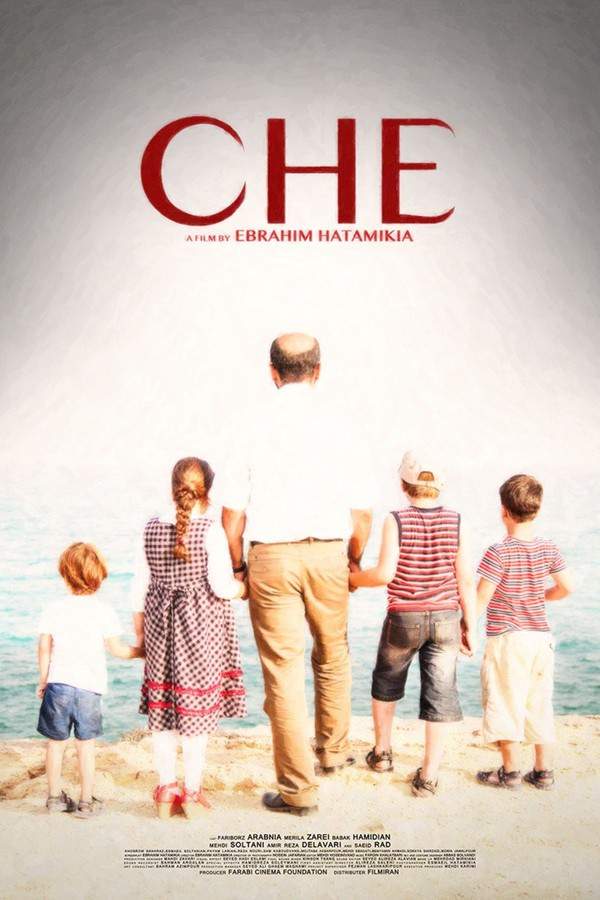
Che (2008) movie poster

Timeline

Che (2008) Timeline Explained – Every Event in Order

Release, runtime and language
2008 · 135 min · Persian
JustWatch #23,493 2
Directed by
Steven Soderbergh

In 1956, Fidel Castro led a rebellion against Cuban dictator Fulgencio Batista, and Argentine doctor Ernesto "Che" Guevara joined his cause. As the conflict intensified, Che’s deep commitment to social justice fueled significant controversy. Following the revolution's success, he ventured into the Bolivian jungle, determined to inspire revolutionary movements throughout Latin America and solidify his place in history.

On this page (6)
  1. 1 Where to watch
  2. 2 Events in order (10)
  3. 3 Timeline questions answered
  4. 4 Movie threads
  5. 5 Movies like Che
  6. 6 Every angle

Where to watch

Where to Watch Che (2008)

Where can you watch Che? Stream, rent or buy it in the US, including on AMC+, Philo and Sundance Now: current JustWatch availability with up-to-date prices.

Streaming availability powered by JustWatch

10 events in order · contains spoilers

Che Timeline: Events in Chronological Order

Every key event of Che (2008) in order, scene by scene, with when and where it takes place. Use it to untangle flashbacks, time jumps and parallel storylines, to refresh your memory before the sequel or to find the exact scene you are thinking of.

  1. Guevara's interview in Havana

    In December 1964, Ernesto 'Che' Guevara is interviewed by Lisa Howard in Havana. She questions whether reform across Latin America might dilute the effectiveness of the Cuban Revolution's message, prompting Guevara to defend the revolution's principles and resolve.

    When
    December 1964
    Where
    Havana, Cuba
  2. Guevara's first encounter with Fidel Castro

    In 1955, Guevara travels to Mexico City where he meets Fidel Castro at a gathering. He listens to Castro's revolutionary plans and decides to join the July 26th Movement, marking his commitment to overthrow the Cuban government.

    When
    1955
    Where
    Mexico City
  3. Guevara's UN speech

    Guevara addresses the United Nations General Assembly in 1964, where he passionately speaks against American imperialism. He defends Cuba's executions, framing the revolution as a decisive, battle-to-the-death struggle.

    When
    1964
    Where
    New York City, USA
  4. Guevara's health struggles and early revolutionary actions

    In March 1957, Guevara suffers from asthma attacks while coordinating with Castro's forces. Despite health issues, he participates in a key attack on an army barracks in Sierra Maestra in May, initiating the revolutionary campaign in Cuba.

    When
    March-May 1957
    Where
    Sierra Maestra, Cuba
  5. Attack on the Sierra Maestra

    On May 28, 1957, Guevara and the guerrillas attack an army barracks in Sierra Maestra, beginning their military campaign. The attack boosts support among Cuban peasants and strengthens their fight against the corrupt regime.

    When
    May 28, 1957
    Where
    Sierra Maestra, Cuba
  6. Growing support and territorial gains

    Following initial victories, Guevara's forces win over the rural population of Cuba. They gradually lose control of some areas of the countryside, but forge alliances with other revolutionary groups to increase their reach.

    When
    1957-1958
    Where
    Cuba
  7. Approach to Las Villas and Battle of Santa Clara

    On October 15, 1958, the guerrillas reach Las Villas. The Battle of Santa Clara involves intense street fighting where Guevara displays his tactical brilliance. They succeed in derailing a train carrying Cuban soldiers, leading to a decisive victory.

    When
    October 15, 1958
    Where
    Las Villas, Cuba
  8. Victory and revolution's end

    With their victory at Santa Clara, the rebels succeed in overthrowing Batista’s regime. Guevara demonstrates bravery during the final battles, taking risks under fire, and the Fidelist forces take control of Havana.

    When
    Late 1958
    Where
    Havana, Cuba
  9. Fleeing dictator and revolution's victory

    After learning that Batista has fled the country, Guevara and his forces declare victory. The revolution is complete, and on New Year’s Day 1959, Guevara travels to Havana, announcing that they have won the war and that 'the revolution starts now.'

    When
    January 1, 1959
    Where
    Havana, Cuba
  10. Revolution begins

    Guevara’s arrival in Havana symbolizes the dawn of the new regime. With Batista gone, the revolutionary government begins the process of establishing socialism and implementing reforms across Cuba.

    When
    January 1960s
    Where
    Havana, Cuba

Last updated: July 16, 2025 at 07:58

Was this helpful?

Timeline questions answered

Che Timeline Explained: Your Questions Answered

When does it happen, and why in that order? The questions people ask about the chronology of Che (2008): time jumps, flashbacks, cause and effect between scenes and the correct order of events, each answered with spoilers.

Q1

Why did Che join Fidel Castro's revolutionary movement?

Che joined Castro after meeting him in Mexico City in 1955 because Castro's revolutionary plans aligned with Che's own deep commitment to social justice and anti-imperialism. He was convinced by Castro's vision of overthrowing Batista's corrupt regime and saw it as an opportunity to actively fight for revolutionary change rather than just advocating for it theoretically.

Foreshadowing: Earlier in Mexico City, Che had been searching for a meaningful cause to dedicate himself to, and Castro's passionate presentation provided exactly that opportunity.

  • che guevara
  • fidel castro
  • july 26th movement
  • mexican city
  • 1955
  • joining revolution
Q2

Why was Che's 1964 UN speech controversial?

Che's 1964 UN General Assembly speech was controversial because he openly justified the executions carried out by the revolutionary Cuban government, stating "This is a battle to the death." He also condemned American imperialism directly, defending Cuba's violent revolutionary methods as necessary for achieving revolutionary goals.

Foreshadowing: The interview scene in Havana in December 1964 already shows Che defending the revolution's principles against questions about reform and dilution of its message.

  • un speech
  • 1964
  • new york
  • american imperialism
  • executions
  • controversy
Q3

How did Che manage his severe asthma during the guerrilla campaign?

Despite suffering from severe asthma attacks throughout 1957, Che continued actively participating in the revolutionary campaign in the Sierra Maestra mountains. He coordinated with Castro's forces and even led attacks despite the physical strain, demonstrating remarkable determination despite his chronic health condition.

Foreshadowing: The narrative establishes early on that Che's health was a constant challenge, yet he refused to let it prevent his participation in combat operations.

  • asthma
  • health
  • sierra maestra
  • 1957
  • guerrilla warfare
  • physical challenges
Q4

What was the significance of the Battle of Santa Clara?

The Battle of Santa Clara in October 1958 was the decisive turning point of the Cuban Revolution. Che led urban combat operations, personally derailing a train carrying soldiers and weapons. This victory broke the rebel forces' final major opposition and directly led to Batista's collapse, making it one of Che's most celebrated military achievements.

Foreshadowing: The rebels' gradual territorial gains throughout 1957-1958 had been building toward a major urban offensive that would target the regime's core strength.

  • battle of santa clara
  • october 1958
  • train derailment
  • las villas
  • urban combat
  • turning point
Q5

Why did Che derail the train during the battle?

Che derailed the train to prevent government reinforcements and supplies from reaching Santa Clara during the critical battle. The train was carrying Cuban soldiers and weapons, so destroying it weakened the regime's defensive capabilities and was a tactical masterstroke that contributed directly to the rebel victory in the city.

Foreshadowing: Earlier rebel attacks had focused on smaller towns and villages to build momentum before taking on a major urban center.

  • train
  • derailment
  • santa clara
  • weapons
  • soldiers
  • tactical attack
Q6

Why did Batista flee Cuba?

Batista fled Cuba on January 1, 1959, after losing control of Havana and witnessing the complete collapse of his military forces following the rebels' decisive victory at Santa Clara. The rapid rebel advance, combined with the loss of key strategic positions, made continued resistance impossible, prompting the dictator to escape before revolutionary forces could capture him.

Foreshadowing: The fall of Santa Clara was the catalyst that triggered the domino effect leading to the regime's total collapse.

  • batista
  • flee
  • january 1 1959
  • dictatorship
  • surrender
  • havana
Q7

What did Che mean when he said the revolution starts now?

When Che arrived in Havana on New Year's Day 1959 and declared "We won the war, the revolution starts now," he meant that overthrowing Batista was only the first step. The real challenge, transforming Cuba through socialist reforms, establishing revolutionary justice, and inspiring Latin America, lay ahead. This acknowledged that the harder work of building a new society was just beginning.

Foreshadowing: The interview with Lisa Howard in December 1964 shows Che already contemplating the difficulties of maintaining revolutionary principles as the movement expanded.

  • revolution starts now
  • new years day 1959
  • havana
  • socialist reforms
  • legacy
Q8

How did the rebels gain support from Cuban peasants?

The rebels gained peasant support through their military successes against the corrupt government and by fighting internal traitors. After the May 1957 barracks attack in Sierra Maestra, rural populations began rallying to the revolutionaries, seeing them as defenders against the oppressive Batista regime. Their campaign of attacking towns and villages demonstrated the government's weakness.

Foreshadowing: The early attack on the army barracks marked the first major military success that began shifting peasant opinion toward the rebels.

  • peasants
  • rural population
  • support
  • sierra maestra
  • cuban countryside
  • 1957
Q9

Why did Che defend the executions carried out by the revolutionary government?

Che defended the executions because he viewed them as necessary acts in a "battle to the death" against counterrevolutionary forces. He believed the revolutionary government faced genuine threats from Batista's loyalists and counterrevolutionaries who sought to restore the old regime. In his view, revolutionary justice required decisive action to protect the new socialist state.

Foreshadowing: The constant tension between the rebels and internal traitors throughout the war established the context for why revolutionary leadership considered harsh measures necessary.

  • executions
  • revolutionary justice
  • counterrevolutionaries
  • battle to death
  • justification
Q10

What was Che's specific role in the Cuban Revolution?

Che served as a key military commander and strategic leader within Castro's July 26th Movement. He led guerrilla operations in the Sierra Maestra, commanded urban combat during the Battle of Santa Clara, and was one of Castro's most trusted advisors. His tactical brilliance and unwavering convictions made him instrumental in the rebel victories that overthrew Batista.

Foreshadowing: From his first meeting with Castro in 1955, Che was positioned as a central figure in planning revolutionary strategy.

  • military commander
  • guerrilla leader
  • santa clara
  • commander
  • strategic role
  • castro advisor

Movie threads

More Movies Like Che, by Mood & Story

Curated lists built around what makes Che tick: the same mood, the same kind of story or the same emotional payoff. Each list explains why these movies belong together.

Ideological Warfare Epics like Che

Intense historical dramas centered on revolutionary conflict and political conviction. Explore movies like Che that depict the intense, strategic battles and personal sacrifices of historical revolutions. If you liked the political fervor and heavy emotional weight of Che, this thread features similar historical dramas about ideological conflict and controversial leadership.

  • revolutionary
  • tense
  • ideological
  • strategic
  • controversial
  • somber
  • Tone: tense, somber, controversial
  • Pacing: steady, epic
Why these movies?

The story pattern: Stories in this thread typically follow a committed individual or group through a protracted revolutionary struggle. The narrative is often steady-paced, building through key battles and political debates towards a climax that redefines a nation, though the ultimate outcome is often mixed, acknowledging the complexity and cost of such upheavals.

Why they belong together: These movies are grouped by their shared focus on high-intensity political revolution, a tense and heavy tone, and a steady-paced, immersive structure that prioritizes ideological debate and strategic warfare over simple heroism. They create a cohesive experience for viewers interested in the grim realities of historical conflict.

Heavy Biographies of Controversial Figures like Che

Steady-paced, intense portraits of complex historical leaders and their legacies. Find movies similar to Che that offer intense, steady-paced biographical portraits of complex historical leaders. If you appreciated the nuanced look at a controversial life in Che, this thread collects other heavy dramas that explore the convictions and costs of influential figures.

  • biographical
  • committed
  • controversial
  • somber
  • nuanced
  • ideological
  • Tone: somber, tense, nuanced
  • Pacing: steady, immersive
Why these movies?

The story pattern: The narrative pattern follows the subject's life, often chronologically, highlighting key events that shaped their ideology and actions. The journey is characterized by unwavering commitment and significant personal sacrifice, leading to an ending that is inherently mixed, reflecting the controversial and multifaceted nature of their legacy.

Why they belong together: These films are united by their biographical focus on a single, complex individual, a steady pacing that allows for deep immersion, and a heavy emotional tone that doesn't shy away from the controversial aspects of the subject's life. They share a commitment to presenting a nuanced, rather than glorified, portrait.

If you liked this

Movies Like Che

Similar movies to Che: the same genre, themes or kind of story. Each one comes with its own plot summary, timeline and ending explained.

Browse all movie summaries

Every angle

Che (2008) Explained: Plot, Timeline & Characters

Everything about Che in one place: what happens in the plot summary, the timeline in chronological order, the characters and meaning and a spoiler-free summary. What's After the Movie adds the cast, box office and post-credit scenes.

Coming soon on iOS and Android

The Plot Explained Movie Summary App

Plot summaries, endings explained and timelines on your phone. Catch up on any movie in minutes, save your favorites and never miss a twist again.

Be the first to know when we launch. Your email stays private, always.

Learn more about the app