






Plot Explained Spoilers guaranteed!
Plot Explained

Browse by genre

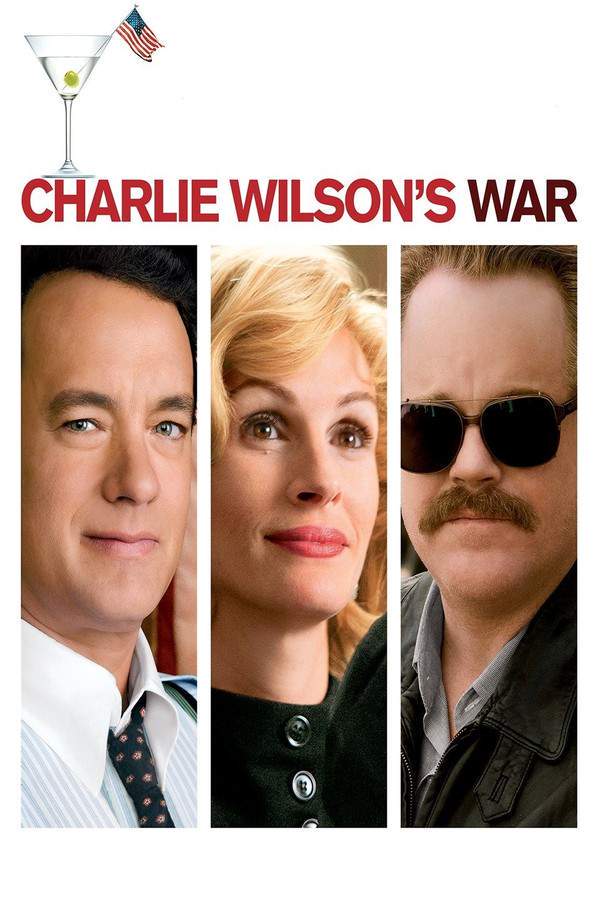
Charlie Wilson's War (2007) movie poster

Timeline

Charlie Wilson's War (2007) Timeline Explained – Every Event in Order

Release, runtime and language
2007 · 102 min · English
Directed by
Mike Nichols
Starring
Tom Hanks, Julia Roberts, Philip Seymour Hoffman
Budget
$75M

A charming Texas congressman, a resourceful CIA agent, and a captivating socialite unexpectedly join forces to launch a clandestine mission. This covert operation funnels aid to Afghanistan, ultimately contributing to the collapse of the Soviet Union and reshaping the geopolitical landscape. The alliance’s actions have lasting consequences, influencing events long after the Cold War concludes.

On this page (6)
  1. 1 Where to watch
  2. 2 Events in order (15)
  3. 3 Timeline questions answered
  4. 4 Movie threads
  5. 5 Movies like Charlie Wilson's War
  6. 6 Every angle

Where to watch

Where to Watch Charlie Wilson's War (2007)

Where can you watch Charlie Wilson's War? Stream, rent or buy it in the US, including on YouTube Free, Amazon Video and Apple TV Store: current JustWatch availability with up-to-date prices.

Streaming availability powered by JustWatch

15 events in order · contains spoilers

Charlie Wilson's War Timeline: Events in Chronological Order

Every key event of Charlie Wilson's War (2007) in order, scene by scene, with when and where it takes place. Use it to untangle flashbacks, time jumps and parallel storylines, to refresh your memory before the sequel or to find the exact scene you are thinking of.

  1. Charlie's Lavish Lifestyle

    In 1980, Congressman Charlie Wilson is well-known for his extravagant social life, which overshadows his responsibilities in Congress. His office is staffed with attractive young women, and his parties draw significant attention, ultimately attracting an investigation led by Rudy Giuliani into allegations of misconduct.

    When
    1980
  2. Soviet War Report

    Amidst his chaotic lifestyle, Charlie watches a television report on the Soviet war in Afghanistan. The report highlights the potential threat posed by the Soviets to the oil-rich Arab nations, painting a dire picture that prompts Charlie to consider the strategic ramifications of this conflict.

  3. Doubling the CIA Budget

    While distracted by trivial legislation like Defense funding for Boy Scouts, Charlie uncovers the CIA’s budget for operations in Afghanistan—a mere $5 million. Recognizing the inadequacy of this funding, he instructs his aide to double the amount to better support the Afghan Mujahideen.

  4. Joanne Herring's Influence

    Charlie's friend and romantic interest, Joanne Herring, plays a crucial role in persuading him to increase aid for Afghanistan. She articulates the urgency of the situation and encourages him to categorize it as a war effort to ensure more substantial support for the Afghan people.

  5. Meeting with Zia-Ul-Haq

    Joanne urges Charlie to meet with the President of Pakistan, Zia-Ul-Haq, to discuss the urgent needs of the Afghan conflict. During their meeting, Zia expresses his frustrations regarding the insufficient U.S. assistance and insists Charlie visit an Afghan refugee camp to witness the crisis firsthand.

    Where
    Pakistan
  6. Visit to Afghan Refugee Camp

    Charlie visits a significant Afghan refugee camp in Pakistan, which profoundly impacts him. Seeing the resilience of the Afghan people amidst their suffering inspires him to push for increased funding for the Mujahideen upon his return to Washington.

    Where
    Afghan Refugee Camp, Pakistan
  7. Collaborating with Gust Avrakotos

    Back in Washington, Charlie partners with Gust Avrakotos, an unconventional CIA operative, to strategize on how to effectively aid the Afghan fighters. Gust, despite his experience, believes the U.S. has no real intention to defeat the Soviets—only to undermine them gradually.

  8. Assembling a Special Team

    Gust assembles a specialized team, including paramilitary officer Michael Vickers, to create a robust plan for aiding the Mujahideen. They decide to engage an Israeli arms dealer, Zvi Rafiah, to help procure weapons that would be disguised as captured Soviet stocks.

  9. Forging International Coalitions

    Charlie's efforts result in a remarkable coalition involving Israel, Egypt, Pakistan, Saudi Arabia, and Afghanistan united against Soviet forces. This diplomatic undertaking significantly enhances support for the Mujahideen and strengthens their fight against the Soviets.

  10. Securing Critical Resources

    Working together with Joanne, Charlie successfully persuades Representative Doc Long to allocate critical U.S. resources for the Afghan cause. This political maneuvering transforms the funding available from $5 million to over $500 million, astonishing Congress.

  11. Introduction of Stinger Missiles

    Charlie's efforts culminate in supplying the Mujahideen with advanced armaments, including the FIM-92 Stinger missiles. This game-changing support transforms the conflict dynamics, putting significant pressure on Soviet forces and shifting the nature of the war.

  12. Reagan Doctrine Implementation

    The impact of Charlie's endeavors leads to the implementation of the Reagan Doctrine, which extends U.S. assistance to various anti-communist movements worldwide. This shift signifies a decisive change in U.S. foreign policy during the Cold War.

  13. Soviet Retreat from Afghanistan

    As a result of the considerable support and strategic shifts, Soviet forces eventually retreat from Afghanistan, marking a significant victory for Charlie and the Mujahideen. This outcome has profound implications for both U.S. foreign policy and the future of Afghanistan.

    Where
    Afghanistan
  14. Challenges Post-Occupation

    Postoccupation, Charlie seeks backing for reconstruction efforts in Afghanistan but faces a lack of enthusiasm from the U.S. government. This reflects the ongoing challenges in addressing the aftermath of the conflict and hints at repercussions for future U.S. involvement.

  15. Reflections on Achievements

    In the end, Charlie receives accolades for his role in the Soviet defeat but grapples with the foreboding consequences of his covert support. He realizes that while he played a significant role during the Cold War, the long-term effects of the U.S. withdrawal from Afghanistan remain uncertain.

Last updated: November 16, 2024 at 17:47

Was this helpful?

Timeline questions answered

Charlie Wilson's War Timeline Explained: Your Questions Answered

When does it happen, and why in that order? The questions people ask about the chronology of Charlie Wilson's War (2007): time jumps, flashbacks, cause and effect between scenes and the correct order of events, each answered with spoilers.

Q1

Why did Charlie Wilson decide to increase funding for Afghanistan?

Charlie Wilson increased Afghanistan funding after watching a television report about the Soviet war in Afghanistan that portrayed it as a precursor to a broader threat against oil-rich Arab nations. The report argued that if the Afghan Mujahideen received proper weapons support, they could defeat the Soviets. Wilson was also motivated by Joanne Herring, who urged him to do more for the Afghan people after learning of his initial budget increase.

  • charlie wilson
  • afghanistan funding
  • cia budget
  • mujahideen
  • soviet war
Q2

What role did Joanne Herring play in Charlie Wilson's war?

Joanne Herring served as Charlie Wilson's friend, romantic interest, and key persuader. She learned of his budget increase and urged him to do more for Afghanistan, encouraging him to meet with Pakistan's President Zia-Ul-Haq. She highlighted the inadequacy of U.S. support, specifically the lack of armored gunships, and pushed Charlie to classify the conflict as a war rather than a covert operation. Her Christian influence also helped persuade Representative Doc Long to allocate critical funding.

  • joanne herrning
  • charlie wilson
  • afghanistan
  • political persuasion
  • funding
Q3

How did Gust Avrakotos change the CIA's approach to Afghanistan?

Gust Avrakotos, a veteran CIA operative with 24 years of experience, believed the U.S. wasn't truly seeking to defeat the Soviets but only to undermine them gradually, similar to the Vietnam War strategy. He assembled a specialized team including Michael Vickers from the Special Activities Division and hired Israeli arms dealer Zvi Rafiah to procure weapons disguised as captured Soviet stocks. His more aggressive approach transformed the covert operation into a serious military supply campaign.

  • gust avrakotos
  • cia
  • afghanistan strategy
  • stinger missiles
  • mujahideen support
Q4

Why were Stinger missiles important in the Afghanistan war?

The FIM-92 Stinger missiles were a game-changing addition to the Mujahideen's arsenal. These advanced surface-to-air missiles allowed Afghan fighters to shoot down Soviet helicopters and aircraft, which had previously dominated the skies with impunity. This shift in air power directly contributed to making the Soviet campaign a grueling struggle and ultimately forced their retreat from Afghanistan.

  • stinger missiles
  • soviet helicopters
  • mujahideen
  • afghanistan war
  • soviet retreat
Q5

How did the funding for Afghan Mujahideen increase from $5 million to $500 million?

The funding increased through Charlie Wilson's political maneuvering and the formation of an international coalition. Charlie convinced Joanne Herring to use her Christian influence to persuade Representative Doc Long, chair of the funding committee. They forged a coalition involving Israel, Egypt, Pakistan, Saudi Arabia, and Afghanistan. Saudi Arabia agreed to match U.S. funding dollar-for-dollar, resulting in over $1 billion total for the Afghan cause, shocking Congress.

  • funding increase
  • congress
  • saudi arabia
  • doc long
  • mujahideen budget
Q6

What was the Reagan Doctrine?

The Reagan Doctrine was a significant shift in U.S. foreign policy that emerged from Charlie Wilson's efforts. It extended U.S. assistance beyond the Afghan Mujahideen to support various anti-communist movements worldwide. The success in Afghanistan demonstrated that covert U.S. support could help defeat Soviet forces, leading President Reagan to apply this approach to other conflicts during the Cold War.

  • reagan doctrine
  • cold war
  • us foreign policy
  • anti-communist
  • soviet defeat
Q7

Why did the US refuse to help Afghanistan after the Soviet withdrawal?

Following the Soviet retreat, Charlie Wilson sought backing for post-occupation reconstruction efforts in Afghanistan but encountered little enthusiasm from the U.S. government. Even modest initiatives were rejected. The film depicts this as a critical failure, as the lack of post-war investment in Afghanistan's infrastructure and stability would have significant consequences for the region's future.

  • afghanistan reconstruction
  • us withdrawal
  • soviet retreat
  • post-war
  • political neglect
Q8

What future consequences were foreshadowed at the end of the movie?

The film concludes with Charlie Wilson receiving accolades for his role in defeating the Soviets but grappling with foreboding about the long-term repercussions of U.S. involvement. He recognizes that just over a decade earlier, the Soviet forces were considered invincible, and he questions what the U.S. withdrawal from Afghanistan might mean for the future. The movie implies that the seeds of future instability and blowback were sown through this covert operation.

  • taliban
  • afghanistan consequences
  • us withdrawal
  • soviet defeat
  • blowback
Q9

What motivated Charlie Wilson to double the CIA's initial $5 million budget?

Charlie Wilson discovered the CIA's covert operations budget for Afghanistan was only $5 million while he was working on trivial legislation like Department of Defense support for the Boy Scouts. Recognizing the inadequacy of this amount to effectively support the Mujahideen against the Soviet military, he instructed his aide to double the budget, marking the beginning of his deeper involvement in the conflict.

  • cia budget
  • charlie wilson
  • congressman
  • afghanistan
  • mujahideen funding

Movie threads

More Movies Like Charlie Wilson's War, by Mood & Story

Curated lists built around what makes Charlie Wilson's War tick: the same mood, the same kind of story or the same emotional payoff. Each list explains why these movies belong together.

Movies like Charlie Wilson's War: Covert Operations with Political Satire

Witty stories where high-stakes geopolitics mix with sharp humor and moral ambiguity. If you enjoyed the blend of real-world politics and witty humor in Charlie Wilson's War, this thread features similar movies. Discover other satirical political thrillers and dramas about covert missions, unlikely alliances, and the ironic consequences of wielding power behind the scenes.

  • satirical
  • witty
  • political
  • suspenseful
  • thought-provoking
  • ironic
  • Tone: witty, bittersweet, ironic
  • Pacing: steady, dialogue-driven
Why these movies?

The story pattern: These narratives typically follow a successful, if unorthodox, mission driven by charismatic operators. The plot is propelled by political maneuvering and escalating stakes, but the tone remains witty and observational, often leading to a conclusion where the victory is undercut by foreshadowed or explicit complications.

Why they belong together: Movies in this thread share a unique tonal blend: the high stakes of a geopolitical thriller are leavened by satirical dialogue and a focus on the absurdities of the systems involved. They feel smart, fast-paced, and engaging without being overly grim, creating a distinctively bittersweet and thought-provoking experience.


Movies with Geopolitical Consequences like Charlie Wilson's War

Stories where a well-meaning intervention creates a legacy of complex, often tragic, outcomes. For viewers fascinated by the theme of unintended consequences in Charlie Wilson's War, this list features similar movies. Explore stories about political interventions, war funding, and diplomatic maneuvers where initial triumphs are shadowed by a sobering legacy and moral ambiguity.

  • thought-provoking
  • ironic
  • bittersweet
  • historical
  • moral ambiguity
  • geopolitical
  • Tone: bittersweet, thought-provoking, ironic
  • Pacing: steady, consequential
Why these movies?

The story pattern: The narrative pattern involves a focused campaign or mission that achieves its immediate objective, framed as a victory. The third act or conclusion, however, shifts perspective to reveal the unforeseen and often negative long-term ramifications, leaving characters and the audience to grapple with the mixed legacy of their actions.

Why they belong together: These films are grouped by their central thematic concern with cause and effect on a historical scale. They share a bittersweet or melancholic emotional core, driven by a thoughtful, steady pacing that allows the weight of consequences to settle. The experience is intellectually engaging and morally complex.

If you liked this

Movies Like Charlie Wilson's War

Similar movies to Charlie Wilson's War: the same genre, themes or kind of story. Each one comes with its own plot summary, timeline and ending explained.

Browse all movie summaries

Every angle

Charlie Wilson's War (2007) Explained: Plot, Timeline & Characters

Everything about Charlie Wilson's War in one place: what happens in the plot summary, the timeline in chronological order, the characters and meaning and a spoiler-free summary. What's After the Movie adds the cast, box office and post-credit scenes.

Coming soon on iOS and Android

The Plot Explained Movie Summary App

Plot summaries, endings explained and timelines on your phone. Catch up on any movie in minutes, save your favorites and never miss a twist again.

Be the first to know when we launch. Your email stays private, always.

Learn more about the app