Plot Explained Spoilers guaranteed!
Plot Explained

Browse by genre

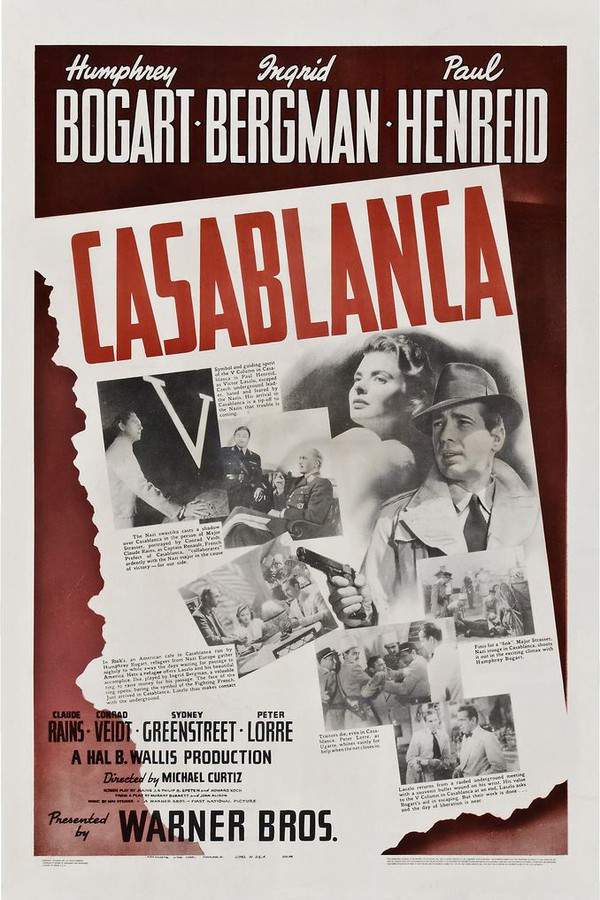
Casablanca (1943) movie poster

Plot Summary

Casablanca (1943) Plot Summary Explained

Release, runtime and language
1943 · 102 min · English
Loading streaming availability…
Directed by
Michael Curtiz
Starring
Humphrey Bogart, Ingrid Bergman
Budget
$950K

During World War II, in the Moroccan city of Casablanca, expatriates and refugees anxiously await passage out of the country. Rick Blaine owns a popular nightclub that serves as a hub for those seeking escape. His past is disrupted when Ilsa Lund, a former lover, reappears with her husband, Victor Laszlo, a renowned resistance leader. Rick is forced to reckon with old feelings and make a difficult decision that will impact their lives and the hopes of others.

On this page (6)
  1. 1 Where to watch
  2. 2 What happens: full plot
  3. 3 Plot questions answered
  4. 4 Movie threads
  5. 5 Movies like Casablanca
  6. 6 Every angle
Loading streaming availability…

Full plot summary · contains spoilers

What Happens in Casablanca: Full Plot Summary

The whole story of Casablanca (1943) explained, from the opening scene to the final frame: every key event, every twist and what it all adds up to. Read it as a quick recap before the sequel, to check a scene you missed, or to finally understand what really happened.

During World War II, the city of Casablanca, located in French Morocco, becomes a crucial stop for countless refugees attempting to escape the grip of Nazi-occupied Europe. As exit visas are hard to come by, a significant incident occurs when two German couriers carrying valuable letters of transit—endorsed by the Free French resistance figure, General Charles DeGaulle—are mysteriously murdered, leading to a wave of fear among the populace as authorities scramble to apprehend all unknown faces within the city.

The tension escalates with the arrival of German Major Heinrich Strasser (Conrad Veidt), a prominent Nazi officer, who is welcomed at the airfield by Captain Louis Renault (Claude Raines). In their discussions, both express concern over the stolen letters and reveal their intent to ensure they do not fall into the hands of Victor Lazlo, the renowned Czech resistance leader rumored to be making his way to the city.

As night falls, Renault and Strasser venture into Rick's Café Americain, a bustling nightclub owned by the enigmatic American expatriate, Richard 'Rick' Blaine (Humphrey Bogart). While sipping a drink in solitude within the gambling room, Rick encounters the dubious Ugarte ([Peter Lorre]), who requests Rick to conceal the stolen letters temporarily. Ugarte, looking to profit from their sale, believes this will allow him to escape Casablanca safely. Rick hides the letters in a piano played by his talented bandmaster, Sam (Dooley Wilson).

Shortly thereafter, Rick faces an offer from the Blue Parrot nightclub owner, Ferrari ([Sydney Greenstreet]), who wishes to buy out Rick; however, he declines. It becomes apparent that Ferrari also deals in forged exit visas, marking the underbelly of Casablanca's economy. Amidst the chaos, Rick's only allies are his devoted employees, including the vivacious maître d', Carl ([S.Z. Sakall]) and the Russian bartender Sascha ([Leonid Kinskey]). A confrontation arises with Yvonne ([Madeleine LeBeau]), a young French woman who once captured Rick's heart, leading him to coldly declare that he "sticks his neck out for nobody," a testament to his bitter transformation over time.

As tensions rise, Ugarte's arrest occurs in a dramatic scene, soon followed by the entrance of Lazlo ([Paul Henreid]) and his companion, Ilsa Lund (Ingrid Bergman). Upon recognizing Sam, Ilsa demands he play "As Time Goes By," a song that stirs painful memories for Rick, prompting him to confront her about their tumultuous past. A series of flashbacks unveil a once joyful love affair in Paris, shadowed by betrayal when Ilsa chooses to abandon Rick at a critical moment, intending to protect him from the Nazi threat.

The very next day, Lazlo and Ilsa visit the police station, learning about Ugarte's tragic demise while in custody. In a turn of fate, as Rick assists a young Romanian couple to secure their freedom through roulette, Lazlo indirectly hints at the stolen letters. The atmosphere grows electric when Lazlo braves the gathering of German officers to request the band to play "La Marseillaise," leading the patrons of Rick's café to collectively defy the oppressive presence of Strasser and his men.

A significant encounter takes place later between Rick and Ilsa, where she divulges the truth behind her decisions: she had believed her husband Lazlo was dead when she chose to stay in Paris. Despite the rekindling of their feelings, a burden of decisions weighs upon them. With the police on the prowl, Lazlo urgently implores Rick to help Ilsa escape.

In a pivotal moment of courage, Rick sells his café to Ferrari, leveraging his resources to aid Lazlo's escape from the police. They rush to the airport, but their path is obstructed by Strasser. Seizing the moment, Rick confesses to Ilsa about their broken past and suggests she leaves with Lazlo, recognizing the profound importance of their mission. In a climactic showdown, Rick shoots Strasser as he attempts to sabotage their departure. In a moment of unexpected camaraderie, Renault counters Strasser’s call for capture, advising to "round up the usual suspects."

The film concludes on a hopeful note as Rick and Renault plan their escape from Casablanca to join forces with the Free French. With a final sentiment, Rick fervently remarks, > "Louie, I think this is the beginning of a beautiful friendship," hinting at a new chapter that awaits them beyond the horizon.
Last updated: May 28, 2025 at 19:07

Was this helpful?

Plot questions answered

Casablanca Plot Explained: Your Questions Answered

The questions people ask most about Casablanca (1943): what happens in the confusing scenes, why the characters do what they do, the twists, hidden details and what the ending means. Each answer contains spoilers.

Q1

Why does Rick decide to help Victor Lazlo escape from Casablanca?

Rick decides to help Lazlo because he recognizes that Lazlo's work as a resistance leader is more important than personal happiness. Although Rick initially claims to be a cynical neutralist, his love for Ilsa and his underlying sense of moral justice resurface when he sees that Lazlo's mission to fight the Nazis is far greater than his own personal interests. Rick chooses the noble cause over his desire to keep Ilsa.

Foreshadowing: Earlier in the film, Rick's claim that he doesn't stick his neck out for anyone sets up his eventual sacrifice.

  • victor laszlo
  • escape
  • resistance
  • nazi
  • letters of transit
  • sacrifice
Q2

Why did Ilsa leave Rick in Paris?

Ilsa left Rick in Paris because she believed her husband Victor Lazlo was dead after the Nazis arrested him. She sent Rick away with a goodbye note to protect him from the Nazi occupation, not knowing Lazlo was actually alive. When Lazlo returned, Ilsa was forced to choose, and she chose to stay with her husband, abandoning Rick at the train station.

Foreshadowing: The flashback to Paris reveals the passionate love affair and shows how abruptly it ended.

  • ilsa
  • paris
  • abandonment
  • nazi
  • victor laszlo
  • love
Q3

What are the letters of transit and why are they so valuable?

The letters of transit are official documents signed by General Charles DeGaulle that allow the bearer to travel freely out of Nazi-occupied territory without inspection or questioning. In Casablanca, where exit visas are nearly impossible to obtain, these letters represent the only hope for refugees trying to escape to America. Both the Nazis and resistance fighters desperately want them because they provide guaranteed passage.

Foreshadowing: The murder of the German couriers at the beginning establishes how valuable and dangerous these letters are.

  • letters of transit
  • exit visas
  • escape
  • nazi
  • free french
  • general degaulle
Q4

Why does Rick shoot Major Strasser at the airport?

Rick shoots Major Strasser to prevent him from stopping Victor Lazlo and Ilsa from escaping on the plane. With Strasser alive, he would have used his authority to halt the departure and capture Lazlo, who was a high-priority target for the Nazis. Rick's action represents his complete transformation from a self-interested cafe owner to someone willing to risk everything for the resistance cause.

Foreshadowing: Strasser's arrival in Casablanca and his determination to capture Lazlo builds tension throughout the film.

  • major strasser
  • shooting
  • airport
  • nazi
  • victor laszlo
  • escape
Q5

What happens to Ugarte after his arrest?

Ugarte is killed by the police while in custody. Although the official report claims he died during an escape attempt, it is strongly implied that Captain Renault ordered his execution to eliminate a dangerous criminal who possessed knowledge about the stolen letters of transit. Ugarte's death removes any chance of Rick simply returning the letters and removes a potential source of information from the Nazis.

Foreshadowing: Ugarte's earlier confidence that the letters would guarantee his escape creates dramatic irony.

  • ugarte
  • arrest
  • police station
  • death
  • letters of transit
Q6

Why does Captain Renault help Rick at the end instead of arresting him?

Captain Renault helps Rick because he has a change of heart after witnessing the courage of Rick, Ilsa, and Lazlo, and seeing Major Strasser killed. Renault, who has always been morally ambiguous and sided with whoever held power, decides to join the resistance himself. Rather than arrest Rick for killing Strasser, he helps cover it up by suggesting they round up the usual suspects, and he and Rick leave together to join the Free French forces.

Foreshadowing: Renault's earlier cooperation with the Nazis was always shown as expedient rather than ideological.

  • captain renault
  • rick
  • arrest
  • resistance
  • free french
  • strasser
Q7

Why does Ilsa choose to leave with Victor Lazlo instead of staying with Rick?

Ilsa chooses Lazlo because of her sense of duty and the greater good. Though she still loves Rick, Lazlo is fighting for the resistance against the Nazis, a cause far more important than their personal happiness. Additionally, leaving with Rick would mean abandoning her husband, who needs her support for his dangerous mission. Rick himself ultimately encourages her to go, recognizing that Lazlo's work is what matters most.

Foreshadowing: The flashback to Paris shows Ilsa previously making a similar choice to protect Rick by sending him away.

  • ilsa
  • victor laszlo
  • rick
  • choice
  • love triangle
  • resistance
Q8

What is the significance of La Marseillaise being played at Rick's café?

When Victor Lazlo orders the band to play La Marseillaise, the French national anthem, it becomes a powerful act of resistance against the Nazi occupation. The patrons in the café, many of whom are refugees from occupied Europe, join together in singing, turning the moment into a collective defiance of the German officers present. This scene energizes the resistance movement in Casablanca and demonstrates that ordinary people will not be silenced.

Foreshadowing: Major Strasser's presence in the café had been a show of Nazi authority.

  • la marseillaise
  • resistance
  • nazi
  • patriotism
  • singing
  • victor laszlo
Q9

Why does Rick say he doesn't stick his neck out for anybody?

Rick claims he doesn't stick his neck out for anyone because he has become disillusioned after witnessing the betrayals and hardships of war. His bitter cynicism is a defense mechanism developed from being abandoned by Ilsa in Paris and seeing the worst of humanity in Casablanca. However, this statement is ultimately proven false as Rick's underlying morality resurfaces when faced with the choice between personal happiness and doing what is right.

Foreshadowing: This statement directly contrasts with his final actions in helping Lazlo escape.

  • rick
  • cynicism
  • neutrality
  • commitment
  • character arc
Q10

Why does Rick give the letters of transit to Victor Laszlo instead of keeping them?

Rick gives the letters to Laszlo because he recognizes that Laszlo's resistance work against the Nazis is more valuable than any personal vendetta or desire to keep Ilsa in Casablanca. By giving Laszlo the letters, Rick ensures that Ilsa can escape with her husband to safety in America, where she will be protected from the Nazis. This act also allows Rick to redeem himself from his previous cynicism.

Foreshadowing: Rick's refusal to sell his café to Ferrari earlier shows his initial self-interest.

  • letters of transit
  • victor laszlo
  • ilsa
  • escape
  • rick
  • sacrifice
Q11

Why does Ilsa ask Sam to play As Time Goes By at the café?

Ilsa requests As Time Goes By because it was the song that defined her relationship with Rick in Paris. When she hears Sam playing it in the café, she is overwhelmed by memories of their love affair and wants to evoke those feelings again. The song serves as an emotional trigger that exposes her unresolved feelings for Rick and sets up the romantic tension that drives the rest of the film.

Foreshadowing: The flashback to Paris confirms this song was central to their relationship.

  • as time goes by
  • sam
  • ilsa
  • rick
  • paris
  • love
  • memories
Q12

What does Rick mean when he says this is the beginning of a beautiful friendship?

When Rick says this to Renault at the end, he means that their relationship, previously based on mutual self-interest and corruption, has transformed into a genuine partnership in the resistance fight against the Nazis. Rather than enemies or casual acquaintances, they are now allies with a shared purpose. The line also suggests hope for the future as they prepare to join the Free French forces together.

Foreshadowing: Their earlier interactions were always tinged with irony and self-preservation.

  • rick
  • renault
  • friendship
  • free french
  • ending
  • hope

Movie threads

More Movies Like Casablanca, by Mood & Story

Curated lists built around what makes Casablanca tick: the same mood, the same kind of story or the same emotional payoff. Each list explains why these movies belong together.

Movies about wartime romance and moral sacrifice like Casablanca

Where great personal love must be surrendered for a greater political good. For viewers who loved the romantic tension and selfless choices in Casablanca, this list features similar movies where a powerful love story unfolds under the shadow of war. These films explore the difficult decisions characters must make when personal desire clashes with duty, sacrifice, and the fight for freedom.

  • romantic
  • tense
  • melancholic
  • sacrificial
  • hopeful
  • nostalgic
  • Tone: tense, romantic, melancholic
  • Pacing: steady, character-driven
Why these movies?

The story pattern: The narrative typically follows a protagonist, often initially cynical or self-interested, who is pulled into a high-stakes conflict through the reappearance of a lost love or a new romantic connection. Their personal journey becomes a crucible for moral growth, forcing them to choose between a life of private contentment and an act of public-spirited sacrifice that redeems them but costs them their heart's desire.

Why they belong together: These films are grouped together because they share a potent mix of high-stakes political tension and deeply personal romantic anguish. They consistently feature a bittersweet ending, heavy emotional weight, and a central theme of redemption through sacrifice, creating a specific, resonant emotional experience.

Movies with a cynical hero's redemption like in Casablanca

A disillusioned outsider finds their purpose in a claustrophobic world of danger. If you liked Rick Blaine's journey from neutral cynic to selfless hero in Casablanca, explore these films about disillusioned characters finding redemption. These stories often take place in tense, confined settings where a jaded individual is pulled back into a moral fight, leading to a powerful character transformation.

  • cynical
  • redemptive
  • claustrophobic
  • tense
  • morally complex
  • melancholic
  • Tone: tense, melancholic, hopeful
  • Pacing: steady, deliberate
Why these movies?

The story pattern: The narrative arc is character-driven, focusing on the protagonist's internal transformation from apathy to commitment. The confined setting acts as a pressure cooker, amplifying tensions and forcing confrontations. The climax typically involves the character using their unique skills or position not for personal gain, but for a principled stand, often sacrificing something valuable in the process.

Why they belong together: Movies in this thread share a specific character archetype and journey: the redemption of a cynical outsider. They also consistently employ a tense, claustrophobic atmosphere and a steady pacing that allows for character development, creating a cohesive vibe of moral awakening under duress.

If you liked this

Movies Like Casablanca

Similar movies to Casablanca: the same genre, themes or kind of story. Each one comes with its own plot summary, timeline and ending explained.

Browse all movie summaries

Every angle

Casablanca (1943) Explained: Plot, Timeline & Characters

Everything about Casablanca in one place: what happens in the plot summary, the timeline in chronological order, the characters and meaning and a spoiler-free summary. What's After the Movie adds the cast, box office and post-credit scenes.

Coming soon on iOS and Android

The Plot Explained Movie Summary App

Plot summaries, endings explained and timelines on your phone. Catch up on any movie in minutes, save your favorites and never miss a twist again.

Be the first to know when we launch. Your email stays private, always.

Learn more about the app