Plot Explained Spoilers guaranteed!
Plot Explained

Browse by genre

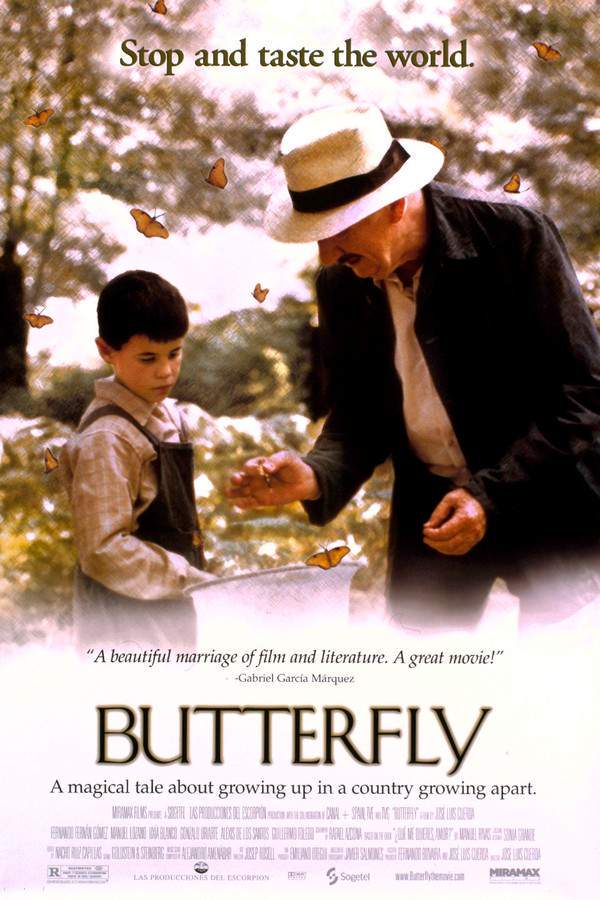
Butterfly Tongues (2000) movie poster

Timeline

Butterfly Tongues (2000) Timeline Explained – Every Event in Order

Release, runtime and language
2000 · 96 min · European spanish
Loading streaming availability…
Directed by
José Luis Cuerda
Starring
Fernando Fernán Gómez, Manuel Lozano, Uxía Blanco

During the Spanish Civil War in 1936, a shy young boy named Moncho develops a close and compassionate relationship with his teacher, Don Gregorio. As the conflict erupts on July 18th, their lives are profoundly changed by the escalating violence and uncertainty. The film explores themes of hope, resilience, and the power of human connection amidst a backdrop of turmoil and loss.

On this page (5)
  1. 1 Where to watch
  2. 2 Events in order (10)
  3. 3 Timeline questions answered
  4. 4 Movie threads
  5. 5 Every angle
Loading streaming availability…

10 events in order · contains spoilers

Butterfly Tongues Timeline: Events in Chronological Order

Every key event of Butterfly Tongues (2000) in order, scene by scene, with when and where it takes place. Use it to untangle flashbacks, time jumps and parallel storylines, to refresh your memory before the sequel or to find the exact scene you are thinking of.

  1. Moncho's First Day of School

    In a small Galician town, young Moncho embarks on his eagerly anticipated first day of school. He enters with a mix of excitement and trepidation about the harsh educational methods he fears he will encounter.

    When
    1930s
    Where
    Galician Town
  2. Meeting Don Gregorio

    Upon arrival, Moncho meets his teacher, Don Gregorio, who quickly eases his fears. Unlike other educators, Don Gregorio embodies a kind and gentle approach to learning, sparking Moncho's love for education.

    When
    1930s
    Where
    School
  3. Field Trip to the Woods

    Don Gregorio takes Moncho and his classmates on a memorable field trip in the beautiful woods. He captivates Moncho with a lesson about nature, specifically the delicate butterfly's tongue, fostering a deep curiosity in the young boy.

    When
    1930s
    Where
    Woods
  4. Asthma Attack

    During the field trip, Moncho suffers an asthma attack that raises alarms among his peers. Don Gregorio quickly comes to his aid, demonstrating his nurturing nature and solidifying their bond.

    When
    1930s
    Where
    Woods
  5. Political Tensions Rise

    As the Spanish civil war begins to unfold, the political climate in the town grows increasingly tense. Moncho's father, a Republican, shares similar beliefs with Don Gregorio, heightening concerns as the Nationalists gain control.

    When
    1930s
    Where
    Galician Town
  6. Capture of Republicans

    The Nationalists begin capturing prominent Republicans, including Moncho's beloved teacher Don Gregorio. The atmosphere in town shifts dramatically, filling the streets with fear and anxiety.

    When
    1930s
    Where
    Galician Town
  7. Town Square Gathering

    In a moment of desperation to protect their family, Moncho's family joins the angry crowds in the town square. They are compelled to mock and jeer at the captured Republicans as they are paraded through the streets.

    When
    1930s
    Where
    Town Square
  8. Forced Betrayal

    Caught in a conflict between his upbringing and the pressure of the crowd, Moncho feels compelled to join in the hateful chants. The societal pressure becomes overwhelming for the young boy, forcing him to betray his own values.

    When
    1930s
    Where
    Town Square
  9. The Last Word

    In a heart-wrenching moment, Moncho throws stones and shouts hurtful words at his teacher, Don Gregorio. The last word he utters, 'espiritrompa', carries deep emotional weight as it symbolizes his inner turmoil and conflict.

    When
    1930s
    Where
    Town Square
  10. Moncho's Internal Conflict

    As Moncho grapples with the shame of betraying his mentor, he experiences profound internal conflict. This moment highlights the impact of societal expectations on a young boy's perception of loyalty and love.

Last updated: November 08, 2024 at 07:05

Was this helpful?

Timeline questions answered

Butterfly Tongues Timeline Explained: Your Questions Answered

When does it happen, and why in that order? The questions people ask about the chronology of Butterfly Tongues (2000): time jumps, flashbacks, cause and effect between scenes and the correct order of events, each answered with spoilers.

Q1

Why does Don Gregorio become so important to Moncho?

Don Gregorio stands apart from other teachers because he uses gentle, compassionate teaching methods instead of the harsh physical punishment common in 1930s Spain. He forms a nurturing bond with Moncho, takes him on nature field trips, and teaches him about the wonders of the world, like the butterfly's tongue. This emotional connection fulfills Moncho's need for guidance and affection, making Don Gregorio a father figure and mentor whom Moncho deeply trusts and admires.

Foreshadowing: Early scenes show Don Gregorio comforting Moncho during an asthma attack, solidifying their bond.

  • don gregorio
  • moncho
  • teacher student bond
  • compassion
  • education
Q2

Why do Moncho's family join the crowd to deride the captured Republicans?

Moncho's family joins the crowd in the town square out of fear for their own survival. With the Nationalists now controlling the town and actively persecuting Republicans, refusing to participate in public displays against the captured Republicans would标记 them as sympathizers. By joining the crowd and shouting, Moncho's family attempts to protect themselves from being targeted next, since Moncho's father is known to be a Republican.

Foreshadowing: The timeline shows political tensions rising as the Nationalists gain control, with Moncho's father's Republican beliefs creating danger for the family.

  • spanish civil war
  • nationalists
  • republicans
  • fear
  • survival
  • persecution
Q3

What is the significance of Moncho saying 'espiritrompa' at the end?

Espritrompa is the Spanish term for "butterfly's tongue", the proboscis a butterfly uses to feed. Don Gregorio taught Moncho this word during their nature lesson in the woods, making it a cherished symbol of their special relationship. When Moncho shouts this word at his teacher while throwing stones, it represents a devastating paradox: the only word he can voice is the one that represents his love for Don Gregorio. This tragic moment shows how the boy is torn between his true feelings and the forced betrayal, making the word both a betrayal and an unconscious expression of his loyalty.

Foreshadowing: Don Gregorio explicitly teaches Moncho about the butterfly's tongue during the field trip, making this moment a direct payoff of that earlier scene.

  • espiritrompa
  • butterfly tongue
  • betrayal
  • irony
  • final word
Q4

Why is Moncho compelled to betray his teacher?

Moncho is forced to betray Don Gregorio because his mother explicitly instructs him to join the crowd in shouting at the captured Republicans. The societal pressure is overwhelming, the entire town is expected to participate in publicly denouncing the prisoners. A young boy like Moncho lacks the power to resist his parents' commands in such a tense, dangerous environment. His mother likely believes that if their family does not participate enthusiastically enough, they themselves could be suspected of Republican sympathies and face punishment.

Foreshadowing: Earlier scenes establish that Moncho's family lives in fear as Republicans under Nationalist rule.

  • moncho
  • don gregorio
  • forced betrayal
  • pressure
  • crowd
  • family
Q5

Why does Moncho's mother force him to join the crowd?

Moncho's mother forces him to participate in the public denunciation because she fears for the family's safety. If they did not join the crowd or showed any hesitation, neighbors and Nationalist forces might suspect them of being Republican sympathizers. By compelling Moncho to participate, she believes she is protecting him and the family from being labeled as enemies of the new regime. Her harshness is motivated by survival, not cruelty, though the choice destroys her son's emotional well-being.

Foreshadowing: The capture of prominent Republicans establishes the immediate danger facing Moncho's family.

  • mother
  • family survival
  • fear
  • nationalists
  • protection
Q6

Why is Don Gregorio arrested by the Nationalists?

Don Gregorio is arrested because he is a known Republican and an educated figure in the community who represents the liberal, progressive ideals opposed to Franco's Nationalist movement. The Nationalists systematically round up prominent Republicans, intellectuals, and teachers who might oppose their ideology. As someone who shares political beliefs with Moncho's father and mentors young people in a non-traditional, humanistic way, Don Gregorio becomes a target for the new regime.

Foreshadowing: The timeline shows political tensions rising and the Nationalists gaining control before the capture occurs.

  • don gregorio
  • capture
  • arrest
  • nationalists
  • republican
  • teacher
Q7

What is the butterfly's tongue lesson about?

During the field trip, Don Gregorio teaches Moncho about the butterfly's tongue, known in Spanish as espiritrompa, which is the long, coiled proboscis butterflies use to feed on nectar. This lesson represents Don Gregorio's unique teaching style that connects learning with direct experience of nature. It also symbolizes the delicate, fragile beauty that exists in the natural world, contrasting sharply with the violent political upheaval that follows. The lesson becomes the emotional anchor that the film returns to during its tragic climax.

Foreshadowing: This lesson is explicitly mentioned as a key moment that fosters Moncho's curiosity and love for learning.

  • nature lesson
  • butterfly
  • education
  • espiritrompa
  • woods
Q8

What is Moncho's internal conflict in the film?

Moncho experiences profound internal conflict between his love and loyalty for Don Gregorio and the overwhelming pressure to conform to the crowd's violence. He deeply admires his teacher, who has shown him kindness and opened his eyes to knowledge and beauty. Yet he is forced by his mother and the social environment to publicly betray this same teacher by shouting insults and throwing stones. The use of the word espiritrompa in this moment reveals that his unconscious mind cannot fully suppress his true feelings, leaving him with shame and emotional trauma.

Foreshadowing: The earlier nurturing relationship between Moncho and Don Gregorio makes the betrayal scene emotionally devastating.

  • moncho
  • internal conflict
  • loyalty
  • betrayal
  • shame
  • trauma
Q9

How does the Spanish Civil War change the story?

The Spanish Civil War serves as the destructive force that shatters the peaceful, educational world Moncho and Don Gregorio share. Before the war begins, their relationship flourishes in a setting of learning and wonder. Once the Nationalists take control of the town, everything changes: Don Gregorio is arrested, fear grips the community, and ordinary people are forced to publicly betray their beliefs to survive. The war transforms the story from a tender tale of mentorship to a tragic exploration of how political violence destroys innocent relationships.

Foreshadowing: Early scenes establish the peaceful Galician town before the July 18th conflict erupts.

  • spanish civil war
  • nationalists
  • republicans
  • political change
  • war impact

Movie threads

More Movies Like Butterfly Tongues, by Mood & Story

Curated lists built around what makes Butterfly Tongues tick: the same mood, the same kind of story or the same emotional payoff. Each list explains why these movies belong together.

Movies about mentorship broken by war like Butterfly Tongues

When political upheaval destroys the gentle relationship between a teacher and student. If you were moved by the tragedy of Moncho and Don Gregorio in Butterfly Tongues, this thread finds similar movies where a cherished teacher-student or mentor-protege relationship is shattered by external conflict. These films share a heavy emotional weight, bittersweet tone, and a focus on the intimate cost of political violence.

  • heartbreaking
  • somber
  • intimate
  • tragic
  • oppressive
  • reflective
  • Tone: bittersweet, poignant, tragic
  • Pacing: steady, character-driven
Why these movies?

The story pattern: Stories in this thread typically build a warm, hopeful bond between a naive individual and a wise mentor. The central conflict arrives not from within the relationship, but from an invasive political force (war, oppression) that forces a painful choice, often betrayal, leading to a tragic loss of innocence and a somber, reflective ending.

Why they belong together: Movies are grouped here because they share the specific narrative arc of a nurturing relationship being destroyed by a larger societal conflict. They evoke a similar feeling of intimate tragedy, blending initial warmth with a crushing, politically-driven conclusion, and focus on the psychological impact on the younger character.

Movies about childhood during war like Butterfly Tongues

A child's perspective on war, where joy is replaced by fear and betrayal. For viewers who appreciated the poignant perspective of young Moncho in Butterfly Tongues, this collection finds similar stories seen through a child's eyes during times of war. These movies capture the feeling of a safe world crumbling, the confusion of adult ideologies, and the heavy emotional cost of losing innocence.

  • innocent
  • heartbreaking
  • somber
  • reflective
  • oppressive
  • poignant
  • Tone: bittersweet, somber, poignant
  • Pacing: steady, reflective
Why these movies?

The story pattern: The narrative pattern follows a child's daily life, initially filled with simple joys and discoveries. The inciting event is the intrusion of a large-scale conflict that the child cannot fully comprehend. The journey revolves around the child being forced to confront adult concepts like betrayal, fear, and loss, leading to an irrevocable change in their worldview.

Why they belong together: These movies are grouped by their shared perspective and emotional core. They use the child's innocence as a powerful lens to highlight the absurdity and tragedy of conflict, creating a uniquely heartbreaking and intimate vibe. The pacing is often steady, building a personal world before it is shattered.

Every angle

Butterfly Tongues (2000) Explained: Plot, Timeline & Characters

Everything about Butterfly Tongues in one place: what happens in the plot summary, the timeline in chronological order, the characters and meaning and a spoiler-free summary. What's After the Movie adds the cast, box office and post-credit scenes.

Coming soon on iOS and Android

The Plot Explained Movie Summary App

Plot summaries, endings explained and timelines on your phone. Catch up on any movie in minutes, save your favorites and never miss a twist again.

Be the first to know when we launch. Your email stays private, always.

Learn more about the app