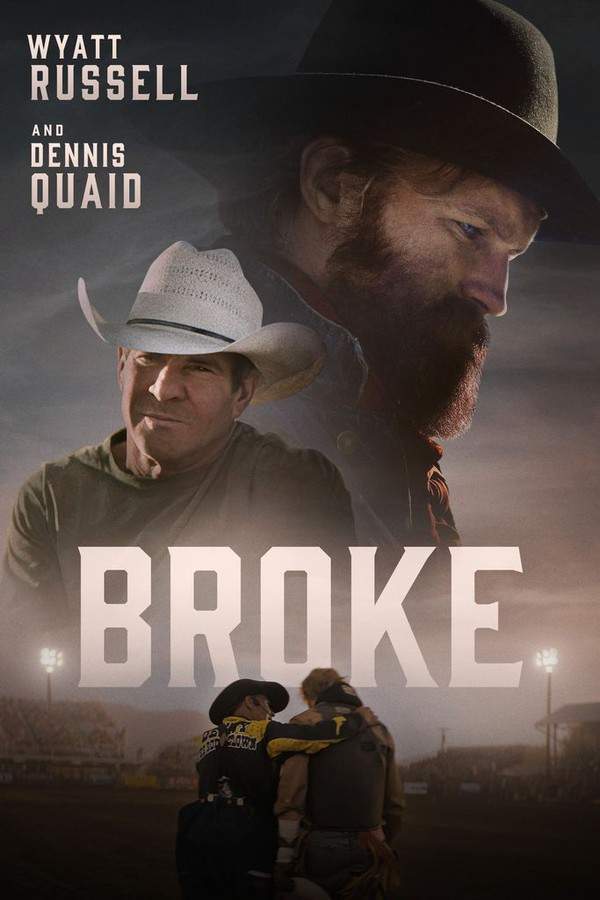
True Brandywine, Wyatt Russell a rugged cattle wrangler, crawls up from a snow-filled meadow after a brutal stretch of weather, calling for his missing horse Dude with little more than a shaky hope. His boot is dislodged, leaving his foot dangerously exposed to the sting of the cold; his phone offers no signal, and the world feels silent except for the wind. In a rapid flashback, he rides a bucking bronco in a rodeo, tasting the adrenaline and the sheer will it takes to stay upright. After the ride, he buys painkillers from a rodeo competitor who has drifted into the drug trade, a reminder of the fragile line between grit and consequence. Back in the present, True returns to his truck, only to find it mired in slush and snow. The cold continues to gnaw at him as his body fights frostbite, and his dreams pull him back to a memory-filled rodeo he can’t fully escape. He tracks down a cabin on a map and steps out of the truck, venturing deeper into a forest that feels almost like a test.
In a series of vivid flashbacks, True returns home to Elko, Nevada, where he lives with his father, Dennis Quaid George Brandywine, his mother, Mary McDonnell Kathy Brandywine, and his younger brother Caleb. George, a former Marine, urges him to enlist, hinting at the duty and structure that might steady a life so unsettled. The present-day True keeps moving, building a fire in the cabin and tending to a body that’s endured a long line of aches. A nurse, Auden Thornton Ali, tends to his injuries after he burns himself on his truck’s engine, and a tentative bond forms between them as they share moments in a cafe and True sketches her portrait, capturing a quiet tenderness that stands in contrast to the harshness around them.
The narrative shifts between pain management and past lessons as True injects himself with penicillin to fight infection, while flashbacks reveal more about his family’s dynamics. He introduces Ali to his family, and they exchange words that hint at a future they both longs for—even if the shadows of uncertainty loom large. In the present, True strips away the weight of that memory, leaving the cabin behind and preparing for the next stage of his life. He crafts snowshoes and surveys his options with a hunter’s focus, scanning the forest through his rifle scope in search of an exit from the treacherous whiteness. The memories deepen: True and Caleb train together, comparing notes on wilderness survival and the stubborn endurance required in the face of nature’s might. A serious setback arrives when True collapses at a rodeo and is rushed to the hospital, where a doctor explains he has sustained a traumatic brain injury. Caleb reveals that he has enlisted in the Marines, a move that adds another layer to the family’s ongoing sacrifices.
Back in the cabin, True builds a snare from a tree branch, while another wave of memory returns—this time of a life beyond the rodeo. Ali and True discuss retirement from the sport and their dreams of art, with Ali urging True to consider art school as a viable path. The mood shifts again when True learns that Caleb has died, a crushing blow that tests the strength of his resolve and his love for his family. He returns home to a house filled with mourning, where his father passes him an audio tape containing Stopping by Woods on a Snowy Evening, a symbolic thread that links memory, art, and resilience. True loads his horse into a trailer, ends his relationship with Ali, and throws himself into breaking horses on ranches. Cliff, the cattle ranch owner Tom Skerritt, hires him at Boot Barn, marking a turning point toward a different kind of work and a new sense of purpose.
In the present, a rabbit he traps is taken by a wolf, a small, brutal reminder that the world is relentlessly indifferent. Through flashbacks, the two figures—True and Cliff—debate the idea of breaking apart and repairing the world, while True expresses a wish to intervene in the welfare of sick cattle in a distant pasture. He ropes cows from horseback in sunny conditions yet collapses again, this time losing his footing and enduring a grueling accident as a snowstorm begins to fall in spring. A single snowflake becomes the signal of a turning point; True falls into despair, contemplating suicide as he cannot relight the fire that once kept him warm. A gunshot pierces the silence, and a shaft of sunlight cuts through a hole in the cabin roof, offering a strange beacon of hope. He staggers outside, finds his horse in a clearing, and flags down a passing snowplow driver who helps him navigate the treacherous road to safety.
The aftermath reveals a hard-won turn of luck: True’s foot is revealed to be amputated, a stark consequence of the brutal path he has walked. He mails an application to art school, an act that signals a hopeful pivot toward a future defined by creativity rather than pure endurance. Ali, who has left her shift at the hospital, discovers a portrait True originally drew of her waiting in her car; as she glances into her rearview mirror, she sees True standing there, and she steps out of the car, a moment that hints at reconciliation and new beginnings. The film closes on a note of cautious optimism, a testament to resilience, art, and the stubborn pull of family and love against the odds.