Plot Explained Spoilers guaranteed!
Plot Explained

Browse by genre

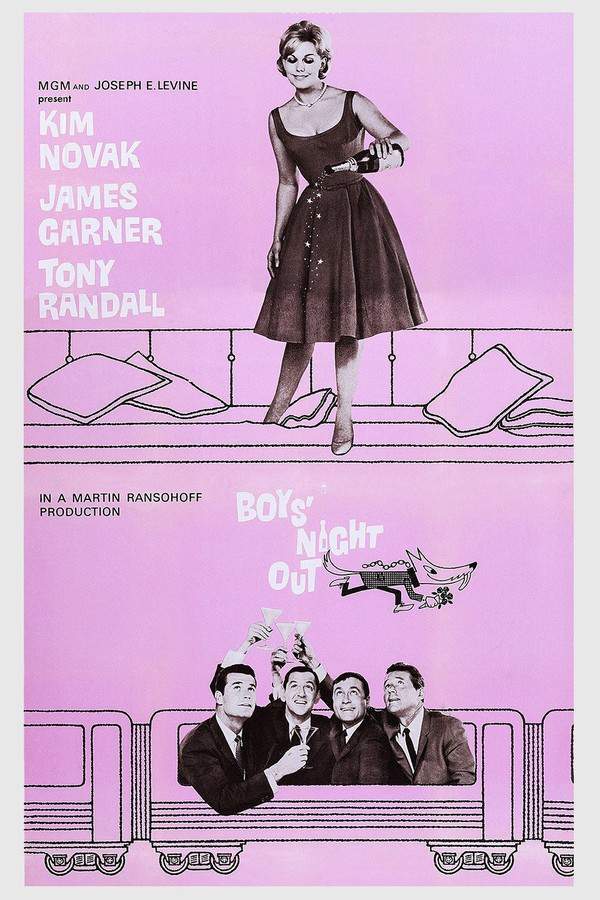
Boys' Night Out (1962) movie poster

Characters & Themes

Boys' Night Out (1962) Characters, Setting & Themes Explained

Release, runtime and language
1962 · 115 min · English
Loading streaming availability…
Directed by
Michael Gordon
Starring
James Garner, Kim Novak, Oskar Homolka, Howard Duff, Janet Blair, Howard Morris

Four friends, frustrated with their demanding boss, decide to rent a lavish bachelor apartment to escape their daily grind. Their plans for relaxation take an unexpected turn when they hire a beautiful housekeeper, played by Kim Novak, to attend to their needs. However, the friends soon discover that she has her own agenda, and their carefree weekend is about to become far more complicated than they anticipated, filled with surprising twists and humorous situations.

On this page (8)
  1. 1 Where to watch
  2. 2 Characters explained (5)
  3. 3 Where & when it takes place
  4. 4 Themes & meaning (3)
  5. 5 Character & meaning questions
  6. 6 Movie threads
  7. 7 Movies like Boys' Night Out
  8. 8 Every angle
Loading streaming availability…

5 main characters · contains spoilers

Boys' Night Out Characters Explained: Who Is Who

The main characters of Boys' Night Out (1962), heroes and villains: what drives them, how they change over the course of the story and what each of them reveals about the film's bigger ideas.

  • George

    George is one of the married men grappling with feelings of inadequacy in his relationship. He often seeks attention and validation, struggling with his wife's interruptions. His journey reflects a deeper desire for connection and understanding.

    • 👨‍👩‍👧‍👦 Family
    • 🏡 Suburbia
  • Doug

    Doug is characterized by his longing to escape the judgment of his status-conscious wife. His comedic attempts to fix belongings symbolize his desire for control and respect. His experiences reveal the inner conflict many face in marital dynamics.

    • 😩 Stress
    • 🔧 Repair
  • Howie

    Howie is the quintessential husband seeking more than what his health-conscious wife offers. His humorous desire for culinary variety reflects a deeper dissatisfaction and longing for joy in his life. He is both relatable and endearing.

    • 🥗 Diet
    • 🍽️ Food
  • Fred

    played by James Garner

    Fred serves as the group's instigator, displaying a mix of humor and sincerity. His genuine feelings for Cathy elevate his character as he grapples with both friendship and romantic feelings. His journey leads him to the most profound understanding of love.

    • 👨‍❤️‍👨 Romance
    • 🕵️‍♂️ Investigative
  • Cathy

    Cathy, the stunning 'housekeeper,' is a sociology graduate student researching adult fantasies. Her wit and intelligence challenge the men, and she navigates the fine line between professional and personal involvement, evolving into a significant catalyst for change.

    • 🎓 Education
    • ❤️ Romance

Last updated: October 22, 2024 at 23:18

Was this helpful?

Setting

Where and When Does Boys' Night Out Take Place?

The setting of Boys' Night Out (1962): the year and time period, the places and locations, and how they shape the characters, the mood and the tension of the story.

Time period

The film takes place in a contemporary setting, reflecting the social dynamics of mid-20th century America. During this time, themes of infidelity, societal expectations, and the quest for personal identity were highly relevant as many men navigated their roles in both domestic and urban environments.

Location

Greenwich, Connecticut, New York City

The story unfolds primarily between Greenwich, Connecticut, and New York City. Greenwich is a serene suburban area known for its affluence and picturesque landscapes, while New York City represents the hustle and bustle of urban life. The juxtaposition of these locations highlights the characters' desires to escape their mundane suburban existence.

  • 🌆 City
  • 🏙️ Urban

Last updated: October 22, 2024 at 23:18

Was this helpful?

3 major themes

Boys' Night Out Meaning: Themes & Message Explained

What is Boys' Night Out (1962) really about? The emotional, social and philosophical themes the film keeps returning to, its symbolism and the message beneath the surface.

  • Love & Infidelity

    The movie explores themes of love and infidelity as the characters seek fulfillment outside their marriages. It questions the complexity of adult relationships and the need for emotional connection amid societal constraints. The interactions reveal varying degrees of longing and disillusionment experienced by the men.

  • Self-Discovery

    Self-discovery is a prominent theme, as the characters undergo personal revelations throughout their escapades. Each man's journey reflects a desire to confront their insecurities and societal expectations. Cathy's role as an observer adds depth, as she prompts them to expose their vulnerabilities.

  • Surveillance & Privacy

    The use of recording conversations for research underscores themes of surveillance and the erosion of privacy. Cathy's academic approach to understanding the men's fantasies leads to dramatic consequences, emphasizing the delicate balance between observation and invasion of personal spaces.

Last updated: October 22, 2024 at 23:18

Was this helpful?

Character & theme questions

Boys' Night Out Characters & Meaning: Your Questions Answered

The questions people ask about Boys' Night Out (1962): who the characters really are, their relationships, what the symbols mean, where it takes place and what the movie is really about. Each answer contains spoilers.

Q1

Where is the movie set?

The story takes place in Greenwich, Connecticut, and New York City. Greenwich represents an affluent suburban escape, while New York City embodies urban excitement. This contrast highlights the characters' desire to break free from their monotonous suburban lives.

Foreshadowing: The locations underscore the men's longing to escape their everyday routines.

  • greenwich connecticut
  • new york city
  • setting
  • suburbs
  • urban escape
Q2

What time period does the film depict?

The movie is set in the early 1960s, reflecting mid-20th century American society. This era was marked by changing social dynamics around marriage, gender roles, and personal identity, which directly inform the story's themes.

  • 1960s
  • era
  • time period
  • mid-20th century
  • 1962
Q3

What are the main themes of the film?

The movie explores three core themes: love and infidelity, self-discovery, and surveillance versus privacy. These themes intersect as the married men seek emotional connection outside their marriages, while Cathy conducts her academic research on their fantasies.

  • themes
  • love
  • infidelity
  • self-discovery
  • surveillance
  • privacy
Q4

What does the movie say about infidelity?

The film examines infidelity as a quest for emotional fulfillment amid societal constraints. Each man experiences varying degrees of longing and disillusionment, revealing the complexity of adult relationships in suburban America.

  • infidelity
  • marriage
  • relationships
  • suburban life
  • emotional connection
Q5

Who is Cathy in the movie?

Cathy appears to be a housekeeper but is actually a sociology graduate student conducting research on adult fantasies. Her academic investigation into the men's desires creates the film's central deception and drives the character dynamics.

Foreshadowing: Cathy's true identity as a researcher explains her observant nature throughout the story.

  • cathy
  • housekeeper
  • graduate student
  • researcher
  • sociology
Q6

Who is Fred and what role does he play?

Fred is the group's instigator who orchestrates the weekend getaway. Unlike his friends, he develops genuine romantic feelings for Cathy, leading him on a personal journey that results in the most profound understanding of love among the group.

  • fred
  • james garner
  • instigator
  • romance
  • lead character
Q7

Why do the married men want to escape?

Each man is dissatisfied with his marriage: George seeks attention and validation, Doug wants to escape his status-conscious wife, and Howie longs for more joy beyond his health-obsessed spouse. Their collective frustration drives them to rent the bachelor apartment.

  • married men
  • george
  • doug
  • howie
  • escape
  • frustration
  • marriage problems
Q8

What role does surveillance play in the story?

Cathy records conversations with the men for her research, exploring themes of privacy erosion and the ethics of observation. Her academic approach to studying the men's fantasies leads to dramatic consequences, blurring professional boundaries.

Foreshadowing: Cathy's recording device becomes central to the plot's complications.

  • surveillance
  • privacy
  • recording
  • research
  • observation
Q9

How does self-discovery factor into the movie?

The men's weekend escapade prompts personal revelations as they confront their insecurities and societal expectations. Cathy's presence as an observer forces each man to expose his vulnerabilities, leading to varying degrees of self-understanding.

  • self-discovery
  • vulnerabilities
  • insecurities
  • personal growth
  • character arcs
Q10

What kind of movie is it tonally?

This is a light comedy with a gentle satirical edge. The film uses humor to explore gender roles and suburban life without heavy criticism. The stakes remain low, involving bruised egos and mild marital tensions rather than genuine danger.

  • comedy
  • tone
  • satire
  • humor
  • lighthearted
  • gender roles

Movie threads

More Movies Like Boys' Night Out, by Mood & Story

Curated lists built around what makes Boys' Night Out tick: the same mood, the same kind of story or the same emotional payoff. Each list explains why these movies belong together.

Comedies with playful deceptions like Boys' Night Out

Stories where clever schemes and hidden agendas lead to humorous outcomes. If you liked the clever twists and humorous misunderstandings in Boys' Night Out, you'll enjoy these movies. This section features lighthearted comedies where characters engage in playful schemes and deceptions that lead to funny and satisfying resolutions, exploring themes of fantasy and self-discovery in a similar witty style.

  • mischievous
  • deceptive
  • whimsical
  • lighthearted
  • satirical
  • playful
  • Tone: light, whimsical, humorous
  • Pacing: steady, building comedic tension
Why these movies?

The story pattern: Stories in this thread often begin with a character or group concocting a seemingly harmless plan based on a fantasy or misconception. This initial deception sets off a chain of increasingly comical misunderstandings and near-discoveries. The narrative arc typically follows the scheme's successful execution, its eventual unraveling, and a final reconciliation where characters learn a gentle lesson, leading to a positive outcome for all involved.

Why they belong together: These movies are grouped together because they share a core narrative engine of deception used for comedic and sometimes satirical effect. They maintain a light tone where the stakes are primarily emotional or social, avoiding genuine danger. The focus is on witty dialogue, clever plot turns, and a ultimately hopeful view of human nature, making them a cohesive and enjoyable viewing experience.

Satirical comedies about suburban life like Boys' Night Out

Comedies that gently poke fun at middle-class life and its secret desires. Fans of Boys' Night Out will appreciate these movies that similarly explore male fantasies and suburban angst with a satirical edge. Discover films that humorously critique social norms and marital dynamics, where characters' attempts to break free from their daily grind lead to comedic self-discovery and a lighthearted, understanding resolution.

  • satirical
  • sociological
  • whimsical
  • humorous
  • suburban
  • fantasy
  • Tone: satirical, light, humorous
  • Pacing: steady, character-driven
Why these movies?

The story pattern: The narrative pattern involves characters who feel constrained by their comfortable but predictable lives. They embark on a quest—often a misguided one—to recapture excitement or fulfill a fantasy, which inevitably clashes with their real-world responsibilities. The comedy arises from this clash, leading to a series of humorous incidents that force the characters to re-evaluate their desires and often find a deeper appreciation for what they already have.

Why they belong together: These films are united by their thematic focus on using comedy as a lens to examine societal expectations, particularly around gender roles, marriage, and the pursuit of the 'ideal' life. They share a specific mood that is both humorous and thoughtfully observant, blending slapstick with sharper social commentary without becoming cynical or heavy-handed, resulting in a uniquely insightful and entertaining vibe.

If you liked this

Movies Like Boys' Night Out

Similar movies to Boys' Night Out: the same genre, themes or kind of story. Each one comes with its own plot summary, timeline and ending explained.

Browse all movie summaries

Every angle

Boys' Night Out (1962) Explained: Plot, Timeline & Characters

Everything about Boys' Night Out in one place: what happens in the plot summary, the timeline in chronological order, the characters and meaning and a spoiler-free summary. What's After the Movie adds the cast, box office and post-credit scenes.

Coming soon on iOS and Android

The Plot Explained Movie Summary App

Plot summaries, endings explained and timelines on your phone. Catch up on any movie in minutes, save your favorites and never miss a twist again.

Be the first to know when we launch. Your email stays private, always.

Learn more about the app