Plot Explained Spoilers guaranteed!
Plot Explained

Browse by genre

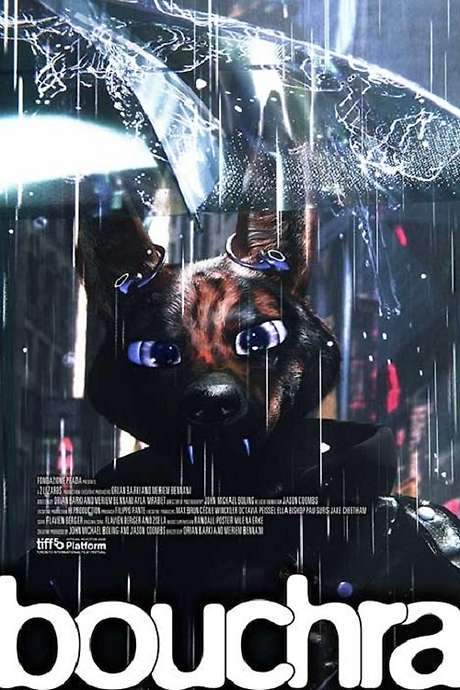
Bouchra (2025) movie poster

Plot Summary

Bouchra (2025) Plot Summary Explained

Release, runtime and language
2025 · 83 mins · Arabic
Loading streaming availability…
Starring
Orian Barki, Fayçal Azizi, Hassan Hamdani, Meriem Bennani, Ariana Faye Allensworth, Yto Barrada

Rendered in 3D animation, Orian Barki and Meriam Bennani’s debut feature blends documentary style with a narrative that follows Bouchra—a queer Moroccan Coyote filmmaker—and her mother, a cardiologist who is also a Coyote, as they navigate their bond in Casablanca. The inventive structure highlights identity, family and belonging.

On this page (6)
  1. 1 Where to watch
  2. 2 What happens: full plot
  3. 3 Plot questions answered
  4. 4 Movie threads
  5. 5 Movies like Bouchra
  6. 6 Every angle
Loading streaming availability…

Full plot summary · contains spoilers

What Happens in Bouchra: Full Plot Summary

The whole story of Bouchra (2025) explained, from the opening scene to the final frame: every key event, every twist and what it all adds up to. Read it as a quick recap before the sequel, to check a scene you missed, or to finally understand what really happened.

Bouchra, a 35-year-old lesbian Moroccan canid, spends her days working as a dedicated filmmaker within the bustling environment of Brooklyn, New York City. Despite her professional drive, she finds herself struggling with a significant period of creative drought, leaving her feeling stalled in both her art and her personal life. In an attempt to break through this stagnation, Meriem Bennani portrays Bouchra as she embarks on a deeply personal journey of self-discovery. This exploration focuses heavily on her own sexual identity, which she channels into the creation of a semi-autobiographical film set in Morocco. Within the narrative of this film-within-a-film, Bouchra's character navigates a romantic affair with another woman while simultaneously managing the complex dynamics of her extended family.

Parallel to her professional ambitions, Bouchra harbors a deep, lingering yearning for reconciliation with her mother, Aïcha, played by Yto Barrada and Dounia Berrada, who resides in Casablanca. This emotional longing is rooted in a pivotal moment from nine years prior, when Bouchra sent a coming-out letter to her parents. In the present day, she attempts to bridge the distance and the emotional gap between them through a series of poignant telephone conversations.

The storytelling of the movie is uniquely layered, blending real-life events with fictionalized versions of the characters. This metafictional approach is brought to life through various creative mediums, including text messages, video calls, and both visual and sonic puns. The narrative even incorporates a play-within-the-film, featuring young animals dressed as vegetables for a school performance, alongside pen-and-ink storyboarding that illustrates the very scenes the audience is watching.

As the story reaches its emotional climax, Bouchra and her mother, Yto Barrada, finally reunite in person. They gather at a dinner table surrounded by their relatives, creating a space for long-overdue honesty. Breaking her prolonged silence, Bouchra opens up to her family, explaining the themes and the purpose of her cinematic production. This moment of vulnerability and truth leads her aunt, Bouchra Benzekri as Yamna, to offer a heartwarming observation:

> "I am with my best family."

Last updated: October 18, 2026 at 17:31

Was this helpful?

Plot questions answered

Bouchra Plot Explained: Your Questions Answered

The questions people ask most about Bouchra (2025): what happens in the confusing scenes, why the characters do what they do, the twists, hidden details and what the ending means. Each answer contains spoilers.

Q1

Why hasn't Bouchra spoken to her mother in nine years?

Nine years before the film begins, Bouchra sent a coming-out letter to her parents revealing she is a lesbian. Her family, and especially her mother Aïcha, responded with silence rather than confrontation, and that silence became the lasting state of their relationship. In *Bouchra*, that unresolved letter hangs over every phone call and eventually frames the climactic dinner scene.

Foreshadowing: Bouchra's line about 'nine years ago' during one of her phone calls with Aïcha sets up the weight the coming-out letter still carries.

  • coming out letter
  • Aïcha
  • nine years
  • estrangement
  • silence
Q2

What motivates Bouchra to start her semi-autobiographical film?

Bouchra has hit a creative drought in Brooklyn and feels stuck in both her art and her personal life. To break through it, she channels her long-suppressed feelings about her identity and her family into a semi-autobiographical film set in Morocco. The project becomes the vehicle through which she finally processes the things she could not say out loud for nearly a decade.

Foreshadowing: Early scenes of Bouchra staring at unfinished projects in Brooklyn signal that her art only starts moving once she lets her private life onto the page.

  • creative block
  • semi-autobiographical film
  • artistic motivation
  • Morocco
Q3

How does the film-within-a-film connect to Bouchra's real life?

The movie Bouchra is making inside *Bouchra* is set in Morocco and follows a lesbian character navigating an affair with another woman while managing the tensions of an extended family. That fictional setup is essentially Bouchra's own story, her sexuality, her Moroccan roots, and the silence with her mother, reworked into cinema. The two layers slowly collapse into each other, so what happens to the character on screen doubles as what is happening inside Bouchra.

Foreshadowing: The first time Bouchra scripts a scene in Morocco, she uses her own family home as reference, hinting that the film is never really separate from her life.

  • film within a film
  • meta
  • autofiction
  • Moroccan setting
Q4

Why does the movie show both a real and fictionalized version of Aïcha?

Aïcha is played by Yto Barrada in live and documentary-style moments and by Dounia Berrada in the more performative, filmed sequences. Splitting the mother across two actors lets the film stage the same person as both a private, real-life parent on the phone and a character inside Bouchra's scripted world. This split mirrors how Bouchra herself relates to Aïcha: as a real woman she misses and as a figure she has had to reinvent in her art in order to confront her.

  • Aïcha
  • Yto Barrada
  • Dounia Berrada
  • mother
  • doubles
  • acting
Q5

Why are all the characters designed as anthropomorphic animals?

The film renders its cast, Bouchra, Aïcha, and everyone else, as canids, with Bouchra specifically identified as a Coyote. The animal design removes the story from a literal, documentary register and gives the filmmakers a way to handle intimate, queer, and culturally specific material with a layer of distance. It also turns the idea of 'passing' or belonging, central themes for Bouchra, into something visible, since a Coyote living in Brooklyn or a cardiologist Coyote in Casablanca can literally inhabit more than one social world.

  • anthropomorphic
  • canid
  • coyote
  • animal design
  • visual style
Q6

What do the telephone calls between Bouchra and Aïcha accomplish in the story?

The phone calls are Bouchra's first real attempt to reopen the conversation that the coming-out letter shut down nine years earlier. Each call only chips away slightly at the silence, but together they rebuild enough contact that a face-to-face meeting becomes possible. Structurally, they bridge the Brooklyn–Casablanca distance and prepare both women for the honesty that finally lands at the dinner table.

  • phone calls
  • Aïcha
  • reconciliation
  • Brooklyn
  • Casablanca
Q7

Why does the film include a school play where animals dress up as vegetables?

The play-within-a-film, in which young animals costume as vegetables for a school performance, is a deliberately whimsical counterweight to the heavier family drama. It showcases the layered storytelling that defines *Bouchra*, a performance inside a film inside a film, and it mirrors the way Bouchra herself uses costume, framing, and persona to talk about identity without always speaking directly. The cuteness of the scene also keeps the overall tone from collapsing into grief.

  • school play
  • vegetables
  • nested storytelling
  • whimsy
Q8

How does the 3D animated documentary style change the way the story is told?

Orian Barki and Meriem Bennani render the film in 3D animation but keep the dialogue, phone calls, and confessional beats in a documentary register. That combination lets the story treat private, real-feeling conversations as cinematic spectacle and lets the fictional, storyboarded scenes sit alongside text messages and FaceTime as if they were the same material. The hybrid form is the point: it shows that for Bouchra, life and filmmaking have already become inseparable.

  • 3D animation
  • documentary style
  • hybrid form
  • video calls
Q9

What does the lesbian affair in the film-within-a-film actually represent?

On the surface, the affair plot is what gives the Moroccan film its narrative engine, but inside *Bouchra* it functions as a stand-in for everything Bouchra could not publicly live or name for years. Directing a scene about a woman loving another woman allows Bouchra to revisit her own desire and her own family's reaction on her own terms. The romance is therefore less a love story than a way for Bouchra to rehearse the honesty she eventually brings to the dinner table.

  • affair
  • lesbian identity
  • romance
  • self-expression
Q10

Why does Bouchra finally open up at the family dinner?

By the time the family gathers around the table, Bouchra has already spent months processing her life on screen and has rebuilt a fragile contact with her mother through phone calls. The dinner gives her the first real chance to say, out loud and in Moroccan, what her film is actually about. She seizes that moment because the cinematic project she built to express her identity has finally given her the language to do it in person.

Foreshadowing: The film-within-a-film's most openly autobiographical scene lands only scenes before the dinner, signaling that Bouchra is ready to drop the fictional shield.

  • dinner scene
  • coming out
  • honesty
  • family revelation
Q11

What does Aunt Yamna's 'I am with my best family' line mean?

After years of estrangement, Bouchra's disclosure could easily have fractured the gathering, but her aunt Yamna responds with warmth by saying she is with her 'best family.' The line reframes the awkward dinner as a moment of chosen closeness, suggesting that a family that can hear the truth and stay at the table together is the best version of itself. It is the comic and emotional release valve for the whole film.

  • Yamna
  • aunt
  • best family
  • ending
  • reconciliation
Q12

How does Bouchra's story with her mother actually end?

The film closes on a hopeful rather than resolved note. Bouchra and Aïcha have finally met in person, sat at the same table with their relatives, and broken the silence the coming-out letter created. Nothing suggests the wounds of nine years are erased, but Yamna's quip and Bouchra's calm disclosure show that the family is willing to stay in the room with her truth. *Bouchra* ends on that fragile but genuine connection.

  • ending
  • resolution
  • hopeful
  • family
  • Aïcha

Movie threads

More Movies Like Bouchra, by Mood & Story

Curated lists built around what makes Bouchra tick: the same mood, the same kind of story or the same emotional payoff. Each list explains why these movies belong together.

Bittersweet family reconciliation movies like Bouchra

Years of silence give way to a tentative dinner table and one last honest conversation. Discover movies like Bouchra that follow estranged family members reuniting after years of distance. These character driven stories blend quiet heartbreak with hopeful endings, focusing on mother daughter bonds, queer identity, and the courage it takes to speak your truth. Expect gentle pacing, emotional weight, and reconciliations that feel earned rather than rushed.

  • tender
  • introspective
  • yearning
  • vulnerable
  • warm
  • layered
  • Tone: bittersweet, hopeful
  • Pacing: steady, character driven
Why these movies?

The story pattern: Films in this thread typically begin with an established separation—often a parent and child who stopped speaking after a confession, a move, or a misunderstanding. Early scenes establish the gap through flashbacks, voice messages, or side characters who hint at the absence. The protagonist is usually building a new life or identity on their own, but the story keeps circling back to the unresolved family wound. The midpoint usually delivers a confrontation or a forced meeting, followed by small, tentative gestures of reconnection—sharing a meal, answering a long-ignored call, or visiting a childhood place. Endings lean hopeful: not a complete erasing of the past, but a fragile, genuine bridge rebuilt across the silence.

Why they belong together: These films share a specific emotional cocktail: medium intensity, steady pacing, and a bittersweet-to-hopeful arc. They prioritize conversation over action and let scenes breathe so the audience can feel the weight of the estrangement and the relief of reconciliation. Mother-daughter dynamics, queer identity disclosure, and diaspora-driven distance are common thematic anchors, giving viewers a similar intimate, documentary-adjacent viewing experience.

Whimsical animated dramas about identity like Bouchra

Inventive visuals and talking vegetables wrap around stories about identity, family, and belonging. If you loved Bouchra, explore more animated dramas that blend documentary intimacy with playful metafiction and surreal visuals. These films use anthropomorphic characters, layered storytelling, and inventive structure to tackle queer identity, family bonds, and creative struggle. Expect coyotes, talking vegetables, and other whimsical conceits wrapped around deeply human stories.

  • playful
  • whimsical
  • layered
  • introspective
  • tender
  • inventive
  • Tone: whimsical, bittersweet
  • Pacing: steady, layered
Why these movies?

The story pattern: Stories in this thread tend to nest multiple layers of reality: real interviews or phone calls sit alongside fictional scenes, a school play dramatizes a personal memory, or the protagonist literally directs a film within the film. This metafictional architecture mirrors a character who is processing their life through their art. The whimsical surface—funny character designs, absurdist touches, musical or theatrical breaks—coexists with moments of vulnerability, allowing heavy themes like estrangement, queerness, or creative block to land without becoming grim. Climaxes often resolve creatively, with art or performance becoming the site of truth-telling rather than direct confrontation.

Why they belong together: These films share an unusual tonal blend: medium intensity, bittersweet mood, and a complex but accessible narrative structure that mixes documentary, fiction, and animation. They are united by a willingness to be playful on the outside and emotionally honest underneath, and they often center creators, immigrants, or queer protagonists whose inner worlds are rendered through inventive visual language. Viewers who appreciate stories that surprise them structurally while moving them emotionally will feel at home here.

If you liked this

Movies Like Bouchra

Similar movies to Bouchra: the same genre, themes or kind of story. Each one comes with its own plot summary, timeline and ending explained.

Browse all movie summaries

Every angle

Bouchra (2025) Explained: Plot, Timeline & Characters

Everything about Bouchra in one place: what happens in the plot summary, the timeline in chronological order, the characters and meaning and a spoiler-free summary. What's After the Movie adds the cast, box office and post-credit scenes.

Coming soon on iOS and Android

The Plot Explained Movie Summary App

Plot summaries, endings explained and timelines on your phone. Catch up on any movie in minutes, save your favorites and never miss a twist again.

Be the first to know when we launch. Your email stays private, always.

Learn more about the app