Year: 2008
Runtime: 104 min
Language: Tibetan
Director: Lucy Walker
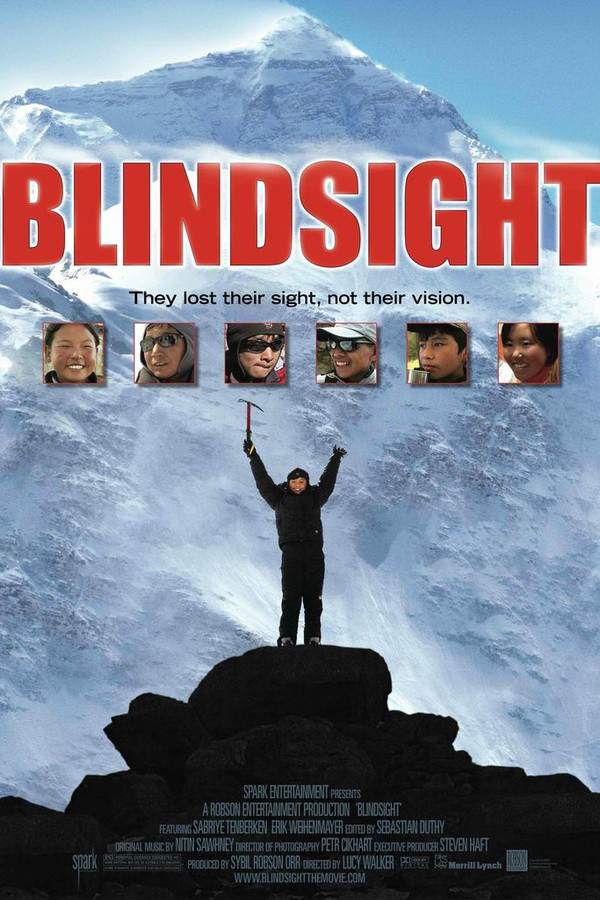
A group of blind teenagers join Erik Weihenmayer, the first blind man to summit Mount Everest, on a remarkable journey. Guided by Sabriye Tenberken, the founder of Lhasa's first school for the blind, they face challenging landscapes and discover their own inner strength and resilience. The expedition pushes them beyond their perceived limitations, showcasing the power of determination and the importance of overcoming obstacles.
Warning: spoilers below!
Haven’t seen Blindsight yet? This summary contains major spoilers. Bookmark the page, watch the movie, and come back for the full breakdown. If you're ready, scroll on and relive the story!
Read the complete plot breakdown of Blindsight (2008), including all key story events, major twists, and the ending explained in detail. Discover what really happened, and what it all means.
Set against the stunning landscapes of the Himalayas, BLINDSIGHT captures the incredible journey of six teenage climbers from Tibet who aspire to reach the pinnacle of Lhakpa Ri, a daunting 23,000-foot peak situated on the northern side of Mount Everest. What makes this expedition extraordinary is that all six of these teenagers are blind.
Often regarded by many in their communities as being afflicted with demons, these children face rejection and ridicule from their families and villages, which adds to the gravity of their expedition. Fortunately, they are rescued from despair by Sabriye Tenberken, a pioneering blind educator and adventurer who founded the first and only school for the blind in Tibet.
Inspired by the remarkable achievements of Erik Weihenmayer, a renowned blind mountain climber known for conquering Everest, the students extend an invitation to him to visit their school. Upon arriving in Lhasa, Erik ignites a new sense of hope and ambition within Kyila, Sonam Bhumtso, Tashi, Gyenshen, Dachung, and Tenzin, challenging them to push their limits and embark on a journey that promises to elevate them to heights they never imagined possible.
Over the next three weeks, this expedition transforms into an unforgettable saga of courage, determination, and triumph, as the teenagers confront not only the physical challenges of the mountain but also the social barriers that have long held them captive. BLINDSIGHT ultimately becomes a story of resilience, hope, and the unyielding spirit of youth as they strive to achieve something profound against all odds.
Last updated: November 04, 2024 at 01:05
Explore frequently asked questions about Blindsight (2008) with spoiler-rich answers covering the full plot summary, major story beats, character motivations, hidden details, and ending meaning. This movie summary FAQ helps explain confusing scenes, plot twists, and narrative decisions in clear, searchable detail.
The teenagers faced severe societal stigma in Tibet, where many people believed that blindness was caused by demons or spiritual affliction. This led to widespread rejection, ridicule, and marginalization of blind individuals within their families and villages. The documentary highlights how these children were often seen as cursed or worthless, which made their achievement of climbing a massive Himalayan peak even more transformative for both them and their communities.
The opening scenes establish this rejection as the emotional foundation that makes their eventual triumph meaningful.
Sabriye Tenberken, a blind educator and adventurer herself, founded the first and only school for the blind in Tibet. She discovered the teenagers and rescued them from despair by providing education, hope, and a sense of purpose. Her work gave these children the tools and confidence to believe they could achieve something extraordinary, and she guided them toward the opportunity to undertake the climbing expedition.
Her introduction marks the turning point that makes the entire expedition possible.
Erik Weihenmayer was the first blind person to successfully summit Mount Everest, making him a legendary figure in the blind climbing community. After the teenagers learned about his achievement, they invited him to visit their school in Lhasa. His presence and message of hope convinced them that similar accomplishments were within their reach, directly motivating them to attempt their own summit of Lhakpa Ri.
The teenagers' invitation to Erik signals their commitment to pursuing the impossible.
Lhakpa Ri is a 23,000-foot peak on the northern side of Mount Everest, placing it in the death zone where oxygen is scarce and weather conditions are extreme. For blind climbers, the technical difficulty of navigating ice, rock, and crevasses without sight, combined with the physical danger of altitude sickness and sub-zero temperatures, created an extraordinarily demanding challenge that few thought could be overcome.
Earlier scenes establishing the mountain's reputation set the stakes for the climb.
After the teenagers returned home as heroes, their achievement fundamentally shifted community perceptions. Their success demonstrated that blind individuals could accomplish what many thought was impossible, challenging deeply held prejudices. The climb became a powerful statement about the capabilities of people with disabilities, inspiring other families to reconsider how they treated blind members of their communities.
The film shows villagers' reactions evolving from skepticism to celebration.
Beyond the inherent dangers of high-altitude climbing, the teenagers faced treacherous terrain including ice fields, rock faces, and hidden crevasses. They experienced moments of doubt, fear, and physical exhaustion. The harsh environment tested their resolve constantly, but they relied on teamwork and their shared purpose to push through these challenges.
The timeline shows multiple moments of doubt interspersed with determination.
The summit represented far more than a climbing feat, it was a powerful statement about overcoming adversity and shattering preconceived limitations. For six blind teenagers who had been marginalized and deemed worthless, standing on that peak proved that their potential had been severely underestimated. It became a symbol of empowerment for blind people everywhere and a transformative moment for their personal identities.
The narrative consistently frames the climb as a spiritual and psychological journey, not just a physical one.
Following Erik Weihenmayer's visit, the teenagers underwent rigorous physical training to build the strength and endurance needed for the expedition. This training went beyond physical preparation, it also fostered teamwork, trust between climbers and guides, and the mental resilience required to face the mountain's challenges. The preparation was essential in building their confidence to attempt such a dangerous ascent.
The training phase establishes the climbers' competency before they face the real mountain.
Blind children in Tibet faced profound isolation and prejudice, often being rejected by their own families due to the belief that blindness was caused by demons. Many lived without access to education or opportunities to prove their worth. The documentary shows how these children had internalized feelings of worthlessness before finding hope through Sabriye Tenberken's school and the climbing opportunity.
Early scenes establish the severity of the discrimination that makes their later success so transformative.
Discover curated groups of movies connected by mood, themes, and story style. Browse collections built around emotion, atmosphere, and narrative focus to easily find films that match what you feel like watching right now.
Powerful true stories of people overcoming daunting physical and social barriers.If you were inspired by Blindsight, explore more movies like it that showcase real-life individuals overcoming incredible odds. These films capture the resilience of the human spirit, often featuring underdog teams or individuals facing physical disabilities, societal prejudice, or extreme environments on their path to a triumphant conclusion.
The narrative follows a linear, goal-oriented path where a person or group undertakes a seemingly impossible challenge. The journey is characterized by moments of extreme difficulty, self-doubt, and external skepticism, but is driven by unwavering determination, leading to a cathartic and emotionally uplifting success that redefines what is possible.
These films are grouped by their core focus on documenting true resilience. They share a hopeful tone, a steady pacing that builds towards a climax, and a strong emotional payoff rooted in genuine accomplishment, making them deeply inspiring and empowering viewing experiences.

Characters find their inner strength while navigating breathtaking, dangerous terrain.Discover films similar to Blindsight that pair epic, natural landscapes with deep personal transformation. If you liked watching the teenagers conquer the mountain and themselves, you'll enjoy these stories where the wilderness is both a formidable obstacle and a teacher, guiding characters toward empowerment and self-knowledge.
Stories in this thread use a challenging physical journey—often a climb, a trek, or a survival scenario—as a structured framework for character development. The plot progresses steadily through the landscape, with each obstacle in the environment prompting a parallel internal breakthrough, culminating in a renewed sense of capability and purpose for the protagonist(s).
These movies share a specific atmosphere: the awe of nature combined with a focused, character-driven narrative. They balance high-intensity physical danger with a hopeful, introspective tone, creating a unique blend of adventure thriller and heartfelt drama centered on self-discovery.
Don't stop at just watching - explore Blindsight in full detail. From the complete plot summary and scene-by-scene timeline to character breakdowns, thematic analysis, and a deep dive into the ending - every page helps you truly understand what Blindsight is all about. Plus, discover what's next after the movie.
Track the full timeline of Blindsight with every major event arranged chronologically. Perfect for decoding non-linear storytelling, flashbacks, or parallel narratives with a clear scene-by-scene breakdown.
Discover the characters, locations, and core themes that shape Blindsight. Get insights into symbolic elements, setting significance, and deeper narrative meaning - ideal for thematic analysis and movie breakdowns.
Discover movies like Blindsight that share similar genres, themes, and storytelling elements. Whether you’re drawn to the atmosphere, character arcs, or plot structure, these curated recommendations will help you explore more films you’ll love.
Blindsight (2008) Scene-by-Scene Movie Timeline
Blindsight (2008) Movie Characters, Themes & Settings
Blindsight (2008) Spoiler-Free Summary & Key Flow
Movies Like Blindsight – Similar Titles You’ll Enjoy
Everest (2015) Ending Explained & Film Insights
Notes on Blindness (2016) Detailed Story Recap
High Ground (2012) Complete Plot Breakdown
The Blind Man Who Did Not Want to See Titanic (2023) Movie Recap & Themes
Snow Blind (2006) Detailed Story Recap
Blind Spot (2017) Full Summary & Key Details
The Weight of Water (2018) Plot Summary & Ending Explained
Blind - What If? (2005) Plot Summary & Ending Explained
Touch the Top of the World (2006) Full Summary & Key Details
Shamans of the Blind Country (1981) Full Movie Breakdown
Climbing Blind (2020) Ending Explained & Film Insights
The Beckoning Silence (2007) Full Summary & Key Details
Land of Silence and Darkness (1971) Spoiler-Packed Plot Recap
Everest (1998) Plot Summary & Ending Explained
Dark Light: The Art of Blind Photographers (2009) Spoiler-Packed Plot Recap