
















Plot Explained Spoilers guaranteed!
Plot Explained

Browse by genre

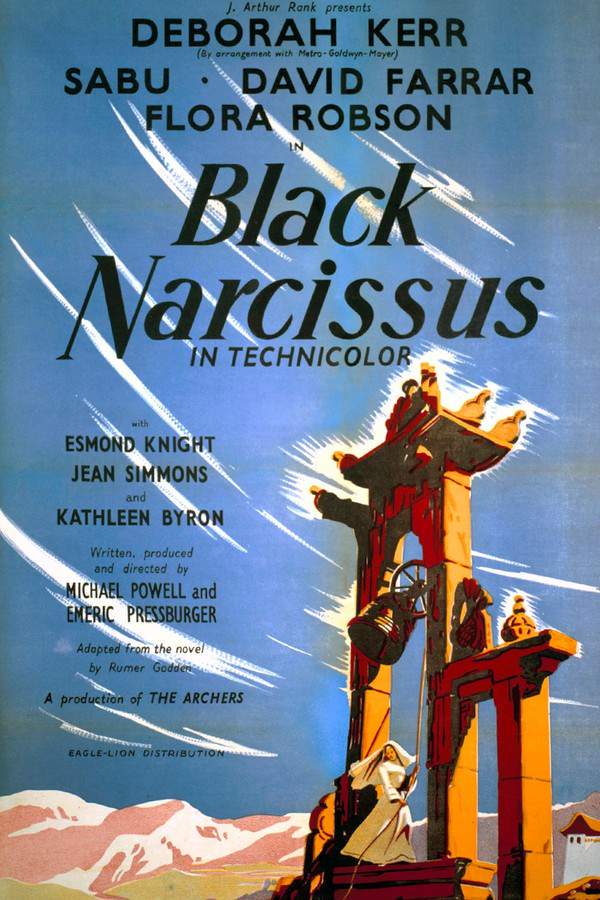
Black Narcissus (1947) movie poster

Timeline

Black Narcissus (1947) Timeline Explained – Every Event in Order

Release, runtime and language
1947 · 101 min · English
JustWatch #2,877 29
Directed by
Emeric Pressburger, Michael Powell
Starring
Jean Simmons, Deborah Kerr, David Farrar, Esmond Knight, Flora Robson, Jenny Laird

In the remote and imposing Himalayas, a group of Anglican nuns, led by the disciplined Sister Clodagh, attempt to build a new convent. The challenging landscape and isolation stir up personal conflicts and repressed emotions within the sisterhood. As they struggle to maintain their vows and faith, the beauty and power of their surroundings begin to unravel their composure, leading to a crisis of conscience and challenging their commitment to a life of devotion.

On this page (7)
  1. 1 Where to watch
  2. 2 Events in order (14)
  3. 3 Timeline questions answered
  4. 4 The book behind the movie
  5. 5 Movie threads
  6. 6 Movies like Black Narcissus
  7. 7 Every angle

Where to watch

Where to Watch Black Narcissus (1947)

Where can you watch Black Narcissus? Stream, rent or buy it in the US, including on Artiflix, fuboTV and HBO Max: current JustWatch availability with up-to-date prices.

Streaming availability powered by JustWatch

14 events in order · contains spoilers

Black Narcissus Timeline: Events in Chronological Order

Every key event of Black Narcissus (1947) in order, scene by scene, with when and where it takes place. Use it to untangle flashbacks, time jumps and parallel storylines, to refresh your memory before the sequel or to find the exact scene you are thinking of.

  1. General Toda Rai's Invitation

    General Toda Rai invites the Congregation of The Servants of Mary to establish a school and hospital in Mopu. This decision is pivotal as it sets the stage for the nuns' challenging journey in the Himalayan region.

    Where
    Mopu
  2. Arrival of Sister Clodagh and Her Team

    Sister Clodagh arrives in Mopu, accompanied by four other sisters with distinct responsibilities. They are greeted by a harsh environment and the daunting prospect of fulfilling their mission.

    Where
    Mopu
  3. Warning from Mr. Dean

    Local British agent Mr. Dean warns the nuns about the difficult challenges they are likely to face. He mentions past failures of similar missions, emphasizing the need for Sister Clodagh to ensure the sisters' well-being.

    Where
    Mopu
  4. Struggles with the Local Community

    The sisters find it increasingly tough to connect with the local population, exacerbated by disdain from their caretaker, Angu Ayah. This growing rift complicates their efforts and deepens their isolation.

    Where
    Mopu
  5. The Introduction of Kanchi

    In an effort to deal with local chaos, the sisters take in Kanchi, a local girl whose unpredictable behavior presents another layer of challenge. This decision reflects their quest to connect more with the community.

    Where
    Mopu
  6. Developing Feelings Amidst Chaos

    As the Young General develops feelings for Kanchi, it leads to tension within the convent. Mr. Dean draws parallels to the classic tale of 'The King and the Beggar-maid,' adding to the complexity of their relationships.

    Where
    Mopu
  7. Sisters' Emotional Distress

    The harsh living conditions start to take their toll on the sisters, leading to emotional and physical ailments. Sister Clodagh reflects on a past romantic failure, while each nun finds themselves battling internal struggles.

    Where
    Mopu
  8. Tragedy with Sister Honey

    Sister Honey's bond with local children ends in tragedy when a medication error results in the death of a critically ill infant. This incident drives the local community further away from the mission, straining relations.

    Where
    Mopu
  9. Sister Ruth's Infatuation

    Sister Ruth becomes increasingly infatuated with Mr. Dean and struggles with her vows of chastity. Her obsession, coupled with her unstable mental state, hints at the unraveling of her character.

    Where
    Mopu
  10. The Decision for Departure

    Sister Philippa expresses her desire to leave, realizing the stark choices presented in their situation. This moment reflects the growing discontent among the sisters and foreshadows their impending departure.

    Where
    Mopu
  11. Ruth's Desperate Act

    Devastated by Mr. Dean's rejection, Ruth attempts to harm Sister Clodagh, culminating in a deadly struggle. Their altercation concludes tragically with Ruth falling to her death, marking a pivotal moment for the remaining sisters.

    Where
    Mupu
  12. The Aftermath of Ruth's Death

    The death of Sister Ruth compels the Congregation to reevaluate their mission in Mopu. In the wake of this tragedy, they decide to shut down operations, leading to the departure of the remaining nuns.

    Where
    Mopu
  13. Farewell to Mr. Dean

    As the monsoon season approaches, Sister Clodagh and the other nuns prepare to leave Mopu. Mr. Dean bids them farewell, and a brief, poignant moment is shared between him and Sister Clodagh.

    Where
    Mopu
  14. Request for Ruth's Grave

    Before leaving Mopu, Sister Clodagh makes a heartfelt request to Mr. Dean to take care of Ruth's grave. This final act symbolizes her connection to the tragedy that unfolded, underscoring her conflicted emotions.

    Where
    Mopu

Last updated: November 16, 2024 at 17:57

Was this helpful?

Timeline questions answered

Black Narcissus Timeline Explained: Your Questions Answered

When does it happen, and why in that order? The questions people ask about the chronology of Black Narcissus (1947): time jumps, flashbacks, cause and effect between scenes and the correct order of events, each answered with spoilers.

Q1

Why did Sister Ruth attack Sister Clodagh?

Sister Ruth attacked Sister Clodagh because she was devastated after Mr. Dean rejected her romantic advances. Ruth had become obsessed with Dean, abandoning her nun's attire for a modern dress and lipstick to pursue him. When Dean spurned her, Ruth suffered a complete mental breakdown and returned to the mission with the intent to harm Clodagh, whom she had grown intensely jealous of throughout their time at the convent.

Foreshadowing: Ruth's jealousy of Clodagh had been building throughout the story, and her order of the alluring dress foreshadowed her desperate attempt to leave the convent.

  • sister ruth
  • sister clodagh
  • attack
  • mr dean
  • rejection
  • breakdown
Q2

Why did the nuns have to leave Mopu?

The nuns were forced to leave Mopu after Sister Ruth's death, which marked a turning point that compelled the Congregation to shut down the mission. The community had already abandoned them following the infant's death caused by Sister Honey's medication error, and the tragedy of a nun killing another made continuing impossible. The remaining sisters departed just as the monsoon season arrived, earlier than Mr. Dean had predicted.

Foreshadowing: Mr. Dean had warned that previous monk missions failed and predicted the nuns would leave with the monsoon.

  • nuns leave
  • mopu
  • mission failed
  • monsoon
  • congregation
Q3

Why did Sister Clodagh hide her feelings for Mr. Dean?

Sister Clodagh suppressed her attraction to Mr. Dean because she had entered the convent following a past romantic failure that had led her to abandon worldly life. Her vows of chastity and her position as Sister Superior made acknowledging such feelings impossible. She was irritated by Dean's indifference while simultaneously drawn to him, a conflict she could not reconcile with her dedication to her religious calling.

Foreshadowing: Early in the film, Clodagh reflects on her past romantic failure, establishing why she retreated into religious life.

  • sister clodagh
  • mr dean
  • feelings
  • vows
  • chastity
  • past romance
Q4

What led to the tragedy with the infant that Sister Honey caused?

Sister Honey's tragic error occurred because she had become emotionally consumed by her bond with local children, to the point of losing focus on her medical duties. When a critically ill infant needed treatment, she accidentally administered the wrong medication, causing the child's death. This mistake incited anger from the locals, who then abandoned the mission entirely.

Foreshadowing: Sister Honey's growing attachment to the local children had been noted throughout the story, showing her priorities shifting away from her assigned duties.

  • sister honey
  • infant death
  • medication error
  • locals abandon mission
Q5

Why did Sister Philippa decide to leave the convent?

Sister Philippa decided to leave because the overwhelming beauty and power of the Himalayan landscape had consumed her entirely. She abandoned the vegetable garden assigned to her and buried herself in flowers instead, unable to maintain her focus on the mission's practical goals. She told Clodagh that there were only two ways to live in Mopu: either ignore the environment like Mr. Dean or surrender to it like the holy man, implying she could do neither.

Foreshadowing: Philippa's gradual immersion in the flowers, rather than the vegetables she was supposed to grow, showed her drifting from her duties.

  • sister philippa
  • leave
  • flowers
  • himalayas
  • environment
Q6

How did the Himalayan environment affect the nuns psychologically?

The Himalayan environment psychologically destabilized the nuns by amplifying their repressed emotions and desires. The stunning yet oppressive beauty of the mountains, combined with isolation and the palace's suggestive art from its harem days, continually tempted them. Each nun's unresolved internal struggles, Clodagh's past romance, Ruth's jealousy, Philippa's surrender to nature, Honey's emotional attachment, were amplified by the setting until they could no longer maintain their composure or vows.

Foreshadowing: Mr. Dean warned the sisters about the hardships they would face, and the palace's previous life as a harem set a tone of sensual temptation.

  • himalayas
  • environment
  • psychological
  • nuns
  • temptation
  • repression
Q7

Why did the Young General develop feelings for Kanchi?

The Young General became attracted to Kanchi after he intervened to protect her when Ayah punished her for stealing. This act of saving her from punishment sparked genuine feelings, despite the vast social gap between them. Mr. Dean noted the parallel to the classic tale of The King and the Beggar-maid, highlighting how the young general's journey to Britain and exposure to Western culture might have made him more open to such a relationship.

Foreshadowing: The sisters took in Kanchi to manage her unpredictable behavior, placing her in proximity to the Young General.

  • young general
  • kanchi
  • king and beggar-maid
  • feelings
  • social gap
Q8

Why was Mr. Dean so cynical about the nuns' mission?

Mr. Dean was cynical because he had witnessed previous attempts by monks to establish a school in the area fail, and he predicted the nuns would leave as soon as the monsoon arrived. As the local British agent, he understood the harsh social and environmental conditions that made such missions extremely difficult to sustain. Despite his cynicism, he showed respect for the sisters and ultimately agreed to care for Ruth's grave.

Foreshadowing: Mr. Dean's early warning about the monks' failure set the expectation for the nuns' eventual departure.

  • mr dean
  • cynical
  • mission
  • monsoon
  • monks failed
Q9

Why did Sister Ruth become jealous of Sister Clodagh?

Sister Ruth's jealousy of Sister Clodagh stemmed from her own emotional instability and unspoken attraction to Mr. Dean. While Ruth struggled with her vows and became infatuated with Dean, she perceived that Clodagh also had hidden feelings for him, despite Clodagh's outward disapproval of Dean's behavior. This combination of rivalry for Dean's attention and Ruth's deteriorating mental state fueled her resentment toward Clodagh.

Foreshadowing: Ruth's observing Clodagh's interactions with Dean and her own growing obsession set the foundation for her jealousy.

  • sister ruth
  • sister clodagh
  • jealousy
  • mr dean
  • infatuation
Q10

Why did General Toda Rai's uncle abandon his duties to become a holy man?

General Toda Rai's wealthy uncle abandoned his Rajput duties to become a Hindu holy man who meditated on a mountain within the monastery domain. He refused all communication with the family and the sisters. This abandonment left the general's heir, the Young General, to be tutored in Western customs by the nuns, and the uncle's presence on the mountain symbolized another form of retreat from worldly responsibilities, paralleling the nuns' own struggles with their vows.

Foreshadowing: The uncle's choice to withdraw from society foreshadows the theme of individuals unable to sustain their chosen paths.

  • general toda rai
  • uncle
  • holy man
  • hindu
  • mountain
  • meditate
Q11

Why couldn't the nuns integrate with the local community?

The nuns struggled to integrate because the local caretaker Angu Ayah treated them with disdain, making cooperation difficult. Their efforts were further hampered when the local community abandoned them after Sister Honey's medication error caused the infant's death. Without community trust, the sisters could not successfully run the school and hospital they had been sent to establish.

Foreshadowing: Ayah's initial disdain established the friction between the sisters and the local population from the start.

  • nuns
  • local community
  • integration
  • ayah
  • locals abandon
  • infant death

Movie threads

More Movies Like Black Narcissus, by Mood & Story

Curated lists built around what makes Black Narcissus tick: the same mood, the same kind of story or the same emotional payoff. Each list explains why these movies belong together.

Atmospheric Isolation Thrillers Like Black Narcissus

Stories where oppressive environments push characters to their psychological limits. Find movies like Black Narcissus that masterfully use claustrophobic and remote settings to drive psychological tension. These films feature characters whose grip on reality is tested by their oppressive surroundings, creating a slow-burn sense of dread similar to the unraveling of the nuns in the Himalayas.

  • claustrophobic
  • unsettling
  • oppressive
  • isolated
  • psychological
  • tense
  • Tone: tense, unsettling, melancholic
  • Pacing: slow burn, deliberate
Why these movies?

The story pattern: The narrative pattern involves characters, often in a confined or remote group, who are confronted by an environment that reflects their deepest fears or repressed desires. The central conflict is internal, as the setting acts as a catalyst for psychological breakdown, paranoia, and the surfacing of hidden tensions.

Why they belong together: These movies are grouped by their shared use of a powerful, almost sentient atmosphere that creates relentless psychological pressure. They share a focus on internal conflict over external action, a gradual pacing that builds unease, and a heavy emotional weight stemming from characters losing their sense of self.


Movies with Bittersweet Endings of Failure Like Black Narcissus

Journeys where noble efforts end in failure, yet offer profound human insight. If you liked the poignant ending of Black Narcissus, explore these movies about failed missions and spiritual crises. These films share a heavy emotional weight and conclude on a bittersweet note, finding a sliver of grace or human connection amidst tragedy and collapse, similar to Sister Clodagh's journey.

  • tragic
  • bittersweet
  • melancholic
  • heavy
  • poignant
  • solemn
  • Tone: bittersweet, heavy, tragic
  • Pacing: slow, character-driven
Why these movies?

The story pattern: The narrative follows dedicated individuals or groups striving for a high ideal—faith, justice, creation—only to be overcome by internal flaws or external forces. The climax is a failure of the mission, often accompanied by personal loss, but the resolution finds value in the lessons learned or the fragile bonds formed during the struggle.

Why they belong together: These films are connected by their shared emotional arc: a heavy investment in a cause leads to a tragic or failed conclusion, yet the ending is not purely bleak. They resonate because they acknowledge the pain of failure while also honoring the dignity and human cost of the endeavor itself.

If you liked this

Movies Like Black Narcissus

Similar movies to Black Narcissus: the same genre, themes or kind of story. Each one comes with its own plot summary, timeline and ending explained.

Browse all movie summaries

Every angle

Black Narcissus (1947) Explained: Plot, Timeline & Characters

Everything about Black Narcissus in one place: what happens in the plot summary, the timeline in chronological order, the characters and meaning and a spoiler-free summary. What's After the Movie adds the cast, box office and post-credit scenes.

Coming soon on iOS and Android

The Plot Explained Movie Summary App

Plot summaries, endings explained and timelines on your phone. Catch up on any movie in minutes, save your favorites and never miss a twist again.

Be the first to know when we launch. Your email stays private, always.

Learn more about the app