Plot Explained Spoilers guaranteed!
Plot Explained

Browse by genre

Black Mirror: Bandersnatch (2018) movie poster

Ending Explained

Black Mirror: Bandersnatch (2018) Ending Explained – Final Scene & Meaning

Release, runtime and language
2018 · 90 mins · English
Echo score 73
Loading streaming availability…
Directed by
David Slade
Starring
Will Poulter, Fionn Whitehead, Rochenda Sandall, Craig Parkinson, Alice Lowe, Sandra Teles

In 1984, a young programmer begins to question reality as he adapts a dark fantasy novel into a video game. A mind-bending tale with multiple endings.

On this page (7)
  1. 1 Where to watch
  2. 2 What happens at the end
  3. 3 Final events in order
  4. 4 Ending questions answered
  5. 5 Movie threads
  6. 6 Movies like Black Mirror: Bandersnatch
  7. 7 Every angle
Loading streaming availability…

Ending explained · contains spoilers

What Happens at the End of Black Mirror: Bandersnatch?

How Black Mirror: Bandersnatch (2018) ends, what the final scene means, which earlier moments set it up and how to read the ending if the film leaves it open. The full ending explained, with every spoiler.

The brilliance of Bandersnatch lies in how it uses its multiple endings to deconstruct the very concept of free will, forcing the viewer to confront their role in the protagonist's suffering. While the narrative branches into dozens of variations, the core message remains consistent: Stefan is trapped in a system where his choices are illusory, and the viewer is the unseen entity pulling the strings. This is explicitly articulated by Colin Ritman, the game’s spiritual guide, who explains that time is a construct and reality is merely a series of branching paths controlled by an outside force. The endings vary in tone from the absurdly meta to the tragically violent, but they all circle back to the idea that Stefan is a "Pac-Man" running a maze he cannot escape.

The most surreal conclusions break the fourth wall to reveal the artificiality of Stefan's world. If the viewer chooses to explain the concept of Netflix to a confused Stefan, or forces him to fight his therapist, the narrative can spiral into a revelation that Stefan is actually an actor on a film set. This validates Colin’s earlier monologue: Stefan’s reality is fake, and the people around him are merely players following a script. It is a moment of existential dread that flips the Black Mirror trope; rather than technology enslaving humanity, it is the audience itself whose demand for entertainment enslaves the character. However, even in endings where Stefan "wins" by successfully finishing his game—such as the brutal path where he chops up his father—the victory is hollow. He completes the game by removing the element of choice, ironically mirroring the viewer's experience, only to have the cycle repeat in the modern day through Colin’s daughter, Pearl, who tries to reboot the game and finds herself trapped by the same technological curse.

The most emotionally resonant ending, however, is the "Train Death" conclusion. This path requires the viewer to delve into Stefan's deepest trauma: the death of his mother. By retrieving a lost rabbit toy, Stefan is able to rewrite his past as a child, choosing to board the train with his mother rather than waiting for a later one that would crash. While this results in his death in the present day—dying peacefully on the therapist's floor—it is the only ending where he achieves true agency and peace. He is no longer a puppet to the viewer's whims or the game's code; he reclaims his life by choosing to be with the one person he loved. Ultimately, Bandersnatch offers no single "happy" ending because the very structure of the game denies it; whether he becomes a murderer, a pawn in a government conspiracy, or a tragic figure dying to be with his mother, Stefan’s fate is always sealed by the hand holding the remote.

Last updated: March 30, 2026 at 16:15

Was this helpful?

The last 4 events

How Black Mirror: Bandersnatch Ends: The Final Events in Order

The last events of Black Mirror: Bandersnatch (2018) in chronological order, the run-up to the ending explained above. The complete timeline has all 15 events, scene by scene.

Open the full timeline
  1. Back to the Train

    In another branch, Stefan seemingly crosses through a mirror and reaches his five-year-old self. He is then faced with the choice of whether to 'die' alongside his mother in the train crash. Choosing to stay with her causes Stefan to suddenly die in the present.

  2. The Fate of Peter

    In the darkest paths, the viewer can make Stefan kill his father and then choose whether to bury or chop up the body. Burying the body leads to Stefan being jailed before the game's release. Chopping it up leads to the game's successful release, but Stefan is sent to prison shortly after, and the game is recalled and destroyed.

    Where
    Stefan's house
  3. Critical Reception and Tuckersoft's Fate

    In several endings, the viewer is shown the critical reaction to the released Bandersnatch game. The reactions and outcomes vary wildly depending on the choices made along the way, and Tuckersoft may even be driven out of business. Each path demonstrates how Stefan's decisions ripple outward to everyone connected with the game.

  4. Pearl's Legacy

    One ending concludes in the present day with an adult Pearl, now a programmer at Netflix, attempting to adapt Bandersnatch into an interactive film. The viewer chooses whether she pours tea over her computer or destroys it entirely. Either choice implies she may be heading down the same destructive path as Davies and Stefan before her.

    When
    Present day
    Where
    Netflix offices

Ending questions answered

Black Mirror: Bandersnatch Ending: Your Questions Answered

The questions people ask most about the ending of Black Mirror: Bandersnatch (2018): what the final scene means, how the twist works, what happens to each character and how to read the ending. Each answer contains spoilers.

Q1

What happens in the Train Death ending of Bandersnatch?

In the Train Death ending, Stefan returns to his childhood home and retrieves a rabbit toy that unlocks a repressed memory of the day his mother died. Using that anchor, he travels back in time and chooses to board the original train with her instead of waiting for the later one that crashes. The trade-off is that Stefan dies in the present, collapsing on his therapist's floor, but the film frames this as the only path where he reclaims genuine agency and inner peace. By choosing to die beside the person he loved most, Stefan escapes the maze of viewer-controlled branching paths for the first time.

Foreshadowing: The rabbit toy appears briefly in early scenes of Stefan's childhood bedroom before it becomes the trigger for the final memory.

  • train death ending
  • mother
  • rabbit toy
  • therapist
  • memory
Q2

Does Stefan ever actually have free will in Bandersnatch?

Across every branch of the story, Stefan's decisions are revealed to be guided by an unseen force that the viewer controls through the interactive interface. Colin Ritman spells this out directly when he explains that time is a construct and reality is a series of branching paths orchestrated from outside Stefan's perception. Even Stefan's attempts to rebel, fight back, or demand answers are absorbed back into the same system. Bandersnatch argues that true free will is impossible inside the experience; the only escape is the kind of irreversible death found in the Train ending.

  • free will
  • choice
  • control
  • colin ritman
  • determinism
Q3

What does it mean when Stefan discovers he is an actor on a film set?

In one surreal conclusion, Stefan becomes aware that he is not a real person but an actor performing on a soundstage, with crew members and cameras suddenly visible around him. The reveal validates Colin's earlier warning that Stefan's reality is fabricated and the people in his life are following a script written by someone else. It flips the usual Black Mirror premise, because the enslaving force is not technology but the audience demanding entertainment. Stefan's suffering is reframed as a product made for an outside consumer.

Foreshadowing: Colin's PAC lecture earlier in the film already implies that Stefan's world is a designed system rather than a real one.

  • film set
  • actor
  • fourth wall
  • meta
  • reality
Q4

What does the ending where Stefan kills his father actually mean?

In this darker path, Stefan murders his father and uses the act to complete his Bandersnatch video game, satisfying the blood-soaked vision he had been chasing. Although technically a victory because the game ships, the ending is presented as hollow, since Stefan finishes the project by stripping choice from himself rather than anyone else. The result ironically mirrors the viewer's own control over him, so the 'win' is actually the deepest defeat. The game then reboots years later through Colin's daughter, signaling that the cycle cannot be broken.

Foreshadowing: Stefan's childhood drawings of violence and his mentions of the novel's brutal imagery prepare the viewer for this escalation.

  • kill father
  • bandersnatch game
  • hollow victory
  • cycle
Q5

Who is Pearl at the end and what does her appearance mean?

Pearl is the young daughter of Colin Ritman, who appears late in one timeline offering Stefan psychedelic drugs and later inheriting her father's obsession with the Bandersnatch code. Her presence at the close of Stefan's story turns the film into a generational horror hook, suggesting the controlling force is about to repeat with a new protagonist. The curse of external control is not solved by Stefan's death, only transferred. Pearl implies that what the audience has just watched is only one loop in a much longer series.

  • pearl
  • colin ritman
  • sequel
  • generational curse
  • reboot
Q6

Why does Colin Ritman say 'PAC' stands for Program and Control?

When Colin corrects Stefan about the acronym PAC, he is revealing the film's central thesis, that reality operates as a managed system rather than a natural flow. The phrase reduces Stefan's life to a set of inputs and outputs governed by an invisible operator, exactly mirroring the maze metaphor the film returns to repeatedly. Colin is not just sharing developer gossip; he is warning Stefan, and the viewer, about the design they are inside. It is the moment Bandersnatch telegraphs that every choice on screen is being routed through an external controller.

  • pac
  • program and control
  • colin ritman
  • system
  • acronym
Q7

What does the Pac-Man maze metaphor mean in the ending?

Bandersnatch compares Stefan to a Pac-Man running through a maze whose exits are fake, a visual shorthand for the interactive experience itself. Every path the viewer selects either loops back, dead-ends, or forces Stefan into another scripted crisis, with no way out of the structure. Whether he becomes a murderer, a government subject, or a man at peace through death, he is still navigating the same controlled design. The maze is the Netflix interface, and Pac-Man is the character whose suffering keeps the audience pressing buttons.

  • pac-man
  • maze
  • metaphor
  • branching paths
  • system
Q8

Why is there no truly happy ending in Bandersnatch?

The interactive structure of Bandersnatch is built so that no single conclusion offers a clean, redemptive outcome, because the framework itself rules one out. Endings that look like wins, such as completing the game, come packaged with violence, hollow victories, or renewed cycles of control. The closest thing to peace, the Train Death ending, requires Stefan to die in the present. The film argues that within a system governed by external choice, happiness cannot be achieved, only traded for.

  • happy ending
  • resolution
  • structure
  • tragic
  • peace
Q9

What does the rabbit toy do in the Train Death ending?

The rabbit toy is the physical object Stefan retrieves from his childhood bedroom that allows him to access and rewrite his earliest memory of his mother's death on the train. Once he holds it, the interface gives him the option to board the original train with her instead of waiting for the later one that crashes, which erases the trauma that has defined his adult life. The toy functions as a symbol of the grief he has been carrying through every branch of the story. Its retrieval is the mechanical key that unlocks Stefan's one genuinely self-directed act in the film.

Foreshadowing: The rabbit toy can be glimpsed in Stefan and his mother's living room during the opening childhood flashback.

  • rabbit toy
  • childhood
  • mother
  • memory
  • trauma
Q10

What is the government conspiracy ending actually about?

One of the available paths leads Stefan to a paranoid conclusion where a shadowy agency reveals that reality, time, and even the Bandersnatch project are being monitored or engineered by an outside authority. Rather than offering Stefan freedom, the conspiracy simply confirms what Colin already proposed, that someone above the player is steering events. It is less an escape route than a darker variation on the same theme, showing that there is nowhere in the narrative where Stefan's autonomy is respected. The ending reframes his suffering as a small piece of a much larger controlled system.

Foreshadowing: Hints about surveillance and coded signals in Colin's dialogue prepare the viewer for this paranoid turn.

  • government
  • conspiracy
  • agency
  • surveillance
  • control
Q11

What does the Netflix ending imply about the audience watching Bandersnatch?

When Stefan confronts the viewer directly, or breaks through into the Netflix-aware film-set ending, the film accuses the audience of being the unseen controller responsible for his suffering. The viewer, who thought they were selecting options, is reframed as the entity whose appetite for content keeps Stefan trapped in the maze. This flips the usual Black Mirror warning from technology harming humanity to entertainment consumption harming the performed character. The implication is uncomfortable, that the act of watching is itself the mechanism of control.

Foreshadowing: Stefan's increasing awareness that someone is 'watching' him builds through several mid-film confrontations.

  • netflix
  • audience
  • viewer
  • meta
  • entertainment

Movie threads

More Movies Like Black Mirror: Bandersnatch, by Mood & Story

Curated lists built around what makes Black Mirror: Bandersnatch tick: the same mood, the same kind of story or the same emotional payoff. Each list explains why these movies belong together.

Reality-bending sci-fi like Black Mirror: Bandersnatch

Stories where characters discover the walls of their world are just suggestions. If you loved Black Mirror: Bandersnatch's mind-bending fourth-wall breaks and branching timelines, these cerebral sci-fi stories will hit the same nerve. Expect philosophical puzzles about determinism, meta-narratives that turn the lens on themselves, and twisty journeys where free will and fate become indistinguishable. Movies like Black Mirror: Bandersnatch for viewers who want to question everything.

  • mind-bending
  • meta
  • unsettling
  • cerebral
  • paranoid
  • existential
  • Tone: dark, cerebral, unsettling
  • Pacing: variable with looping rhythms
Why these movies?

The story pattern: These narratives typically begin with an ordinary character who notices impossible things slipping into their world. Reality glitches, time loops, hidden controllers, or simulated environments reveal themselves layer by layer. The protagonist may fight against the unseen forces, or surrender to them, but the audience is always left wondering how much was chosen and how much was orchestrated. Endings often refuse to resolve the puzzle cleanly, instead amplifying the existential vertigo.

Why they belong together: They share a cerebral, unsettling mood anchored by philosophical questions rather than action. Pacing shifts between meditative and jolting as new realities crash into each other. Protagonists are typically intelligent, isolated, and emotionally burdened, and violence or emotion exists to underline the ideas rather than work as spectacle.
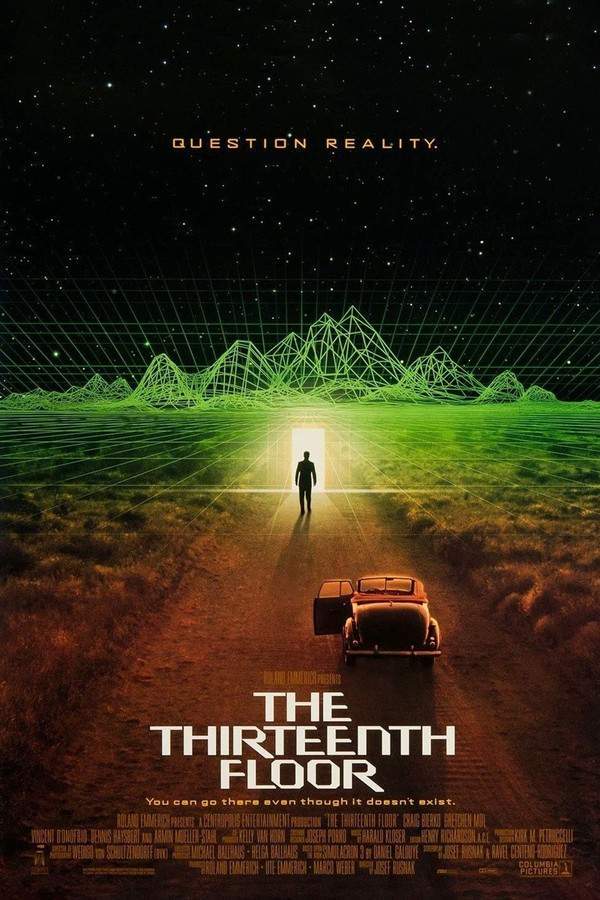
Dark psychological unravelings like Black Mirror: Bandersnatch

Haunted minds where grief becomes a maze with no exit. Looking for movies like Black Mirror: Bandersnatch that focus on a fragile mind buckling under trauma? These heavy stories follow characters haunted by childhood loss, survivor's guilt, and creeping paranoia. Expect relentless psychological pressure, bleak atmospheres, and endings that reveal the cost of everything they've been carrying. Perfect for fans of cerebral, character-driven darkness.

  • paranoid
  • anxious
  • traumatized
  • melancholic
  • unsettling
  • oppressive
  • Tone: dark, melancholic, oppressive
  • Pacing: variable and uneven
Why these movies?

The story pattern: A quiet protagonist carries a wound from childhood, a parent's death, abuse, or absence, and the film shows that wound reopening through strange events, intrusive thoughts, or impossible choices. Reality becomes suspect. The protagonist may lash out, withdraw, or try to outrun the past, only to discover that the past has already rewritten them. Often framed around a project or puzzle that mirrors their inner collapse until the two merge.

Why they belong together: The defining connection is the interior, claustrophobic mood. Tone is dark and melancholic, pacing can stretch into stillness before spiking into confrontation. Ending feels are mixed or bleak, and emotional weight stays heavy throughout. Characters tend to be isolated, and the world visibly shrinks around them as the film progresses.

If you liked this

Movies Like Black Mirror: Bandersnatch

Similar movies to Black Mirror: Bandersnatch: the same genre, themes or kind of story. Each one comes with its own plot summary, timeline and ending explained.

Browse all movie summaries

Every angle

Black Mirror: Bandersnatch (2018) Explained: Plot, Ending, Timeline & Characters

Everything about Black Mirror: Bandersnatch in one place: what happens in the plot summary, the timeline in chronological order, the characters and meaning, the ending explained and a spoiler-free summary. What's After the Movie adds the cast, box office and post-credit scenes.

Coming soon on iOS and Android

The Plot Explained Movie Summary App

Plot summaries, endings explained and timelines on your phone. Catch up on any movie in minutes, save your favorites and never miss a twist again.

Be the first to know when we launch. Your email stays private, always.

Learn more about the app