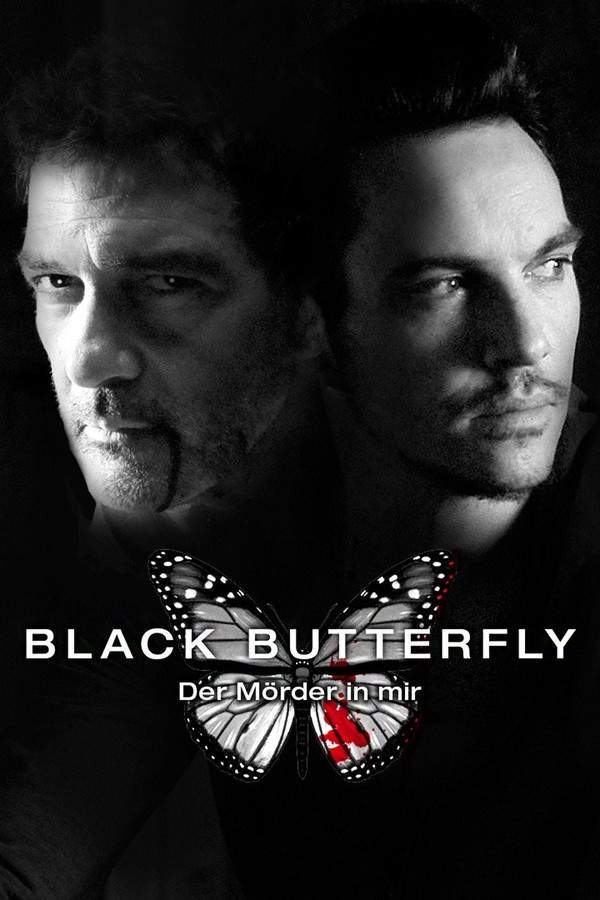
Paul, Jonathan Rhys Meyers, a reclusive writer, sits at his typewriter repeating the words “I’m stuck” as if the tension between creativity and isolation could be trapped on the page. The hush of his farmhouse is broken when Laura, the real estate agent, arrives with prospective buyers for his house and farm. Laura’s visit nudges Paul toward ordinary errands and a planned lunch, a rare thread of human contact in his secluded life. As he heads into town, a tense moment with a truck driver interrupts his routine, a confrontation that bleeds into the day’s small dramas. After the dust settles, Paul finishes his errands and makes his way to a Diner to meet Laura, only for trouble to follow when the road and the road’s sayings seem to twist around him. A stranger’s quiet intervention in the restaurant—someone who hurls the truck driver out and then steps away—leaves Paul unsettled, and he leaves Laura to arrange dinner on his own terms.
Antonio Banderas, as Jack, a drifter with no fixed place to stay, emerges into Paul’s story when Paul spots him walking along the road and offers shelter for a few nights. The act of generosity sets a new rhythm inside the cabin where Paul lives: Jack takes over cooking, does odd jobs, and constantly pushes Paul to admit he has nothing left to say. The power dynamic shifts as the power lines go down and the isolation deepens; there is no phone or internet to call for help, and Jack’s grip tightens. One morning, Paul wakes to a knife pressed at his neck, and soon a gun is leveled at him, driving him back into the house and away from any chance of escape. Without means to signal distress, Paul retreats into writing, drafting a few pages of a screenplay, only to have his work discarded by Jack and burned in the fire.
Laura, Piper Perabo, reappears with groceries and the weight of an exterior world that refuses to stay distant. The tension between them escalates until Jack uses force to bend the situation to his will, forcing Paul and Jack to push Laura’s car into the farm’s pond to prevent any obvious sign of trouble. The sheriff arrives, but Jack overpowers him, shoving the lawman into his own police car and shooting him, while Laura is dragged away into a side room. The sounds of a struggle give way to silence, and the boundary between fear and control sharpens. As the crisis spirals, Jack keeps Paul under tight control, tying him up so that Paul cannot escape or call for help.
Paul, now restrained, manages to free himself, grab a rifle, and confront Jack with a long, deliberate monologue about luck and consequence. He reveals a hidden box of mementoes—trophies from other killings—that he plants into Jack’s bag, intending to manipulate a narrative that might save him. He fires the rifle, only to reveal it is loaded with blanks, a cruel joke that leaves him vulnerable to Jack’s overpowering grip. The scene plunges into a tense reversal, and Paul is knocked unconscious.
The aftermath reveals a twist: FBI agents flood the farm with questions and evidence, and Paul realizes he has been outmaneuvered by Jack, who has been tracking him for years for a string of murders beginning with his wife. Laura and the sheriff were never lost souls; they are revealed to be FBI agents, and the hunt for the missing victims centers on the farm’s pond and the willingness of Paul to confess. Jack presses Paul for the locations of the bodies, but Paul refuses, insisting he could turn his own confession into a lie suitable for a courtroom, arguing that the “mementoes” were planted. The pursuit of truth becomes a chess game, with Jack probing the idea of a final, inevitable ending, while Paul contends with the possibility of a different, deeper truth.
The FBI team scans the farm and finds no trace of the wife’s body, prompting Jack to study a picture of Paul’s wife as the truth of the pond’s buried past inches closer. The confrontation edges toward a potential resolution: Paul offers to reveal the victims’ locations in exchange for sparing him the death penalty. Jack rejects the offer with a chilling line, undiluted by mercy: > I like my ending better. The moment lingers as the farm’s past weighs on the living.
When Paul wakes again, he finds himself back on the couch, the typewriter before him bearing the same taunting script—“I'm stuck.” Only this time, the realization hits him with a brittle clarity: it was all a dream. He slides a fresh sheet into the typewriter and, with a quiet resolve, types the title Black Butterfly, a signal of a new literary project born from a storm of fear, manipulation, and the uncertainty of truth. In the final quiet, the story of the writer who dared to dream inside a nightmare becomes the seed for a new work, a fresh page waiting to be filled with whatever truth he can still craft.