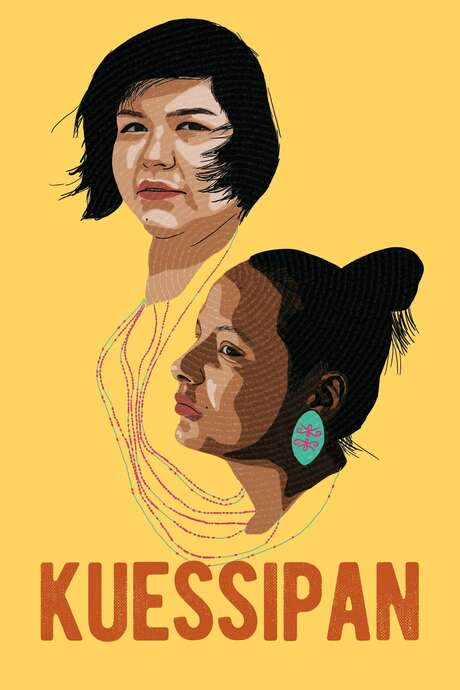
Tekehentahkhwa, who goes by the nickname “Beans,” is a bright preteen growing up on the Mohawk reserve of Kahnawake, along the St. Lawrence River. She is supported by her mother, Lily, who encourages her to apply to a prestigious, largely white school in Montreal, even as her father resists the idea. The tension between pursuing opportunity and staying rooted in tradition frames Beans’ world, her family’s values, and the choices that accompany growing up between two worlds.
The family’s world expands when they glimpse a cousin, Karahwen'hawi, on television, a protester opposing the expansion of a golf course into Kahnesatake territory upriver. Motivated by this show of resistance, they drive to the area to stand with the protesters. Oka, Quebec, sits nearby, the town eyeing the land and the possibility of erasing a Mohawk cemetery to make way for development. What begins as a demonstration soon becomes a high-stakes clash as police raid the encampment, barricades go up, and the Mohawk land is effectively cut off from the surrounding town. Food grows scarce, families are told they may evacuate, and outside, confrontations flare as protesters battle against the advancing tactics of the authorities.
Into this charged atmosphere enters April, an older girl Beans views as a guide to toughness, friendship, and boundaries. April introduces Beans to a harsher way of handling life—lessons that sometimes come with rough edges and risk. As the standoff intensifies, the army is brought in to replace local police, and the climate shifts from protest to siege. Beans, her younger sister Ruby, and their mother Lily are relocated to a hotel with other Mohawk women and children, a temporary sanctuary that makes the stakes even more personal.
At the hotel, Beans joins April and a group of older teens for a night that includes music, laughter, and difficult decisions. The evening features a moment of vulnerability and a kiss with April’s older brother, a memory that sticks with Beans as the days blur together under the strain of the siege. Back at the hotel lobby, a confrontation with a white girl explodes into a scene that ends with Beans and her family being asked to leave the premises, underscoring how fragile safety can be in a moment of upheaval.
Returning home is not simple. Beans, Ruby, and Lily slip through the barricades just as Lily is about to give birth, a moment of intense relief and new life in the middle of a tense standstill. The family draws closer as Lily’s labor unfolds, and Beans spends time around a campfire with April and her friends, a space that grows complicated when April’s family dynamics come into view. An uncomfortable admission surfaces when April hints that her father—and possibly her brother—have harmed her, a revelation that casts a long shadow over their community and the struggles they endure.
In the months that follow, the family finds a path forward. They meet with their cousin Hawi, who declares that an agreement has been reached with the government to protect the native burial ground and to prevent the golf course expansion from destroying that sacred space. The conflict eases for a moment, but life continues to move with all its complexity. Beans ultimately begins private school in the fall, stepping into a world of new expectations while holding onto her Mohawk identity. In a quiet, symbolic moment, she proudly introduces herself as Tekehentahkhwa, her full Mohawk name, signaling a bridge between the traditions she loves and the future she seeks.