Plot Explained Spoilers guaranteed!
Plot Explained

Browse by genre

Band of Brothers (1000) movie poster

Timeline

Band of Brothers (1000) Timeline Explained – Every Event in Order

Release, runtime and language
1000 · 594 mins · English
Directed by
Phil Alden Robinson, Richard Loncraine
Starring
Ron Livingston, Nicholas Aaron, Damian Lewis, Donnie Wahlberg, Dexter Fletcher, Michael Cudlitz

Based on Stephen E. Ambrose’s acclaimed book, the series draws from interviews, journals and letters of Easy Company survivors. It follows the men from paratrooper training in Georgia through their D‑Day parachute drop, the Battle of the Bulge and other brutal combat, showing both their bravery and the deep fear they endured, cementing their legend.

On this page (5)
  1. 1 Events in order (12)
  2. 2 Timeline questions answered
  3. 3 Movie threads
  4. 4 Movies like Band of Brothers
  5. 5 Every angle

12 events in order · contains spoilers

Band of Brothers Timeline: Events in Chronological Order

Every key event of Band of Brothers (1000) in order, scene by scene, with when and where it takes place. Use it to untangle flashbacks, time jumps and parallel storylines, to refresh your memory before the sequel or to find the exact scene you are thinking of.

  1. Training at Camp Toccoa

    Easy Company's grueling training begins at Camp Toccoa, where recruits face intense physical conditioning and airborne preparation. The drill sergeants push them to their limits, forging discipline and early bonds that will carry into combat. This period establishes the leadership dynamics and unit cohesion that define their later actions.

    When
    1942-1943
    Where
    Camp Toccoa, Georgia, USA
  2. D-Day airborne insertion behind Utah Beach

    In the early hours of D-Day, Easy Company parachutes behind enemy lines to support the Utah Beach assault. They contend with heavy anti-aircraft fire, difficult landings, and scattered drop zones as they fight to link up with advancing troops. Their successful insertion helps secure the Normandy beachhead and disrupt German defenses.

    When
    June 6, 1944
    Where
    Normandy, France
  3. Liberation of Carentan

    The company presses into Carentan to consolidate the beachheads and ensure a continuous front. They engage German defenses in street fighting and secure the town to facilitate the link between Utah and Omaha beachheads. The victory strengthens the Allied breakout from the Cotentin Peninsula.

    When
    June 1944
    Where
    Carentan, France
  4. Operation Market Garden insertions

    As part of Operation Market Garden, Easy Company parachutes into the Netherlands to seize critical bridges. They endure heavy resistance, harsh weather, and logistical challenges as they press toward victory. The operation tests endurance and leadership under difficult conditions.

    When
    September 1944
    Where
    Netherlands
  5. Siege of Bastogne

    The unit fights in the freezing siege of Bastogne during the Battle of the Bulge. They are surrounded, outnumbered, and low on supplies, yet hold the line until relief forces arrive. Winters and his men demonstrate resilience and steadfast leadership under crushing pressure.

    When
    December 1944 - January 1945
    Where
    Bastogne, Belgium
  6. Crossing into Germany

    In early 1945, Easy Company advances into occupied Germany, pushing through towns as Allied forces close in on the Reich. They confront stubborn defenses and logistical tailbacks as the war nears its end. The campaign marks the final push into enemy territory in Europe.

    When
    March–April 1945
    Where
    Germany
  7. Liberation of Kaufering concentration camp

    Easy Company liberates the Kaufering concentration camp complex, witnessing the atrocities endured by prisoners. They provide aid and help secure the area as Allied forces advance deeper into Germany. The liberation leaves a lasting moral impact on the soldiers' views of the war.

    When
    April 1945
    Where
    Kaufering, Germany
  8. Capture of the Eagle's Nest

    Towards the war’s end, Easy Company becomes among the first Allied forces to enter Berchtesgaden and seize the Kehlsteinhaus, Hitler's mountain retreat. They encounter little resistance and take control of the symbolically charged site. The moment serves as a symbolic capstone to their European combat march.

    When
    May 1945
    Where
    Berchtesgaden, Germany
  9. Occupation of Germany

    With combat operations winding down, Easy Company undertakes occupation duties across German towns. They assist civilians, restore order, and begin rebuilding in a war-torn landscape. The transition from frontline fighting to occupation duties defines the immediate postwar period.

    When
    May–June 1945
    Where
    Germany
  10. End of World War II in Europe

    The war in Europe officially ends, and the soldiers reflect on their losses and camaraderie. Homecoming begins as survivors return or are reassigned, while others are wounded or transition to civilian life. The narrative emphasizes the human cost of victory and the bonds forged under fire.

    When
    May 8, 1945
    Where
    Europe
  11. Winters' leadership and unit cohesion

    Richard Winters emerges as a central figure, steering Easy Company through campaigns while protecting his men. He makes tough decisions under pressure and maintains morale amid casualties and danger. His steady leadership helps shape the unit's identity and effectiveness across the war.

    When
    1944-1945
    Where
    Europe
  12. Postwar reflections and survivors

    The narrative closes with reflections on the fates of Easy Company members after the war. Some die or are seriously wounded, others recover and return home, while some adjust to civilian life. The episodes emphasize the lasting mental and moral impact of their experiences on each man.

    When
    1945-1946

Last updated: February 20, 2026 at 12:24

Was this helpful?

Timeline questions answered

Band of Brothers Timeline Explained: Your Questions Answered

When does it happen, and why in that order? The questions people ask about the chronology of Band of Brothers (1000): time jumps, flashbacks, cause and effect between scenes and the correct order of events, each answered with spoilers.

Q1

Why was Richard Winters able to lead Easy Company so effectively?

Richard Winters demonstrated effective leadership through his calm demeanor under fire and his ability to make quick, sound decisions during critical moments. He consistently put his men's safety ahead of mission glory, which earned their trust and loyalty. His strategic thinking was evident at key moments like the D-Day jump and during the Battle of the Bulge, where his decisions directly saved lives. Unlike officers who showed bravado at the expense of their men, Winters led by example and maintained clear communication with his platoon.

Foreshadowing: Winters' leadership qualities were forged during the grueling training at Camp Toccoa, where he first earned the respect of his fellow soldiers.

  • richard winters
  • leadership
  • easy company commander
  • tactical decisions
  • battle of the bulge
  • d-day
Q2

Why was the Siege of Bastogne one of the hardest battles for Easy Company?

The Siege of Bastogne placed Easy Company in an impossible position: they were surrounded by German forces, outnumbered, and critically low on supplies including food, ammunition, and medicine. The bitter winter cold added another enemy, causing frostbite and hypothermia among soldiers without proper winter gear. Despite these conditions, they were ordered to hold their position at all costs until relief forces arrived. The combination of enemy fire, harsh weather, and dwindling resources created a survival situation that tested the limits of human endurance and unit cohesion.

Foreshadowing: Earlier training at Camp Toccoa prepared soldiers physically, but nothing could fully prepare them for the exhaustion and fear of being trapped behind enemy lines.

  • bastogne
  • siege
  • battle of the bulge
  • winter combat
  • surrounded
  • supplies
  • cold weather
Q3

What was the impact on Easy Company soldiers after liberating the Kaufering concentration camp?

The liberation of Kaufering concentration camp exposed Easy Company to the full horror of Nazi atrocities, leaving a lasting psychological impact that went beyond combat trauma. Soldiers witnessed emaciated prisoners barely alive, evidence of systematic extermination, and the dehumanizing conditions inflicted by the Nazis. This experience forced many soldiers to confront the moral purpose of the war firsthand, it was no longer just about winning battles but about stopping genuine evil. Thecamp liberation became a defining moment that shaped their postwar reflections and understanding of what they had been fighting for.

Foreshadowing: Throughout their European campaign, the soldiers heard rumors of concentration camps, but nothing prepared them for witnessing it directly.

  • kaufering concentration camp
  • liberation
  • nazi atrocities
  • psychological impact
  • world war 2 crimes
  • holocaust
Q4

Why did so many soldiers in Easy Company die or suffer serious wounds during the war?

Easy Company suffered heavy casualties because they were consistently deployed in some of the most dangerous operations of the European theater. From the chaotic D-Day parachute drop into heavy anti-aircraft fire, to the desperate defense at Bastogne, to the final push into Germany, the unit was at the center of key battles where losses were inevitable. As an airborne unit, their role required them to be inserted behind enemy lines, often in the most heavily defended areas. The nature of their missions, seizing bridges, holding strategic towns, and leading frontal assaults, meant they faced concentrated German resistance throughout the campaign.

Foreshadowing: The intense training at Camp Toccoa prepared them for combat, but could not protect them from the statistical reality of being in the most dangerous combat assignments.

  • casualties
  • deaths
  • wounds
  • airborne operations
  • combat losses
  • easy company casualties
  • battlefield
Q5

Why was capturing the Eagle's Nest (Berchtesgaden) significant for Easy Company?

The capture of Berchtesgaden and the Kehlsteinhaus, known as the Eagle's Nest, was symbolically powerful because it represented the heart of Nazi power. Easy Company was among the first Allied units to enter Hitler's mountain retreat, essentially completing the mission of defeating the Nazi regime. However, the actual capture was anticlimactic, German resistance had collapsed, and they found the building nearly empty. The symbolic significance came from the psychological victory of standing in the enemy's private sanctuary, representing the complete collapse of Hitler's thousand-year Reich that the soldiers had been fighting to destroy.

Foreshadowing: Throughout the war, soldiers spoke about reaching Berlin, but the Eagle's Nest became an unexpected symbol of ultimate victory.

  • berchtesgaden
  • eagle's nest
  • kehlsteinhaus
  • hitler retreat
  • symbolic victory
  • nazi surrender
  • adolf hitler
Q6

How did the D-Day parachute drop affect Easy Company's initial combat performance?

The D-Day parachute insertion into Normandy was chaotic and scattered Easy Company across the French countryside. Many soldiers landed miles from their intended drop zone, some in trees, others in flooded fields, and the unit struggled to regroup under enemy fire. This initial baptism of fire tested their training immediately, they had to rely on their drill instructors' lessons while under real fire for the first time. Despite the confusion, the company ultimately succeeded in linking up with advancing troops and helping secure the Utah Beach area, proving they could function under the worst possible conditions.

Foreshadowing: Training at Camp Toccoa emphasized unit cohesion, but the scattered D-Day drop forced individual soldiers to make life-or-death decisions on their own.

  • d-day
  • parachute drop
  • normandy
  • utah beach
  • easy company
  • airborne
  • ww2 invasion
Q7

Why did Operation Market Garden fail despite Easy Company's efforts?

Operation Market Garden failed because the operation's timeline was overly optimistic and relied on German forces being in disarray when they were actually regrouping. Easy Company performed its mission of parachuting into the Netherlands and securing bridges, but the Allied armored units supposed to link up with them were delayed by unexpected German resistance. The operation's failure trapped airborne units in a precarious position, forcing them to fight their way out or wait for relief. The 'bridge too far' became a costly lesson in overconfidence and poor intelligence, with Easy Company enduring heavy casualties for an objective that ultimately could not be held.

Foreshadowing: Earlier successes at Carentan and D-Day may have created confidence that bordered on underestimating German resilience.

  • operation market garden
  • netherlands
  • bridges
  • allied failure
  • ww2 operation
  • airborne assault
Q8

How did training at Camp Toccoa prepare Easy Company for combat?

Training at Camp Toccoa was deliberately brutal, pushing recruits to their physical and mental limits through constant physical conditioning, forced marches, and parachute training. Drill sergeants like Captain Herbert Sobel created intense pressure to weed out those who couldn't handle combat stress. This training established the leadership hierarchy, with Winters and other strong soldiers rising to key positions. Crucially, the training forged bonds between soldiers that would later save lives in combat, the trust built during those grueling months meant men would follow each other into dangerous situations without hesitation.

Foreshadowing: The harsh training created both the unit cohesion and the internal conflicts that would define Easy Company throughout the war.

  • camp toccoa
  • training
  • paratrooper
  • boot camp
  • herbert sobel
  • physical conditioning
  • military training
Q9

Why was the liberation of Carentan strategically important?

The liberation of Carentan was strategically crucial because it connected the American Utah Beach and Omaha Beachhead, creating a continuous Allied front that enabled the breakout from the Normandy peninsula. Easy Company fought through street-to-street combat to clear German defenders from the town. Without securing Carentan, the Allied forces would have remained fragmented, unable to launch the coordinated push toward Paris and beyond. The town's capture represented a major success in the early days of the invasion and directly enabled subsequent operations.

Foreshadowing: The D-Day insertion behind Utah Beach was designed specifically to support operations like the capture of Carentan.

  • carentan
  • liberation
  • normandy
  • france
  • beachhead
  • operation
  • strategic objective
Q10

Why did Easy Company soldiers continue fighting despite constant fear?

Easy Company soldiers continued fighting through a combination of factors: genuine patriotism, loyalty to their fellow soldiers, fear of letting friends down, and professional pride in their airborne training. The bonds forged during training and early combat created a brotherhood where leaving would mean abandoning men they had come to consider family. Additionally, many soldiers felt a moral obligation, they had seen what Nazi Germany was capable of, especially at the concentration camps. The fear never disappeared, but it was channeled into determination rather than retreat, and the survival of the unit became more important than individual fear.

Foreshadowing: The intense training at Toccoa specifically built these bonds as a survival mechanism for combat.

  • fear
  • courage
  • brotherhood
  • loyalty
  • combat stress
  • motivation
  • unit cohesion
  • patriotism
Q11

How did Richard Winters make critical battlefield decisions under pressure?

Richard Winters made critical decisions by staying calm, assessing situations quickly, and prioritizing the safety of his men over aggressive action. Rather than ordering dangerous frontal assaults, he looked for tactical advantages like using terrain, artillery support, or flanking maneuvers. His famous decision during the Battle of the Bulge to lead a small team to eliminate a German machine gun nest was characteristic of his leadership style, he took action himself rather than sending subordinates into obvious danger. This approach earned him deep respect from his men, who trusted that his decisions would not waste their lives unnecessarily.

Foreshadowing: Winters' calm demeanor under fire was evident from the chaotic D-Day drop onward, setting the tone for his leadership.

  • richard winters
  • battlefield decisions
  • tactical
  • leadership
  • combat
  • machine gun nest
  • battle of the bulge
Q12

Why did many Easy Company survivors struggle after returning home?

Many Easy Company survivors struggled after the war because they experienced severe psychological trauma that was poorly understood at the time. Soldiers had witnessed friends die, liberated concentration camps, and engaged in combat that violated normal human experience. The transition from the extreme intensity of combat to civilian life was jarring, men who had made life-or-death decisions daily suddenly faced mundane problems that seemed trivial. Some turned to alcohol, others couldn't hold jobs or relationships, and many never discussed their experiences even with family. The bonds formed in war were so intense that civilian relationships often felt shallow by comparison.

Foreshadowing: The psychological toll was visible even before the war ended, with soldiers showing signs of combat fatigue during the Battle of the Bulge.

  • postwar
  • ptsd
  • trauma
  • veterans
  • readjustment
  • civilian life
  • psychological impact
  • alcohol
  • memories

Movie threads

More Movies Like Band of Brothers, by Mood & Story

Curated lists built around what makes Band of Brothers tick: the same mood, the same kind of story or the same emotional payoff. Each list explains why these movies belong together.

Movies about military brotherhood like Band of Brothers

Stories of soldiers whose bonds are their only shield against the horrors of combat. Explore more films and series that delve into the intense bonds formed between soldiers in combat. If you liked the brotherhood in Band of Brothers, you'll find similar stories of camaraderie, loyalty, and shared sacrifice in these powerful war dramas.

  • brotherly
  • courageous
  • gritty
  • harrowing
  • somber
  • tense
  • Tone: tense, somber, courageous
  • Pacing: variable, with intense action and anxious downtime
Why these movies?

The story pattern: Narratives follow a group of soldiers through a harrowing campaign or series of battles. The plot is driven by external combat threats, but the emotional core is the internal development of the unit's bond. Characters are defined by their role within the group and their commitment to protecting each other, often at great personal cost.

Why they belong together: These films are grouped together because they share a central focus on the theme of brotherhood as a survival mechanism. They feature a high-intensity, gritty tone, heavy emotional weight centered on sacrifice, and a narrative that prioritizes the collective experience over any single hero's journey.
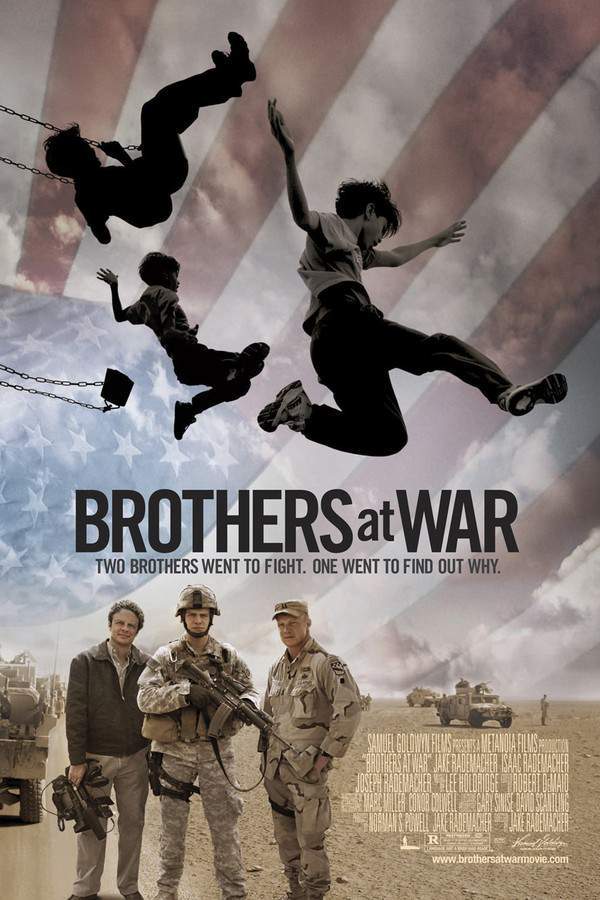

Movies about the psychological cost of war like Band of Brothers

Gripping journeys into the mental and emotional scars left by warfare on soldiers. Discover more films and series that honestly portray the trauma and emotional burden carried by soldiers. If you appreciated the realistic depiction of fear and survival in Band of Brothers, these stories offer a similar unflinching look at the psychological toll of combat.

  • gritty
  • harrowing
  • somber
  • exhausting
  • tense
  • psychological
  • Tone: somber, harrowing, tense
  • Pacing: variable, reflective of combat's rhythm
Why these movies?

The story pattern: The narrative follows characters as they are gradually worn down by the relentless stress and horror of their experiences. The central conflict is often internal, pitting the soldiers' humanity against the dehumanizing requirements of survival. The arc is less about winning a battle and more about the personal cost of enduring it.

Why they belong together: These movies are united by their gritty, somber mood and heavy emotional weight focused on trauma, loss, and survival. They share a high-intensity, tense tone that doesn't shy away from the brutal realities of war, resulting in a harrowing and often bittersweet viewing experience.

If you liked this

Movies Like Band of Brothers

Similar movies to Band of Brothers: the same genre, themes or kind of story. Each one comes with its own plot summary, timeline and ending explained.

Browse all movie summaries

Every angle

Band of Brothers (1000) Explained: Plot, Timeline & Characters

Everything about Band of Brothers in one place: what happens in the plot summary, the timeline in chronological order, the characters and meaning and a spoiler-free summary. What's After the Movie adds the cast, box office and post-credit scenes.

Coming soon on iOS and Android

The Plot Explained Movie Summary App

Plot summaries, endings explained and timelines on your phone. Catch up on any movie in minutes, save your favorites and never miss a twist again.

Be the first to know when we launch. Your email stays private, always.

Learn more about the app