Plot Explained Spoilers guaranteed!
Plot Explained

Browse by genre

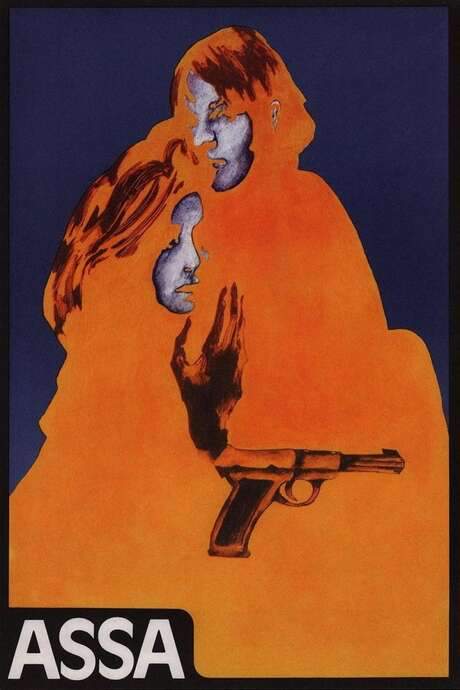
Assa (1987) movie poster

Plot Summary

Assa (1987) Plot Summary Explained

Release, runtime and language
1987 · 153 mins · Russian
Directed by
Sergey Solovyov
Starring
Aleksandr Bashirov, Alexandr Domogarov, Tatyana Drubich, Aleksandr Inshakov, Viktor Tsoy, Georgi Guryanov

Set against a bleak Crimean winter in the mid‑1980s, the film follows a young musician, Bananan, who becomes infatuated with Alika, the alluring young mistress of a powerful mobster, Krymov. At the same time, a parallel storyline recounts an 18th‑century assassination plot, linking past intrigue with present desire.

On this page (5)
  1. 1 What happens: full plot
  2. 2 Plot questions answered
  3. 3 Movie threads
  4. 4 Movies like Assa
  5. 5 Every angle

Full plot summary · contains spoilers

What Happens in Assa: Full Plot Summary

The whole story of Assa (1987) explained, from the opening scene to the final frame: every key event, every twist and what it all adds up to. Read it as a quick recap before the sequel, to check a scene you missed, or to finally understand what really happened.

Alika, Tatyana Drubich, a young nurse, stays in Yalta with her patient and lover Krymov, Stanislav Govorukhin, a man considerably older who runs a criminal group under the watchful eye of the KGB. The pair navigate a delicate balance between tenderness and danger as the resort town hums with conspicuous leisure and unseen surveillance. Alika’s world begins to widen when she is drawn into a circle that thrives on a counterculture that isn’t sanctioned by the state, and the fragile lines between affection, loyalty, and risk start to blur.

At the Yalta Intourist, Alika meets Bananan, Sergei Bugayev, a young and eccentric underground rock musician whose presence jolts the routine of the seaside city. Bananan’s music and free-spirited attitude open a door to a Soviet counterculture that feels almost rebellious in a milieu where conformity is the norm. The encounter sparks a change in Alika, who finds herself pulled toward a social milieu that promises excitement but also draws her closer to Krymov’s shadowy world. The tension between private longing and public duty becomes a quiet undercurrent that neither the nightclub lights nor the hotel corridors can fully mask.

Krymov becomes aware of Alika’s growing bond with Bananan and is consumed by jealousy. He tries to pressure Bananan to leave Alika and to abandon Yalta for good, hoping to sever the connection before it tightens its grip on his life. Bananan refuses to bow to threats or to the pull of a safer, quieter life, and Krymov’s enforcers move to remove the obstacle. Bananan is murdered by Krymov’s minions, a brutal act that marks a turning point in the story and shatters the fragile equilibrium Alika and Krymov had been skating along. When Krymov later confesses the chain of events to Alika, she makes a drastic choice of her own and murders him, an act that propels her into the Militsiya’s grasp, though the authorities treat her with a rare gentleness that hints at the moral ambiguity threaded through the film.

Interwoven with this central arc is a quieter, historical thread about the murder of Tsar Paul I of Russia. The film adapts material from a book by Natan Eidelman, which Krymov is shown reading throughout the film, creating a dialogue between past and present violence and inviting viewers to consider how power, fate, and perception echo across different eras. The juxtaposition of a modern tragedy in a resort town with a historical mystery adds a contemplative layer to the narrative, emphasizing how personal history and broad political currents illuminate one another in unforeseen ways.

The mood of the film blends noir elements with intimate drama, painting a portrait of desire laced with danger, and it uses Yalta’s glamorous facade as a counterpoint to the secretive, often brutal undercurrents that drive the characters’ choices. Across its intertwining plots, the story examines how love, ambition, and rebellion collide under a regime that watches every move, and it does so with a restrained, matter-of-fact tone that keeps the stakes human and the emotions raw.

Last updated: February 03, 2026 at 07:40

Was this helpful?

Plot questions answered

Assa Plot Explained: Your Questions Answered

The questions people ask most about Assa (1987): what happens in the confusing scenes, why the characters do what they do, the twists, hidden details and what the ending means. Each answer contains spoilers.

Q1

Why does Krymov have Bananan murdered?

Krymov orders Bananan's murder because his jealousy consumes him after discovering Alika's growing bond with the young musician. Seeing Alika drawn to Bananan's free-spirited counterculture world threatens Krymov's control over her and his criminal empire. When Bananan refuses to abandon Alika and leave Yalta, Krymov views him as an insurmountable obstacle that must be eliminated to preserve his power and relationship.

Foreshadowing: Earlier, Krymov's growing awareness of Alika's connection to Bananan foreshadows his violent response, as he monitors her daily life and feels his position threatened.

  • krymov
  • bananan
  • murder
  • jealousy
  • yalta
Q2

Why does Alika kill Krymov after learning about Bananan?

Alika kills Krymov in response to learning that he ordered Bananan's murder. The revelation shatters whatever trust remained in their relationship and represents the final betrayal. Driven by a combination of grief, rage, and desperation to reclaim some control over her life, she makes a drastic choice that marks her transformation from victim of Krymov's world to active participant in its violence.

Foreshadowing: Krymov's confession about Bananan's murder directly triggers Alika's decision, as the weight of his actions becomes unavoidable.

  • alika
  • krymov
  • murder
  • revenge
  • betrayal
Q3

What is the significance of the Tsar Paul I historical subplot?

The parallel storyline about Tsar Paul I's murder creates a thematic dialogue between past and present violence. Krymov is shown reading about the assassination throughout the film, drawing a symbolic connection between historical and modern acts of betrayal and murder. The subplot explores how power, fate, and crime echo across different eras, suggesting that the cycles of violence in Krymov's criminal world mirror the political assassinations of Russian history.

Foreshadowing: Krymov's reading about Tsar Paul I appears consistently throughout the film, establishing the thematic parallel before the main plot's violent climax.

  • tsar paul i
  • historical subplot
  • krymov
  • book
  • natan eidelman
Q4

Why does the Militsiya treat Alika gently after she kills Krymov?

The Militsiya's gentle treatment of Alika reflects the moral ambiguity woven throughout the film. Despite committing murder, Alika is portrayed as a woman who was manipulated and controlled by a dangerous criminal, and her act followed the murder of someone she loved. The authorities' restraint suggests they recognize her as both a victim and a perpetrator, acknowledging the complex circumstances that led to her crime.

Foreshadowing: The unusual gentleness hints at the moral complexity established from the start, where the lines between victim and perpetrator blur in Krymov's dangerous world.

  • alika
  • militsiya
  • arrest
  • gentle treatment
  • crime
Q5

Why does Bananan refuse to leave Yalta when Krymov threatens him?

Bananan refuses to abandon Alika and flee Yalta because his connection to her is genuine and he refuses to be intimidated by Krymov's criminal power. His free-spirited counterculture attitude makes him unwilling to bow to threats or abandon a relationship that represents something real and meaningful to him. This refusal directly leads to his murder, as Krymov's enforcers remove the perceived obstacle.

Foreshadowing: Bananan's initial encounter with Alika at the Yalta Intourist establishes his rebellious nature, which later manifests in his refusal to comply with Krymov's demands.

  • bananan
  • refuse
  • leave
  • yalta
  • threat
  • krymov
Q6

Why does Alika stay in Yalta with Krymov despite knowing his criminal activities?

Alika remains with Krymov because their relationship, though built on an unequal power dynamic, contains genuine tenderness alongside the danger. As a young nurse caring for her older patient, she became entangled in both an illicit romance and a criminal world she doesn't fully comprehend. Her growing attraction to Bananan's counterculture eventually pulls her toward a different life, but her initial stay reflects the complex entanglements of affection, dependency, and the seductive danger Krymov represents.

Foreshadowing: The opening scenes establish the delicate balance between tenderness and danger that characterizes Alika and Krymov's relationship.

  • alika
  • krymov
  • relationship
  • yalta
  • criminal
  • stay
Q7

Why is Krymov reading about Tsar Paul I's murder throughout the film?

Krymov's reading about Tsar Paul I's assassination serves as both a character detail and a thematic mirror. The book by Natan Eidelman is a recurring presence, showing Krymov's intellectual interest in historical violence. More importantly, it creates a structural parallel: like the conspirators who murdered the Tsar, Krymov himself will become a victim of betrayal. The historical narrative foreshadows his own fate while exploring themes of power, fate, and political crime.

Foreshadowing: The consistent presence of the book early in the film hints at the violent end that awaits Krymov, echoing the historical assassination he reads about.

  • krymov
  • tsar paul i
  • reading
  • book
  • foreshadowing
Q8

What does the counterculture scene represent for Alika's character?

Alika's introduction to Bananan's Soviet counterculture represents her awakening to a world beyond Krymov's control. The underground rock music and nonconformist lifestyle offer excitement and freedom that contrast sharply with the constrained, dangerous existence she shares with the mobster. This social milieu draws her deeper into a sphere that promises autonomy but ultimately places her in even greater peril, as her connection to Bananan triggers the violent chain of events.

Foreshadowing: Alika's initial meeting with Bananan at the Yalta Intourist marks the beginning of her transformation and the conflict that will define the story's tragic trajectory.

  • alika
  • counterculture
  • bananan
  • rock music
  • awakening
  • yalta intourist
Q9

Why does Krymov operate under KGB surveillance in Yalta?

Krymov runs his criminal group in Yalta while being watched by KGB agents, suggesting he operates with some level of tolerance or tacit approval from authorities. This creates a precarious balance where he enjoys relative freedom to conduct his criminal activities, but remains under constant surveillance. The presence of the KGB adds another layer of danger and moral complexity, positioning Krymov as a man navigating multiple loyalties and threats.

Foreshadowing: The ongoing KGB surveillance establishes the precarious nature of Krymov's power from the beginning, underscoring that his criminal empire exists in a fragile space between official tolerance and potential crackdowns.

  • krymov
  • kgb
  • surveillance
  • yalta
  • criminal group

Movie threads

More Movies Like Assa, by Mood & Story

Curated lists built around what makes Assa tick: the same mood, the same kind of story or the same emotional payoff. Each list explains why these movies belong together.

Doomed Crime Romance Stories like Assa

Where passionate affairs spiral into tragic consequences within a harsh criminal world. If you enjoyed the tragic love story and criminal tension in Assa, explore more movies where romance blossoms in the shadow of the underworld. These films share a dark tone, heavy emotional weight, and a bleak, often sad ending, capturing the fatalistic clash between desire and crime.

  • doomed love
  • tragic
  • oppressive
  • fatalistic
  • melancholic
  • crime drama
  • Tone: dark, tragic, oppressive
  • Pacing: steady, deliberate build
Why these movies?

The story pattern: Stories in this thread typically follow a protagonist, often an outsider, who becomes entangled in a forbidden romance with someone connected to a powerful criminal figure. The central conflict arises from jealousy and the threat to established power, escalating tension until it erupts in violence, betrayal, and a tragic outcome for the lovers.

Why they belong together: These movies are grouped together because they share a potent mix of high-stakes romance and crime drama. They create a specific, melancholic vibe defined by fatalistic love, an oppressive atmosphere, and the inevitable collision between personal desire and the unforgiving rules of the criminal world.

Movies with a Rebellious Melancholic Vibe like Assa

Stories steeped in a somber mood where counterculture clashes with a bleak reality. Fans of Assa's atmospheric winter setting and its rebellious rock musician protagonist will appreciate these films. They capture a similar feeling of nostalgic melancholy, where countercultural energy meets a fatalistic, heavy story, often with a steady pace and a deeply emotional core.

  • melancholic
  • atmospheric
  • rebellious
  • nostalgic
  • fatalistic
  • counterculture
  • Tone: melancholic, nostalgic, bleak
  • Pacing: steady, atmospheric
Why these movies?

The story pattern: The narrative pattern often involves an artist or non-conformist (like a musician) navigating a world that is visually and emotionally bleak. Their rebellion provides a spark of life, but the overall tone is one of melancholy, as their spirit is ultimately subdued or crushed by the oppressive forces around them, leading to a poignant, if sad, conclusion.

Why they belong together: These films are connected by their powerful, immersive atmosphere and the central theme of rebellion against gloom. They share a specific emotional mix: the energy of counterculture contrasted with a pervasive sense of nostalgia and tragic futility, creating a uniquely heavy and atmospheric viewing experience.

If you liked this

Movies Like Assa

Similar movies to Assa: the same genre, themes or kind of story. Each one comes with its own plot summary, timeline and ending explained.

Browse all movie summaries

Every angle

Assa (1987) Explained: Plot, Timeline & Characters

Everything about Assa in one place: what happens in the plot summary, the timeline in chronological order, the characters and meaning and a spoiler-free summary. What's After the Movie adds the cast, box office and post-credit scenes.

Coming soon on iOS and Android

The Plot Explained Movie Summary App

Plot summaries, endings explained and timelines on your phone. Catch up on any movie in minutes, save your favorites and never miss a twist again.

Be the first to know when we launch. Your email stays private, always.

Learn more about the app