






Year: 2002
Runtime: 96 min
Language: English
Director: Harold Ramis
Budget: $60M
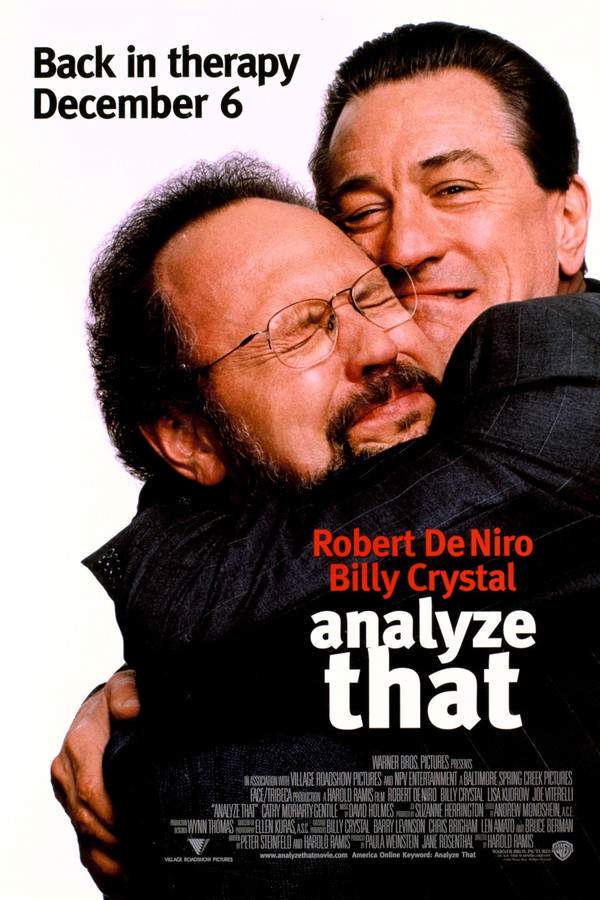
While incarcerated, mob boss Paul Vitti exhibits strange behavior, appearing catatonic. FBI agents are uncertain whether this is a genuine mental breakdown or a deliberate ploy to manipulate the system and gain an early release from prison. The situation becomes increasingly complex as they try to determine the truth behind his actions.
Get a spoiler-free look at Analyze That (2002) with a clear plot overview that covers the setting, main characters, and story premise—without revealing key twists or the ending. Perfect for deciding if this film is your next watch.
In the gritty corridors of Sing Sing, a notorious mob boss finds himself under the stark fluorescent lights of a federal assessment room, his once‑commanding presence reduced to a baffling stillness. Paul Vitti—a man whose reputation has long been built on intimidation and street‑level authority—now appears almost catatonic, leaving the prison staff and his rivals whispering about the true nature of his condition. The atmosphere is thick with the tension of a world where power is usually proven through bold acts, yet here silence is the only clue.
Enter a neurotic but well‑meaning FBI psychiatrist tasked with untangling the mystery. Ben Sobel, a seasoned agent whose career has been marked by awkward confrontations and a penchant for earnest, if clumsy, problem‑solving, steps into this uneasy dance. Their interactions are charged with a nervous energy that oscillates between the serious business of mental health evaluation and the absurdity of a hardened criminal behaving like a patient in a therapy session. The film balances the stark realism of the prison setting with a sly, almost theatrical comedy that highlights the incongruity of the two men’s worlds colliding.
Behind the closed doors, the underworld continues its subtle machinations, reminding the audience that even when a leader seems to have withdrawn, the structures of loyalty, fear, and ambition persist just out of view. The tone walks a fine line between darkly comic and sharply observant, offering a portrait of characters who must confront not only each other’s motives but also the unsettling possibility that the greatest deception may be the one they present to themselves. As the stakes of determining reality versus ruse loom, the film invites viewers into a witty, tension‑laden investigation that promises both laughs and lingering questions.
Last Updated: August 10, 2025 at 11:14
Discover curated groups of movies connected by mood, themes, and story style. Browse collections built around emotion, atmosphere, and narrative focus to easily find films that match what you feel like watching right now.
Tough guys and gangsters forced into self-discovery and unlikely friendships.If you liked the dynamic of a mob boss faking insanity and working with a therapist in Analyze That, you'll enjoy these movies. This collection features hilarious and heartfelt stories about tough guys, gangsters, and criminals who are forced into therapy, leading to unexpected friendships and personal change.
The narrative revolves around a cynical, rule-breaking individual from a criminal world being forced to conform to the rules of therapy or psychological evaluation. The conflict between their tough exterior and the process of introspection drives the story, often resulting in comedic misunderstandings, moments of genuine growth, and a climactic situation where their old and new lives collide.
These films are grouped by their central premise of criminal-therapy dynamics, sharing a lighthearted tone that finds humor in the contrast between violence and vulnerability. They focus on character-driven comedy, the friction of two opposing worlds, and themes of redemption through unlikely connection.
Fast-paced comedies where elaborate plans spiral into slapstick misadventures.Fans of the fast-paced, irreverent heist and mob war chaos in Analyze That will love these films. This selection features comedies where criminal plans go absurdly wrong, leading to a series of playful misadventures, slapstick humor, and a generally lighthearted take on the crime genre.
The plot follows a group, often an odd couple or mismatched team, as they attempt a crime or navigate the criminal underworld. Their plan quickly unravels due to incompetence, bad luck, or interpersonal friction, leading to a domino effect of comedic situations. The journey is prioritized over the destination, celebrating the chaos itself.
These movies share a core identity of playing crime for laughs. They combine a fast pace with a light tone, using criminal plots as a backdrop for physical comedy, witty dialogue, and character-based humor. The experience is defined by its playful irreverence and lack of genuine danger.
Don't stop at just watching — explore Analyze That in full detail. From the complete plot summary and scene-by-scene timeline to character breakdowns, thematic analysis, and a deep dive into the ending — every page helps you truly understand what Analyze That is all about. Plus, discover what's next after the movie.
Read a complete plot summary of Analyze That, including all key story points, character arcs, and turning points. This in-depth recap is ideal for understanding the narrative structure or reviewing what happened in the movie.
Track the full timeline of Analyze That with every major event arranged chronologically. Perfect for decoding non-linear storytelling, flashbacks, or parallel narratives with a clear scene-by-scene breakdown.
Discover the characters, locations, and core themes that shape Analyze That. Get insights into symbolic elements, setting significance, and deeper narrative meaning — ideal for thematic analysis and movie breakdowns.
Visit What's After the Movie to explore more about Analyze That: box office results, cast and crew info, production details, post-credit scenes, and external links — all in one place for movie fans and researchers.