Year: 2002
Runtime: 96 min
Language: English
Director: Harold Ramis
Budget: $60M
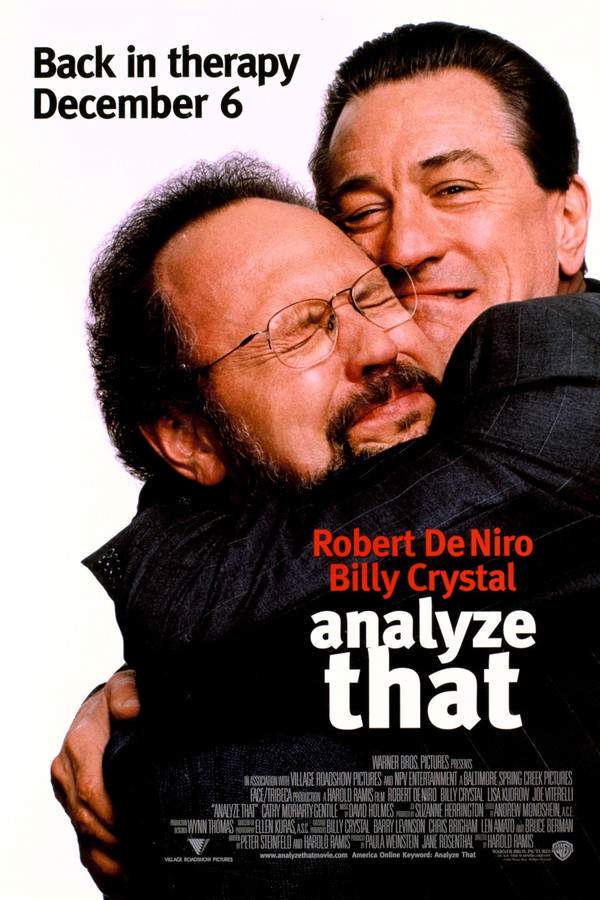
While incarcerated, mob boss Paul Vitti exhibits strange behavior, appearing catatonic. FBI agents are uncertain whether this is a genuine mental breakdown or a deliberate ploy to manipulate the system and gain an early release from prison. The situation becomes increasingly complex as they try to determine the truth behind his actions.
Warning: spoilers below!
Haven’t seen Analyze That yet? This summary contains major spoilers. Bookmark the page, watch the movie, and come back for the full breakdown. If you're ready, scroll on and relive the story!
Read the complete plot breakdown of Analyze That (2002), including all key story events, major twists, and the ending explained in detail. Discover what really happened—and what it all means.
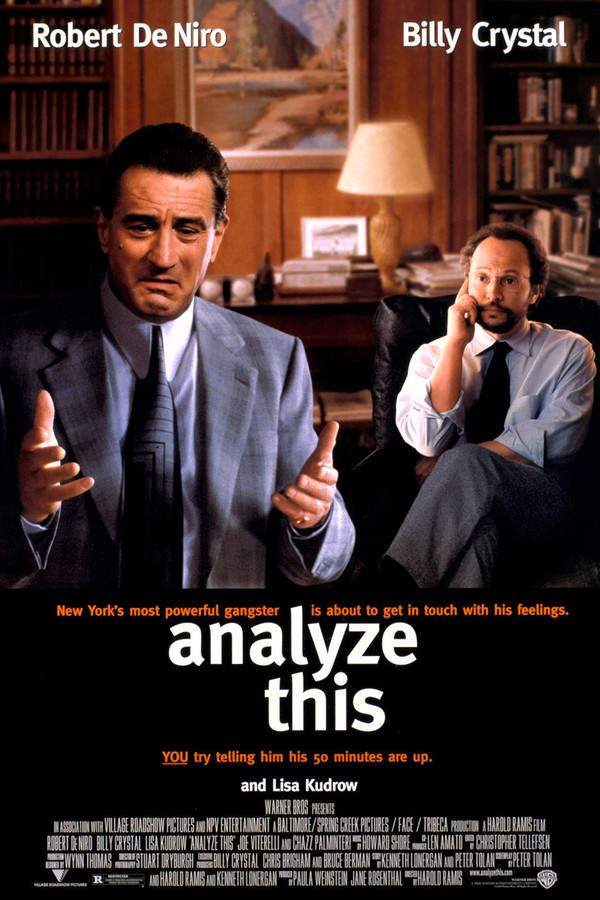
As Paul Vitti, portrayed by Robert De Niro, nears the conclusion of his prison term at Sing Sing, an unsettling urgency envelops him. With threats lurking from merciless assassins and corrupt prison guards, he desperately seeks solace in the show tunes of West Side Story, passionately serenading the iconic melodies to attract the attention of Ben Sobel, played by Billy Crystal, who had infamously cut their conversation short during the grief of his father’s funeral.
The FBI steps in, sending Ben to perform a series of psychiatric evaluations aimed at discerning whether Paul is genuinely unhinged. At first glance, it appears that Paul’s mental condition is declining, leading authorities to authorize his release into Ben’s care for continued therapy. However, it doesn’t take long for Paul to unveil the truth: he has simply been masquerading as insane.
Reluctantly complying with the FBI’s directive, Ben permits Paul to seek out legitimate employment. Paul embarks on a quest for jobs at several establishments, ranging from a car dealership to a restaurant and a jewelry store. Unfortunately, his abrasive personality and escalating paranoia turn each opportunity into a comedic misadventure, ultimately resulting in his dismissal from every position.
In the meantime, Patti LoPresti, having assumed the role of the de facto boss, cautions Paul that the Rigazzi family has intentions to eliminate him. In response, Paul insists to the Rigazzis that he is “out” of their organization and is eager to explore new paths. He eventually secures a position as a technical advisor on a mafia-themed television series, further complicating his entanglements.
As tensions rise within the criminal underworld, FBI agents inform Ben that Paul has reunited with his former crew, hinting at a significant scheme brewing. This revelation incites Ben’s suspicions, prompting him to confront Paul directly. Their encounter quickly escalates into a thrilling car chase, as they narrowly evade hits from the Rigazzi faction.
Following this chaos, the FBI holds Ben accountable for Paul’s actions, imposing a 24-hour deadline for him to locate his former patient. Through the assistance of Paul’s son Michael, who has taken on the role of chauffeur for his father, Ben uncovers Paul’s plot to execute a grand armored car heist alongside LoPresti, who has her own dubious motives. Despite Ben’s urgent pleas for Paul to reconsider, he is stubbornly met with resistance.
Undaunted, the crew embarks on their audacious heist, using smoke grenades to heighten the disorder and facilitate the lifting of the armored vehicle over a fence amidst the confusion. They effectively commandeer over $22 million worth of gold bullion, only to have LoPresti’s men uncork their true loyalties - having been secretly aligned with the Rigazzi family from the start.
In a fit of rage, Ben channels his frustrations into physically confronting one of LoPresti’s associates, signaling Paul’s henchmen to engage and subdue the rest. Using the seized gold bullion, they orchestrate a trap against the Rigazzi family and manage to ensnare three of their goons, strategically suspending them within the armored truck precariously dangling from a crane. This calculated tactic leads to the mass arrest of the entire Rigazzi clan, averting the clash of an imminent mob war.
In a heartfelt moment, as Ben reunites with Paul and Jelly by the Brooklyn waterfront’s iconic bridges, the trio shares a touching farewell, harmonizing perfectly to another classic tune from West Side Story. As the credits roll, audiences are treated to an endearing montage of bloopers, adding a humorous touch to the tumultuous saga that preceded it.
Last Updated: November 19, 2024 at 20:38
Discover curated groups of movies connected by mood, themes, and story style. Browse collections built around emotion, atmosphere, and narrative focus to easily find films that match what you feel like watching right now.
Tough guys and gangsters forced into self-discovery and unlikely friendships.If you liked the dynamic of a mob boss faking insanity and working with a therapist in Analyze That, you'll enjoy these movies. This collection features hilarious and heartfelt stories about tough guys, gangsters, and criminals who are forced into therapy, leading to unexpected friendships and personal change.
The narrative revolves around a cynical, rule-breaking individual from a criminal world being forced to conform to the rules of therapy or psychological evaluation. The conflict between their tough exterior and the process of introspection drives the story, often resulting in comedic misunderstandings, moments of genuine growth, and a climactic situation where their old and new lives collide.
These films are grouped by their central premise of criminal-therapy dynamics, sharing a lighthearted tone that finds humor in the contrast between violence and vulnerability. They focus on character-driven comedy, the friction of two opposing worlds, and themes of redemption through unlikely connection.
Fast-paced comedies where elaborate plans spiral into slapstick misadventures.Fans of the fast-paced, irreverent heist and mob war chaos in Analyze That will love these films. This selection features comedies where criminal plans go absurdly wrong, leading to a series of playful misadventures, slapstick humor, and a generally lighthearted take on the crime genre.
The plot follows a group, often an odd couple or mismatched team, as they attempt a crime or navigate the criminal underworld. Their plan quickly unravels due to incompetence, bad luck, or interpersonal friction, leading to a domino effect of comedic situations. The journey is prioritized over the destination, celebrating the chaos itself.
These movies share a core identity of playing crime for laughs. They combine a fast pace with a light tone, using criminal plots as a backdrop for physical comedy, witty dialogue, and character-based humor. The experience is defined by its playful irreverence and lack of genuine danger.
Don't stop at just watching — explore Analyze That in full detail. From the complete plot summary and scene-by-scene timeline to character breakdowns, thematic analysis, and a deep dive into the ending — every page helps you truly understand what Analyze That is all about. Plus, discover what's next after the movie.
Track the full timeline of Analyze That with every major event arranged chronologically. Perfect for decoding non-linear storytelling, flashbacks, or parallel narratives with a clear scene-by-scene breakdown.
Discover the characters, locations, and core themes that shape Analyze That. Get insights into symbolic elements, setting significance, and deeper narrative meaning — ideal for thematic analysis and movie breakdowns.
Get a quick, spoiler-free overview of Analyze That that covers the main plot points and key details without revealing any major twists or spoilers. Perfect for those who want to know what to expect before diving in.
Visit What's After the Movie to explore more about Analyze That: box office results, cast and crew info, production details, post-credit scenes, and external links — all in one place for movie fans and researchers.