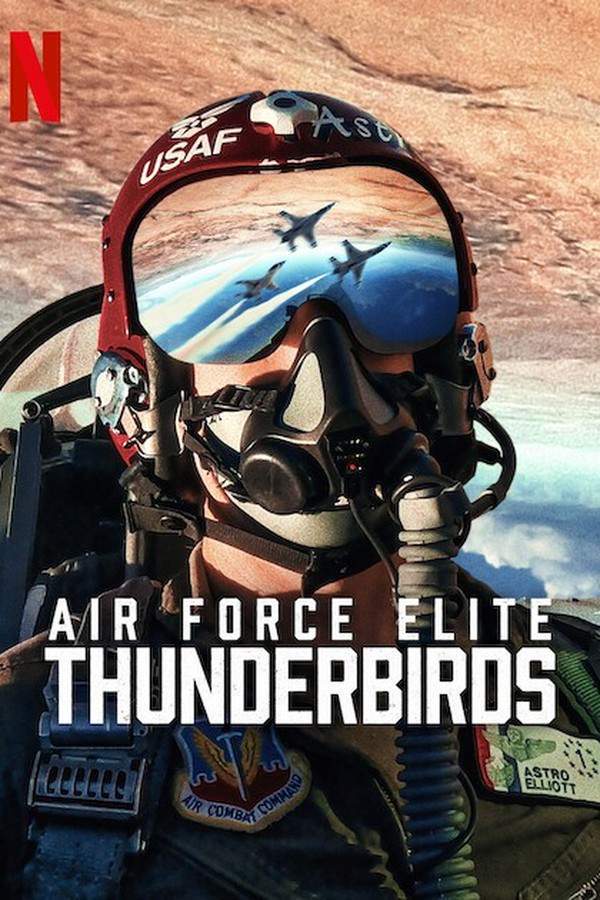
The U.S. Air Force Thunderbirds are the official aerial demonstration squadron of the United States Air Force, based at Nellis Air Force Base in Nevada and operating under the 57th Wing. Formed in 1953, they are among the oldest and most recognizable flight demonstration teams in the world. Their shows blend high-speed formation flying—often in the Diamond or Delta layouts—with daring solo routines that highlight the F-16 Fighting Falcon’s agility and power, all painted in bold red, white, and blue. Becoming a Thunderbird is intensely competitive, demanding pilots who embrace demanding training and relentless precision.
The Thunderbirds were created during the Korean War era to inspire unity and showcase American excellence in turbulent times. As one of their leaders explains the Team’s mission, the purpose remains clear: the entire team is meant to unite and give people a beacon of excellence to look up to. The squad’s jets streak through the sky at incredible speeds, often just 18 inches apart, turning complex maneuvers into a meticulously choreographed performance.
Justin "Astro" Elliott rises to the role of lead pilot, entrusted with steering a team that spends two years in the program. The first months are devoted to intense training, after which the pilots tour the country performing at air shows and events, refining their craft along the way. The core squad typically includes Thunder the lead solo, Lauren "Threat" Schlichting who pilots the back of the diamond, Astro himself, and three newcomers who rotate in each year.
Every season, roughly half of the pilots rotate out. The newer members joining the team include Eric "Miami" Tise, Zachary "Zeke" Taylor, and Jake "Primo" Impellizzeri. The show’s choreography centers on eight formations—the Diamond, Delta, Stinger, Arrowhead, Line-Abreast, Trail, Echelon, and the Five Card—each demanding flawless timing and close formation work. The opposing solos execute maneuvers at speeds approaching the sound barrier, performing fast passes, slow passes, rapid rolls, tight turns, and synchronized patterns like opposing passes and calypso-style belly-to-belly or back-to-back mirror formations.
During the routine, the four lead aircraft lift off and slip into the Diamond before rising to a vertical and executing the signature Bomb Burst. In this moment, the four planes break away in separate directions while a solo aircraft climbs higher to perform aileron rolls until it reaches several miles above the ground, after which all six aircraft converge back into a final Delta formation.
Astro’s background sets him apart: a Yale-trained mechanical engineer who joined ROTC in 2005, he logged 255 combat hours in Afghanistan and nearly 3,000 hours across 33 aircraft types as an experimental test pilot. His path to the cockpit was a “Hail Mary” moment after a last-minute policy change allowed him laser eye surgery, which had previously disqualified him from the program. Astro has always believed a team is only as strong as its weakest link, and he has stressed the necessity of blind trust among pilots to perform under extreme conditions.
The Thunderbird story is also a constant reminder of the dangers of high-stakes flight. The team has faced real losses, including the memory of a 1982 crash that saw four planes nosedive into the ground at roughly 400 miles per hour. The documentary also follows the grief surrounding the death of Stephen "Cajun" Del Bagno in 2018, who crashed during a routine training flight after losing consciousness in the cockpit. The film explores why even highly trained pilots can encounter severe challenges when moving from standard mission flying to precision formation aerobatics, where gravity, spatial awareness, and rapid decision-making all push a pilot to the edge.
Astro and the Thunderbirds ultimately persevere, driven by the need to deliver a show that embodies the nation’s pride. They confront the pressure of public expectation, the memory of past tragedies, and the ongoing demand for meticulous practice and flawless execution. After certification, the team delivers an impressive slate of performances, tallying 62 shows in a single year and continually striving to surpass what audiences expect from one of America’s most iconic aerobatic squads. The result is a story about courage, discipline, and the pursuit of excellence at the highest level of flight.