







Plot Explained Spoilers guaranteed!
Plot Explained

Browse by genre

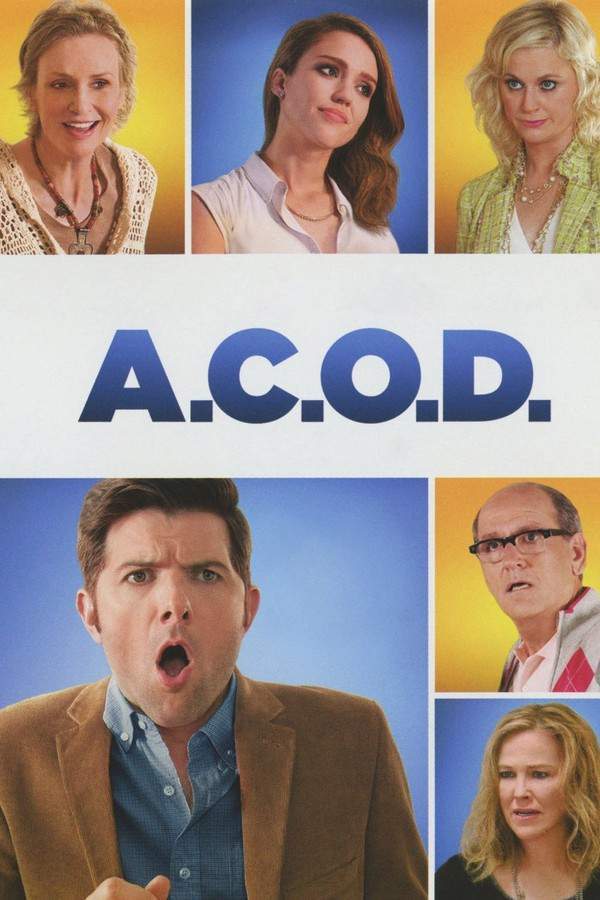
A.C.O.D. (2013) movie poster

Characters & Themes

A.C.O.D. (2013) Characters, Setting & Themes Explained

Release, runtime and language
2013 · 88 min · English
Directed by
Stu Zicherman
Starring
Catherine O'Hara, Jessica Alba, Mary Elizabeth Winstead, Amy Poehler, Jane Lynch, Richard Jenkins

Carter is a man who has successfully avoided his parents’ messy divorce for years, until his brother's wedding forces him to reunite with them. As the event approaches, Carter is pulled back into the dysfunctional dynamics of his upbringing, confronting the chaotic and destructive patterns that shaped his childhood. He must navigate the family drama and ultimately find a way to move forward and let go of the past.

On this page (8)
  1. 1 Where to watch
  2. 2 Characters explained (8)
  3. 3 Where & when it takes place
  4. 4 Themes & meaning (4)
  5. 5 Character & meaning questions
  6. 6 Movie threads
  7. 7 Movies like A.C.O.D.
  8. 8 Every angle

Where to watch

Where to Watch A.C.O.D. (2013)

Where can you watch A.C.O.D.? Stream, rent or buy it in the US, including on Hoopla, Kanopy and Amazon Video: current JustWatch availability with up-to-date prices.

Streaming availability powered by JustWatch

8 main characters · contains spoilers

A.C.O.D. Characters Explained: Who Is Who

The main characters of A.C.O.D. (2013), heroes and villains: what drives them, how they change over the course of the story and what each of them reveals about the film's bigger ideas.

  • Carter Spencer (Adam Scott)

    Carter is a calculating and protective figure who tries to control his family’s drama by engineering a truce between his feuding parents. He treats relationships as projects to be mastered, revealing a need to manage his past trauma. His plan escalates from manipulation to a broader reckoning with his own limits and emotions.

    • 🎭 Complex
    • 🧭 Control
    • 🧠 Manipulative
    • 🕊️ Family ties
  • Trey Spencer (Clark Duke)

    Trey is Carter’s younger brother, more impulsive and hopeful, who seeks stability by pushing his parents toward civility. He supports the wedding plans, reflecting a desire to preserve the family while being drawn into the drama. His actions reveal how sibling loyalties collide with his own romantic future.

    • 🎭 Family
    • 🫶 Loyalty
    • 💍 Romance
    • 🧠 Naive
  • Hugh Spencer (Richard Jenkins)

    Hugh is a distant, philanderer father who treats marriages as negotiations and appearances as priorities. His selfish actions propel the family’s dysfunction and fuel Carter’s drive to control outcomes. His dynamics with Melissa form the core of the parental conflict.

    • 🎭 Failing role model
    • 💔 Infidelity
    • 🧭 Power
    • 🗣️ Distant
  • Melissa Spencer (Catherine O'Hara)

    Melissa is sharp-witted and protective, wielding humor to shield herself from emotional pain while remaining entangled with her husband’s infidelity. She fights to maintain control over the family narrative and finances, contributing to the overall tension. Her stormy relationship with Hugh anchors the family’s unraveling.

    • 🎭 Resilience
    • 🧠 Strategy
    • 💔 Infidelity
    • 👩‍🦳 Maternal
  • Dr. Lorraine Smith (Jane Lynch)

    Dr. Smith is the adult in custody of the children of divorce narrative, whose work informs the characters’ self-perceptions. Carter discovers she’s a real person behind the book, complicating his view of therapy. She becomes a catalyst for revelations and a foil to Carter’s plan.

    • 🧠 Therapy
    • 📚 Book
    • 🧭 Guidance
    • 👩‍🏫 Professional
  • Keiko (Jessica Alba)

    Keiko is Trey’s girlfriend, a newer love interest who becomes part of the wedding drama. She is present as the romance thread that intersects with the parents’ old conflicts. Her role highlights how new relationships contend with family history.

    • 💑 Romance
    • 🌸 Fresh love
    • 🧭 Family clash
    • 👗 Fashion
  • Lauren (Mary Elizabeth Winstead)

    Lauren is Carter’s longtime girlfriend whose relationship tests the limits of his controlling instincts. She confronts the fallout of Carter’s scheme and the impact of his family’s drama on their bond. Her presence underscores the tension between romance and family obligation.

    • 🎭 Long-term love
    • 🧭 Boundaries
    • 💔 Breakup
    • 👩‍❤️‍👨 Partnership
  • Sondra (Amy Poehler)

    Sondra is Hugh’s domineering third wife who adds another layer of conflict to the household. Her presence accelerates the unraveling of the family dynamic as she asserts control and navigates divorce. She marks the film’s sharp, comic edge amid the drama.

    • 🎭 Outsider
    • 💪 Power
    • 💔 Divorce
    • 🗓️ Timeline

Last updated: October 01, 2025 at 12:15

Was this helpful?

Setting

Where and When Does A.C.O.D. Take Place?

The setting of A.C.O.D. (2013): the year and time period, the places and locations, and how they shape the characters, the mood and the tension of the story.

Time period

Location

Spencer family lake house, restaurant, church

The Spencer family lake house is the central setting where childhood wounds resurface and pivotal confrontations unfold. It becomes a symbol of the family’s history, hosting the ninth birthday party and later the plan to force civility between feuding parents. Key scenes also take place in a restaurant where Carter forces both parents to dine together, and at a church during the final wedding, framing the arc of reconciliation and rupture.

  • 🏖️ Lake house
  • 👪 Family drama
  • 🌊 Water setting

Last updated: October 01, 2025 at 12:15

Was this helpful?

4 major themes

A.C.O.D. Meaning: Themes & Message Explained

What is A.C.O.D. (2013) really about? The emotional, social and philosophical themes the film keeps returning to, its symbolism and the message beneath the surface.

  • Family Dysfunction

    A.C.O.D. centers on how a fractured family hides pain behind humor and manipulation. The parents’ emotional games seep into Carter and Trey, shaping their choices and sense of control. The film tracks the ripple effects of unresolved divorce on multiple generations, forcing each character to confront past decisions.

  • Therapy and Trauma

    Dr. Lorraine Smith’s presence and her best-selling book on children of divorce frame how trauma is understood and communicated. Carter discovers he was a subject, revealing how memory and interpretation can distort healing. Therapy is both a means of insight and a mirror for manipulation.

  • Love and Betrayal

    The movie threads romance with deception, from Hugh and Melissa’s affair to Carter’s engagement with Lauren and his reaction to his parents’ infidelity. Relationships are tested by secrets, power dynamics, and the pressure to maintain appearances. Betrayal drives the plot toward a dramatic reckoning.

  • Reckoning and Renewal

    Burning the lake house marks the destruction of a shared past and a willingness to start anew. The final church scene signals a cautious form of reconciliation among the brothers, while the wedding represents the stubborn persistence of family ties. The film uses destruction as a prelude to personal growth and new beginnings.

Last updated: October 01, 2025 at 12:15

Was this helpful?

Character & theme questions

A.C.O.D. Characters & Meaning: Your Questions Answered

The questions people ask about A.C.O.D. (2013): who the characters really are, their relationships, what the symbols mean, where it takes place and what the movie is really about. Each answer contains spoilers.

Q1

Where is the movie set?

A.C.O.D. primarily takes place at the Spencer family lake house, which serves as the emotional center of the story. Additional key scenes occur at a restaurant where Carter orchestrates a tense dinner between his parents, and at a church where the wedding takes place. The lake house functions as both a literal location and a symbol of the family's complicated history.

Foreshadowing: The lake house appears early as the site of Carter's ninth birthday party, establishing it as a place of childhood memories that later becomes contested ground.

  • lake house setting
  • spencer family home
  • restaurant scene
  • church wedding location
Q2

What does A.C.O.D. mean in the title?

A.C.O.D. stands for Adult Children of Divorce. The term refers to Carter Spencer and his brother Trey, who grew up navigating the aftermath of their parents' messy separation. The film explores how this label shapes their identities and influences their relationships throughout the story.

  • adult children of divorce
  • acronym meaning
  • carter spencer
  • trey spencer
Q3

What is the main theme of the movie?

The film centers on family dysfunction as its primary theme, exploring how divorced parents' emotional games and manipulation ripple across generations. Carter and Trey have built their adult lives around avoiding their parents' conflict, and the wedding forces them to confront how these childhood wounds shaped their choices and sense of control.

  • family dysfunction
  • divorce impact
  • generational trauma
  • parental conflict
Q4

What role does therapy play in the movie?

Therapy and trauma are central to understanding Carter's character. Dr. Lorraine Smith, a therapist who wrote a best-selling book about children of divorce, becomes a key figure when Carter discovers he was a subject in her research. This revelation complicates his view of therapy and forces him to confront how his understanding of his own trauma may have been shaped by external interpretation rather than authentic self-examination.

  • therapy
  • dr lorraine smith
  • trauma
  • children of divorce book
Q5

Who is Carter Spencer and what drives him?

Carter Spencer is the older brother played by Adam Scott who tries to manage his family's dysfunction by engineering a truce between his feuding parents. His motivation stems from a deep need to control outcomes and master his past trauma, treating family relationships as projects to be solved. His calculating approach ultimately escalates into a broader reckoning with his own emotional limits.

  • carter spencer
  • adam scott
  • family manipulation
  • controlling personality
Q6

Who are Hugh and Melissa Spencer and why do they conflict?

Hugh and Melissa Spencer are Carter and Trey's parents, portrayed by Richard Jenkins and Catherine O'Hara. Hugh is a distant, philandering father who treats marriages as negotiations and prioritizes appearances. Melissa is sharp-witted and uses humor as a shield while fighting to maintain control over the family narrative. Their unresolved infidelity and ongoing power struggle drive much of the family's tension.

  • hugh spencer
  • melissa spencer
  • divorce
  • infidelity
  • parental conflict
Q7

What does the lake house burning represent?

The burning of the lake house symbolizes destruction of the family's shared past and a willingnessto start anew. It marks a turning point where Carter and Trey commit to letting go of the old family dynamics that have kept them trapped in childhood patterns. The act represents both destruction and prelude to personal growth, setting up the film's theme of renewal.

  • lake house fire
  • burning house
  • symbolism
  • new beginnings
  • letting go
Q8

How does love and betrayal factor into the plot?

Love and betrayal weave through every relationship in the film, from Hugh's affair with Melissa to Carter's own engagement with Lauren. The movie explores how secrets and power dynamics test relationships, with betrayal serving as the catalyst for the dramatic reckoning that forces each character to confront their past decisions. New relationships like Trey's with Keiko must contend with the weight of family history.

  • betrayal
  • affairs
  • relationships
  • secrets
  • love and deception
Q9

Is A.C.O.D. a dark comedy or a family drama?

A.C.O.D. balances comedy with more serious themes of betrayal and trauma, creating a bittersweet tone. Despite dealing with dark subject matter like long-term family deception, the film takes an observational and comedic approach rather than a disturbing one. The humor serves as both a defense mechanism for characters and a narrative tool, with sadness stemming from relational pain rather than tragedy.

  • comedy genre
  • bittersweet tone
  • family drama
  • humor and trauma

Movie threads

More Movies Like A.C.O.D., by Mood & Story

Curated lists built around what makes A.C.O.D. tick: the same mood, the same kind of story or the same emotional payoff. Each list explains why these movies belong together.

Dysfunctional Family Dramedies like A.C.O.D.

Humorous and painful stories about deeply flawed families finding their way back. If you enjoyed the mix of humor and heart in A.C.O.D., you'll appreciate these movies about families navigating long-buried conflicts and awkward reunions. They share a similar bittersweet tone, blending comedic chaos with a genuine, cathartic journey toward healing.

  • dysfunctional
  • cathartic
  • anxious
  • wry humor
  • hopeful
  • reflective
  • Tone: bittersweet, wry
  • Pacing: steady, character-driven
Why these movies?

The story pattern: The narrative pattern often involves a central character, who has tried to distance themselves from their family's chaos, being pulled back in by a significant event. This triggers a series of confrontations and revelations, forcing everyone to face uncomfortable truths. The arc is typically one of reluctant acceptance and gradual healing, where resolution is imperfect but hopeful.

Why they belong together: These movies are grouped together because they share a core emotional mix: they find humor in the absurdity of family dysfunction while never shying away from the sadness and pain it causes. The tone is consistently bittersweet, the pacing is steady and character-driven, and the endings offer a sense of hard-won, realistic hope.

Movies with High-Stakes Social Chaos like A.C.O.D.

Movies where a single event unleashes a torrent of long-suppressed drama and tension. Fans of A.C.O.D.'s wedding-centric family meltdown will enjoy these films where a single social gathering becomes the catalyst for major drama. These stories capture the unique anxiety and comedy of forced family reunions and high-pressure events.

  • anxious
  • cringe comedy
  • chaotic
  • tense
  • awkward
  • revelatory
  • Tone: anxious, cringe-comedy, bittersweet
  • Pacing: steady, event-driven
Why these movies?

The story pattern: The narrative is structured around the build-up to and execution of a major social event. The event serves as a fixed point in time, creating a deadline that accelerates conflict. Characters are trapped in a social situation they can't easily escape, leading to a domino effect of revelations and confrontations that resolve the central tensions by the event's conclusion.

Why they belong together: These movies share a common structural engine: the high-anxiety social gathering. They unite on the specific feeling of dread and anticipation that comes with being trapped with people from your past. The pacing is often steady, driven by the inevitable approach of the event, and the tone balances cringe comedy with genuine emotional stakes.

If you liked this

Movies Like A.C.O.D.

Similar movies to A.C.O.D.: the same genre, themes or kind of story. Each one comes with its own plot summary, timeline and ending explained.

Browse all movie summaries

Every angle

A.C.O.D. (2013) Explained: Plot, Timeline & Characters

Everything about A.C.O.D. in one place: what happens in the plot summary, the timeline in chronological order, the characters and meaning and a spoiler-free summary. What's After the Movie adds the cast, box office and post-credit scenes.

Coming soon on iOS and Android

The Plot Explained Movie Summary App

Plot summaries, endings explained and timelines on your phone. Catch up on any movie in minutes, save your favorites and never miss a twist again.

Be the first to know when we launch. Your email stays private, always.

Learn more about the app