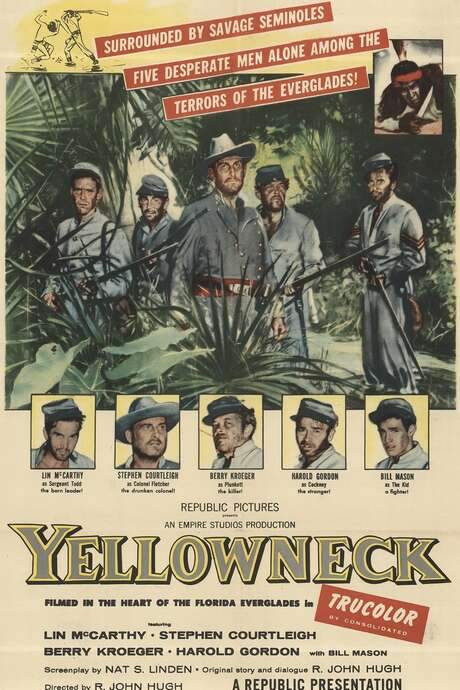
In the sweltering Florida Everglades of 1863, four Confederate deserters—Plunkett, Sergeant Todd, Cockney, and the Kid—huddle in hiding as the Civil War drags on around them. Their fragile shelter is shattered when a fellow deserter, The Colonel, steps from the brush bearing a note from an Indian who claims a path to the ocean that could carry him to Cuba. The Indian guide is later found dead, killed by Seminoles, and the foursome reluctantly agrees to join forces with the Colonel to reach the coast and ride out the rest of the war together.
As the group plows through the swampy, peril-filled terrain, tensions rise and loyalties are tested. It becomes clear that [Plunkett] has stolen a substantial stash of gold from the Confederate army, a fortune that [Cockney] wants to reclaim for himself. The quest for the gold underpins a growing strain within the band, fueling mistrust and dangerous decisions as they push forward under the relentless Florida sun. The journey is not only a physical ordeal but a moral one, with each man weighing duty against desire and the crushing weight of their past decisions.
Along the way, Cockney’s crippling fear of snakes becomes a recurring burden, a grim reminder of how fear can paralyze even in the face of mortal danger. The Colonel’s backstory also unravels publicly—the desertion after giving drunken orders during the Battle of Murfreesboro casts a shadow over him and raises questions about leadership, courage, and accountability when survival is on the line. A drought tightens the group's already fraught resilience, and when they finally reach water, they must confront the grim discovery of two dead fellow deserters blamed on Seminoles, a wrenching reminder of the violence that surrounds them.
The Colonel’s health deteriorates, his fever and hallucinations amplifying the tension within the troupe. Smoke on the horizon signals trouble, and the Sergeant, taking the lead, ventures ahead to investigate only to be attacked by a panther. The others hurry to join, stumbling into what appears to be an abandoned Seminole settlement. In a moment of reckless verve driven by anxiety and fear, the Colonel charges forward into the camp and is struck down by an arrow. The Sergeant reassembles the group, but they are forced to endure another brutal setback as Seminole forces attack; they narrowly escape, yet the Colonel dies that evening, leaving the group with a stark new reality: the mission must continue without their previous commander.
With the Colonel gone, the Sergeant assumes a harder, more solitary role, declaring that each man must look after himself now. The remaining trio presses on toward the ocean, their march marked by cruelty of the elements and dwindling hope. Tragedy threads through their progress: Cockney is killed when the group stumbles upon a nest of rattlesnakes, and he tumbles into them in a fatal misstep born of fatigue and fear. Plunkett grows increasingly strained and paranoid, convinced that the treasure he once guarded is slipping away from him as the expedition’s sanity unravels.
The survivors must cross a river thick with danger, navigating a passage that is both physically demanding and psychologically taxing. On the far bank, Plunkett offers the gold to the Sergeant in a moment of supposed loyalty and gratitude, only to discover that the satchel holds nothing but rocks. Convinced that Cockney has stolen the gold, he dives back into the river, where he is overtaken by alligators, his fate sealed by the very water that carried them forward.
Only the Kid and the Sergeant remain. They press on with a shared, quiet resolve, moving deeper into the wilderness toward the sea. A heartfelt conversation about running away from one’s problems—deliberately chosen over facing them—haunts the pair, and the Sergeant’s own admission of fear and responsibility lingers in the air. In a final, brutal moment, the Sergeant treads into quicksand, and the Kid, desperate to save him, cannot pull him free. Haunted by the voices of his fallen comrades, the Kid flees, the forest closing in as the memory of his friends echoes around him. Yet, with the distant murmur of the ocean beckoning, the Kid remains determined to finish what they started, and in the concluding image, he finally reaches the ocean, carrying with him the weight of loss, memory, and an uneasy sense of unfinished business.