Plot Explained Spoilers guaranteed!
Plot Explained

Browse by genre

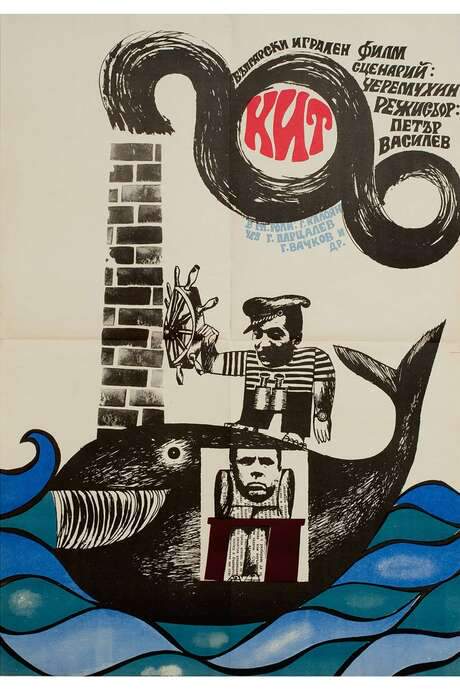
Whale (1970) movie poster

Characters & Themes

Whale (1970) Characters, Setting & Themes Explained

Release, runtime and language
1970 · 80 mins · Bulgarian
Directed by
Petar B. Vasilev
Starring
Georgi Popov, Bogdana Vulpe, Georgi Kaloyanchev, Georgi Georgiev-Gocheto, Katya Chukova, Georgi Partsalev

The crew of a fishing boat returns, having caught only a tiny fish. To avoid embarrassment they claim 300 kg mackerel. The port authority, craving a success story, inflates the catch into tons of bonito, then a dolphin, finally a whale. The false report sparks celebrations, honors and awards, yet no whale ever exists—exposing the officials’ folly.

On this page (7)
  1. 1 Characters explained (6)
  2. 2 Where & when it takes place
  3. 3 Themes & meaning (3)
  4. 4 Character & meaning questions
  5. 5 Movie threads
  6. 6 Movies like Whale
  7. 7 Every angle

6 main characters · contains spoilers

Whale Characters Explained: Who Is Who

The main characters of Whale (1970), heroes and villains: what drives them, how they change over the course of the story and what each of them reveals about the film's bigger ideas.

  • Captain Grigor Vachkov

    The ship's captain who steers the crew and communicates the haul to the base. He wields authority aboard but is also entangled in the pressure to present a profitable picture. His decisions reveal a pragmatic, if sometimes morally flexible, approach to satisfying higher-ups.

    • ⚓ Captain
    • 🧭 Authority
    • 💬 Communicator
  • Vtori zam (Georgi Popov)

    The second-in-command who witnesses the communications chain and the crew’s attempts to influence reports. He embodies loyalty to the vessel and crew, while navigating the expectations of the base leadership. His perspective highlights the human cost of bureaucratic manipulation at sea.

    • 🧭 SecondMate
    • ⚓ Loyalty
  • Kalcho Kalchev (Dimitar Panov)

    The powerful local boss whose influence looms over the enterprise. He demands favorable numbers to protect his economic domain and maintain control. He personifies the drive for power that fuels inflated claims and the cycle of corruption.

    • 🏛️ Boss
    • 💼 Power
  • Parushev (Georgi Kaloyanchev)

    A ministerial figure represented in the story by a portrait and public gestures. He embodies the top-level politics and ritualized authority that shape decisions on the ground. His presence underscores the theater of governance that sustains the deception.

    • 🏛️ Minister
    • 🎭 Vanity
  • Petrov (Tzvyatko Nikolov)

    The base superior who receives the captain’s transmission and oversees reporting. He sits at the apex of the local administrative chain that escalates the misleading ‘draught’ narrative. He represents the interface between on-the-ground operations and bureaucratic oversight.

    • 👔 BaseBoss
    • 💬 Bureaucracy
  • Lead Engineer (Georgi Partsalev)

    The lead engineer who hints that the dolphin is actually a whale, offering a technical rationalization to shield the enterprise from scrutiny. He embodies the rationalization used to justify inflated claims and protect the economic interests behind them.

    • 🛠️ Engineer
    • 🔍 Skepticism

Last updated: February 19, 2026 at 09:20

Was this helpful?

Setting

Where and When Does Whale Take Place?

The setting of Whale (1970): the year and time period, the places and locations, and how they shape the characters, the mood and the tension of the story.

Time period

Location

small fishing ship, fishing base

The action unfolds aboard a small fishing ship and within the surrounding fishing base where reports are generated. The ship’s crew face a grim, resource-scarce sea, highlighting the harsh working conditions of the fishing industry. The base becomes a hub of officials and managers who inflate numbers to sustain the operation. The coastal setting frames a clash between survival at sea and the politics of reporting success.

  • 🌊 Sea
  • 🐟 Fishing
  • 🏢 Bureaucracy

Last updated: February 19, 2026 at 09:20

Was this helpful?

3 major themes

Whale Meaning: Themes & Message Explained

What is Whale (1970) really about? The emotional, social and philosophical themes the film keeps returning to, its symbolism and the message beneath the surface.

  • Power & Bureaucracy

    The film satirizes how officials at different levels inflate success to preserve status and funding. Decisions are driven by political considerations and personal pride rather than facts. The portrait scene with Parushev and the back-and-forth among the base leadership reveal a theater of power where truth is secondary to appearances. Bureaucracy becomes the real force shaping the fate of the crew and their catch.

  • Exaggeration & Deception

    The crew converts a sprat into a dolphin and then into a whale, turning a minor haul into a grand achievement. This deception serves to justify continued operation and to entertain those in charge. The exaggeration is less about convincing others and more about preserving control over resources. The film explores how storytelling can substitute for reality in high-stakes industries.

  • Nature vs Economy

    The sea is treated as a resource to be exploited, with biodiversity and weather as background to economic pressures. The debate over the supposed size of the catch shows how financial interests reshape perception. The narrative hints at environmental and ethical costs behind the administrators' fantasies, illustrating a tension between ecological limits and corporate greed.

Last updated: February 19, 2026 at 09:20

Was this helpful?

Character & theme questions

Whale Characters & Meaning: Your Questions Answered

The questions people ask about Whale (1970): who the characters really are, their relationships, what the symbols mean, where it takes place and what the movie is really about. Each answer contains spoilers.

Q1

Where does the story take place?

The film unfolds aboard a small fishing ship and at a nearby fishing base. The ship represents the harsh, resource-scarce working conditions of the fishing industry, while the base serves as a hub where officials manage reports and inflate catch numbers. This coastal setting creates a clash between the crew's survival struggles at sea and the bureaucratic politics of reporting success on land.

  • fishing ship
  • fishing base
  • setting
  • sea
  • coast
Q2

What does the movie say about bureaucracy and power?

The film satirizes how officials at every level inflate success to protect their status and funding. Decisions are driven by political considerations and personal pride rather than facts. The portrait of Parushev and the back-and-forth among base leadership reveal a theater of power where truth is secondary to appearances. Bureaucracy becomes the real force shaping the fate of the crew and their catch.

  • bureaucracy
  • power
  • satire
  • officials
  • corruption
Q3

How does the film explore exaggeration and deception?

The crew turns a tiny sprat into a dolphin and then into a whale, transforming a minor haul into a grand achievement. This deception justifies continued operation and entertains those in charge. The film shows how storytelling can substitute for reality in high-stakes industries, with exaggeration less about convincing others and more about preserving control over resources.

  • deception
  • exaggeration
  • lie
  • truth
  • manipulation
Q4

What is the film's message about nature versus economy?

The sea is treated as a resource to be exploited, with biodiversity and weather serving as background to economic pressures. The debate over the catch's supposed size shows how financial interests reshape perception. The narrative hints at environmental and ethical costs behind the administrators' fantasies, illustrating the tension between ecological limits and corporate greed.

  • nature
  • economy
  • environment
  • resources
  • exploitation
Q5

Who is Captain Grigor Vachkov and what is his role?

Captain Grigor Vachkov is the ship's captain who steers the crew and communicates the haul to the base. He wields authority aboard the vessel but is entangled in the pressure to present a profitable picture. His decisions reveal a pragmatic, if sometimes morally flexible, approach to satisfying higher-ups while managing his crew.

  • captain
  • Grigor Vachkov
  • crew leader
  • authority
Q6

Who is Kalcho Kalchev and why is he important?

Kalcho Kalchev (Dimitar Panov) is the powerful local boss whose influence looms over the fishing enterprise. He demands favorable numbers to protect his economic domain and maintain control. He personifies the drive for power that fuels inflated claims and the cycle of corruption within the bureaucratic system.

  • Kalcho Kalchev
  • boss
  • local leader
  • power
  • corruption
Q7

What roles do the base officials play in the story?

Petrov serves as the base superior who receives the captain's transmission and oversees reporting, representing the apex of the local administrative chain that escalates the misleading narrative. The Lead Engineer provides technical rationalizations to justify inflated claims and protect economic interests. Together, they embody the interface between on-the-ground operations and bureaucratic oversight.

  • Petrov
  • Lead Engineer
  • base officials
  • hierarchy
  • administration
Q8

What is the role of the second-in-command, Georgi Popov?

  • Georgi Popov
  • second-in-command
  • Vtori zam
  • loyalty
  • crew
Q9

Who is Parushev and what does he represent?

Parushev (Georgi Kaloyanchev) is a ministerial figure represented in the story by a portrait and public gestures. He embodies the top-level politics and ritualized authority that shape decisions on the ground. His presence underscores the theater of governance that sustains the deception, showing how high-level leadership enables bureaucratic absurdity.

  • Parushev
  • minister
  • government
  • authority
  • portrait
Q10

What kind of film is this - is it a comedy?

Yes, this is a comedy that uses a whimsical, playful tone built on an absurd premise where a lie grows exponentially. The film creates a comical rather than sinister critique of bureaucracy. Despite addressing serious themes like corruption and deception, the emotional weight remains light as the themes are handled with humor rather than heavy-handed criticism.

  • comedy
  • satire
  • tone
  • humor
  • absurd

Movie threads

More Movies Like Whale, by Mood & Story

Curated lists built around what makes Whale tick: the same mood, the same kind of story or the same emotional payoff. Each list explains why these movies belong together.

Movies with escalating absurdity like Whale

Stories where a small untruth spirals into a comically large deception. If you enjoyed Whale's tale of a fabricated whale, you'll like these movies where a small lie snowballs into a huge farce. These comedies feature similar themes of social folly, bureaucratic gullibility, and lighthearted consequences.

  • absurd
  • satirical
  • lighthearted
  • comical
  • bureaucratic folly
  • escalating chaos
  • Tone: whimsical, satirical
  • Pacing: steady, logical progression
Why these movies?

The story pattern: The narrative pattern begins with a minor, often trivial, deception intended to avoid embarrassment or gain a small advantage. Through a series of misinterpretations, exaggerations, and characters who have a vested interest in believing the lie, the falsehood grows to absurd proportions, creating a domino effect of comical situations.

Why they belong together: These movies are grouped together because they share a core comedic engine: the exponential growth of a falsehood. They feature a 'whimsical' tone, 'low' intensity, and focus on the folly of human nature and social systems, making the journey more entertaining than the final outcome.

Gentle bureaucratic satires like Whale

Comedies that playfully expose the absurdities of official systems and social conformity. Fans of Whale's take on official foolishness will enjoy these similar movies. These comedies explore themes of truth vs. convenience within systems, using a light touch and absurd humor rather than heavy-handed criticism.

  • satirical
  • bureaucratic
  • absurd
  • lighthearted
  • comical
  • social conformity
  • Tone: whimsical, comical
  • Pacing: steady, deliberate
Why these movies?

The story pattern: The story typically unfolds within a structured system—a government office, a corporation, a small town—where a logical flaw or a convenient fiction is embraced by those in charge. The plot follows the ripple effects of this collective self-deception, highlighting the gap between official reality and the obvious truth, all played for laughs.

Why they belong together: These films are united by their specific brand of satire: they target the folly of bureaucracy and groupthink with a 'whimsical' and 'lighthearted' approach. The conflict arises from characters prioritizing reputation and comfort over truth, resulting in a 'steady', 'straightforward' narrative that feels both amusing and recognizably human.

If you liked this

Movies Like Whale

Similar movies to Whale: the same genre, themes or kind of story. Each one comes with its own plot summary, timeline and ending explained.

Browse all movie summaries

Every angle

Whale (1970) Explained: Plot, Timeline & Characters

Everything about Whale in one place: what happens in the plot summary, the timeline in chronological order, the characters and meaning and a spoiler-free summary. What's After the Movie adds the cast, box office and post-credit scenes.

Coming soon on iOS and Android

The Plot Explained Movie Summary App

Plot summaries, endings explained and timelines on your phone. Catch up on any movie in minutes, save your favorites and never miss a twist again.

Be the first to know when we launch. Your email stays private, always.

Learn more about the app