Year: 2010
Runtime: 3 mins
Language: English
Director: Eric Appel
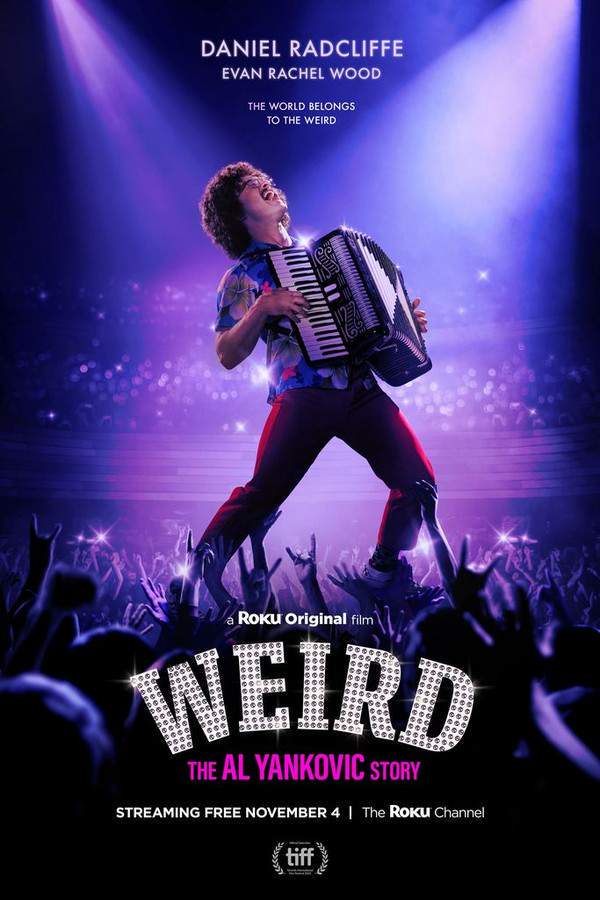
A film that’s sure to sweep next year’s Academy Awards. A fictional biographical film about ‘Weird Al’ Yankovic that parodies other films based on musicians.
Warning: spoilers below!
Haven’t seen Weird: The Al Yankovic Story yet? This summary contains major spoilers. Bookmark the page, watch the movie, and come back for the full breakdown. If you're ready, scroll on and relive the story!
Read the complete plot breakdown of Weird: The Al Yankovic Story (2010), including all key story events, major twists, and the ending explained in detail. Discover what really happened—and what it all means.
Young Alfred ‘Al’ Yankovic, Weird Al Yankovic, discovers a talent for turning popular songs into playful parodies while facing his father’s stern disapproval. His mother, Mary Steenburgen, secretly buys him an accordion, but his father, Gary Cole, destroys it after catching him at a forbidden polka party, a moment that strains their relationship and plants the seeds of his artistic rebellion.
Years later, a grown Al shares a cramped apartment with Steve, Jim, and Bermuda, and he keeps getting rejected at band auditions as an accordionist. While he sips a bologna sandwich and hears My Sharona on the radio, a spark lights up: he writes the cheeky tune My Bologna and sends it to a local radio DJ, who airs it immediately. He then heads to Scotti Brothers Records, where the brothers mock him but hint they might reconsider if he gains more experience.
A pivotal moment comes when Al performs I Love Rocky Road at a biker bar, with his roommates stepping in to flesh out the act; the performance captures the attention of Dr. Demento, Patton Oswalt, who offers to manage him and suggests adopting the stage name “Weird Al.” At a party hosted by Dr. Demento, the mood sharpens as Wolfman Jack dares Al to parody Queen’s Another One Bites the Dust with a cameo by John Deacon. Al rises to the challenge with Another One Rides the Bus, a stunt that sets off a whirlwind of celebrity buzz and helps him land a record contract. His debut album explodes in popularity, a phenomenon affectionately known as the “Yankovic bump,” and he even garners praise from unlikely fans like Oprah.
Back home, Al calls his parents only to hear their lingering skepticism. Dr. Demento pushes him toward writing an original song, but Al initially resists. A wild detour occurs when Demento hands him guacamole laced with LSD, a moment that spurs the creation of Eat It. Madonna, seeking the famed “Yankovic bump,” begins a romance with Al to coax a parody of her hit Like a Virgin, though he remains convinced that he now only writes original material. Their romance alarms Dr. Demento and the band, but the couple carries on. Just before a major show, Al learns that Michael Jackson has riffed on Eat It with a parody of Beat It, a development that fuels his frustration and fear of misinterpretation.
An inebriated Al endures a near-fatal car crash and, after regaining consciousness in the hospital, unveils Like a Surgeon with a dramatic onstage premiere that same night. Yet, as Eat It looms as the finale, he becomes enmeshed in a chaotic moment, drinks too much, berates the crowd, and lands in jail for lewdness. Upon his release, he opens up to Madonna about his fear of losing the people who matter, sensing that she may be the last one left.
Madonna is then drawn into a high-stakes kidnapping by Pablo Escobar’s agents, who are eager fans ready to bend his success to their ends. Al travels to Colombia to intervene, breaking into Escobar’s compound and refusing to perform. A violent confrontation ensues, and Al ends Escobar’s operation in a desperate showdown to save Madonna. Yet Madonna’s plans do not end there; she presses him to retire from music and help seize the drug empire, an offer he rejects.
Returning home, Al is drawn back to his father’s factory floor, where his father confesses that he always supported his son’s path, even as he hid a revealing truth: he grew up in an Amish community and was excommunicated for playing the accordion, a past that shaped his caution about Al’s future. With new resolve, Al presents his father’s song, Amish Paradise, on a grand stage and earns a major award in 1985. The triumph is cut short when he is assassinated onstage by one of Madonna’s henchmen, a brutal twist that shatters the dream.
In the aftermath, Madonna visits Al’s grave, only to be grabbed by his undead arm, a final eerie note that lingers as the memory of his extraordinary, boundary-pushing career endures.
Last Updated: October 09, 2025 at 17:01
Discover curated groups of movies connected by mood, themes, and story style. Browse collections built around emotion, atmosphere, and narrative focus to easily find films that match what you feel like watching right now.
Wildly fictionalized life stories that parody celebrity culture with gleeful irreverence.If you liked the zany, fictionalized take on a musician's life in 'Weird: The Al Yankovic Story', you'll enjoy these other movies. This thread finds similar films that are satirical artist biographies, blending comedy with a playful parody of fame and celebrity culture for a uniquely hilarious experience.
Stories in this thread follow a linear, rise-to-fame structure but populate it with increasingly absurd and impossible events. They use the biographical format as a framework for satire, turning mundane moments into epic, ridiculous set pieces while often weaving in a thread of mock-serious drama or pathos.
These movies are grouped by their shared approach to storytelling: using the biography genre as a vehicle for high-energy satire. They share a whimsical tone, fast pacing filled with comedic beats, and a core premise of playfully dismantling the clichés of 'serious' artist portraits.
Self-aware films that hilariously deconstruct genre conventions with breakneck energy.Fans of the rapid-fire, self-referential jokes and genre parody in 'Weird: The Al Yankovic Story' will find more to love here. Discover movies that are zany meta-comedies, featuring playful satire, a fast pace, and a witty, nostalgic love for the film styles they're mocking.
The narrative pattern is less about a traditional arc and more about a series of comedic sketches or set pieces connected by a meta-narrative. The joy comes from recognizing the tropes being lampooned, as the film joyfully dances between celebrating and ridiculing its subject matter.
These films share a specific comedic vibe: they are fast-paced, intellectually playful, and deeply self-referential. The similarity lies in their tonal blend of wit and silliness, their high humor score, and their primary goal of making the audience laugh through clever deconstruction rather than simple slapstick.
Don't stop at just watching — explore Weird: The Al Yankovic Story in full detail. From the complete plot summary and scene-by-scene timeline to character breakdowns, thematic analysis, and a deep dive into the ending — every page helps you truly understand what Weird: The Al Yankovic Story is all about. Plus, discover what's next after the movie.
Track the full timeline of Weird: The Al Yankovic Story with every major event arranged chronologically. Perfect for decoding non-linear storytelling, flashbacks, or parallel narratives with a clear scene-by-scene breakdown.
Discover the characters, locations, and core themes that shape Weird: The Al Yankovic Story. Get insights into symbolic elements, setting significance, and deeper narrative meaning — ideal for thematic analysis and movie breakdowns.
Get a quick, spoiler-free overview of Weird: The Al Yankovic Story that covers the main plot points and key details without revealing any major twists or spoilers. Perfect for those who want to know what to expect before diving in.
Visit What's After the Movie to explore more about Weird: The Al Yankovic Story: box office results, cast and crew info, production details, post-credit scenes, and external links — all in one place for movie fans and researchers.