Plot Explained Spoilers guaranteed!
Plot Explained

Browse by genre

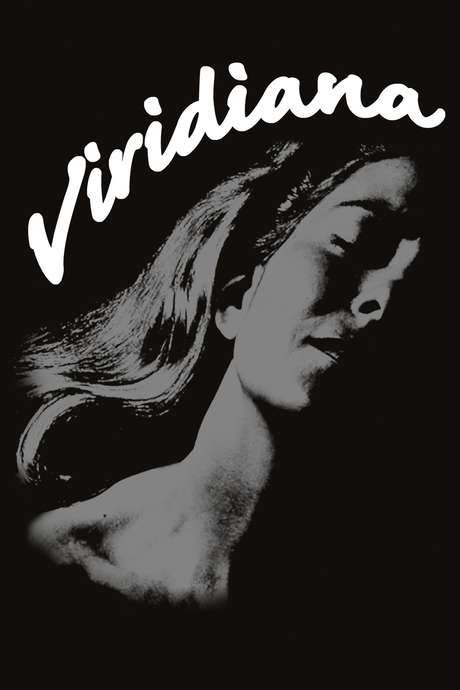
Viridiana (1961) movie poster

Plot Summary

Viridiana (1961) Plot Summary Explained

Release, runtime and language
1961 · 90 mins · Spanish
JustWatch #31,308 1
Directed by
Luis Buñuel
Starring
Fernando Rey, José Calvo, Margarita Lozano, Claudio Brook, Lola Gaos, Sergio Mendizábal

Viridiana is on the verge of taking vows as a nun when she is summoned, reluctantly, to see her aging uncle Don Jaime, whom she has never met. He dotes on her, believing she resembles his late wife. Secretly despising him, she is shocked as Jaime becomes intent on seducing his pure niece, unraveling her plans for the convent.

On this page (5)
  1. 1 Where to watch
  2. 2 What happens: full plot
  3. 3 Plot questions answered
  4. 4 Movie threads
  5. 5 Every angle

Where to watch

Where to Watch Viridiana (1961)

Where can you watch Viridiana? Stream, rent or buy it in the US, including on Darkroom, Kanopy and Amazon Video: current JustWatch availability with up-to-date prices.

Streaming availability powered by JustWatch

Full plot summary · contains spoilers

What Happens in Viridiana: Full Plot Summary

The whole story of Viridiana (1961) explained, from the opening scene to the final frame: every key event, every twist and what it all adds up to. Read it as a quick recap before the sequel, to check a scene you missed, or to finally understand what really happened.

On the eve of taking her final vows as a nun, Viridiana travels to visit her only living relative, an isolated uncle, Don Jaime, who has funded her education and now dwells in a decaying mansion with a devoted caretaker, Ramona. The estate feels like a relic of a fable, its halls and gardens held together by memory as much as by maintenance, where the line between propriety and temptation often blurs.

During a tense and intimate late-night conversation, the uncle reveals a chilling connection to Viridiana’s past: his wife, who bore an uncanny resemblance to her, died in their bed on their wedding night. He asks her to wear the preserved wedding dress and veil, a strange ritual that weighs on the air. After a startling moment where he drugs her coffee and tries to force himself upon her, he regains control, leaving the room with a disturbing silence that lingers in the darkness.

In the morning, the uncle delivers a cruel decree: Viridiana can no longer return to the convent because she is said to no longer be a virgin. He asserts it as truth, even as he claims it was a lie. Terrified and betrayed, she packs her belongings and flees. At a bus stop, she is accosted by the police and brought back to the mansion, where the truth about the night’s events unfolds. The man who has sheltered her is found dead by his own hand, having hanged himself, and his will divides his assets between Viridiana and an illegitimate son named Jorge. This turn of events shatters the expectations of the life she had planned and opens a path she never anticipated.

Don Jaime’s death and will catalyze Viridiana’s decision to abandon the cloistered life she once pursued. Instead of retreating into prayer alone, she resolves to help those in need. Returning to the mansion, she begins to shelter and feed a growing group of vagrants who inhabit the outbuildings and receive sustenance, while she leads them in quiet acts of devotion. The arrival of Jorge, along with his girlfriend Lucía, introduces a new dynamic: they set about renovating the neglected land and buildings, and Jorge starts a discreet relationship with Ramona. The rustic isolation begins to change them all, though Lucía grows bored and resentful, choosing to depart.

Tensions escalate when the beggars break into the estate. What starts as petty theft quickly spirals into a grand, reckless spectacle: the group stages a banquet and arranges a group photograph that playfully parodies Leonardo da Vinci’s The Last Supper. The moment devolves into a drunken, chaotic orgy of sex and destruction, a stark disruption of the home Viridiana has tried to build. When the owners return, most of the intruders scatter, but two men seize Jorge and Viridiana. One of the assailants attempts to rape Viridiana with a knife at her side, while another awaits his turn. In a desperate bid to end the assault, Jorge offers money to the attacker to kill the other man, and the police arrive shortly after, summoned by Ramona.

A few nights later, Ramona and Jorge are playing cards in Jorge’s bedroom to lively music. They invite Viridiana in to join them for what they call a threesome, a dangerous and intimate moment that tests loyalties, beliefs, and the fragile boundaries they have been forced to navigate.
Last updated: October 09, 2025 at 10:44

Was this helpful?

Plot questions answered

Viridiana Plot Explained: Your Questions Answered

The questions people ask most about Viridiana (1961): what happens in the confusing scenes, why the characters do what they do, the twists, hidden details and what the ending means. Each answer contains spoilers.

Q1

Why does Don Jaime try to assault his niece?

Don Jaime reveals during their late-night conversation that his wife died on their wedding night and bore a striking resemblance to Viridiana. Obsessed with recreating that lost love, he drugs her coffee and carries her to bed, though he ultimately regains control before completing the assault. This disturbing ritual stems from his inability to accept his wife's death and his distorted attempt at closure.

Foreshadowing: Earlier in the film, the description notes that the estate feels like a relic of a fable where the line between propriety and temptation blurs, hinting at the uncle's psychological state.

  • don jaime
  • assault
  • motivation
  • wife resemblance
  • obsession
Q2

Why does Don Jaime tell Viridiana she can no longer return to the convent?

In the morning after the assault, Don Jaime claims Viridiana is no longer a virgin and therefore cannot take her vows. He admits it was a lie, but uses this false accusation as a manipulation tactic to control her freedom and prevent her from leaving. The lie serves as both a psychological weapon and a means to keep her bound to the estate.

  • convent
  • virginity
  • lie
  • control
  • manipulation
Q3

Why does Don Jaime hang himself after the assault?

Don Jaime cannot live with the guilt and shame of his attempted assault on his niece. His psychological unraveling is compounded by the realization that his obsessive attempt to recreate his lost wife has failed utterly. The combination of his perverse desire, his moral horror at his own actions, and his recognition that he has irrevocably damaged his relationship with his only family leads him to take his own life.

Foreshadowing: The narrative notes that Don Jaime 'regains control' during the assault, suggesting a brief return to conscience that would later be overwhelmed by shame.

  • suicide
  • guilt
  • shame
  • don jaime
  • hanging
Q4

Why does Viridiana decide to help the beggars at the estate?

After Don Jaime's death and being unable to return to the convent due to the false accusation, Viridiana chooses a different path of devotion. Rather than retreat into prayer alone, she resolves to practice Christian charity directly by sheltering and feeding the vagrants who inhabit the outbuildings. Her decision represents an attempt to find meaning and purpose outside the convent walls while remaining true to her faith.

  • beggars
  • charity
  • compassion
  • help poor
  • vagrants
Q5

Why do the beggars break into the mansion and cause destruction?

When Viridiana leaves the estate with Jorge and Ramona, the beggars seize the opportunity to invade the mansion. Their actions begin as petty theft but escalate into a chaotic retaliation against the wealthy household that has only recently provided them with charity. The banquet they stage, parodying The Last Supper, becomes a drunken orgy of destruction, reflecting their resentment toward the social order and perhaps their perception of hypocrisy in Viridiana's charity.

Foreshadowing: The meta notes indicate the beggars' intrusion is one of the 'transgressive events' the film builds toward, showing how quickly virtual charity can breed contempt.

  • beggars
  • invasion
  • destruction
  • last supper
  • orgy
  • chaos
Q6

Why does Jorge offer money to kill one of his attackers?

When two beggars seize Jorge and Viridiana, with one attempting to rape Viridiana at knifepoint, Jorge makes a desperate calculation to save himself and Viridiana. He offers the attacker money to kill the other man, reasoning that once the witness is dead, the killer would be less likely to let either victim live to testify. This ruthless act reveals the moral compromises humans make under extreme duress.

  • jorge
  • assault
  • bribery
  • murder
  • survival
Q7

Why does Lucía leave the estate?

Lucía grows bored with the rustic life at the decaying mansion and becomes resentful of Jorge's interest in Viridiana. Feeling excluded and unimportant in the household dynamics, she chooses to depart. Her departure removes a volatile element from the group but also fuels the jealousy and insecurity already present among the characters.

  • lucía
  • jealousy
  • departure
  • boredom
  • leaving estate
Q8

What does the final threesome invitation mean?

In the film's ambiguous ending, Ramona and Jorge invite Viridiana to join them in a threesome, testing the boundaries of faith, charity, and sexuality. The invitation represents a culmination of the film's exploration of moral corruption and the collapse of spiritual idealism. Viridiana's unresolved choice, whether she joins them or remains outside, leaves the film on a note of moral compromise rather than redemption.

Foreshadowing: The meta notes explicitly identify this scene as representing 'a bleak capitulation to base desires rather than redemption.'

  • threesome
  • ending
  • ramona
  • jorge
  • invitation
  • ambiguous
Q9

Why does Jorge start a relationship with Ramona?

After arriving at the estate as the illegitimate son who inherits half the property, Jorge develops a discreet relationship with Ramona, the longtime caretaker. Their connection likely stems from shared adult experience in a household increasingly dominated by religious idealism and youth. The relationship adds another layer of complexity to the household dynamics, intertwining class, loyalty, and desire.

  • jorge
  • ramona
  • relationship
  • romance
  • affair
Q10

Why is Viridiana brought back to the mansion by police?

After Don Jaime accuses her of no longer being a virgin, Viridiana packs her belongings and flees to a bus station, hoping to escape the estate. However, the police intercept her and return her to the mansion, likely at Don Jaime's request. This forces her to witness the aftermath of the morning's events, including her uncle's suicide, ensuring she cannot simply walk away from the situation.

  • police
  • bus stop
  • escape
  • return
  • arrested
Q11

Why do the beggars stage a Last Supper parody?

The beggars' group photograph deliberately parodies Leonardo da Vinci's The Last Supper, turning a sacred religious image into a scene of hedonistic excess. This visual statement serves as a sharp critique of religious hypocrisy, using sacred imagery to celebrate gluttony, drunkenness, and sexual liberation. The film uses this moment to underscore its thematic attack on the corruption within religious institutions and the failure of charity.

Foreshadowing: The meta notes specifically mention this scene as using 'symbolism to critique religious and social hypocrisy.'

  • last supper
  • parody
  • symbolism
  • religious critique
  • art
Q12

Why does Don Jaime ask Viridiana to wear his dead wife's wedding dress?

During the tense late-night conversation, Don Jaime asks Viridiana to wear the preserved wedding dress and veil of his late wife, who bore a striking resemblance to her. This request reveals his psychological fixation on his dead wife and his desire to recreate her through Viridiana. The ritualistic demand is part of his disturbed attempt to connect with his lost love and overcome the trauma of her death on their wedding night.

Foreshadowing: The narrative establishes the wife's death on the wedding night as a key detail that drives Don Jaime's entire behavior.

  • wedding dress
  • veil
  • dead wife
  • ritual
  • obsession

Movie threads

More Movies Like Viridiana, by Mood & Story

Curated lists built around what makes Viridiana tick: the same mood, the same kind of story or the same emotional payoff. Each list explains why these movies belong together.

Movies about the corruption of purity like in Viridiana

Stories where a pure belief system is shattered by a cynical, corrupting reality. If you liked Viridiana's exploration of faith challenged by a cynical world, you'll find similar stories here. These movies follow characters whose sacred ideals or innocence are shattered by moral decay and hypocrisy, leading to a profound existential crisis.

  • transgressive
  • bleak
  • unsettling
  • satirical
  • melancholic
  • psychological
  • Tone: dark, cynical, transgressive
  • Pacing: steady, deliberate
Why these movies?

The story pattern: These stories typically follow a protagonist with a strong, often naive, belief system (religious, moral, or ideological) who enters an environment or situation that actively challenges and corrupts that worldview. The central conflict is internal and external, charting the protagonist's disillusionment as their ideals are systematically dismantled.

Why they belong together: Movies are grouped here for their shared thematic core: the tension between purity and corruption. They share a dark tone, a focus on psychological transformation, and a cynical perspective on whether innocence can survive in a fallen world.

Bleak satirical movies with social criticism like Viridiana

Cynical films that use transgression and dark humor to expose societal failings. Discover more movies like Viridiana that use dark satire and transgressive narratives to critique society. These films expose religious hypocrisy, class disparity, and moral decay through a lens of unsettling, bleak humor and ambiguous endings.

  • satirical
  • unsettling
  • bleak
  • transgressive
  • decadent
  • oppressive
  • Tone: dark, satirical, bleak
  • Pacing: steady, building to chaos
Why these movies?

The story pattern: Narratives in this thread often build a steady, deliberate pace towards chaotic or transgressive set pieces (like a symbolic orgy or rebellion) that serve as a microcosm for the film's critique. Characters frequently represent different facets of the society being satirized, and their interactions reveal the absurdity or cruelty of the system.

Why they belong together: These films are united by their use of satire as a primary tool for social commentary. They share a dark tone, an unsettling mood, and a willingness to push boundaries to make their point, often resulting in an emotionally heavy and intellectually provocative experience.

Every angle

Viridiana (1961) Explained: Plot, Timeline & Characters

Everything about Viridiana in one place: what happens in the plot summary, the timeline in chronological order, the characters and meaning and a spoiler-free summary. What's After the Movie adds the cast, box office and post-credit scenes.

Coming soon on iOS and Android

The Plot Explained Movie Summary App

Plot summaries, endings explained and timelines on your phone. Catch up on any movie in minutes, save your favorites and never miss a twist again.

Be the first to know when we launch. Your email stays private, always.

Learn more about the app