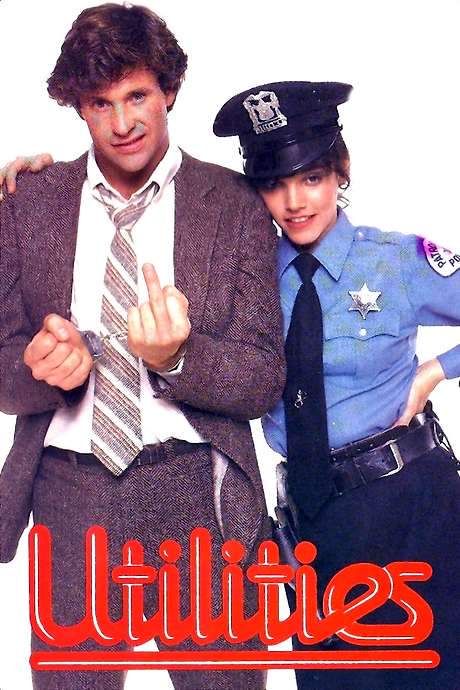
Year: 1983
Runtime: 94 mins
Language: English
Director: Harvey Hart
When a neighbor’s electricity is shut off because she can’t pay, the community rallies and pays the bill in pennies. The utility refuses the coin payment and, due to a communication error, fails to restore power, leaving the elderly woman hospitalized with hypothermia. Enraged, Bob Hunt launches a campaign of sabotage against the company’s support systems.
Warning: spoilers below!
Haven’t seen Utilities yet? This summary contains major spoilers. Bookmark the page, watch the movie, and come back for the full breakdown. If you're ready, scroll on and relive the story!
Explore the full timeline and setting of Utilities (1983). Follow every major event in chronological order and see how the environment shapes the story, characters, and dramatic tension.
Last updated: November 22, 2025 at 15:52
Meet the key characters of Utilities (1983), with detailed profiles, motivations, and roles in the plot. Understand their emotional journeys and what they reveal about the film’s deeper themes.
Last updated: November 22, 2025 at 15:52
Explore the central themes of Utilities (1983), from psychological, social, and emotional dimensions to philosophical messages. Understand what the film is really saying beneath the surface.
Last updated: November 22, 2025 at 15:52
Browse frequently asked questions about Utilities (1983) focused on characters, relationships, themes, symbols, setting, and story context. This movie info FAQ gives spoiler-aware explanations for character arcs, world details, and thematic interpretation so readers can better understand what the film is really about.
The story takes place in a mid-sized North American city with a bustling urban environment. The setting features visible electricity grids, neighborhood streets, and local services that anchor the drama as power and billing disputes disrupt daily life.
The events are set in the early 1980s, a pre-digital era when households relied on manual billing and long-distance calls were expensive. This period is reflected in the public commissions, regulatory hearings, and media coverage that drive the plot.
Bob Hunt is a social worker portrayed by Robert Hays who becomes a driven, vengeful force after witnessing systemic neglect of vulnerable citizens. He targets failing support networks to expose weaknesses in public services, believing drastic action can force reform. His methods blur the line between justice and obsession, and his identity as 'The Finger' becomes a citywide symbol of citizen resistance.
Dr. Martha Louise Rogers is an elderly physician portrayed by Jane Mallett whose electricity is cut off when she cannot pay her bill. Her resulting hospitalization due to hypothermia becomes the inciting incident that motivates the community to rally around her and fuels Bob Hunt's campaign against the utility company.
Kenneth Knight is a power broker behind the utility company, portrayed by James Blendick. He is rumored to orchestrate substation sabotage to gain public sympathy and influence rate decisions. He represents corporate manipulation and political calculation, driving much of the film's antagonistic pressure.
Marion Edwards is a police officer portrayed by Brooke Adams who is involved in upholding order while also uncovering a larger manipulation within the utility saga. She embodies authority and determination, and her investigation helps reveal the extent of corporate and regulatory corruption, tying law enforcement to the fight for public welfare.
The film explores how a social worker's quest to force reform evolves into a vendetta against failing social systems. The Finger becomes a symbol exposing weaknesses in civic infrastructure and accountability. The narrative probes whether individual action can catalyze change or foster chaos, questioning who should police public welfare and at what cost.
Media coverage drives the mystery and shapes how the public perceives the conflict between citizens and utilities. Sensational reporting magnifies small clues, influencing fear, sympathy, and outrage. The courtroom and street protests become stages where information and rumor compete for power, suggesting media narratives can propel reform or manipulate sentiment.
Central to the plot are the operations and decisions of a public utility and its rate hikes. Corporate interests and regulatory maneuvering frame the struggle between profit and public welfare. Sabotage reveals the fragility of essential services and tests the resilience of the city's infrastructure, with the public commission embodying a critical check on power.
The Finger is Bob Hunt's symbolic identity as he wages his campaign of sabotage against the utility company's support systems. It becomes a citywide symbol that represents citizen resistance against corporate negligence and failing public services, evolving from a personal vendetta into a broader movement for accountability.
The film emphasizes community resilience through neighbors like Roy Blue, Ruby Blue, Eddie, and Walt who rally around Dr. Rogers when her electricity is cut off. Citizens participate in discussions, public demonstrations, and collective action, reflecting solidarity and pragmatic support for those affected by outages and unfair utility practices.
The movie maintains a light tone despite its serious subject matter because it is presented as a comedy. The narrative is driven by a quirky, almost whimsical form of protest through The Finger, rather than grim despair. The film balances satire and social commentary with clever retaliation and character-driven plot, creating an engaging commentary on civic issues without becoming preachy.
Discover curated groups of movies connected by mood, themes, and story style. Browse collections built around emotion, atmosphere, and narrative focus to easily find films that match what you feel like watching right now.
Ordinary people use unconventional tactics to fight back against the system.If you enjoyed the clever sabotage and community spirit in Utilities, you'll like these movies. They feature everyday people using unconventional, often humorous, tactics to fight back against larger, oppressive systems, blending social commentary with satisfying, character-driven plots.
Stories in this thread typically begin with a personal injustice that galvanizes an individual or community. The conflict escalates not through violence, but through inventive, symbolic acts of protest that expose the absurdity or callousness of the antagonist. The journey is one of empowerment, building from individual frustration to collective action.
Movies are grouped here for their shared focus on creative civil disobedience, a light-to-medium tone that finds humor in resistance, and a narrative that champions ingenuity over brute force. They deliver a cathartic and often satirical experience rooted in social justice themes.
Sharp, observant stories that critique society through a personal lens.Fans of Utilities will appreciate these films that similarly use a personal story to explore larger social themes. They blend comedy and drama to offer a sharp, satirical look at modern life, often featuring steady pacing, medium complexity, and an ending that leaves you thinking.
The narrative pattern centers on a relatable protagonist whose personal conflict becomes a microcosm of a wider social problem. The plot unfolds in a measured way, revealing the intricacies of the system being critiqued. The resolution is often nuanced, highlighting a moral victory or exposing hypocrisy rather than providing a simple, clean win.
These movies share a 'MODERATE' complexity and a 'STEADY' pace that allows for thoughtful exploration of themes. They possess a specific tonal blend—using a 'LIGHT' touch to tackle serious subjects—and an 'AMBIGUOUS' or bittersweet ending feel that prioritizes thematic resonance over pure escapism.
Don't stop at just watching - explore Utilities in full detail. From the complete plot summary and scene-by-scene timeline to character breakdowns, thematic analysis, and a deep dive into the ending - every page helps you truly understand what Utilities is all about. Plus, discover what's next after the movie.
Read a complete plot summary of Utilities, including all key story points, character arcs, and turning points. This in-depth recap is ideal for understanding the narrative structure or reviewing what happened in the movie.
Track the full timeline of Utilities with every major event arranged chronologically. Perfect for decoding non-linear storytelling, flashbacks, or parallel narratives with a clear scene-by-scene breakdown.
Discover movies like Utilities that share similar genres, themes, and storytelling elements. Whether you’re drawn to the atmosphere, character arcs, or plot structure, these curated recommendations will help you explore more films you’ll love.
Utilities (1983) Plot Summary & Movie Recap
Utilities (1983) Scene-by-Scene Movie Timeline
Utilities (1983) Spoiler-Free Summary & Key Flow
Movies Like Utilities – Similar Titles You’ll Enjoy
Buffaloed (2020) Detailed Story Recap
Fun with Dick and Jane (2005) Plot Summary & Ending Explained
Wrong Cops (2013) Full Movie Breakdown
How to Beat the High Cost of Living (1980) Story Summary & Characters
Buffaloed (2019) Ending Explained & Film Insights
Charge! (2000) Film Overview & Timeline
Common Wealth (2000) Ending Explained & Film Insights
Police (1916) Ending Explained & Film Insights
Hustling for Health (1919) Full Movie Breakdown
Police (1916) Movie Recap & Themes
A Plumbing We Will Go (1940) Movie Recap & Themes
Looking for Trouble (1934) Story Summary & Characters
The Water Plug (1920) Movie Recap & Themes
Scheming Schemers (1956) Ending Explained & Film Insights
Ten Dollars or Ten Days (1924) Film Overview & Timeline