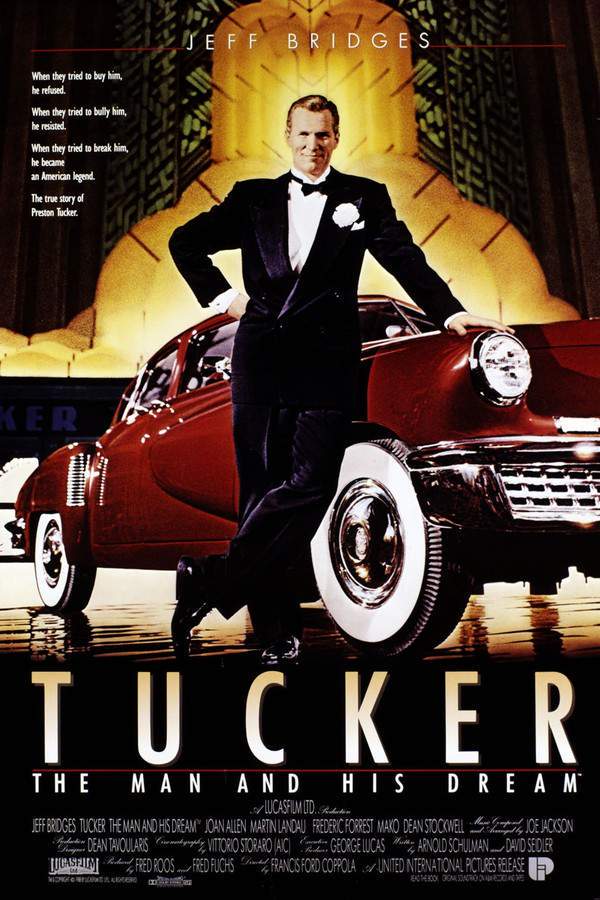
Tucker: The Man and His Dream

Driven by a lifelong fascination with automobiles, inventor Preston Tucker (Jeff Bridges) sets out to realize his ambitious dream of building a revolutionary car, the Tucker Torpedo. Despite early successes and wartime contributions, Tucker faces opposition from established Detroit automakers who see his innovative design as a threat. Production challenges and accusations of financial impropriety escalate, forcing him to defend his vision and reputation in a dramatic courtroom battle.
Where to Watch Tucker: The Man and His Dream?
Find where to stream, rent, or buy Tucker: The Man and His Dream (1988) in the US with current JustWatch availability, up-to-date pricing, and platform listings for subscription, rental, and digital purchase options.

















Streaming availability powered by 
Warning: spoilers below!
Haven’t seen Tucker: The Man and His Dream yet? This summary contains major spoilers. Bookmark the page, watch the movie, and come back for the full breakdown. If you're ready, scroll on and relive the story!
Timeline – Tucker: The Man and His Dream (1988)
Trace every key event in Tucker: The Man and His Dream (1988) with our detailed, chronological timeline. Perfect for unpacking nonlinear stories, spotting hidden connections, and understanding how each scene builds toward the film’s climax. Whether you're revisiting or decoding for the first time, this timeline gives you the full picture.
Last updated: November 03, 2024 at 12:18
Tucker: The Man and His Dream (1988) Timeline Questions Answered – Chronology FAQ
Find frequently asked questions about the Tucker: The Man and His Dream (1988) timeline, including chronological order, nonlinear jumps, cause-and-effect links, and scene sequence clarifications. This timeline FAQ helps explain when key events happen, how moments connect, and why the story unfolds in that specific order.
Why did the Tucker Torpedo fail to reach mass production?
The Tucker Torpedo failed to reach mass production because established Detroit automakers viewed Tucker's innovative design as a direct threat to their market dominance. They actively lobbied against him, using their political connections to create regulatory obstacles and spread accusations of financial impropriety. Only 50 units were ever produced before the company was forced to cease operations, and Senator Homer Ferguson played a significant role in using his influence to stifle Tucker's efforts.
Earlier scenes showed Tucker's enthusiastic promotion generating massive public excitement, which directly threatened established auto manufacturers.
What role did Senator Homer Ferguson play in Tucker's failure?
Senator Homer Ferguson (R-Michigan) used his influence in the automotive sector to actively work against Preston Tucker. He leveraged his political position to create regulatory hurdles and help orchestrate the corporate opposition that ultimately shut down Tucker Motor Corporation. His actions are widely regarded as having significantly contributed to the failure of the Tucker Torpedo project.
The timeline notes that Senator Ferguson's role is a lingering sentiment in the Tucker community, suggesting his involvement was a major factor from the start.
What made the Tucker Torpedo's design revolutionary?
The Tucker Torpedo featured several groundbreaking innovations that were decades ahead of its time, including a rear-mounted air-cooled engine, disk brakes, independent 4-wheel suspension, and a unique center headlight that pivoted left and right to improve visibility during turns. It also prioritized safety with features like seatbelts, a padded dashboard, and a pop-out safety windshield, none of which were standard in 1940s automobiles.
The summary emphasizes that Tucker's vision was to create a car that combined elegance, efficiency, and safety in ways thought impossible at the time.
How many Tucker Torpedo cars were actually produced?
Only 50 units of the Tucker Torpedo were ever manufactured, despite Tucker having secured the former Dodge B-29 engine facility in Chicago for mass production. This limited production run represents a tiny fraction of what was originally planned and has become a symbol of great potential unrealized.
The public excitement and investment from Chicagoans suggested production would be substantial, making the limited output even more poignant.
Why did Detroit automakers oppose the Tucker Torpedo?
Detroit automakers opposed the Tucker Torpedo because its innovative design posed a direct threat to their existing business model. The car's revolutionary features, including superior safety, efficiency, and engineering, could have disrupted the established auto market and rendered current vehicles obsolete. Rather than compete with innovation, the major automakers chose to use their political and financial power to block Tucker's ability to produce the car at scale.
Early in the timeline, Tucker's vision is described as aiming to transform the auto industry, which naturally set him on a collision course with established manufacturers.
What happened to the investors who believed in Tucker's vision?
Many Chicagoans took a significant financial risk by investing in the Tucker Motor Corporation, and some even purchased dealerships to sell the Torpedo. When the company failed, these investors lost their money along with their dreams of being part of an automotive revolution. The failure represented not just a business loss but a crushing of hope for those who believed in Tucker's innovative vision.
The timeline notes widespread community involvement, with Chicagoans leaping faith to invest in the venture.
Was Preston Tucker actually guilty of financial crimes?
The accusations of financial impropriety leveled against Preston Tucker were largely part of the coordinated effort by established automakers to discredit him. While the movie depicts a courtroom battle where Tucker had to defend his reputation, the historical record shows the charges were exaggerated and used as a tool to destroy his company rather than legitimate concerns about financial misconduct.
The summary mentions accusations of financial impropriety escalating alongside production challenges, suggesting these charges were intertwined with corporate opposition.
Where was the Tucker Torpedo supposed to be manufactured?
Tucker planned to manufacture the Torpedos at the former Dodge B-29 engine facility located on the far southwest side of Chicago. This site was strategically chosen to leverage existing World War II infrastructure for rapid production of the innovative vehicles.
The timeline specifically highlights the Chicago facility as a key part of Tucker's manufacturing plan.
What is the legacy of the Tucker Torpedo despite its failure?
Despite failing to achieve mass production, the Tucker Torpedo left a lasting legacy in automotive history as a symbol of innovation and aspiration. It represents what could have been in automobile design and serves as an enduring reminder of how corporate politics can stifle groundbreaking ideas. Tucker himself is celebrated for his vision and pioneering spirit, even though his dream was ultimately crushed.
The meta notes describe the ending as bittersweet, with Tucker's spirit and innovation celebrated as a moral victory despite the commercial failure.
What motivated Preston Tucker to build the Tucker Torpedo?
Preston Tucker was driven by a lifelong fascination with automobiles and an ambitious dream to revolutionize the auto industry. His vision was not simply to build another car, but to create a groundbreaking vehicle that combined elegance, efficiency, and safety in ways that were previously thought impossible. This relentless pursuit of innovation defined his career and led him to challenge the established auto industry despite knowing the risks involved.
The movie description establishes Tucker's lifelong passion for automobiles as the core motivation behind his ambitious project.

Explore Movie Threads
Discover curated groups of movies connected by mood, themes, and story style. Browse collections built around emotion, atmosphere, and narrative focus to easily find films that match what you feel like watching right now.
Movies about innovators against the system like Tucker: The Man and His Dream
Inspiring stories of dreamers battling entrenched powers to change the world.If you liked Tucker: The Man and His Dream, explore movies about visionary pioneers battling corporate or institutional giants. These films share a similar narrative of ambitious dreamers, revolutionary ideas, and the bittersweet struggle against powerful opposition. They capture the spirit of innovation and the emotional cost of challenging the established order.










Narrative Summary
The narrative pattern follows a rise-and-fall (or rise-fall-rise) structure, beginning with a brilliant idea or invention. The protagonist gains early momentum and supporters, only to face escalating opposition from powerful, often corporate, adversaries. The conflict typically involves financial, legal, and public relations battles, testing the visionary's resolve and the loyalty of their team, culminating in a result that is more about moral victory than outright success.
Why These Movies?
Movies in this thread are grouped by their shared focus on the archetypal struggle of the individual innovator versus a monolithic system. They share a tone that balances hopeful ambition with the frustration of bureaucratic or corporate warfare, creating a specific emotional mix of inspiration and righteous indignation that resonates with viewers.
Bittersweet underdog biographies like Tucker: The Man and His Dream
True stories of ambition and passion that celebrate the journey more than the victory.Find movies similar to Tucker: The Man and His Dream that tell true stories of determined underdogs. These biographical dramas share a bittersweet tone, where the victory lies in the fight itself rather than the outcome. They are inspiring yet realistic, focusing on character and legacy over conventional success.
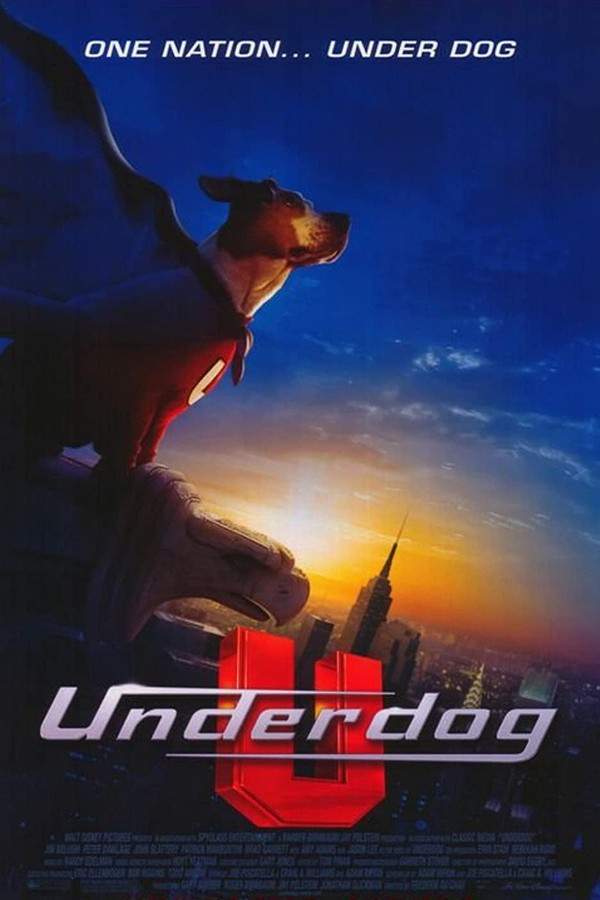
Underdog
2023

The Underdoggs
2024

Mixed Doubles
2017

The Derby Stallion
2005

Lucky Loser
2006

The Babe Ruth Story
1948

Endless Poetry
2017

The Beat Beneath My Feet
2014

The Bad News Bears
1976

Victory
2009
Inside Moves
1980

12 Mighty Orphans
2021

The Final Season
2007

The Hungry Bachelors Club
1999

Next Goal Wins
2023
Narrative Summary
The narrative journey is linearly straightforward, tracing the subject's passionate pursuit of a goal against significant odds. The emotional arc is key: initial optimism gives way to struggle, leading to a climax where external forces often prevail. The ending provides a sense of closure that acknowledges failure on practical terms but affirms success in terms of inspiration, integrity, or lasting influence, leaving the audience with a poignant mix of admiration and melancholy.
Why These Movies?
These films are connected by their specific emotional payoff—a bittersweet ending that feels earned and meaningful. They share a medium emotional weight, balancing the stakes of the protagonist's dream with a grounded, often nostalgic, tone. The pacing is steady, allowing the viewer to invest in the character's journey without the manipulation of high-stakes melodrama.
Unlock the Full Story of Tucker: The Man and His Dream
Don't stop at just watching - explore Tucker: The Man and His Dream in full detail. From the complete plot summary and scene-by-scene timeline to character breakdowns, thematic analysis, and a deep dive into the ending - every page helps you truly understand what Tucker: The Man and His Dream is all about. Plus, discover what's next after the movie.
Tucker: The Man and His Dream Summary
Read a complete plot summary of Tucker: The Man and His Dream, including all key story points, character arcs, and turning points. This in-depth recap is ideal for understanding the narrative structure or reviewing what happened in the movie.

Characters, Settings & Themes in Tucker: The Man and His Dream
Discover the characters, locations, and core themes that shape Tucker: The Man and His Dream. Get insights into symbolic elements, setting significance, and deeper narrative meaning - ideal for thematic analysis and movie breakdowns.


Similar Movies to Tucker: The Man and His Dream
Discover movies like Tucker: The Man and His Dream that share similar genres, themes, and storytelling elements. Whether you’re drawn to the atmosphere, character arcs, or plot structure, these curated recommendations will help you explore more films you’ll love.
Framing John DeLorean
2019
The Old Man & the Gun
2018
Flash of Genius
2008
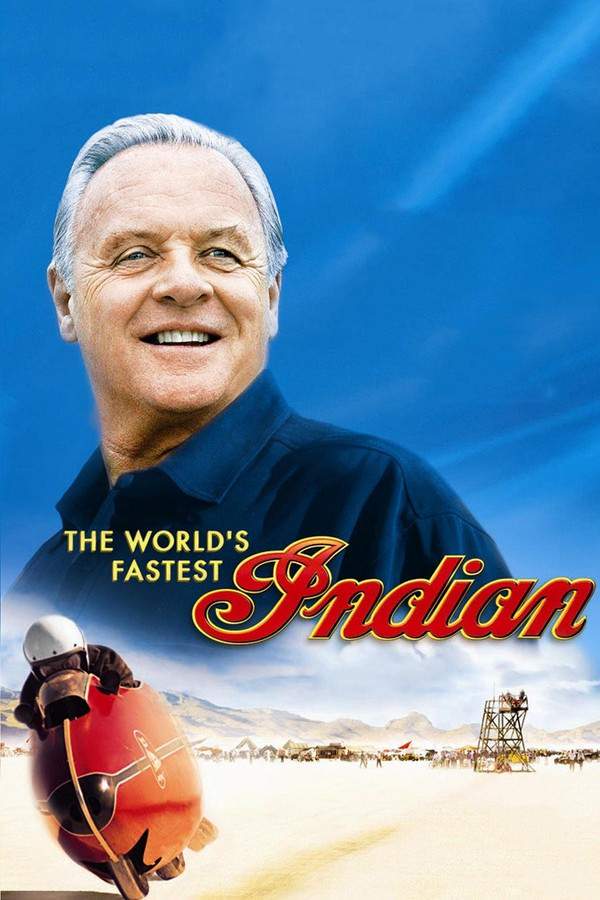
The World's Fastest Indian
2005
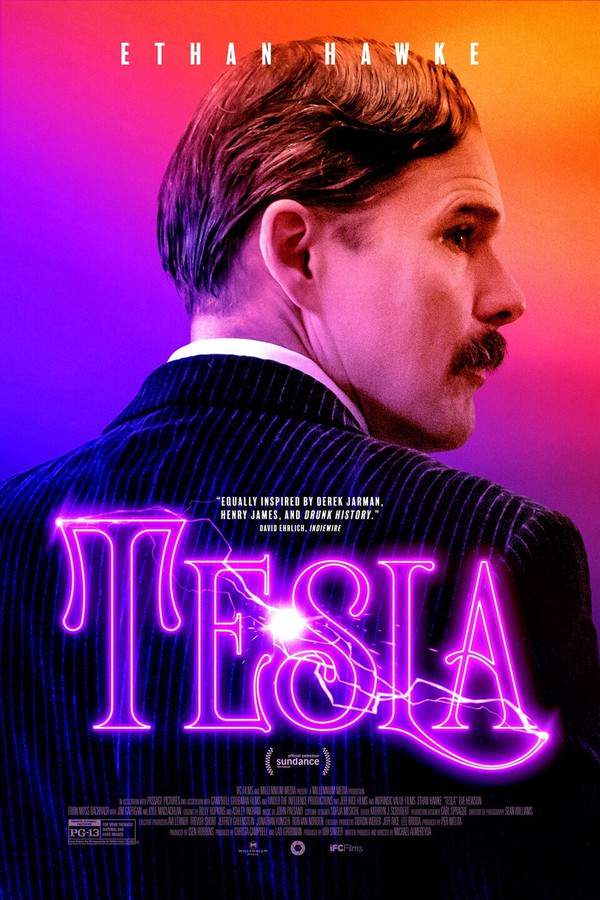
Tesla
2020

Driven
2019
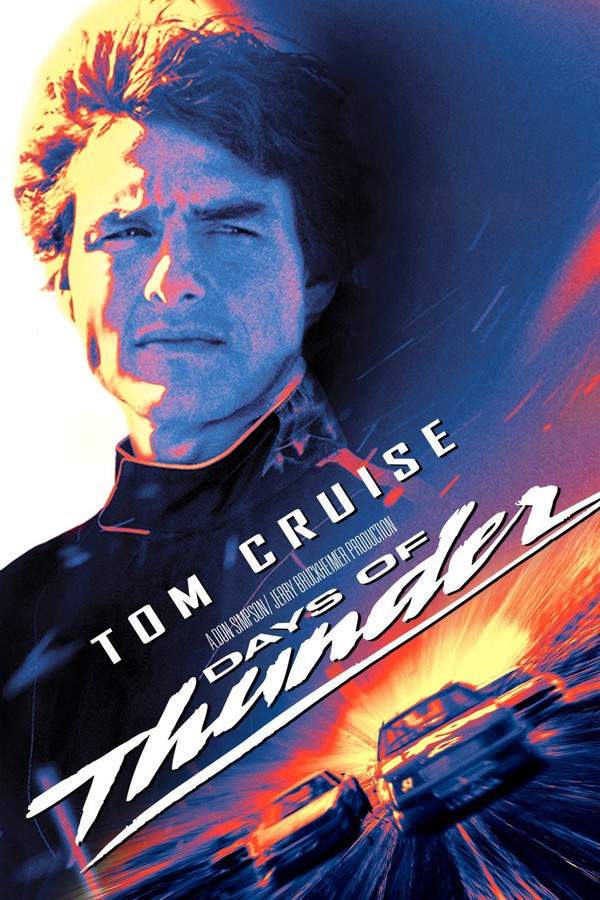
Days of Thunder
1990

Wheeler
2017
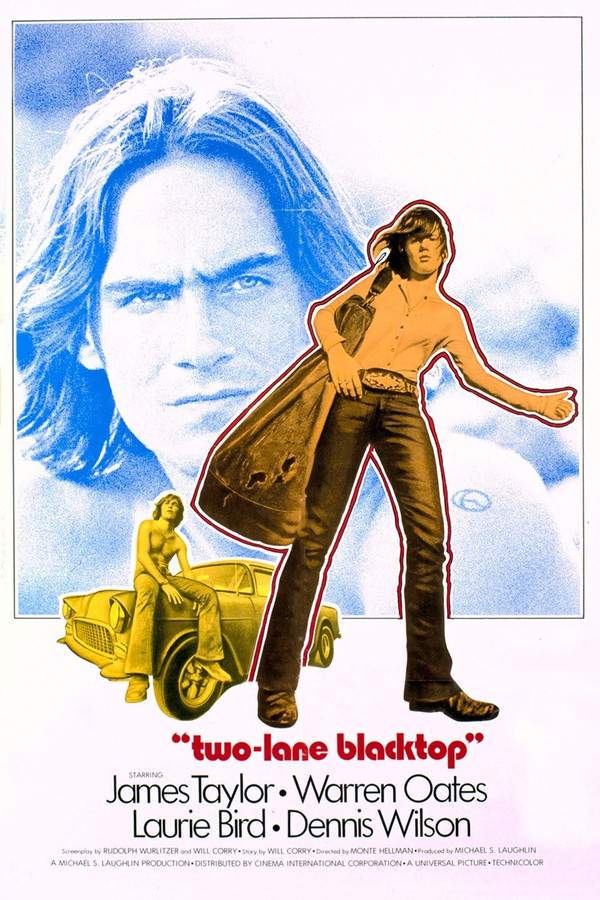
Two-Lane Blacktop
1971

Ford: The Man and the Machine
1987

The Roaring Road
1919

Silver Dream Racer
1980

Silver Dream Racer
1980

High Gear
1933

Hot Rod
1950
Explore More About Movie Tucker: The Man and His Dream
Tucker: The Man and His Dream (1988) Plot Summary & Movie Recap
Tucker: The Man and His Dream (1988) Scene-by-Scene Movie Timeline
Tucker: The Man and His Dream (1988) Spoiler-Free Summary & Key Flow
Movies Like Tucker: The Man and His Dream – Similar Titles You’ll Enjoy
Framing John DeLorean (2019) Film Overview & Timeline
The Old Man & the Gun (2018) Complete Plot Breakdown
Flash of Genius (2008) Detailed Story Recap
The World's Fastest Indian (2005) Story Summary & Characters
Tesla (2020) Complete Plot Breakdown
Driven (2019) Full Movie Breakdown
Days of Thunder (1990) Story Summary & Characters
Wheeler (2017) Full Summary & Key Details
Two-Lane Blacktop (1971) Complete Plot Breakdown
Ford: The Man and the Machine (1987) Full Movie Breakdown
The Roaring Road (1919) Movie Recap & Themes
Silver Dream Racer (1980) Complete Plot Breakdown
Silver Dream Racer (1980) Complete Plot Breakdown
High Gear (1933) Full Movie Breakdown
Hot Rod (1950) Film Overview & Timeline