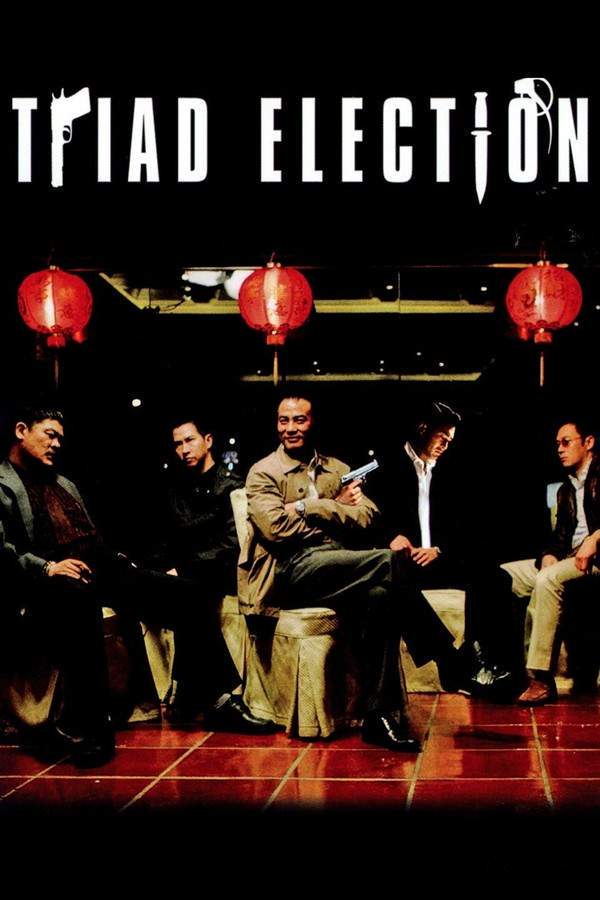
Lee Man Ho is the son of Uncle Kwan, the stern leader of the Hung Hing Gang. Raised far from the core of Hong Kong’s underworld after a childhood in the United States, Ho builds a stable family life and tries to leave his father’s world behind. His quiet existence is shattered when Uncle Kwan is ambushed and killed during a violent clash with a rival faction led by Shrimp. Ho returns for his father’s funeral, and in a moment that will redefine everything, he is chosen to succeed his father as the new head of the Hung Hing Gang. The transition is anything but simple, because Ho must prove himself in a world where loyalty is earned, not inherited.
From the start, Ho encounters friction from key figures within the gang. Yeung Kong, a powerful and often harsh veteran, questions Ho’s inexperience and cultural distance from the underworld’s codes. Likewise, Tse Shing, a respected member, remains wary of the new leader’s approach. A banquet intended to showcase harmony instead exposes the cracks in the gang’s inner workings, and Ho—driven by a genuine desire to keep the peace—must navigate a delicate balance between mercy and authority. Under his leadership, the Hung Hing members begin to rally to him, drawn by his insistence on brotherhood and a sense of camaraderie that feels almost familial.
The plot thickens when the gang captures Coffin Rope, the formidable head of a rival triad. Ho contemplates killing him, but his lenient streak pushes him toward a subtler strategy: use Coffin Rope’s capture as a bargaining chip and exploit the tensions between rival leaders to weaken Coffin Rope’s grip. Ho’s maneuvering deepens when he secretly collaborates with Boss Chow, a wealthy businessman with his own ambitions, to manipulate the gang’s internal dynamics. By leveraging the rivalry between Tse Shing and Coffin Rope, Ho aims to consolidate power without burning every bridge.
The plan spins into a brutal sequence of payback and manipulation. Coffin Rope retaliates by sending men to target Shing’s family, and then he frames another member, intensifying the rift within Hung Hing. As the police close in and a key rival is arrested, the thin thread of trust within the gang frays further. Kong—a figure who warns Ho about balancing leadership with loyalty—finds himself in handcuffs, and the fragile equilibrium Ho sought begins to crumble under the weight of betrayal and crime. Kong’s parting line—he acknowledges Ho’s kindness as a leader, even as he cannily notes that Ho may not be suited to the life of a triad boss—lands with quiet gravity.
In the end, Ho takes decisive action to sever the triad’s grip on his life. He returns to the Hung Hing office and sets it ablaze, extinguishing the organization’s old power structure and signaling a hard break with the underworld. With the danger behind him, Ho apologizes to his father in a gesture that seeks forgiveness and personal peace, and he steps away from crime to return to a normal life in America with his family. The film closes on a note of bittersweet reconciliation: a man torn between two worlds chooses a quieter, more domestic future, even as the scars of the past linger in his heart.