Plot Explained Spoilers guaranteed!
Plot Explained

Browse by genre

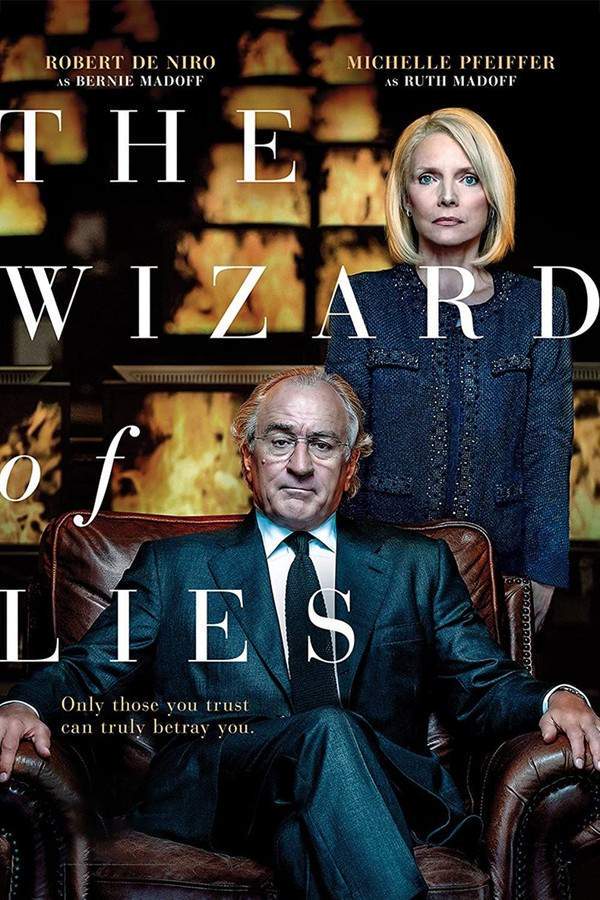
The Wizard of Lies (2017) movie poster

Timeline

The Wizard of Lies (2017) Timeline Explained – Every Event in Order

Release, runtime and language
2017 · 133 mins · English
Loading streaming availability…
Directed by
Barry Levinson
Starring
Robert De Niro, Hank Azaria, Alessandro Nivola, Michelle Pfeiffer, Doris McCarthy, Kathrine Narducci

A disturbing look at the rise and fall of Bernie Madoff and his devastating Ponzi scheme. The film explores how Madoff built his fraudulent empire, the widespread impact on investors and the profound consequences for his family as the truth is revealed and the scale of the betrayal comes to light.

On this page (6)
  1. 1 Where to watch
  2. 2 Events in order (14)
  3. 3 Timeline questions answered
  4. 4 Movie threads
  5. 5 Movies like The Wizard of Lies
  6. 6 Every angle
Loading streaming availability…

14 events in order · contains spoilers

The Wizard of Lies Timeline: Events in Chronological Order

Every key event of The Wizard of Lies (2017) in order, scene by scene, with when and where it takes place. Use it to untangle flashbacks, time jumps and parallel storylines, to refresh your memory before the sequel or to find the exact scene you are thinking of.

  1. Founding on Wall Street

    Bernard Madoff founded his company on Wall Street in the early 1960s, growing it into one of the largest investment funds. He earned a reputation as a successful and influential financier, broker, and philanthropist. His operation would shape his family's life for decades.

    When
    early 1960s
    Where
    Wall Street, New York
  2. Family involvement

    Over time he employed his sons, Mark and Andrew, and relied on his wife Ruth as part of the operation. The family-run business presented an image of stability and trust to clients. This close access would later worsen the fallout when fraud was exposed.

    When
    1960s-2000s
    Where
    New York
  3. Ponzi scheme begins

    In the 1970s, Madoff admits he had been operating a Ponzi scheme for years. He used new investors' funds to pay returns to earlier clients, masking true profits. The scheme seemed legitimate for decades, helping the firm grow into a financial powerhouse.

    When
    1970s
    Where
    New York
  4. 2005 DTC/SEC asset verification

    In 2005, investigators asked for Madoff's Depository Trust Company (DTC) account numbers to verify assets. Madoff claimed he did not want to share them but complied in an unsuspecting way, saying the SEC could call DTC to verify assets. No such verification phone call was made, allowing the fraud to remain hidden.

    When
    2005
    Where
    New York / SEC offices
  5. 2008 withdrawals and looming exposure

    As the 2008 Great Recession began, clients rushed to withdraw their money from the fund. Madoff realized he did not have the funds to return, and the impending exposure threatened to destroy his operation. He began telling his wife and sons about the Ponzi scheme, setting the stage for a final reckoning.

    When
    2008
    Where
    New York
  6. Lawyer's advice to turn him in

    Lawyer Martin London, Mark Madoff's father-in-law, advised Bernie Madoff's sons to turn their father in to the authorities. This counsel reflected the collapse of the facade and the necessity of legal exposure. The family faced the moral and legal implications of reporting him.

    When
    2008-2009
    Where
    New York
  7. Sons report him to authorities

    Bernie Madoff's sons were left with no choice but to turn him in to the authorities. The revelation led to rapid investigations and the unraveling of the long-running fraud. The case would become one of the most infamous financial crimes in history.

    When
    2008-2009
    Where
    New York
  8. Ambien suicide attempt

    Following the exposure, Madoff and his wife attempted suicide by taking Ambien, but did not die. The desperate act underscored the personal toll of the scandal on the family. Authorities would proceed with arrests and charges soon after.

    When
    2008-2009
    Where
    Home
  9. Arrest, plea, and sentencing

    Madoff was arrested and later pleaded guilty to fraud charges. He received a 150-year prison sentence for the magnitude of his crimes. The case became a landmark example of white-collar crime and its devastating impact.

    When
    2009
    Where
    Federal court, New York
  10. FBI confession

    While in custody, Madoff admitted to FBI agents that he had been operating the Ponzi scheme since the 1970s. The admission framed the scope of the deception and confirmed long-held suspicions. The confession reinforced the narrative of a deliberate, unrepentant fraudster.

    When
    2009
    Where
    FBI
  11. Markopolos testimony

    In 2009, Harry Markopolos testified before the U.S. House that he believed the firm was a fraudulent Ponzi scheme. He argued that the gains never fluctuated like true market profits. His testimony added pressure on regulators to scrutinize Madoff’s operation.

    When
    2009
    Where
    U.S. House of Representatives, Washington D.C.
  12. Clawback suits

    Clawback lawsuits were filed against Madoff's sons as beneficiaries of his fraud. The suits sought to recover funds tied to the scheme and to compensate victims. The legal battles intensified the scandal's toll on the family.

    When
    2009-2010
    Where
    New York
  13. Mark's suicide and Andrew's death

    Mark Madoff committed suicide amid the aftermath of the collapse, and his brother Andrew later died of cancer. Ruth distanced herself, vowing not to visit Bernie in prison and blaming him for Mark's death. The double tragedy underscored the personal cost of the fraud on the family.

    When
    2010-2011
    Where
    New York
  14. Final prison interview and sociopath question

    In a prison interview, Bernie Madoff refused to take responsibility for ruining his victims' lives. He suggested others had let him take advantage of them, shifting blame. He ended the exchange by asking, 'Do you think I'm a sociopath?'

    Where
    Prison

Last updated: October 01, 2025 at 13:06

Was this helpful?

Timeline questions answered

The Wizard of Lies Timeline Explained: Your Questions Answered

When does it happen, and why in that order? The questions people ask about the chronology of The Wizard of Lies (2017): time jumps, flashbacks, cause and effect between scenes and the correct order of events, each answered with spoilers.

Q1

Why did Bernie Madoff start the Ponzi scheme?

Madoff started the Ponzi scheme in the 1970s as a way to generate fake profits that would satisfy clients expecting steady returns. Rather than investing legitimately, he used money from new investors to pay returns to earlier investors, creating the illusion of consistent gains. The scheme began as a way to cover early trading losses but spiraled into a decades-long fraud that eventually reached billions of dollars.

Foreshadowing: Early in his career, Madoff built his reputation on delivering unusually steady returns, which later became one of the key red flags investigators noticed.

  • ponzi scheme
  • Bernie Madoff
  • fraud
  • investment
  • 1970s
Q2

Why did Mark and Andrew Madoff turn their father in to authorities?

Madoff's sons turned him in after lawyer Martin London, Mark's father-in-law, urged them to confront the truth and cooperate with authorities. When clients began demanding withdrawals during the 2008 financial crisis, Madoff confessed to his sons that the entire operation was fraudulent and that he could not meet the withdrawal requests. Faced with the reality of the scheme and pressure from London, Mark and Andrew chose to report their father to the FBI.

Foreshadowing: The film establishes London as a moral voice who pushes the family toward accountability long before the sons make their final decision.

  • Mark Madoff
  • Andrew Madoff
  • FBI
  • report father
  • Martin London
Q3

Why did the SEC fail to catch Madoff earlier?

In 2005, investigators requested Madoff's Depository Trust Company account numbers to verify his assets. Madoff reluctantly complied, claiming the SEC could simply call DTC to verify the assets. However, no such verification call was ever made, allowing the fraud to continue undetected for years. The regulators missed multiple opportunities to uncover the scheme despite mounting suspicions.

Foreshadowing: Harry Markopolos had been documenting red flags about Madoff's impossible returns since 2005, but his warnings went unheeded.

  • SEC
  • DTC
  • verification
  • regulators
  • investigation
  • 2005
Q4

What triggered Madoff's confession to his family in 2008?

The 2008 financial crisis triggered Madoff's confession. As the market collapsed, clients panicked and rushed to withdraw their money from his fund. Madoff realized he could not honor these requests without exposing that there were no actual profits, the scheme only worked while new money kept flowing in. Faced with imminent collapse, he confessed to his wife Ruth and sons Mark and Andrew that the entire operation was a Ponzi scheme.

Foreshadowing: The film shows years of steady returns that masked the underlying fraud, but the 2008 crisis created the first major squeeze on liquidity.

  • 2008 financial crisis
  • confession
  • withdrawal
  • Ponzi scheme
Q5

Why did Mark Madoff commit suicide?

Mark Madoff committed suicide in 2010 amid the overwhelming fallout from his father's fraud. He faced intense public scrutiny, clawback lawsuits seeking to recover funds from family members, and the devastating betrayal of learning his father had orchestrated a massive decades-long deception. The combination of legal pressure, financial ruin, and personal shame contributed to his decision to take his own life.

Foreshadowing: The film establishes Mark as someone who trusted and defended his father, making the betrayal particularly devastating when the truth emerged.

  • Mark Madoff
  • suicide
  • betrayal
  • family
  • consequences
Q6

Why did Ruth Madoff refuse to visit Bernie in prison?

Ruth Madoff refused to visit her husband in prison and told him she would no longer take his calls because she blamed him for Mark's suicide. After Mark died, Ruth confronted the reality of the fraud's devastating impact on her family and could not forgive Bernie for the deception that had destroyed their sons and their life together. She also sought to maintain a relationship with her surviving son Andrew.

Foreshadowing: The film shows Ruth's gradual realization of the depth of Bernie's deception, leading to her ultimate rejection of him.

  • Ruth Madoff
  • prison
  • visit
  • Mark death
  • blame
Q7

What were the clawback lawsuits against Madoff's family?

Clawback lawsuits were legal actions filed against Madoff's sons and other family members to recover money they had received from the fraudulent scheme. The lawsuits sought to reclaim funds that had been paid out as profits or distributions, arguing that these monies belonged to the victims of the Ponzi scheme. Mark and Andrew faced legal battles over millions they had received from their father's operation.

Foreshadowing: The film shows the family enjoying the benefits of the scheme's returns, which became the basis for later recovery actions.

  • clawback
  • lawsuits
  • recovery
  • victims
  • family funds
Q8

How did Harry Markopolos help expose Madoff's fraud?

Harry Markopolos, a forensic financial analyst, spent years investigating Madoff's operation and compiled evidence that the returns were mathematically impossible. He testified before the U.S. House in 2009, arguing that Madoff's claimed profits never fluctuated in the way legitimate market investments would. His testimony highlighted that the gains were too steady and that the operation exhibited classic Ponzi scheme characteristics. Markopolos had been warning regulators since 2005 but was ignored.

Foreshadowing: Early in the film, Madoff's unusually consistent returns are presented as a point of pride, which became the central evidence of fraud.

  • Harry Markopolos
  • testimony
  • House of Representatives
  • investigation
  • fraud evidence
Q9

What happened to Andrew Madoff after the scandal?

Andrew Madoff died of cancer in 2011, one year after his brother Mark's suicide. Before his death, Andrew distanced himself from his father, telling him, "My father is dead to me," reflecting the profound betrayal he felt. Andrew had turned his father in to authorities along with Mark and faced the same public shame and legal consequences, all while battling cancer.

Foreshadowing: The film establishes the close relationship between the brothers, making Andrew's loss even more devastating for Ruth.

  • Andrew Madoff
  • cancer
  • death
  • Mark death
  • family tragedy
Q10

Why did Madoff ask a journalist if he was a sociopath?

In a prison interview, Madoff asked a journalist "Do you think I'm a sociopath?" as he refused to take full responsibility for the devastation he caused. He deflected blame by suggesting others had allowed him to take advantage of them. The question encapsulated his defiance and inability to fully accept moral accountability for the fraud that ruined countless lives, leaving viewers to grapple with questions of his psychological state and moral bankruptcy.

Foreshadowing: Throughout the film, Madoff maintains a controlled, confident demeanor that masks deeper psychological issues.

  • sociopath
  • interview
  • prison
  • responsibility
  • psychology
Q11

How did Madoff keep the Ponzi scheme running for so long?

Madoff maintained the Ponzi scheme for decades by paying earlier investors with money from new investors, creating a false appearance of legitimate profits. He cultivated a prestigious public image as a successful financier, used his family's loyalty to create a trustworthy facade, and exploited regulatory failures. The scheme required constant new money to pay returns, but Madoff's reputation kept investors pouring funds in even as the 2008 crisis eventually collapsed the operation.

Foreshadowing: The film shows Madoff's careful cultivation of influence and reputation on Wall Street, which silenced early doubts.

  • Ponzi scheme
  • decades
  • investors
  • returns
  • reputation
Q12

What was Madoff's prison sentence?

Madoff was sentenced to 150 years in federal prison in 2009 after pleading guilty to fraud charges. The sentence reflected the unprecedented scale of his crimes, which devastated thousands of investors and caused billions in losses. He was arrested immediately after his plea and spent the remainder of his life behind bars.

Foreshadowing: The sentencing marked the formal end of Madoff's freedom, though the film's epilogue shows his continued defiance in prison.

  • sentence
  • 150 years
  • prison
  • guilty plea
  • fraud

Movie threads

More Movies Like The Wizard of Lies, by Mood & Story

Curated lists built around what makes The Wizard of Lies tick: the same mood, the same kind of story or the same emotional payoff. Each list explains why these movies belong together.

Financial thrillers with moral collapse like The Wizard of Lies

Stories where ambition and deception lead to catastrophic personal and financial ruin. If you liked the tense, fact-based unraveling of a financial empire in The Wizard of Lies, you'll find similar stories here. This thread gathers movies about massive fraud, white-collar crime, and the shocking human cost of greed, focusing on character-driven dramas with a heavy emotional weight.

  • tense
  • cautionary
  • documentary-like
  • anxious
  • devastating
  • introspective
  • Tone: dark, tense, investigative
  • Pacing: steady, methodical
Why these movies?

The story pattern: Narratives in this thread typically follow a rise-and-fall structure, charting the ascent of a charismatic or powerful figure who commits large-scale fraud. The story meticulously details the mechanics of the deception before shifting focus to the inevitable unraveling, the exposure of secrets, and the profound personal and legal consequences that follow.

Why they belong together: Movies are grouped here for their shared focus on financial deception as a catalyst for moral and familial collapse. They share a dark, serious tone, a steady pacing that builds investigative tension, and a heavy emotional weight stemming from themes of betrayal and widespread ruin.
Family dramas shattered by secrets like The Wizard of Lies

Intense stories of families trapped by a devastating truth that destroys them from within. For viewers who appreciated the devastating family implosion at the heart of The Wizard of Lies, this thread collects movies about domestic life ruptured by a catastrophic secret. These are heavy, character-focused stories where betrayal and truth have profound and tragic consequences within the home.

  • claustrophobic
  • somber
  • devastating
  • tense
  • anxious
  • introspective
  • Tone: dark, somber, tense
  • Pacing: steady, deliberate
Why these movies?

The story pattern: The narrative pattern revolves around a seemingly stable family whose world is constricted by a central, destructive secret. The story explores the psychological toll of maintaining the facade, the moment of revelation, and the irreversible fragmentation of family bonds, often leading to isolation, trauma, or tragedy.

Why they belong together: These films are grouped by their core focus on the family as a pressure cooker for drama. They share a claustrophobic, somber mood, high emotional intensity driven by interpersonal betrayal, and a steady pacing that allows the tension to build methodically towards a heartbreaking conclusion.

If you liked this

Movies Like The Wizard of Lies

Similar movies to The Wizard of Lies: the same genre, themes or kind of story. Each one comes with its own plot summary, timeline and ending explained.

Browse all movie summaries

Every angle

The Wizard of Lies (2017) Explained: Plot, Timeline & Characters

Everything about The Wizard of Lies in one place: what happens in the plot summary, the timeline in chronological order, the characters and meaning and a spoiler-free summary. What's After the Movie adds the cast, box office and post-credit scenes.

Coming soon on iOS and Android

The Plot Explained Movie Summary App

Plot summaries, endings explained and timelines on your phone. Catch up on any movie in minutes, save your favorites and never miss a twist again.

Be the first to know when we launch. Your email stays private, always.

Learn more about the app