Plot Explained Spoilers guaranteed!
Plot Explained

Browse by genre

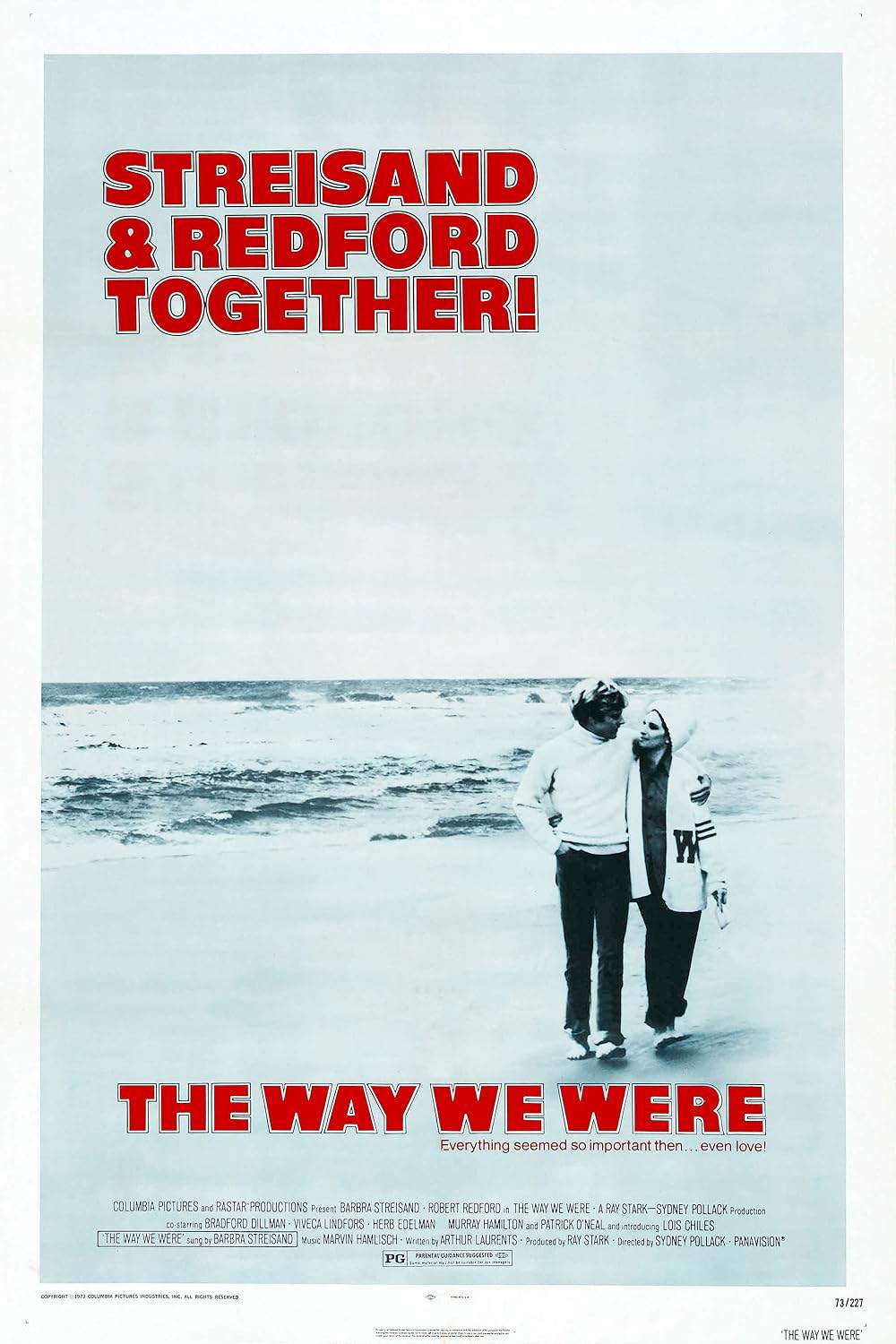
The Way We Were (1973) movie poster

Plot Summary

The Way We Were (1973) Plot Summary Explained

Release, runtime and language
1973 · 118 min · Chinese
JustWatch #5,490 24
Directed by
Sydney Pollack
Starring
Robert Redford, Murray Hamilton, Barbra Streisand, Bradford Dillman, Patrick O'Neal, Allyn Ann McLerie

A dedicated father's aspirations for a successful acting career create a growing distance between him and his daughter. As he becomes increasingly consumed by his ambitions, she struggles to cope with the emotional neglect and the void left by his absence. Their relationship is tested as he chases his dreams, forcing her to find her own path and understand the complexities of family and personal fulfillment.

On this page (6)
  1. 1 Where to watch
  2. 2 What happens: full plot
  3. 3 Plot questions answered
  4. 4 Movie threads
  5. 5 Movies like The Way We Were
  6. 6 Every angle

Where to watch

Where to Watch The Way We Were (1973)

Where can you watch The Way We Were? Stream, rent or buy it in the US, including on YouTube TV, Amazon Video and Apple TV Store: current JustWatch availability with up-to-date prices.

Streaming availability powered by JustWatch

Full plot summary · contains spoilers

What Happens in The Way We Were: Full Plot Summary

The whole story of The Way We Were (1973) explained, from the opening scene to the final frame: every key event, every twist and what it all adds up to. Read it as a quick recap before the sequel, to check a scene you missed, or to finally understand what really happened.

In the year 1937, the lives of Katie Morosky and Hubbell Gardiner intersect, bringing together two opposing worlds. Katie, a passionate Marxist Jew, stands firm in her anti-war beliefs, while Hubbell, a laid-back WASP, exemplifies the essence of indifference. Their first meeting at college ignites a peculiar attraction: Katie finds herself mesmerized by Hubbell's effortless charm and literary skill, while Hubbell is intrigued by Katie's steadfast principles and relentless conviction. As they part ways after a brief dance at prom, the groundwork for a complicated bond is established.

Decades later, as World War II comes to an end, their paths cross again in New York City. Now juggling various jobs, Katie is fueled by her persistent commitment to social justice. Conversely, Hubbell returns from service in the South Pacific, having developed a deeper understanding of the fragility of life. Despite their differences, the two feel an undeniable pull toward one another, momentarily setting aside their divergent views amid shared passion.

As time unfolds, Katie and Hubbell traverse the challenging landscape of post-war America. Though Hubbell's naval experience has transitioned into a promising writing career, Katie becomes increasingly troubled by his growing detachment from political matters and social issues. His friends' casual remarks regarding the passing of President Franklin D. Roosevelt further exacerbate the rift, marking their first significant conflict.

Against the odds, the couple reconciles, nurturing their relationship into a romance that eventually leads to marriage. Yet, as Hubbell's literary success opens doors with a prestigious studio contract in Malibu, Katie's anxieties about his choice to adapt his novel for film begin to surface. Her concerns are not unfounded, as the Hollywood blacklist gains momentum, casting a long shadow over their lives amid growing McCarthyism.

With Katie's political activism surging, her participation in protests and demonstrations puts significant strain on their marriage. Hubbell, weary from the relentless pressures and struggling to meet Katie's expectations, grows increasingly aloof. The birth of their daughter only heightens the tensions, ultimately culminating in their divorce.

Years later, destiny reunites the couple outside the Plaza Hotel in New York City, where Katie is protesting against the escalation of nuclear arms. In a poignant and bittersweet goodbye, it becomes evident that while the wounds of their past still linger, they have evolved into a deeper understanding of one another's complexities.
Last updated: November 21, 2024 at 14:41

Was this helpful?

Plot questions answered

The Way We Were Plot Explained: Your Questions Answered

The questions people ask most about The Way We Were (1973): what happens in the confusing scenes, why the characters do what they do, the twists, hidden details and what the ending means. Each answer contains spoilers.

Q1

Why did Katie and Hubbell get divorced?

Their divorce stemmed from irreconcilable ideological differences that deepened over time. Katie remained committed to political activism and social justice causes, while Hubbell wanted to distance himself from politics after experiencing the horrors of war. Her increasingly intense protests and her refusal to compromise her beliefs created constant tension. Hubbell, exhausted by the pressure to meet her expectations and by the McCarthy-era paranoia affecting his Hollywood career, grew emotionally detached. The birth of their daughter amplified these stresses rather than uniting them, leading to their eventual separation.

Foreshadowing: Earlier scenes establish their fundamentally different worldviews, with Katie confronting Hubbell about his indifference to social issues from their college days onward.

  • divorce
  • marriage
  • ideological differences
  • activism
  • katie
  • hubbell
Q2

Why did Katie fall for Hubbell despite their opposing views?

Katie was drawn to Hubbell's effortless charm and natural literary talent, which represented everything she lacked, ease and confidence. His laid-back WASP demeanor stood in stark contrast to her passionate, conviction-driven nature. The attraction was rooted in opposites: she saw in him a kind of freedom from the constant ideological struggle that defined her life, while he was intrigued by her unwavering principles and fierce conviction. This magnetic tension persisted across decades, keeping them connected despite their differences.

Foreshadowing: Their first meeting at the 1937 college prom establishes this dynamic, Katie mesmerized by Hubbell's charm while he finds her convictions fascinating.

  • attraction
  • love
  • opposites
  • katie
  • hubbell
  • college
Q3

Why did Hubbell become politically detached after the war?

Hubbell's detachment from politics resulted from his experiences serving in the South Pacific during World War II. Witnessing the fragility of life and the senseless destruction of war left him wanting to live a peaceful, quiet life away from ideological battles. Unlike Katie, who channeled her emotions into activism, Hubbell sought normalcy and stability. His friends' casual dismissal of President Roosevelt's death symbolized this shift, Hubbell wanted to move forward without being consumed by the political conflicts that defined Katie's worldview.

Foreshadowing: The timeline shows his perspective changing after military service, marking a clear before and after in his relationship with politics.

  • politics
  • war
  • detachment
  • hubbell
  • south pacific
Q4

Why was Katie worried about the Hollywood blacklist?

Katie's fear stemmed from the rise of McCarthyism in late 1940s and early 1950s America. The Hollywood blacklist targeted writers, actors, and filmmakers suspected of communist sympathies, destroying careers and livelihoods. Since Katie was a known Marxist and active political activist, she feared that her association with Hubbell could jeopardize his new studio contract in Malibu. Her anxieties were justified, the climate of fear and persecution could have ruined Hubbell's promising writing career if his leftist connections were exposed.

Foreshadowing: The timeline notes the Hollywood blacklist gaining momentum as Hubbell's career begins to flourish, creating a persistent undercurrent of threat.

  • blacklist
  • mccarthyism
  • hollywood
  • activism
  • fear
Q5

What caused their first major conflict in the relationship?

Their first significant conflict arose when Hubbell's friends casually dismissed the death of President Franklin D. Roosevelt. For Katie, who was deeply committed to progressive political causes, this dismissive attitude represented everything wrong with Hubbell's world, the indifference to the social progress FDR represented. This moment crystallized the growing rift between them: Katie's passionate commitment to social justice versus Hubbell's apolitical, carefree approach to life. It was the first time they truly confronted how fundamentally different their values were.

Foreshadowing: This conflict emerges during their post-war reconciliation, showing that their ideological divide persists even when they attempt to reunite.

  • conflict
  • politics
  • fdr
  • roosevelt
  • values
Q6

Why did Katie and Hubbell decide to marry despite their differences?

Despite their opposing worldviews, Katie and Hubbell shared an undeniable passionate connection that persisted across years and distance. The attraction they first felt at college never truly faded, and their reunion in New York City rekindled that intense bond. They loved each other deeply, and both believed their love was strong enough to bridge their ideological divide. The timeline shows they worked toward reconciliation repeatedly, choosing to nurture their romance and eventually marry, hoping their affection would be sufficient to overcome their differences.

Foreshadowing: Their momentary connections after WWII demonstrate the persistent pull between them, setting the stage for their decision to commit.

  • marriage
  • love
  • passion
  • commitment
  • differences
Q7

Why did Katie's activism put such strain on their marriage?

Katie's refusal to scale back her political activism created chronic tension because it represented a fundamental incompatibility in lifestyle priorities. Hubbell wanted a stable, quiet family life after the trauma of war, while Katie viewed silence on social issues as complicity. Her participation in protests and demonstrations consumed significant time and energy, leaving little room for the domestic harmony Hubbell desired. The strain was cumulative, each protest, each arrest, each political meeting reminded Hubbell of the life he was trying to escape, and made him feel that Katie's true commitment was to her causes rather than to their family.

Foreshadowing: The timeline indicates Katie's activism surging after Hubbell's Hollywood success, creating an escalating pattern of conflict.

  • activism
  • protests
  • marriage strain
  • political causes
  • katie
Q8

Why did Katie and Hubbell reunite at the Plaza Hotel?

Their reunion was a chance encounter in New York City years after their divorce. Katie was protesting against nuclear arms escalation outside the Plaza Hotel when their paths crossed. This location is significant because it represents the contrast between their lives, Katie remained committed to her political causes, standing outside in protest, while the Plaza Hotel symbolizes the world Hubbell had moved into. The encounter forced them to confront their unresolved feelings and the reality that while they still loved each other, they had become too fundamentally different to rebuild their marriage.

Foreshadowing: The earlier timeline establishes their separate paths, Katie continuing activism while Hubbell pursued Hollywood success, making this convergence inevitable yet poignant.

  • reunion
  • protest
  • plaza hotel
  • chance encounter
  • nuclear
Q9

Why couldn't Katie and Hubbell reconcile at the end?

They couldn't reconcile because they had simply grown into different people with incompatible life paths. Katie remained true to her convictions, still fighting for social justice and willing to stand alone in protest. Hubbell had found peace in his detached, apolitical existence in Hollywood. Their final conversation revealed a bittersweet understanding, they acknowledged their enduring love and appreciated each other's complexities, but recognized that their fundamental differences made a reunited life impossible. The ending accepts that sometimes love alone is not enough to sustain a relationship when core values diverge too greatly.

Foreshadowing: The entire narrative arc builds toward this realization, with each reconciliation followed by deeper分离, making permanent separation the inevitable conclusion.

  • reconciliation
  • farewell
  • final meeting
  • acceptance
  • love
Q10

How did World War II change Katie and Hubbell?

WWII fundamentally altered both characters in opposite directions. Hubbell's service in the South Pacific exposed him to the brutal realities of war and the fragility of life, leading him to reject ideology and seek peaceful normalcy. Katie, meanwhile, used the post-war period to intensify her political activism, viewing the aftermath as a critical time to fight for social justice. The war created a paradox: it should have brought them together as survivors, but instead it pushed them further apart, Hubbell retreating from engagement while Katie charged forward into it.

Foreshadowing: Their reunion in 1945 immediately reveals how differently the war affected them, setting the trajectory for all subsequent conflicts.

  • world war 2
  • change
  • growth
  • south pacific
  • post-war
Q11

Why did Hubbell agree to adapt his novel for Hollywood film?

Hubbell's decision to adapt his novel for film represented his desire for mainstream success and his hope to build a stable life outside the political turmoil. The studio contract in Malibu offered financial security and creative opportunity. However, this choice directly conflicted with Katie's fears about Hollywood's political climate. Hubbell likely viewed the adaptation as a way to prove he could provide for his growing family while pursuing his writing career, but it also marked his complete withdrawal from the ideological battles Katie valued most.

Foreshadowing: The timeline shows this as a turning point where personal ambition clashes with political principle, accelerating the cracks in their marriage.

  • novel
  • adaptation
  • hollywood
  • career
  • film
Q12

What role did McCarthyism play in their marriage breakdown?

McCarthyism served as an external pressure that amplified the existing tensions in Katie and Hubbell's marriage. The Hollywood blacklist created an atmosphere of fear where anyone with leftist associations risked career destruction. Katie, as a known Marxist activist, represented a liability to Hubbell's new Hollywood career. This external threat forced Hubbell to choose between protecting his professional future and standing by his wife's beliefs. His growing emotional distance can be partially attributed to the stress of navigating this political minefield while trying to maintain his career and family.

Foreshadowing: The timeline explicitly links the blacklist concerns to their growing tension, showing how historical events directly impacted their personal lives.

  • mccarthyism
  • blacklist
  • fear
  • persecution
  • hollywood

Movie threads

More Movies Like The Way We Were, by Mood & Story

Curated lists built around what makes The Way We Were tick: the same mood, the same kind of story or the same emotional payoff. Each list explains why these movies belong together.

Epic Romances Spanning Decades like The Way We Were

Passionate relationships forged across years and tested by differing ideals. Discover movies like The Way We Were that chart the course of intense romantic relationships over many years. These films feature star-crossed lovers whose passionate connection is tested by time and their irreconcilable differences, leading to bittersweet reflections on love and loss.

  • epic
  • romantic
  • nostalgic
  • passionate
  • melancholic
  • reflective
  • Tone: bittersweet, passionate, nostalgic
  • Pacing: slow, character-driven, episodic
Why these movies?

The story pattern: Stories in this thread typically begin with an intense, often unlikely, attraction between two strong-willed individuals. The narrative then jumps through key periods of their lives—spanning 20, 30, or even 50 years—showing how external events and internal conflicts gradually pull them apart, even as a deep affection remains.

Why they belong together: These films are grouped by their shared structure of a long-term, tumultuous romance and their bittersweet tone. They focus on character-driven drama over plot, allowing viewers to become deeply invested in the emotional journey of a couple whose love story is defined by its duration and its poignant imperfection.

Movies About Ambition vs Relationships like The Way We Were

Stories of passionate individuals torn between their ambitions and their loved ones. If you liked The Way We Were's theme of a character's ambitions creating a rift in their relationship, you'll find similar stories here. These dramas explore the painful choices between personal fulfillment and connection, often set against a backdrop of historical or social change.

  • idealistic
  • tense
  • melancholic
  • reflective
  • passionate
  • dramatic
  • Tone: bittersweet, reflective, tense
  • Pacing: slow to steady, character-focused
Why these movies?

The story pattern: The narrative pattern follows a protagonist whose dedication to a goal—be it artistic, political, or professional—intensifies over time, causing them to neglect their partner or family. The story examines the sacrifices made on both sides, leading to a crisis where a choice must be made, often resulting in a bittersweet acceptance of the paths not taken.

Why they belong together: This thread connects movies through their shared thematic focus on the eternal struggle between individual passion and romantic/familial duty. They possess a reflective, often melancholic mood, and a character-driven pacing that allows for deep exploration of internal conflict and emotional consequence.

If you liked this

Movies Like The Way We Were

Similar movies to The Way We Were: the same genre, themes or kind of story. Each one comes with its own plot summary, timeline and ending explained.

Browse all movie summaries

Every angle

The Way We Were (1973) Explained: Plot, Timeline & Characters

Everything about The Way We Were in one place: what happens in the plot summary, the timeline in chronological order, the characters and meaning and a spoiler-free summary. What's After the Movie adds the cast, box office and post-credit scenes.

Coming soon on iOS and Android

The Plot Explained Movie Summary App

Plot summaries, endings explained and timelines on your phone. Catch up on any movie in minutes, save your favorites and never miss a twist again.

Be the first to know when we launch. Your email stays private, always.

Learn more about the app