Plot Explained Spoilers guaranteed!
Plot Explained

Browse by genre

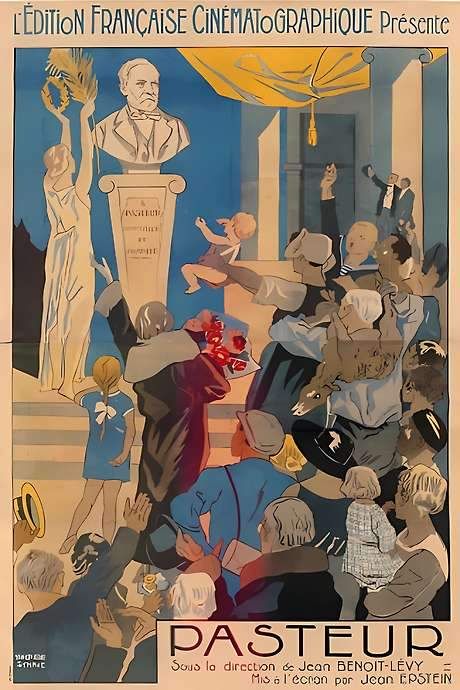
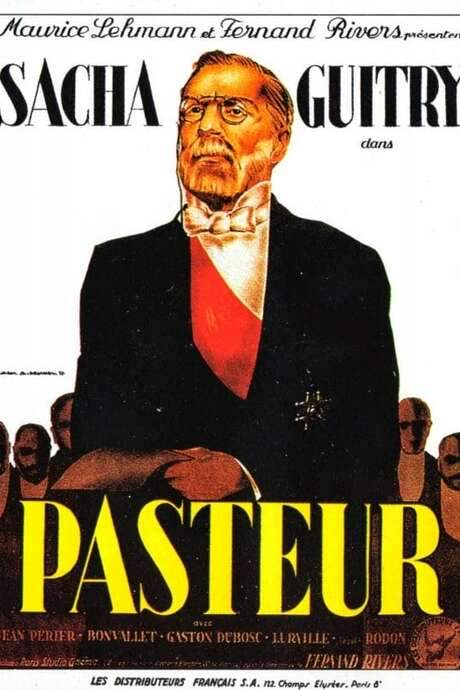
The Story of Louis Pasteur (1936) movie poster

Timeline

The Story of Louis Pasteur (1936) Timeline Explained – Every Event in Order

Release, runtime and language
1936 · 86 mins · English
Directed by
William Dieterle
Starring
Paul Muni, Porter Hall, Henry O'Neill, Frank Reicher, Dickie Moore, Akim Tamiroff

A true story of Louis Pasteur, the pioneering scientist whose discoveries showed that microbes cause many diseases, emphasized the importance of sanitation, and led to the development of life‑saving vaccines. His work laid the groundwork for germ theory and introduced pasteurization, saving countless lives.

On this page (6)
  1. 1 Where to watch
  2. 2 Events in order (15)
  3. 3 Timeline questions answered
  4. 4 Movie threads
  5. 5 Movies like The Story of Louis Pasteur
  6. 6 Every angle

Where to watch

Where to Watch The Story of Louis Pasteur (1936)

Where can you watch The Story of Louis Pasteur? Stream, rent or buy it in the US, including on Amazon Video: current JustWatch availability with up-to-date prices.

Streaming availability powered by JustWatch

15 events in order · contains spoilers

The Story of Louis Pasteur Timeline: Events in Chronological Order

Every key event of The Story of Louis Pasteur (1936) in order, scene by scene, with when and where it takes place. Use it to untangle flashbacks, time jumps and parallel storylines, to refresh your memory before the sequel or to find the exact scene you are thinking of.

  1. Pasteur's public theory on microbes

    In 1860 Paris, Louis Pasteur publicly argues that microbes cause disease and that doctors should wash their hands and sterilize their instruments. His warnings are met with hostility from the medical academy, who dismiss him as a crank. He even predicts that a member of Napoleon III's royal family will die from puerperal fever, which heightens the controversy surrounding his ideas.

    When
    1860
    Where
    Paris
  2. Backlash and relocation to Arbois

    Pasteur faces continued opposition from the academy and Charbonnet, who brand his ideas as witchcraft. The backlash convinces him that he must leave Paris to pursue his work more freely. He relocates to Arbois to continue his research away from the capital's scrutiny.

    When
    1860s
    Where
    Paris and Arbois
  3. Arbois becomes the hub for anthrax work

    In the 1870s, as France seeks to rebuild after war, the government learns that sheep near Arbois remain free of anthrax while others die. Pasteur forms a small, loyal team and begins laying the groundwork for an anthrax vaccine. The project anchors itself in Arbois, far from Paris’s critics.

    When
    1870s
    Where
    Arbois
  4. Anthrax vaccine trial demonstrates success

    Pasteur vaccinates 25 newly arrived sheep and leaves another 25 as controls, using blood from an infected sheep for the challenge. The vaccinated sheep stay healthy while the controls die, showcasing the vaccine's promise. Joseph Lister attends the demonstration, signaling international interest.

    When
    1870s
    Where
    Arbois
  5. Martel and Annette's engagement

    Jean Martel, once Charbonnet's assistant but now aligned with Pasteur, becomes engaged to Pasteur's daughter Annette. The personal side of Pasteur's life strengthens as science and family ties intertwine. The engagement occurs amid the ongoing research in Arbois.

    When
    1870s
    Where
    Arbois
  6. Rabid dog bites a man; superstition flares

    A rabid dog runs through the town, biting a man and sparking fear. A woman attempts to cure him with witchcraft, illustrating the town's desperation and superstition. Pasteur laments that doctors lack reliable remedies for rabies at this early stage of his work.

    When
    1870s
    Where
    Arbois
  7. Pasteur returns to Paris to pursue rabies

    Moving back to Paris, Pasteur pivots to rabies as his next frontier. He conducts experiments to understand transmission, attempting to pass the disease from one animal to another, though microbes had not yet been identified. The work marks a high-stakes leap in his career.

    When
    1870s
    Where
    Paris
  8. Charbonnet's self-inoculation setback

    Charbonnet visits the lab and injects himself with rabies, believing himself immune due to an old sample. Pasteur is puzzled by the apparent success and the contradiction it poses for his theory, spurring him to refine the experimental approach. The moment underscores the intense rivalry between the two men.

    When
    1870s
    Where
    Paris
  9. Desperate plea to treat a rabies bite

    A frantic mother begs Pasteur to try his untested treatment on her rabies-bitten son. Despite fears of practicing without a license, Pasteur decides to proceed, driven by a sense of responsibility to save the child. The decision marks a pivotal turn in experimental therapy for rabies.

    When
    1870s
    Where
    Paris
  10. Zaranoff arrives with Russian volunteers

    Dr. Zaranoff arrives from Russia with a group of peasants exposed to rabies who volunteer to receive Pasteur's treatment. The Russian cohort expands the scope of Pasteur's work beyond a single patient and adds international momentum to the effort. The collaboration symbolizes a turning point in the acceptance of his methods.

    When
    1870s
    Where
    Paris
  11. Annette goes into labor; Charbonnet's terms

    As trials continue, Annette goes into labor but a doctor is unavailable. Pasteur begs Charbonnet to wash his hands and sterilize, and Charbonnet agrees only if Pasteur retracts and denounces his rabies work after a month. The birth proceeds under tense conditions, highlighting the personal costs of scientific risk.

    When
    1870s
    Where
    Paris
  12. Pasteur suffers a mild stroke

    The stressful period takes its toll when Pasteur experiences a mild stroke during the ongoing experiments. Despite the setback, he shows resilience and continues the work with the Russians. The episode underscores the human cost of scientific progress.

    When
    1870s
    Where
    Paris
  13. First injections in the Russian program succeed

    Pasteur proceeds with the Russian patients in a hospital setting, using a wheelchair and later a cane as he administers the early injections. The initial results are positive, validating his approach and boosting confidence among the medical community. The success marks a meaningful milestone in the rabies campaign.

    When
    1870s
    Where
    Paris hospital
  14. Charbonnet retracts and seeks the shots

    Charbonnet tears up his earlier retraction and requests to be vaccinated himself in a dramatic turn of events. The reversal signals a broader acceptance of Pasteur's methods among even his fiercest critics. The moment cements Pasteur's vindication in the eyes of some skeptics.

    When
    1870s
    Where
    Paris
  15. Lister's praise and formal honors arrive

    Lister publicly praises Pasteur, countering earlier opposition from the academy. Zaranoff presents a Russian medal, and doctors begin to honor Pasteur for his pioneering work. The film closes on a note of recognition and international regard for Pasteur's contributions.

    When
    1870s
    Where
    Paris

Last updated: October 05, 2025 at 11:15

Was this helpful?

Timeline questions answered

The Story of Louis Pasteur Timeline Explained: Your Questions Answered

When does it happen, and why in that order? The questions people ask about the chronology of The Story of Louis Pasteur (1936): time jumps, flashbacks, cause and effect between scenes and the correct order of events, each answered with spoilers.

Q1

Why did Louis Pasteur's wife die?

Pasteur's wife Marie died of puerperal fever after childbirth. This tragedy directly resulted from the lack of sterile medical practices, doctors were not washing their hands or sterilizing instruments, allowing microbes to spread infection. The loss became a pivotal moment that fueled Pasteur's determination to prove that microbes cause disease and to advocate for sanitation in medical procedures.

Foreshadowing: Earlier in the film, Pasteur publicly warns that doctors must wash their hands and sterilize instruments, but the medical academy dismisses his warnings.

  • marie pasteur
  • wife death
  • puerperal fever
  • childbirth death
Q2

Why did Pasteur leave Paris for Arbois?

Pasteur left Paris because the medical academy and Dr. Charbonnet relentlessly opposed his microbe theory, dismissing it as witchcraft. Facing hostility and rejection from the established medical community, he relocated to the quieter town of Arbois where he could continue his research away from Paris's political and professional obstruction.

Foreshadowing: The opening scenes show Pasteur publicly challenging Charbonnet's methods and predicting that a member of Napoleon III's court would die of puerperal fever, predictions that intensified the backlash.

  • paris
  • arbois
  • relocation
  • medical opposition
Q3

How did the anthrax vaccine experiment work?

Pasteur conducted a controlled experiment using 50 sheep: 25 received his new anthrax vaccine, while the remaining 25 served as unvaccinated controls. All sheep were then injected with blood from an anthrax-infected sheep. The vaccinated sheep survived while the unvaccinated controls died, demonstrating that Pasteur's vaccine provided immunity against anthrax.

Foreshadowing: Earlier, the government noticed that sheep near Arbois stayed healthy while others died of anthrax, prompting them to invite Pasteur to test his approach.

  • anthrax
  • vaccine trial
  • sheep
  • experiment
  • lister
Q4

Why did Dr. Charbonnet inject himself with rabies?

Dr. Charbonnet deliberately injected himself with rabies to disprove Pasteur's work. He used an old sample of rabies material that had weakened over time, believing he would prove the disease was not transmissible and that Pasteur's methods were fraudulent. The apparent success initially puzzled Pasteur until his wife Marie suggested the older sample had lost its potency.

Foreshadowing: Charbonnet had been Pasteur's primary antagonist throughout the film, constantly mocking and opposing his germ theory.

  • charbonnet
  • rabies
  • self-injection
  • old sample
Q5

Why did Pasteur agree to treat the rabies-bitten child?

Pasteur agreed to treat the desperate mother's son despite knowing he could face legal consequences for practicing medicine without a license. The child was already showing rabies symptoms, and without treatment, death was certain. Pasteur felt a moral duty to try his untested method, believing it was the only chance to save the boy's life, even at great personal and professional risk.

Foreshadowing: Earlier, Pasteur lamented that doctors had no cure for rabies after witnessing a man bitten by a rabid dog.

  • rabies child
  • untested treatment
  • moral duty
  • illegal practice
Q6

Why did Charbonnet agree to help with Annette's birth?

Charbonnet agreed to assist with Annette's difficult labor only under one condition: Pasteur must publicly retract and denounce his rabies research within one month. This tense compromise reflected Charbonnet's continued opposition to Pasteur's methods. Despite their rivalry, Charbonnet washed his hands and used sterile technique, a small victory for Pasteur's lifelong advocacy.

Foreshadowing: The agreement came during a period when Pasteur was administering experimental rabies treatments to Russian volunteers while his daughter went into labor.

  • annette
  • birth
  • charbonnet
  • compromise
  • sterile technique
Q7

What was the significance of the Russian volunteers?

Dr. Zaranoff arrived from Russia with a group of peasants who had been exposed to rabies and volunteered for Pasteur's treatment. Their participation was crucial because it expanded the trial beyond a single patient, providing more data and adding international legitimacy to Pasteur's work. Their successful treatment ultimately convinced the medical community of the vaccine's effectiveness.

Foreshadowing: After the first child was treated, Pasteur needed more patients to validate his method and prove it wasn't a one-time success.

  • russia
  • zaranoff
  • volunteers
  • rabies treatment
  • international
Q8

Why did Pasteur have a stroke during this time?

Pasteur suffered a mild stroke while managing multiple crises: his daughter Annette was in labor, he was racing against time to treat the Russian rabies volunteers, and he was negotiating with his nemesis Charbonnet. The immense physical and emotional stress of these simultaneous demands on top of years of relentless scientific work and opposition took a severe toll on his health.

Foreshadowing: The timeline shows multiple urgent events converging, Annette's labor, Charbonnet's demands, and the ongoing Russian treatment program, all occurring in rapid succession.

  • stroke
  • stress
  • health
  • exhaustion
  • overwork
Q9

How did the medical community finally accept Pasteur's work?

The turning point came when the Russian patients survived Pasteur's rabies treatment after being exposed to the disease. This success, combined with Dr. Lister's public praise at the academy and Charbonnet's dramatic reversal, tearing up his retraction and requesting the vaccine himself, forced the medical establishment to acknowledge Pasteur's discoveries. The film ends with formal honors and international recognition.

Foreshadowing: Charbonnet's earlier self-injection with the old rabies sample had created doubt, but the Russian trials with fresh, properly prepared vaccine demonstrated clear success.

  • lister
  • praise
  • acceptance
  • medical community
  • honors
Q10

Why were sheep near Arbois immune to anthrax?

Sheep near Arbois remained healthy while other flocks died of anthrax because the soil in that area had different properties that somehow prevented the anthrax spores from thriving. This natural phenomenon caught the government's attention and led them to invite Pasteur to conduct his vaccine trials there, establishing Arbois as the center of his anthrax work.

Foreshadowing: The government was seeking solutions after the Franco-Prussian War and noticed this unusual pattern in the sheep population.

  • arbois
  • anthrax
  • sheep
  • soil
  • natural immunity

Movie threads

More Movies Like The Story of Louis Pasteur, by Mood & Story

Curated lists built around what makes The Story of Louis Pasteur tick: the same mood, the same kind of story or the same emotional payoff. Each list explains why these movies belong together.

Movies about pioneering scientists like The Story of Louis Pasteur

Stories of brave researchers facing opposition to prove world-changing discoveries. If you enjoyed The Story of Louis Pasteur, explore other movies about real-life scientific pioneers. These captivating biographical dramas follow dedicated researchers as they face professional opposition to prove their groundbreaking theories, leading to inspiring vindication and lasting social impact.

  • inspiring
  • resolute
  • dramatic
  • tense
  • uplifting
  • thought-provoking
  • Tone: hopeful, resolute, inspiring
  • Pacing: steady, methodical
Why these movies?

The story pattern: The narrative follows a linear, chronological path, presenting a series of scientific challenges that the protagonist must overcome. The central conflict is not against a villain, but against entrenched dogma and skepticism. Each solved problem builds credibility, leading to a final, public triumph that silences critics and secures the legacy of the discovery.

Why they belong together: These movies are grouped by their shared focus on the scientific process as a heroic journey. They blend factual history with dramatic tension, emphasizing the perseverance required for innovation. The tone is consistently hopeful, driven by the conviction that truth and evidence will eventually prevail over prejudice.


Hopeful and steady biographical dramas like The Story of Louis Pasteur

Methodical, character-driven stories of real figures overcoming adversity. Fans of The Story of Louis Pasteur will appreciate these similarly paced and toned biographical films. These movies offer a straightforward, inspiring look at the lives of notable figures, methodically charting their struggles and eventual triumphs without excessive complexity or bleakness.

  • hopeful
  • dramatic
  • inspiring
  • resolute
  • uplifting
  • earnest
  • Tone: hopeful, dramatic, uplifting
  • Pacing: steady, chronological
Why these movies?

The story pattern: The narrative structure is typically linear, spanning key periods in the subject's life. The pacing is steady, allowing the audience to deeply engage with the protagonist's incremental progress and mounting challenges. The emotional arc moves from determination through struggle to a climax of validation and success, providing a satisfying and coherent journey.

Why they belong together: These films are united by their respectful, steady approach to biography. They prioritize a clear, inspiring narrative over stylistic experimentation or overwhelming complexity. The experience is consistently engaging and hopeful, making them perfect for viewers who appreciate character-driven stories with a solid, satisfying resolution.

If you liked this

Movies Like The Story of Louis Pasteur

Similar movies to The Story of Louis Pasteur: the same genre, themes or kind of story. Each one comes with its own plot summary, timeline and ending explained.

Browse all movie summaries

Every angle

The Story of Louis Pasteur (1936) Explained: Plot, Timeline & Characters

Everything about The Story of Louis Pasteur in one place: what happens in the plot summary, the timeline in chronological order, the characters and meaning and a spoiler-free summary. What's After the Movie adds the cast, box office and post-credit scenes.

Coming soon on iOS and Android

The Plot Explained Movie Summary App

Plot summaries, endings explained and timelines on your phone. Catch up on any movie in minutes, save your favorites and never miss a twist again.

Be the first to know when we launch. Your email stays private, always.

Learn more about the app