#9,2978 Year: 2019
Runtime: 124 min
Language: English
Director: Farhad Safinia
Echo Score: 59Budget: $25M
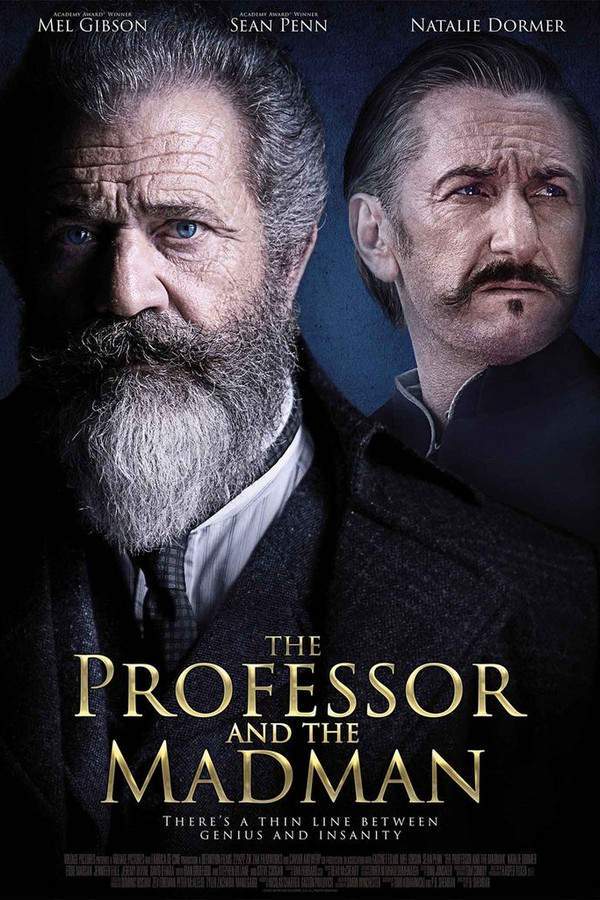
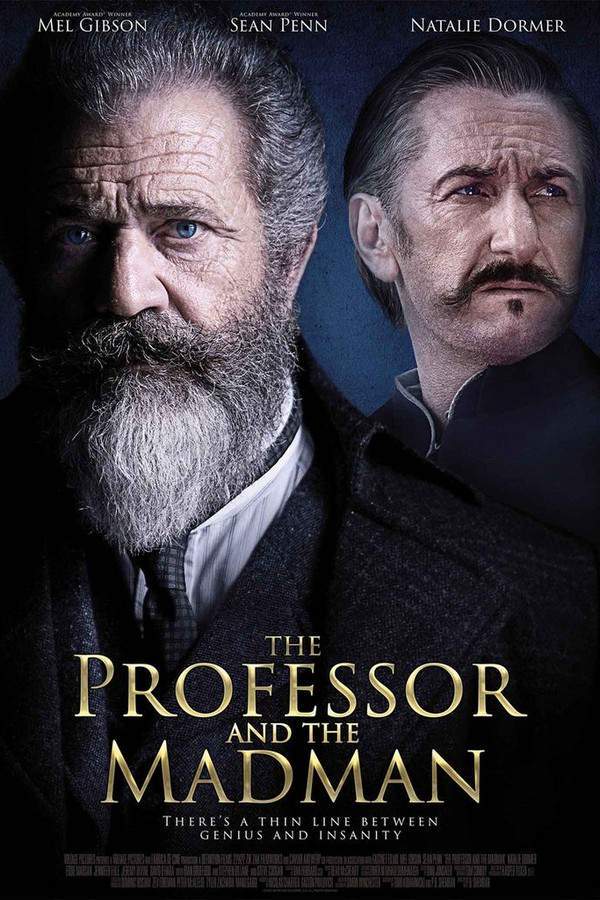
During the Victorian era, Professor James Murray undertakes the ambitious project of creating the Oxford English Dictionary. He finds an invaluable, unexpected ally in Dr. William Minor, a brilliant former army doctor incarcerated at Broadmoor Asylum following a puzzling crime. Working in secret, Minor contributes over ten thousand essential entries to the dictionary, forging an extraordinary and complex partnership with the professor.
Find where to stream, rent, or buy The Professor and the Madman (2019) in the US with current JustWatch availability, up-to-date pricing, and platform listings for subscription, rental, and digital purchase options.
Warning: spoilers below!
Haven’t seen The Professor and the Madman yet? This summary contains major spoilers. Bookmark the page, watch the movie, and come back for the full breakdown. If you're ready, scroll on and relive the story!
Trace every key event in The Professor and the Madman (2019) with our detailed, chronological timeline. Perfect for unpacking nonlinear stories, spotting hidden connections, and understanding how each scene builds toward the film’s climax. Whether you're revisiting or decoding for the first time, this timeline gives you the full picture.
Last updated: November 21, 2024 at 10:25
Find frequently asked questions about the The Professor and the Madman (2019) timeline, including chronological order, nonlinear jumps, cause-and-effect links, and scene sequence clarifications. This timeline FAQ helps explain when key events happen, how moments connect, and why the story unfolds in that specific order.
Minor, a retired U.S. Army surgeon suffering from severe hallucinations due to what appears to be severe mental illness, mistakenly identified George Merritt as a threat in the fog-laden streets of 1872 London. In a moment of distorted reality, he killed an innocent stranger, believing he was defending himself. This tragic error led to his classification as insane and confinement at Broadmoor Asylum.
Earlier scenes establish that Minor already struggled with vivid hallucinations that blurred his perception of reality.
During his lucid moments at Broadmoor Asylum, Minor learned about Murray's dictionary project and began submitting thousands of word entries with citations and literary examples. His surgical training and extensive reading allowed him to provide high-quality contributions that significantly enhanced the dictionary's scope and accuracy.
Minor's intellectual capacity was first demonstrated when he saved a guard's life by performing a complex amputation, showing his mind remained sharp despite his illness.
Murray chose to protect Minor's identity because revealing that the dictionary's major contributor was an inmate at a mental asylum would have likely discredited the entire project and doomed its publication. Murray privately visited Minor at Broadmoor and maintained their friendship while shielding his colleague from the social stigma and professional backlash that would have followed.
The film establishes early on that Murray faced pressure from rivals like Henry Bradley who sought any opportunity to undermine his leadership.
After the truth about Minor's past was exposed by a journalist, Churchill decided to send Minor back to America, labeling him an unwanted alien. Minor died of pneumonia in 1920 in America, separated from his friends. Despite the tragic ending, his contributions to the dictionary were preserved, and his name was included among the collaborators when the first edition was published.
Earlier scenes show Minor's growing hallucinations and self-destructive spiral, foreshadowing his ultimate downfall.
Initially, Eliza hated Minor for killing her husband, but he sent his army pension to support her family as atonement. Over time, she began visiting him, bringing books and learning from him. Dr. Brayne encouraged the relationship because it had a positive impact on Minor's mental well-being. Their connection evolved into a meaningful bond that helped Minor find purpose.
Minor's guilt over killing George Merritt drives his generosity toward Eliza's family from the beginning.
William Minor contributed over ten thousand essential entries to the Oxford English Dictionary, making him one of the dictionary's most valuable and unexpected contributors. His entries were known for their quality citations and literary examples.
Minor's contributions are first mentioned when he learns about Murray's project and decides to atone through intellectual work.
After the jury upheld Minor's insanity diagnosis and Eliza's appeals for his release failed, the case was taken directly to the Home Secretary, Winston Churchill. Churchill made the final decision to send Minor back to America as an unwanted alien, effectively ending his possibility of release in England.
Freddie Furnivall's earlier navigation through bureaucratic obstacles sets up the eventual appeal to Churchill.
Minor's mental state fluctuated throughout his confinement. After Eliza introduced him to her children, the eldest daughter's slap served as a harsh reminder of his crime, triggering turmoil. He began experiencing hallucinations of George Merritt, confessing to 'killing' him twice. This psychological spiral led Dr. Brayne to revoke his privileges, causing his condition to worsen further.
The film establishes early on that Minor's guilt over Merritt's death was a persistent psychological burden.
Murray visited Broadmoor Asylum specifically to meet Minor after learning about his contributions to the dictionary project. This visit became a turning point in both their lives, forming a profound friendship. Murray was deeply affected by Minor's condition and chose to keep their correspondence and Minor's identity private from his colleagues and wife.
Minor's valuable contributions to the dictionary make Murray curious enough to seek him out.
Minor was committed to Broadmoor after killing George Merritt, an innocent stranger he mistakenly perceived as a threat during a hallucination. He was classified as insane due to his severe mental illness, which caused vivid hallucinations and distorted reality. Broadmoor was specifically designed for mentally ill criminals, making it the appropriate facility for his confinement.
The opening scenes in fog-laden London establish Minor's struggling mental state before the killing occurs.
Henry Bradley was a rival of Murray's who sought to dethrone him as project manager of the dictionary. When a journalist uncovered the truth about Minor's past, Bradley seized the opportunity to attack Murray by attempting to erase Minor's contributions from the dictionary project, questioning the accuracy and legitimacy of entries submitted from an asylum.
Bradley is introduced as questioning Murray's accuracy and lamenting the omission of common words early in the project.
Murray fiercely defended Minor against Bradley's attacks and worked to protect his friend's legacy. Ada, Murray's wife, also recognized her affection for Minor and stepped in to aid him. Murray made a passionate plea to Churchill and ensured that Minor's name would be included among the dictionary's collaborators when it was published.
Murray's decision to keep Minor's identity private from colleagues earlier sets up this conflict.
Discover curated groups of movies connected by mood, themes, and story style. Browse collections built around emotion, atmosphere, and narrative focus to easily find films that match what you feel like watching right now.
Stories of profound partnerships that create a legacy against personal odds.If you enjoyed the extraordinary bond between James Murray and William Minor in 'The Professor and the Madman,' explore these movies about complex historical partnerships. These films feature brilliant but unlikely duos whose collaboration leads to great achievements, often set against a backdrop of personal struggle and a bittersweet emotional tone.
Narratives in this thread follow the development of a deep, often improbable partnership between two central characters, usually set against a significant historical backdrop. The story explores how their collaboration on a demanding project (scientific, artistic, or academic) intertwines with their personal demons, leading to a legacy that is celebrated but a relationship that is complicated and ultimately bittersweet.
Movies are grouped here for their shared focus on the emotional and intellectual dynamics of a central partnership. They share a melancholic, reflective tone, a steady pacing that allows for character depth, and an ending that acknowledges achievement while carrying the weight of personal cost, creating a coherent viewing experience centered on complex human connection.
Brilliant minds grappling with past trauma through a consuming intellectual pursuit.Fans of 'The Professor and the Madman' will appreciate these stories of intellectual obsession and redemptive guilt. These movies feature brilliant but tormented protagonists who channel their genius into a monumental task as a way to grapple with their past, offering a somber and psychologically gripping experience similar to the journey of Dr. William Minor.
The narrative pattern follows a protagonist haunted by guilt or trauma who finds a precarious anchor in a complex, scholarly, or creative endeavor. Their brilliant contributions to the project are inextricably linked to their mental state, creating a poignant tension between their capacity for great work and their internal suffering. The resolution often involves a form of redemption through their legacy, but not necessarily personal happiness.
These movies share a specific emotional mix: the cerebral satisfaction of an academic or creative pursuit intertwined with the heavy, somber weight of a character's psychological turmoil and quest for atonement. They are united by a gripping, atmospheric mood, moderate complexity, and a focus on the redemptive power—and personal cost—of intellectual obsession.
Don't stop at just watching - explore The Professor and the Madman in full detail. From the complete plot summary and scene-by-scene timeline to character breakdowns, thematic analysis, and a deep dive into the ending - every page helps you truly understand what The Professor and the Madman is all about. Plus, discover what's next after the movie.
Read a complete plot summary of The Professor and the Madman, including all key story points, character arcs, and turning points. This in-depth recap is ideal for understanding the narrative structure or reviewing what happened in the movie.
Discover the characters, locations, and core themes that shape The Professor and the Madman. Get insights into symbolic elements, setting significance, and deeper narrative meaning - ideal for thematic analysis and movie breakdowns.
Discover movies like The Professor and the Madman that share similar genres, themes, and storytelling elements. Whether you’re drawn to the atmosphere, character arcs, or plot structure, these curated recommendations will help you explore more films you’ll love.
The Professor and the Madman (2019) Plot Summary & Movie Recap
The Professor and the Madman (2019) Scene-by-Scene Movie Timeline
The Professor and the Madman (2019) Spoiler-Free Summary & Key Flow
Movies Like The Professor and the Madman – Similar Titles You’ll Enjoy
Mr. Holmes (2015) Spoiler-Packed Plot Recap
The Oxford Murders (2010) Spoiler-Packed Plot Recap
Sleuth (2007) Movie Recap & Themes
The Professor (2019) Movie Recap & Themes
Stonehearst Asylum (2013) Full Movie Breakdown
Irrational Man (2015) Detailed Story Recap
Holmes & Watson (2018) Full Movie Breakdown
D.O.A. (1988) Film Overview & Timeline
Shining Victory (1941) Plot Summary & Ending Explained
Dr. Mabuse vs. Scotland Yard (1963) Plot Summary & Ending Explained
The Triumph of Sherlock Holmes (1935) Detailed Story Recap
The Private Life of Sherlock Holmes (1970) Ending Explained & Film Insights
Sherlock Holmes Faces Death (1943) Full Movie Breakdown
The Oxford Murders (2008) Plot Summary & Ending Explained
The Adventures of Sherlock Holmes (1939) Full Summary & Key Details