












Plot Explained Spoilers guaranteed!
Plot Explained

Browse by genre

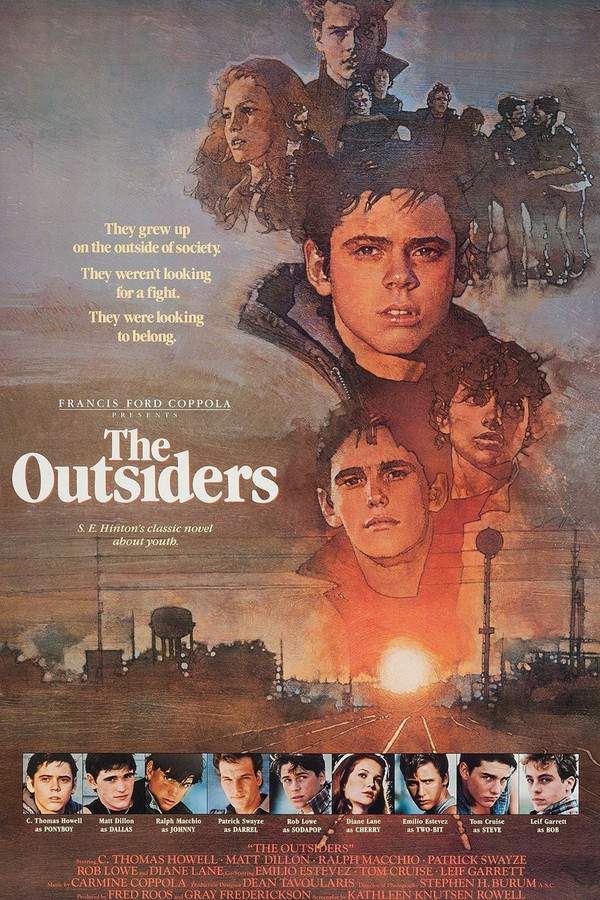
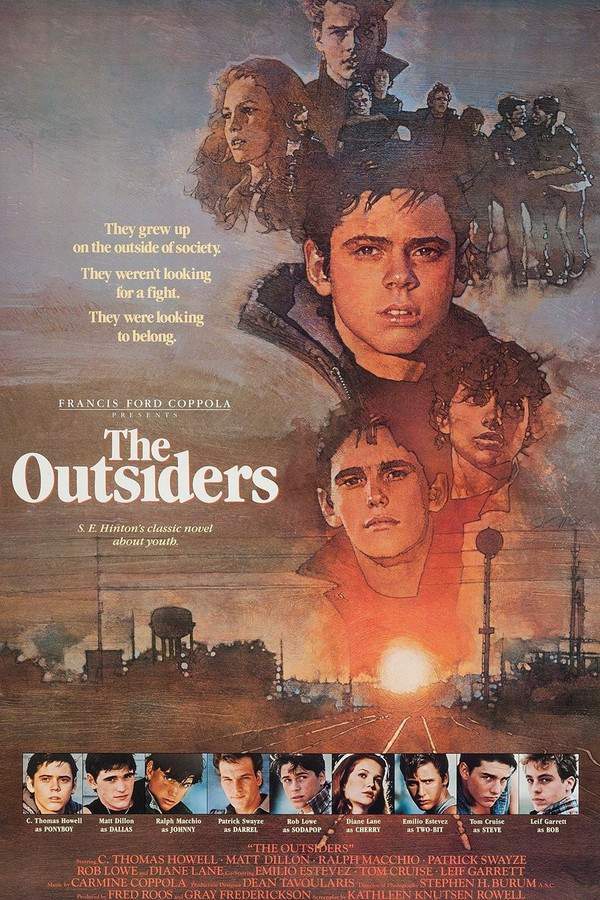
The Outsiders (1983) movie poster

Timeline

The Outsiders (1983) Timeline Explained – Every Event in Order

Release, runtime and language
1983 · 91 min · English
JustWatch #548 231
Directed by
Francis Ford Coppola
Starring
Tom Cruise, Rob Lowe, Matt Dillon, Patrick Swayze, Emilio Estevez, C. Thomas Howell

In the gritty landscape of 1960s Oklahoma, the Greasers, a tight-knit gang of working-class teens, are constantly at odds with the privileged Socials. After a violent encounter escalates, two Greaser friends, Ponyboy and Johnny, are forced to go on the run, facing serious charges and the harsh realities of their world. Loyalty, friendship, and the search for redemption are tested as they navigate the dangers and consequences of their reckless actions.

On this page (7)
  1. 1 Where to watch
  2. 2 Events in order (15)
  3. 3 Timeline questions answered
  4. 4 The book behind the movie
  5. 5 Movie threads
  6. 6 Movies like The Outsiders
  7. 7 Every angle

Where to watch

Where to Watch The Outsiders (1983)

Where can you watch The Outsiders? Stream, rent or buy it in the US, including on HBO Max, Tubi TV and Amazon Video: current JustWatch availability with up-to-date prices.

Streaming availability powered by JustWatch

15 events in order · contains spoilers

The Outsiders Timeline: Events in Chronological Order

Every key event of The Outsiders (1983) in order, scene by scene, with when and where it takes place. Use it to untangle flashbacks, time jumps and parallel storylines, to refresh your memory before the sequel or to find the exact scene you are thinking of.

  1. Ponyboy's Reflection

    The film opens with Ponyboy Curtis reflecting on his life while seated at his desk. He shares his thoughts as he begins to write, hinting at the tumultuous journey ahead.

  2. Confrontation with the Socs

    While on his way home from the cinema, Ponyboy is confronted by a gang in a red Corvair. They mock him for his hair and overpower him, threatening him until his brothers and friends come to his rescue.

  3. Growing Up Without Parents

    Ponyboy and his brothers, Darrel and Sodapop, struggle with the loss of their parents in a tragic accident. Despite the hardship, they have formed a close bond, with Darrel taking on a parental role.

  4. Drive-in Movie Encounter

    Eager to escape their problems, Ponyboy, Johnny, and Dallas attend a drive-in movie. There, Ponyboy forms a connection with Cherry, a Soc, creating complications with their rival gang.

    Where
    Drive-in theater
  5. Confrontation with Bob

    Tensions escalate when Cherry's drunken boyfriend, Bob, confronts the boys at the drive-in. In an attempt to avoid violence, Cherry leaves with Bob, which heightens the divide between the Greasers and Socs.

    Where
    Drive-in theater
  6. Johnny's Home Life

    Later, Ponyboy and Johnny overhear a violent argument between Johnny's parents, leading Johnny to choose to spend the night outside. This reflects the harsh realities they both face at home.

    Where
    Johnny's home
  7. Conflict with Darrel

    Upon returning home late, Ponyboy faces severe reprimand from Darrel, resulting in a physical confrontation. Feeling rejected, Ponyboy seeks refuge in the vacant lot with Johnny.

    Where
    Ponyboy's home
  8. Brutal Fight with the Socs

    While in the vacant lot, Ponyboy and Johnny are confronted by the Socs, who mock them. In a desperate act of self-defense, Johnny uses a switchblade during the ensuing fight, resulting in Bob's death.

    Where
    Vacant lot
  9. Hiding Out in Windrixville

    After the altercation, Johnny and Ponyboy seek shelter in an abandoned church in Windrixville, advised by Dallas. Here, they undergo a transformation to conceal their identities from the police.

    Where
    Windrixville
  10. Moments of Bonding

    As they hide out in the church, Ponyboy and Johnny bond over books and life. They share a poignant moment when Ponyboy recites a Robert Frost poem that resonates deeply with them both.

    Where
    Abandoned church
  11. The Fire Rescue

    Their calm is shattered when the church catches fire with children trapped inside. In a brave act, Ponyboy and Johnny rush back inside to save the kids, resulting in severe injuries for Johnny.

    Where
    Abandoned church
  12. The Rumble

    As tensions rise, the Greasers prepare for a rumble against the Socs to avenge Bob's death. This event marks a significant confrontation between the two groups, highlighting their ongoing conflict.

  13. Johnny's Hospitalization

    The aftermath of the rumble brings emotional turmoil as Ponyboy visits Johnny in the hospital. Johnny's condition worsens, leaving Ponyboy feeling helpless and concerned for his friend.

    Where
    Hospital
  14. Johnny's Death

    Johnny's eventual death becomes a turning point for Ponyboy and Dallas. The loss drives Dallas into a furious state that ends tragically, highlighting the story's themes of grief and desperation.

  15. Finding Closure

    The story concludes with Ponyboy returning to normal life after a trial clears him of wrongdoing. He finds solace in a note from Johnny that motivates him to write his own narrative, capturing their story.

Last updated: November 03, 2024 at 20:54

Was this helpful?

Timeline questions answered

The Outsiders Timeline Explained: Your Questions Answered

When does it happen, and why in that order? The questions people ask about the chronology of The Outsiders (1983): time jumps, flashbacks, cause and effect between scenes and the correct order of events, each answered with spoilers.

Q1

Why did Johnny kill Bob in The Outsiders?

Johnny killed Bob in self-defense during a brutal fight in the vacant lot. The Socs confronted Ponyboy and Johnny, mocking them and physically attacking them. When Bob grabbed Ponyboy and threatened to drown him, Johnny panicked and used his switchblade to defend his friend, stabbing Bob. The killing was not premeditated but a desperate act of self-preservation during a violent altercation.

Foreshadowing: The Socs' earlier confrontation with Ponyboy at the drive-in and their threatening behavior toward Cherry established their capacity for violence.

  • johnny cade
  • bob
  • stabbing
  • self-defense
  • greasers vs socs
Q2

Why did Ponyboy and Johnny hide in the abandoned church?

After Johnny killed Bob, Dallas Winston advised them to hide in an abandoned church in Windrixville to avoid immediate arrest. The police were searching for them in connection with the stabbing. While hiding, they cut and dyed Ponyboy's hair to change their appearance and evade detection.

Foreshadowing: Dallas's warning about the police growing interested in them foreshadows the need for hiding.

  • windrixville
  • church hideout
  • dallas
  • police
  • runaway
Q3

Why did Dallas rampage after Johnny died?

Dallas Winston went into a destructive spiral after Johnny's death because Johnny was the closest thing to family he had. Having grown up in orphanages with no real family, Johnny was the only person Dallas truly cared about. When Johnny died, Dallas's grief turned to rage, leading him to rob a store, point a gun at police, and ultimately get shot dead.

Foreshadowing: Dallas's earlier cold demeanor and his fierce loyalty to Johnny hinted at how devastating Johnny's loss would be for him.

  • dallas winston
  • johnny cade death
  • grief
  • police chase
  • tragic ending
Q4

What happened to the children in the church fire?

During Ponyboy and Johnny's hideout, the abandoned church caught fire with several children trapped inside. Ponyboy and Johnny heroically rushed back into the burning building and rescued the children. Johnny was severely burned in the process, suffering injuries that would ultimately lead to his death.

Foreshadowing: The earlier peaceful moments in the church, with Ponyboy reciting poetry, sharply contrast the disaster that follows.

  • church fire
  • rescue
  • children
  • johnny burns
  • heroism
Q5

Why was Ponyboy exonerated after Bob's death?

Ponyboy was cleared of wrongdoing because the court ruled the stabbing was in self-defense. Bob and the other Socs had attacked Ponyboy and Johnny, with Bob almost drowning Ponyboy in the fountain. Since Johnny was the one who actually stabbed Bob and it occurred during a fight initiated by the Socs, Ponyboy was not held legally responsible for the death.

Foreshadowing: The vacant lot fight showed the Socs as the aggressors, establishing self-defense context.

  • trial
  • exonerated
  • self-defense
  • legal outcome
  • court
Q6

What is the significance of the poem Nothing Gold Can Stay in The Outsiders?

Ponyboy recites Robert Frost's poem "Nothing Gold Can Stay" while hiding in the church, and it deeply resonates with Johnny. The poem about how all beautiful, precious things are fleeting mirrors the novel's themes of lost innocence, the temporary nature of youth, and how quickly good things can be taken away. Johnny's favorite line 'nothing gold can stay' becomes prophetic given the tragic events that follow.

Foreshadowing: The poem's themes of loss and impermanence foreshadow Johnny's death and the story's bittersweet ending.

  • robert frost poem
  • nothing gold can stay
  • innocence
  • lost youth
  • theme
Q7

Why does Darrel punish Ponyboy so harshly?

Darrel acts harshly toward Ponyboy because he feels responsible for raising his younger brothers after their parents died. He works hard to provide for the family and worries about Ponyboy getting into trouble. His strictness stems from parental concern, he wants Ponyboy to stay safe and avoid the consequences that come with hanging out late at night. The physical confrontation reflects Darrel's frustration and fear of losing control.

Foreshadowing: The opening scene establishes Darrel as a father figure struggling to hold the family together.

  • darrel
  • ponyboy brothers
  • parental role
  • family conflict
  • responsibility
Q8

Why do the Greasers and Socs hate each other?

The Greasers and Socs are rivals because of deep social class divisions in 1960s Oklahoma. The Greasers are working-class teens from poor neighborhoods, while the Socs (short for Socials) are wealthy kids from the other side of town. The Socs look down on the Greasers, calling them 'greasers' for their slicked-back hair and poor background. This class resentment fuels constant tension, fights, and violence between the two gangs.

Foreshadowing: The opening scene establishes the class divide through Ponyboy's initial confrontation with the Socs.

  • greasers
  • socs
  • class conflict
  • social divide
  • gangs
Q9

Why did Cherry choose to sit with the Greasers at the drive-in?

Cherry Valance, a Soc girl, chose to sit with Ponyboy and Johnny at the drive-in because she had just quarreled with her boyfriend Bob and was upset. Despite being from different worlds, she found genuine connection with Ponyboy and Johnny, who treated her with respect rather than the objectification she experienced with Bob. Her choice represented a brief moment of crossing social boundaries.

Foreshadowing: Cherry's interaction with the Greasers foreshadows her later role as a bridge between the two worlds.

  • cherry valance
  • soc
  • greasers
  • drive-in
  • connection
Q10

How did Johnny's home life affect his decisions?

Johnny's abusive and neglectful home life significantly shaped his character and choices. Overhearing his parents' violent arguments drove him to sleep outside rather than endure the turmoil at home. His desperate home situation made him more prone to violence when threatened and contributed to his loyalty to the Greaser gang, which provided him the family and protection he lacked at home.

Foreshadowing: Johnny's home life is revealed through Ponyboy and Johnny's late-night encounter, showing why Johnny values the gang as family.

  • johnny cade
  • abuse
  • parents
  • family
  • dysfunctional home
Q11

Why did Johnny want to turn himself in after the stabbing?

Johnny struggled with guilt over killing Bob and initially wanted to turn himself in because he couldn't live with the weight of murder. However, Dallas convinced him that the consequences would be severe, he would be convicted of manslaughter at minimum and sent to a high-security facility. Johnny ultimately agreed to wait and think it through, but his sense of moral responsibility remained a central conflict throughout the story.

Foreshadowing: Dallas's arrival with news of police interest triggers Johnny's crisis of conscience.

  • johnny
  • guilt
  • turn himself in
  • confession
  • consequences
Q12

What was the rumble between the Greasers and Socs?

The rumble was a planned fight between the Greasers and Socs to settle scores after Bob's death. It took place on neutral territory with weapons limited to simple brawling. The Greasers won the fight, which was a symbolic victory for the working-class gang. However, the victory was overshadowed by Johnny's worsening condition in the hospital.

Foreshadowing: Tensions building throughout the film, especially after Bob's death, culminate in this violent confrontation.

  • rumble
  • fight
  • greasers
  • socs
  • bob death
  • winner
Q13

Why did Darrel get so angry when Ponyboy came home late?

Darrel's extreme reaction to Ponyboy coming home late stemmed from his fear of losing another family member. Since their parents died in a car accident, Darrel has been terrified of anything happening to Ponyboy or Sodapop. When Ponyboy stayed out late without contacting them, Darrel's anxiety exploded into anger, which he expressed through physical confrontation, a manifestation of his overwhelming protective instinct.

Foreshadowing: The opening establishes the family's tragic loss, explaining Darrel's intense fear.

  • darrel
  • ponyboy late
  • family fear
  • parental death
  • conflict
Q14

What was Johnny's note to Ponyboy about?

After Johnny died, Ponyboy found a note he had written tucked inside the pages of Gone With the Wind. The note encouraged Ponyboy to stay gold and to write their story so others could understand what being a Greaser really meant. This note inspired Ponyboy to write his memoir, which frames the entire narrative of The Outsiders.

Foreshadowing: Johnny's earlier reflection on 'staying gold' and his desire to matter foreshadow his final message.

  • johnny note
  • gone with the wind
  • stay gold
  • writing
  • legacy

Movie threads

More Movies Like The Outsiders, by Mood & Story

Curated lists built around what makes The Outsiders tick: the same mood, the same kind of story or the same emotional payoff. Each list explains why these movies belong together.

Tragic coming-of-age stories of brotherhood like The Outsiders

Young men united by hardship face devastating losses that shatter their innocence. If you loved the powerful bonds and devastating losses in The Outsiders, explore more movies like it. This collection features similar stories about teen brotherhood tested by tragedy, focusing on gritty dramas with heavy emotional weight and bittersweet endings.

  • tragic
  • brooding
  • yearning
  • angsty
  • gritty
  • melancholic
  • Tone: melancholic, tragic, angsty
  • Pacing: steady, character-driven
Why these movies?

The story pattern: Stories typically follow a tight-knit group of young men whose loyalty is their greatest strength. A catalyst event—often involving violence or a fatal mistake—forces them on a run or into a crisis, culminating in the tragic death of one or more members. The survivors are left to grapple with grief, guilt, and a fractured sense of identity, finding a painful new maturity.

Why they belong together: They are grouped by their shared focus on the visceral pain of losing a friend at a young age, the unbreakable yet strained bonds of chosen family, and the melancholic tone of growing up too fast through trauma. The pacing is often steady, building deliberately towards an emotionally crushing climax.

Gritty melodramas of class conflict like The Outsiders

Working-class youth clash with a privileged world in emotionally charged struggles. Find movies similar to The Outsiders that explore intense class warfare and teen angst. These films share a gritty, realistic atmosphere, high dramatic tension, and focus on the struggles of working-class youth against a privileged society, often with tragic consequences.

  • gritty
  • tense
  • brooding
  • angsty
  • melancholic
  • yearning
  • Tone: gritty, tense, melancholic
  • Pacing: steady, building tension
Why these movies?

The story pattern: The narrative revolves around a clear 'us vs. them' dynamic, pitting an underdog group against a more powerful, affluent opposition. The conflict escalates from verbal taunts to physical violence, forcing the protagonists into morally complex situations. The story examines how poverty and social standing shape identity, destiny, and the choices available to young people.

Why they belong together: These films share a specific vibe: a combination of gritty realism, high emotional intensity, and a focus on socio-economic division as a primary driver of plot and character motivation. The mood is consistently brooding and tense, with a steady pacing that allows the social tensions to simmer and eventually explode.

If you liked this

Movies Like The Outsiders

Similar movies to The Outsiders: the same genre, themes or kind of story. Each one comes with its own plot summary, timeline and ending explained.

Browse all movie summaries

Every angle

The Outsiders (1983) Explained: Plot, Timeline & Characters

Everything about The Outsiders in one place: what happens in the plot summary, the timeline in chronological order, the characters and meaning and a spoiler-free summary. What's After the Movie adds the cast, box office and post-credit scenes.

Coming soon on iOS and Android

The Plot Explained Movie Summary App

Plot summaries, endings explained and timelines on your phone. Catch up on any movie in minutes, save your favorites and never miss a twist again.

Be the first to know when we launch. Your email stays private, always.

Learn more about the app