







Plot Explained Spoilers guaranteed!
Plot Explained

Browse by genre

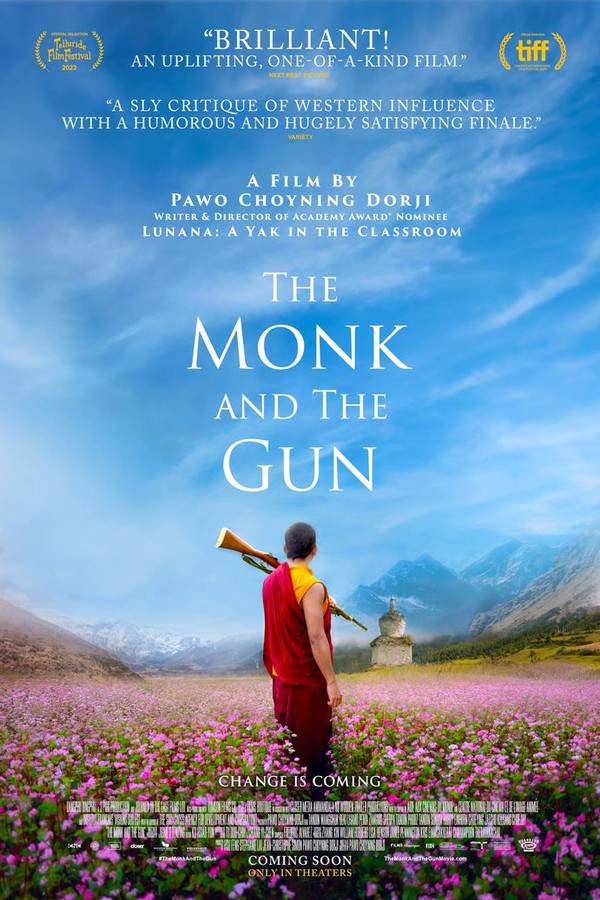
The Monk and the Gun (2024) movie poster

Timeline

The Monk and the Gun (2024) Timeline Explained – Every Event in Order

Release, runtime and language
2024 · 1 h 47 m · English
Echo score 88
Directed by
Pawo Choyning Dorji
Starring
Harry Einhorn, Tandin Wangchuk, Tandin Sonam, Choeying Jatsho, Tandin Phubz, Deki Lhamo

A wise lama foresees impending upheaval and sends his young disciple, Tashi, on a surprising mission. To address the approaching crisis, he tasks Tashi with retrieving two guns, believing this unusual action will restore balance before the next full moon.

On this page (5)
  1. 1 Where to watch
  2. 2 Events in order (13)
  3. 3 Timeline questions answered
  4. 4 Movie threads
  5. 5 Every angle

Where to watch

Where to Watch The Monk and the Gun (2024)

Where can you watch The Monk and the Gun? Stream, rent or buy it in the US, including on Hoopla, Kanopy and Amazon Video: current JustWatch availability with up-to-date prices.

Streaming availability powered by JustWatch

13 events in order · contains spoilers

The Monk and the Gun Timeline: Events in Chronological Order

Every key event of The Monk and the Gun (2024) in order, scene by scene, with when and where it takes place. Use it to untangle flashbacks, time jumps and parallel storylines, to refresh your memory before the sequel or to find the exact scene you are thinking of.

  1. Bhutan prepares for its first democratic election

    In 2006, Bhutan is gearing up for its first democratic election, and the government organizes a mock election as a training exercise for the citizens. This event aims to familiarize the population with democratic processes and build civic awareness. The scene sets the stage for political and social changes in the country.

    When
    2006
  2. Old lama instructs young monk Tashi

    In the town of Ura, an old lama instructs the young monk Tashi to procure firearms in preparation for the upcoming upheaval. Tashi is tasked with acquiring weapons, which symbolizes the potential violence and resistance during the national changes. The lama’s guidance indicates a deeper connection to local beliefs and resistance movements.

    Where
    Ura
  3. Ron Coleman arrives in Bhutan

    American gun collector Ron Coleman arrives seeking to acquire an antique rifle. He is driven to Ura by a guide named Benji, indicating his explicit interest in rare firearms. His presence introduces foreign interference into the local setting and highlights the international demand for Bhutanese guns.

    Where
    Ura
  4. Ron meets with elderly gun owner

    Ron meets with an elderly man who owns the antique rifle and agrees to buy it. This purchase symbolizes the gathering of historical weapons, which may have cultural or spiritual significance. It also marks the beginning of Ron's deeper involvement with the weapons trade in the region.

    Where
    Ura
  5. Tashi receives the gun as a gift

    Tashi arrives at the bank to withdraw cash for the gun purchase, but the monk gives the gun to Tashi as a gift before completing the transaction. This act indicates a transfer of symbolic or spiritual power associated with the firearm, possibly linked to local beliefs or traditions.

    Where
    Ura
  6. Ron and Benji pursue Tashi for the gun

    Ron and Benji learn that Tashi has the gun and attempt to convince him to sell it to them. Tashi resists at first, but eventually agrees to trade the gun for two AK-47s smuggled from India. This exchange introduces illicit weapons into the local conflict.

    Where
    Ura
  7. Police inquire about Ron's activities

    The police get involved after learning about Ron's interest in guns. They seek to question him, highlighting increasing law enforcement concern over foreign and illegal weapon activities. This complicates Ron's plans and emphasizes the tension between local authorities and foreign interests.

    Where
    Ura
  8. Married couple Tshomo and Choephel's conflict

    Tshomo and Choephel, a married couple, come into conflict over Choephel’s support for a political candidate. This discord reflects the divided opinions during the election period and affects personal relationships, including the well-being of their daughter Yuphel.

  9. Yuphel receives a school eraser

    Yuphel, their daughter, receives an eraser from an official hosting the mock election. The eraser symbolizes the hope for a new beginning and the importance of education and democracy, despite the political tensions surrounding her family.

  10. Lama begins construction of a stupa

    The lama starts a ceremony to initiate the construction of a new stupa using the antique gun, which he seeks as a symbol of evil to be buried. This act is part of a spiritual ritual aimed at purification and spiritual cleansing.

  11. Lama buries the gun in the stupa foundation

    The lama buries the antique gun in the foundation of the new stupa, symbolizing the repurposing of an object associated with evil into a spiritual monument. This act signifies a spiritual rebellion against violence and evil.

  12. Police arrive to detain Ron

    The police arrive at the ceremony intending to detain Ron, suspecting him of illicit activities involving weapons. Benji intervenes by claiming Ron's donation of AK-47s to the ceremony, which Tashi supports, leading to a tense standoff.

  13. Lama shows appreciation with a large phallus

    As a token of gratitude, the lama gives Tashi a large phallus, symbolizing fertility or perhaps a blessing, after the ceremonial act of burying the gun. This gesture underscores local cultural and spiritual symbolism embedded in the ritual.

Last updated: August 19, 2025 at 05:13

Was this helpful?

Timeline questions answered

The Monk and the Gun Timeline Explained: Your Questions Answered

When does it happen, and why in that order? The questions people ask about the chronology of The Monk and the Gun (2024): time jumps, flashbacks, cause and effect between scenes and the correct order of events, each answered with spoilers.

Q1

Why does the lama send Tashi to get guns?

The lama sends Tashi to procure firearms because he foresees impending upheaval during Bhutan's transition to democracy. He believes that obtaining these weapons will help restore balance and protect the community before the first democratic election takes place. The guns, particularly the antique rifle, hold spiritual significance as symbols that can be used in rituals to neutralize evil.

Foreshadowing: The lama instructs Tashi early in the film about the importance of preparation for the upcoming political changes.

  • lama
  • tashi
  • guns
  • bhutan
  • democracy
  • upheaval
Q2

Why does the elderly gun owner give the rifle to Tashi as a gift?

The elderly man gifts the antique rifle to Tashi instead of selling it to Ron Coleman. This transfer appears to be driven by spiritual or traditional beliefs rather than commercial interest. The act suggests the elderly owner recognizes a deeper significance in the gun that aligns with Buddhist values, choosing to pass it to the monk rather than allow it to leave the community as a commodity.

Foreshadowing: This gift sets in motion the entire chain of events involving Ron's pursuit of the weapon.

  • elderly man
  • antique rifle
  • tashi
  • gift
  • bhutan
Q3

Why does Tashi agree to trade the antique gun for AK-47s?

Tashi eventually agrees to trade the antique rifle in exchange for two AK-47s that Ron arranges to smuggle into Bhutan from India. This decision reflects Tashi's willingness to fulfill the lama's larger mission. The exchange allows the antique gun to remain in the community while acquiring the weapons the lama apparently sought for his ceremonial purpose.

Foreshadowing: Earlier, the lama tasked Tashi with obtaining firearms for the upcoming crisis.

  • tashi
  • ak-47
  • trade
  • antique rifle
  • smuggling
Q4

Why does the lama bury the gun in the stupa foundation?

The lama uses the antique gun as a symbolic element in the construction of a new stupa, burying it in the foundation. He regards the gun as a symbol of evil, and burying it represents destroying evil and hoping for a peaceful future. The ceremony transforms the weapon from a tool of violence into a spiritual anchor for community healing and transformation.

Foreshadowing: The lama's earlier instruction to Tashi to procure firearms was specifically for this ceremonial purpose.

  • lama
  • gun
  • stupa
  • burial
  • evil
  • symbolism
  • ceremony
Q5

What happens when police try to arrest Ron at the ceremony?

Police arrive at the stupa ceremony intending to detain Ron Coleman, suspecting him of illegal weapon activities. Benji intervenes by claiming that Ron is donating the AK-47s for the ceremony's use. Tashi supports this narrative, emphasizing the ceremony's importance for community healing. The authorities are convinced and allow the event to proceed, resolving the tense standoff.

Foreshadowing: Police had been questioning Ron earlier about his interest in guns.

  • police
  • ron
  • ceremony
  • arrest
  • ak-47s
  • benji
Q6

Why does the American gun collector come to Bhutan?

Ron Coleman, an American gun collector, travels to Bhutan specifically to acquire an antique rifle. His interest is that of a collector seeking rare historical firearms. He is willing to purchase the weapon at any cost and becomes entangled in the local politics and spiritual significance of the gun he seeks.

Foreshadowing: Ron meets with the elderly owner and agrees to buy the rifle before the situation changes.

  • ron coleman
  • american
  • collector
  • antique rifle
  • bhutan
Q7

What is the significance of the stupa ceremony?

The stupa ceremony represents the community's spiritual response to political change. By using the antique gun, considered a symbol of evil, and burying it in the monument's foundation, the lama performs a ritual of purification. The act symbolizes transforming violence into protection, hoping to destroy evil and ensure a peaceful future as Bhutan transitions to democracy.

Foreshadowing: The lama began preparing for this ceremony after receiving the antique gun.

  • stupa
  • ceremony
  • purification
  • democracy
  • bhutan
  • spiritual
Q8

Why do Tshomo and Choephel argue about politics?

Tshomo and Choephel, a married couple, come into conflict because Choephel supports a particular political candidate while Tshomo disagrees with his choice. This disagreement reflects the broader social divisions caused by Bhutan's first democratic election. Their arguments highlight how political allegiances strain personal relationships during times of national transition.

Foreshadowing: The couple's daughter Yuphel witnesses the tension between her parents.

  • tshomo
  • choephel
  • married couple
  • politics
  • election
  • bhutan
Q9

What does the eraser symbolize for Yuphel?

Yuphel receives a simple eraser from an election official during the mock election. The eraser symbolizes her innocence and represents the child's experience of democratic education amidst adult conflicts. It stands for hope for a new beginning and the importance of learning about democracy at a young age.

Foreshadowing: The eraser is given during the educational mock election exercise.

  • yuphel
  • eraser
  • election
  • innocence
  • education
  • democracy
Q10

Why does the lama give Tashi a large phallus at the end?

The lama gives Tashi a large phallus as a traditional offering symbolizing fertility and protection. This gesture is part of Bhutanese cultural and Buddhist tradition, expressing gratitude and blessings. The humorous yet meaningful gift underscores the film's blend of cultural traditions and spiritual symbolism.

Foreshadowing: The gift comes after the successful ceremony where Tashi helped preserve the gun for spiritual use.

  • lama
  • tashi
  • phallus
  • tradition
  • fertility
  • protection
  • bhutan

Movie threads

More Movies Like The Monk and the Gun, by Mood & Story

Curated lists built around what makes The Monk and the Gun tick: the same mood, the same kind of story or the same emotional payoff. Each list explains why these movies belong together.

Whimsical Cultural Parables like The Monk and the Gun

Quirky stories that use humor and symbolism to explore profound cultural change. If you enjoyed the quirky, symbolic storytelling of The Monk and the Gun, you'll find similar movies here. This thread gathers gentle comedies and dramas that use humor and allegory to explore cultural shifts, political transitions, and the collision of tradition with modernity in a hopeful light.

  • quirky
  • hopeful
  • thoughtful
  • cultural
  • symbolic
  • humorous
  • Tone: hopeful, whimsical, thoughtful
  • Pacing: steady, observational
Why these movies?

The story pattern: These narratives often unfold through a central, unusual mission or event that acts as a catalyst, bringing together a diverse cast of characters. The plot weaves smaller, personal stories into a larger thematic tapestry, culminating in a symbolic resolution that reinforces community and optimism.

Why they belong together: They are grouped by their distinctive lighthearted yet thoughtful tone, which uses whimsy and cultural specificity to make profound ideas feel approachable. The shared low-intensity, steady pacing, and hopeful conclusions create a consistently uplifting and intellectually engaging vibe.

Movies about Peaceful Political Transitions like The Monk and the Gun

Observing communities navigate major change with dialogue and optimism, not conflict. For viewers who appreciated the peaceful, community-focused approach to democracy in The Monk and the Gun, this thread collects films that depict political or social change through dialogue, ceremony, and optimism. Discover stories where major shifts happen through understanding rather than violence.

  • hopeful
  • thoughtful
  • community
  • cultural
  • peaceful
  • ceremonial
  • Tone: hopeful, observational, warm
  • Pacing: steady, deliberate
Why these movies?

The story pattern: The narrative follows a community, often in a distinct cultural setting, as it prepares for a significant political event like an election or a shift in power. Conflict arises from misunderstandings or personal friction, but is resolved through communication and shared purpose, leading to a unifying and happy conclusion.

Why they belong together: These films share a unique combination of political themes with a low-intensity, hopeful execution. They reject high-stakes drama in favor of observing how change can be a positive, communal process, characterized by steady pacing, medium emotional weight, and a ultimately happy resolution.

Every angle

The Monk and the Gun (2024) Explained: Plot, Ending, Timeline & Characters

Everything about The Monk and the Gun in one place: what happens in the plot summary, the timeline in chronological order, the characters and meaning, the ending explained and a spoiler-free summary. What's After the Movie adds the cast, box office and post-credit scenes.

Coming soon on iOS and Android

The Plot Explained Movie Summary App

Plot summaries, endings explained and timelines on your phone. Catch up on any movie in minutes, save your favorites and never miss a twist again.

Be the first to know when we launch. Your email stays private, always.

Learn more about the app