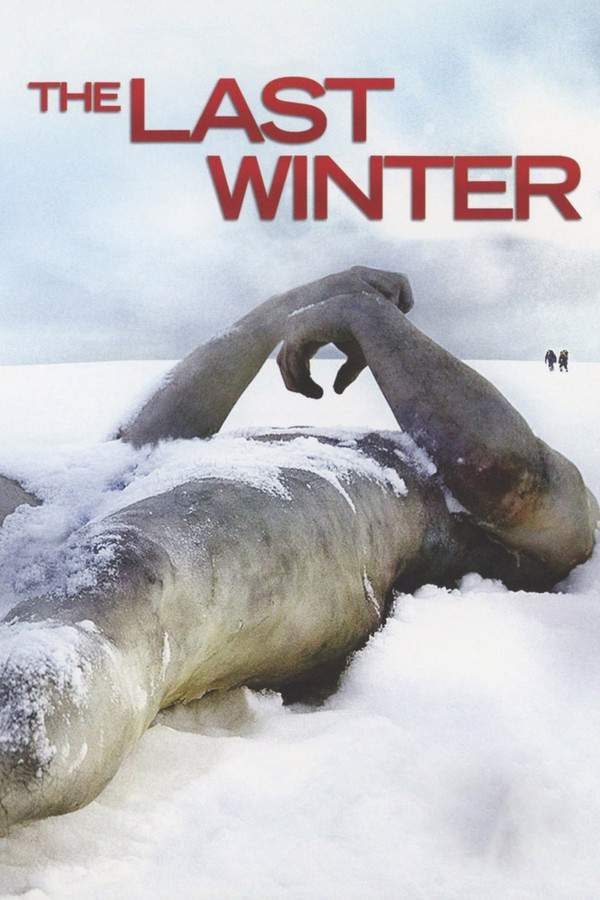
Connie Britton, Ron Perlman, and James LeGros anchor a stark Arctic drama about energy ambitions colliding with an unforgiving landscape as the K.I.K. Corporation pushes to drill in the remote Arctic National Wildlife Refuge by building an ice road that snakes across the snow and ice.
In this high-stakes setup, a cooperative team of independent environmentalists works alongside a drilling base led by the stern Ed Pollack, operating under a loose agreement with the government to monitor procedures and file reports. The uneasy balance between commerce and conservation is breached during a friendly football game outside the housing area, when a routine collision between environmental scientist Elliot and a rookie oil worker named Maxwell shatters the calm, leaving Maxwell with a bloody nose and a lingering sense of unease. That night, Maxwell experiences an unnerving vision of a spectral herd of caribou sweeping past the camp, the ghostly procession casting a chill over the men who must navigate both human and elemental danger.
The following day, Maxwell is sent to check one of the drilling sites and vanishes for most of the day, returning home traumatized as night falls. A radio check reveals that he walked hundreds of miles, a claim that clashes with the physical and emotional toll of his disappearance. Maxwell confronts James Hoffman, an environmental scientist who has been sounding the alarm about drilling in such a sensitive, unusually warm region, confessing that he did not want to work at the site but felt pressured by a connection to Pollack and his circle. Maxwell speaks of “seeing something” in the snow and begs Hoffman to speak publicly about the peril, underscoring the tension between personal fear and the political risk of drawing attention to the region’s fragility.
That night, Maxwell, partly delirious, roams outside naked with a video camera, determined to capture the paranormal phenomena. He documents the spectral caribou herd as it passes and, in a moment of violence from the unseen, is struck from behind. When dawn arrives, he is found dead on the snow, and Hoffman suspects a possible link to sour gas—gas tainted with hydrogen sulfide released by the arctic heat and climate-driven methane release—that could provoke hallucinations and destabilize the group’s grip on reality. As the team scrambles to interpret these events, Elliot, Hoffman’s partner, attempts to reach the outside world by email but fails, hinting at a growing isolation and a breakdown of communication.
The situation worsens when Pollack’s leadership is challenged by the ever-present risk of environmental damage and the need for heavy equipment to move drilling gear. Hoffman and Pollack arrange for a replacement to take over the technical side, leaving Hoffman to accompany the team to a hospital for examination after Elliot’s death. Yet catastrophe strikes again when a bush plane crashes into the camp, killing pilot Gary and the interim environmental scientist Marshowitz, severely burning Foster, who nonetheless survives the night only to die soon after. The disaster fractures the camp’s stability and forces a deeper look at who remains standing in the face of an encroaching wilderness.
The stress takes a toll on the local Native Alaskan workers as well, with Lee vanishing the morning after the crash and the sound of hooves—a motif that preceded the appearance of the ghostly caribou—echoing through the camp. Dawn, another worker, loses her grip and begins to unravel, eventually murdering Motor, the station mechanic who had suffered injuries in the crash. Abby Sellers is drawn into the chaos by the violence surrounding Dawn, and in a tense confrontation, she pushes Dawn, causing her to fall and break her neck.
As the crew pieces together what is happening, a chilling interpretation begins to take shape: nature itself may be turning against humankind. Documents found in an abandoned shack suggest the Earth is releasing a force termed The Last Winter, a cycle in which the pursuit of fossil fuels awakens vengeful presences and resurrects the ghosts of the substances being extracted. The lore grows more unsettling as characters reference older myths—Dawn herself mentions a Wendigo-like spirit, and she invokes the Chenoo from Algonquin myth in the context of the terror they feel.
In a crucial decision point, Hoffman must choose whether to fire a flare at a stalking apparition or use it to summon help from a nearby town. He opts for the latter, a choice that draws the ghostly creature’s attention away from Pollack and toward Hoffman, who is then grabbed and carried off. The scene shifts into a montage of past life images that interrupts itself just long enough to reveal Pollack being attacked by a trio of spectral beings, hinting at a fate that is as much metaphysical as physical.
The ending centers on Abby Sellers, the sole remaining researcher who wakes up alone in a deserted hospital, with no memory of how she arrived there. A television news anchor reports disasters unfolding nationwide, and she encounters a male employee who has hanged himself in a room. She walks outside into a world that feels both open and claustrophobic, with pools of water on the ground, car alarms echoing in the distance, and the wind carrying an ominous fluttering sound reminiscent of the murderous spirits that stalked the snow fields further north. The final overhead shot leaves the audience with a haunting sense of ambiguity, suggesting that the forces released by human ambition and the harsh environment have reshaped the world in unexpected and unsettling ways.