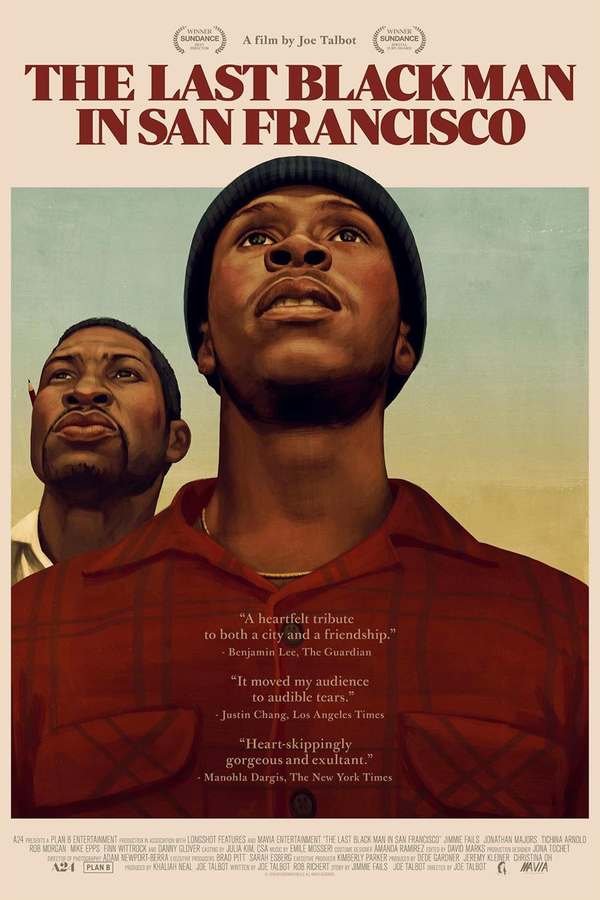
The Last Black Man in San Francisco

The Last Black Man in San Francisco

Year: 2019

Runtime: 121 min

Language: English

Director: Joe Talbot

Echo Score: 83
Drama

Amidst the changing landscape of San Francisco, Jimmie Fails grapples with his family's history and a disappearing community. He and his friend Mont are drawn to a grand Victorian house that once belonged to Jimmie’s grandfather, a celebrated writer. As they attempt to reclaim the house, they confront themes of displacement, memory, and the struggle to preserve identity in a rapidly evolving city, reflecting on what it means to belong.

Where to Watch The Last Black Man in San Francisco?

Find where to stream, rent, or buy The Last Black Man in San Francisco (2019) in the US with current JustWatch availability, up-to-date pricing, and platform listings for subscription, rental, and digital purchase options.

Warning: spoilers below!

Haven’t seen The Last Black Man in San Francisco yet? This summary contains major spoilers. Bookmark the page, watch the movie, and come back for the full breakdown. If you're ready, scroll on and relive the story!

Timeline – The Last Black Man in San Francisco (2019)

Trace every key event in The Last Black Man in San Francisco (2019) with our detailed, chronological timeline. Perfect for unpacking nonlinear stories, spotting hidden connections, and understanding how each scene builds toward the film’s climax. Whether you're revisiting or decoding for the first time, this timeline gives you the full picture.

1

Introduction to Jimmie and Mont

Jimmie Fails is a young man residing in Bayview–Hunters Point, San Francisco. He spends his days wandering the neighborhood alongside his best friend, Montgomery Allen, who lives with his grandfather.

Bayview–Hunters Point, San Francisco
2

Visiting the Victorian House

Jimmie and Mont often skateboard to a Victorian house in the Fillmore District, which Jimmie claims was built by his grandfather in 1946. They express frustration over the neglect of the house by its current occupants, an older white couple.

Fillmore District, San Francisco
3

The Couple's Crisis

During one of their visits, Jimmie and Mont find the woman of the house in distress, with movers removing her belongings. They learn from a mover that the couple's house is now in dispute after the death of the woman's mother.

Fillmore District, San Francisco
4

Inquiring About the House

Jimmie and Mont seek information about the house from Clayton Newsom, a realtor. Newsom informs them that the house is likely to remain empty until the inheritance dispute is resolved.

5

Exploring the Vacant House

With the knowledge that the house might be empty for a while, Jimmie and Mont decide to explore it in detail. They subsequently visit Jimmie's aunt Wanda, who provides them with furniture from the family’s past.

Jimmie's Aunt Wanda's home
6

Moving In

Jimmie and Mont, with the help of Wanda's husband Ricky, transport the gathered furniture back to the Victorian house. They begin settling into the home, feeling a connection to Jimmie's family history.

Fillmore District, San Francisco
7

Kofi's Invitation

Mont invites Kofi, a childhood friend, to the house for a night of fun. However, their night takes a turn the next day when Kofi makes hurtful remarks to Jimmie stemming from his own insecurities.

The Victorian house
8

Kofi's Tragic Fate

Following a conflict, Jimmie and Mont learn about Kofi's fatal scuffle with another man. This tragic news profoundly affects both friends, further complicating their emotional ties to the house.

9

Feeling Betrayed

Upon returning to the house, Jimmie and Mont discover that their belongings have been carelessly discarded onto the sidewalk. They find a For Sale sign placed by Newsom, intensifying Jimmie's feelings of betrayal.

Fillmore District, San Francisco
10

Failed Attempts to Buy the House

In a moment of frustration, Jimmie visits a bank to attempt purchasing the house but ultimately fails. Meanwhile, Mont finds out from Newsom that Jimmie's grandfather was not the true builder of the house.

Bank, Realtor's office
11

Mont's Play Production

Mont writes a play depicting the aftermath of Kofi's death, planning to perform it in the uppermost tower of the house. The performance aims to honor Kofi while giving the community a voice in addressing the tragedy.

Victorian house
12

Father's Arrival

On the day of the performance, Jimmie's estranged father shows up unexpectedly, throwing Jimmie's emotions into turmoil. During the play, Mont prompts the audience to share their perceptions of Kofi, leading to profound introspection.

Victorian house
13

Confrontation and Revelation

During a tense moment, Mont confronts Jimmie about the deception regarding the house's history. This revelation angers Jimmie, causing him to storm out with the audience following suit, creating a deep rift in their friendship.

Victorian house
14

Reflection with Wanda

Jimmie finds solace while speaking with his aunt Wanda, who encourages him, suggesting that leaving San Francisco wouldn’t be his loss but the city’s. Her words offer a new perspective on his unresolved feelings.

15

Final Goodbyes

Jimmie reunites with Mont at the dock, where he admits to knowing the truth about the house all along. However, he leaves a note thanking Mont for their friendship before rowing away, leaving Mont to grapple with solitude.

Dock, Golden Gate Bridge

Last updated: December 13, 2024 at 06:47

Was this helpful?

The Last Black Man in San Francisco (2019) Timeline Questions Answered – Chronology FAQ

Find frequently asked questions about the The Last Black Man in San Francisco (2019) timeline, including chronological order, nonlinear jumps, cause-and-effect links, and scene sequence clarifications. This timeline FAQ helps explain when key events happen, how moments connect, and why the story unfolds in that specific order.

Q1

Did Jimmie's grandfather really build the Victorian house?

A.

No. After Mont confronts him, it is revealed that the house's deed actually dates back to the 1850s, meaning Jimmie's grandfather did not build it. Jimmie had been living with a false family narrative about the house's origin.

Earlier in the film, Jimmie confidently tells Mont the house was built in 1946 on an empty lot, which becomes ironic when the truth emerges.

Jimmie FailsgrandfatherVictorian houseFillmorefalse history
Q2

Why is Jimmie so fixated on the Victorian house in Fillmore?

A.

Jimmie believes the house represents his family's legacy and rightful place in San Francisco. He grew up there and claims his grandfather built it, making the house a symbol of belonging in a city where Black communities are being displaced.

Jimmie repeatedly tells Mont about his grandfather choosing to build on an empty lot during WWII rather than buying interned Japanese Americans' property, establishing his deep emotional investment.

Jimmie FailsVictorian houseFillmoredisplacementfamily legacy
Q3

What happens to Kofi in The Last Black Man in San Francisco?

A.

Kofi, Mont's childhood friend whom they invite to stay in the house, dies violently after a confrontation. His death shocks Jimmie and Mont and deeply affects both, particularly Mont, who channels his grief into writing a play about the tragedy.

The night before Kofi's death, he makes harsh, dominating comments to Jimmie, revealing his insecurities and setting up the tragic events that follow.

KofideathMonttragedyfight
Q4

Why does Mont write and perform a play about Kofi?

A.

Mont channels his grief and anger over Kofi's sudden death into creative expression. He stages the play in the house's tower to honor Kofi and force the community to confront how little they truly knew him, prompting reflection on identity and perception.

The play directly addresses Kofi's death and includes social media reactions, showing Mont's need to process the loss through art.

MontKofiplaygriefperformance
Q5

Why does Jimmie's estranged father appear at the play?

A.

Jimmie's father unexpectedly shows up on the day of Mont's play performance, adding to Jimmie's emotional turmoil. The appearance represents another broken relationship in Jimmie's life and intensifies his sense of abandonment and loss.

Jimmie's family history of abandonment is hinted at throughout the film, making his father's sudden appearance both shocking and thematically consistent.

Jimmie's fatherestranged fatherfamilyappearance
Q6

Did Jimmie actually know the house wasn't built by his grandfather?

A.

Yes. In the final conversation at the dock, Jimmie admits to Mont that he always knew the truth about the house. This revelation represents his painful process of letting go of the family myth that gave him a sense of belonging and identity in San Francisco.

Jimmie's unwavering certainty about the house's history, combined with his desperation to reclaim it, suggests a need to believe in something larger than himself.

Jimmietruthhousegrandfatherdeceptiondisillusionment
Q7

Why does Jimmie leave San Francisco at the end?

A.

Jimmie leaves after his confrontation with Mont and his conversation with Aunt Wanda, who tells him that leaving wouldn't be his loss, it would be the city's loss. He departs to escape the painful memories and the shattered narrative that defined his identity in San Francisco.

Wanda's conversation with Jimmie earlier provides the perspective he needs to let go, suggesting his departure is an act of self-preservation rather than defeat.

Jimmie leavesSan FranciscoendingdepartureGolden Gate Bridge
Q8

What causes the confrontation between Jimmie and Mont at the play?

A.

During Mont's play, Mont publicly confronts Jimmie about lying regarding his grandfather building the house. This revelation enrages Jimmie, who storms out followed by the audience, creating a rift in their friendship.

Earlier, Mont had discovered the truth about the house from Clayton Newsom, planting the seeds for this explosive confrontation.

confrontationMontJimmiehouse truthargument
Q9

Why are Jimmie and Mont kicked out of the house?

A.

After Kofi's death, the house is put up for sale by the realtor Clayton Newsom. The inheritance dispute between the sisters is resolved, and the house returns to the market. Jimmie and Mont return to find their belongings on the sidewalk and a For Sale sign posted.

Newsom had warned them earlier that the house would likely sell once the estate matter was resolved, giving them a false sense of time.

evictionFor Sale signClayton Newsomhousebelongings
Q10

What does Wanda tell Jimmie about leaving San Francisco?

A.

After Jimmie's confrontation with Mont, his aunt Wanda reassures him that leaving San Francisco wouldn't be a loss for him, it would be the city's loss. Her words offer him a new perspective on displacement and validate his choice to leave.

Wanda had previously helped them by providing furniture from her family's former home, showing her understanding of their connection to the past.

WandaauntJimmieSan Franciscoadviceleaving
Mobile App Preview

Coming soon on iOS and Android

The Plot Explained Mobile App

From blockbusters to hidden gems - dive into movie stories anytime, anywhere. Save your favorites, discover plots faster, and never miss a twist again.

Sign up to be the first to know when we launch. Your email stays private, always.

Explore Movie Threads

Discover curated groups of movies connected by mood, themes, and story style. Browse collections built around emotion, atmosphere, and narrative focus to easily find films that match what you feel like watching right now.

Urban melancholia and the search for home like in The Last Black Man in San Francisco

Character-driven stories exploring identity and belonging in changing cityscapes.If you were moved by the contemplative exploration of place and identity in The Last Black Man in San Francisco, this thread features other movies like it. Discover similar character-driven dramas that use changing urban landscapes to tell bittersweet stories about grief, legacy, and the meaning of home.

melancholicnostalgicatmosphericcontemplativewistfulautobiographicalpoignantlonely

Narrative Summary

Narratives in this thread often follow a protagonist's quiet, introspective journey to reclaim or understand their past within a city that no longer resembles their memories. The central conflict is less about external action and more about an internal struggle with displacement and the painful redefinition of self in relation to a vanishing world.

Why These Movies?

These films are grouped by their shared melancholic tone, deliberate pacing, and heavy emotional weight derived from themes of urban change and personal loss. They create a specific, wistful mood through atmospheric cinematography and a focus on character introspection over plot.

Bittersweet journeys of disillusionment like in The Last Black Man in San Francisco

Stories where characters confront painful truths to find a new kind of peace.Fans of the poignant and bittersweet ending of The Last Black Man in San Francisco will find more movies like it here. This thread features stories where characters undergo a painful process of disillusionment, leading to a resolution that mixes sadness with a hard-won sense of acceptance and closure.

bittersweetpoignantreflectiveheartbreakingacceptancedisillusionmentintrospectiveemotional

Narrative Summary

The pattern involves a protagonist clinging to an idealized version of their past or identity. A key revelation or series of events forces them to confront a painful truth, dismantling their foundational narrative. The story concludes not with a clear victory, but with a poignant mix of loss for what was imagined and a quiet acceptance of a new, more complex reality.

Why These Movies?

Movies in this thread share a specific emotional trajectory: a heavy emotional weight built on grief or loss, a moderate narrative complexity often involving a pivotal truth, and a consistently bittersweet ending feel. The pacing is often slow to allow for deep character introspection throughout this difficult emotional process.

Unlock the Full Story of The Last Black Man in San Francisco

Don't stop at just watching - explore The Last Black Man in San Francisco in full detail. From the complete plot summary and scene-by-scene timeline to character breakdowns, thematic analysis, and a deep dive into the ending - every page helps you truly understand what The Last Black Man in San Francisco is all about. Plus, discover what's next after the movie.

The Last Black Man in San Francisco Summary

Read a complete plot summary of The Last Black Man in San Francisco, including all key story points, character arcs, and turning points. This in-depth recap is ideal for understanding the narrative structure or reviewing what happened in the movie.

The Last Black Man in San Francisco Summary

Characters, Settings & Themes in The Last Black Man in San Francisco

Discover the characters, locations, and core themes that shape The Last Black Man in San Francisco. Get insights into symbolic elements, setting significance, and deeper narrative meaning - ideal for thematic analysis and movie breakdowns.

Characters, Settings & Themes in The Last Black Man in San Francisco

The Last Black Man in San Francisco Spoiler-Free Summary

Get a quick, spoiler-free overview of The Last Black Man in San Francisco that covers the main plot points and key details without revealing any major twists or spoilers. Perfect for those who want to know what to expect before diving in.

The Last Black Man in San Francisco Spoiler-Free Summary

More About The Last Black Man in San Francisco

Visit What's After the Movie to explore more about The Last Black Man in San Francisco: box office results, cast and crew info, production details, post-credit scenes, and external links - all in one place for movie fans and researchers.

More About The Last Black Man in San Francisco

Similar Movies to The Last Black Man in San Francisco

Discover movies like The Last Black Man in San Francisco that share similar genres, themes, and storytelling elements. Whether you’re drawn to the atmosphere, character arcs, or plot structure, these curated recommendations will help you explore more films you’ll love.