





Plot Explained Spoilers guaranteed!
Plot Explained

Browse by genre

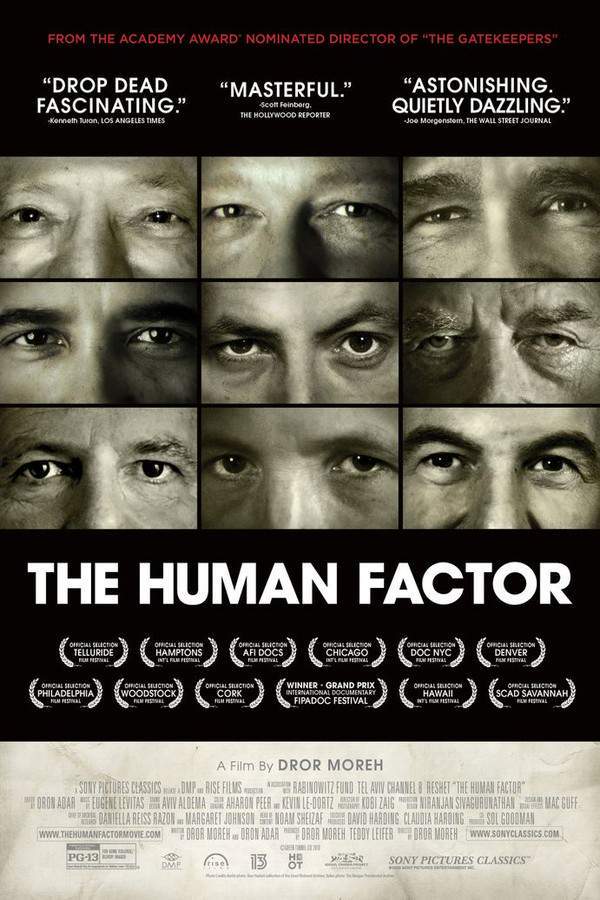
The Human Factor (1979) movie poster

Timeline

The Human Factor (1979) Timeline Explained – Every Event in Order

Release, runtime and language
1979 · 115 min · English
Directed by
Otto Preminger
Starring
John Gielgud, Robert Morley, Derek Jacobi, Richard Vernon, Nicol Williamson, Ann Todd

A rookie Secret Service agent finds his idealism challenged when he unwittingly becomes entangled in a complex deception. His naivete is exploited by a skilled con artist, and when a trusted colleague is implicated in a suspicious scheme, he must confront the repercussions of his mistakes. Thrust into a dangerous game of cat and mouse, he desperately tries to uncover the truth and clear his colleague's name.

On this page (6)
  1. 1 Where to watch
  2. 2 Events in order (13)
  3. 3 Timeline questions answered
  4. 4 Movie threads
  5. 5 Movies like The Human Factor
  6. 6 Every angle

Where to watch

Where to Watch The Human Factor (1979)

Where can you watch The Human Factor? Stream, rent or buy it in the US, including on Amazon Video, Apple TV Store and Fandango At Home: current JustWatch availability with up-to-date prices.

Streaming availability powered by JustWatch

13 events in order · contains spoilers

The Human Factor Timeline: Events in Chronological Order

Every key event of The Human Factor (1979) in order, scene by scene, with when and where it takes place. Use it to untangle flashbacks, time jumps and parallel storylines, to refresh your memory before the sequel or to find the exact scene you are thinking of.

  1. Castle's ordinary life with family

    Maurice Castle appears to lead a quiet, unremarkable life as a mid-level MI6 bureaucrat. He is married to Sarah and has a young son, Sam, grounding his loyalties beyond the office. The mix of family life and a discreet career hints at stakes that go beyond routine espionage.

    Where
    London
  2. MI6 detects a possible leak in Castle's department

    Dr. Percival and Sir John Hargreaves brief newly appointed security chief Daintry that intelligence from a double agent in Moscow suggests a leak within Castle's division. The concern is not about a dramatic public scandal, but about the potential for information to drift into hostile hands. The atmosphere is tense, with high-level urgency to identify the source quietly.

    Where
    MI6 Headquarters, London
  3. Decision to quietly neutralize the mole

    The regime decides that the traitor should be identified and eliminated covertly rather than risking a trial or defection. They settle on the most likely candidate, Arthur Davis, and prepare a covert strategy to smoke him out. The plan hinges on controlled exposure rather than public exposure.

    Where
    MI6 Headquarters, London
  4. Davis lured with taunting intelligence

    Percival plants a seemingly tantalising intelligence tidbit with Arthur Davis in the hope that Davis will pass it along to the Soviets. The bait is crafted to provoke a formal exchange that can be traced back to the source. The trap relies on Davis's routine, unwary handling of sensitive material.

    Where
    Davis's office
  5. Moscow learns of the tainted intel

    Davis, under pressure, casually shares the tidbit with Castle, unaware of the trap. The information is then picked up by contacts and eventually reaches Moscow, where it appears to trace back to the suspected mole. The double agent network reads the signals as a confirmation of their suspicions.

    Where
    Moscow, USSR
  6. London confirms the mole is likely Davis

    Back in London, Percival and colleagues grow convinced that Arthur Davis was the source of the leak based on the Moscow transmission. The hunt tightens, and Davis becomes the principal target of covert scrutiny. The decision to neutralize him becomes increasingly irreversible.

    Where
    London
  7. Davis is eliminated by toxin

    To make the loss appear natural, Percival administers a toxin to the incapacitated Davis, producing symptoms that mimic liver failure from alcoholism. The death is staged to look unremarkable to outside observers. The covert operation secures its first, deadly result without public accountability.

    Where
    Hospital setting
  8. Castle hosts Muller, old nemesis from SA

    Castle is tasked with hosting his old nemesis Muller, who operates under the cover of being a writer. Muller represents the shadowy entanglements of Castle’s past in apartheid South Africa and the murky web between espionage and personal history. The encounter underscores how personal history can intersect with present danger.

    Where
    Britain
  9. Connolly's death and Castle's past with Sarah

    Muller soberly drops that Matthew Connolly, the white South African connection, had recently died in police custody, a detail that reverberates through Castle’s past. He also reminds Castle of how Connolly introduced him to Sarah, deepening the gravity and complexity of his personal history. The revelation weighs on Castle as he contemplates loyalties and betrayals.

    Where
    Britain
  10. South Africa nuclear plan surfaces

    The briefing reveals a plan by South Africa to deploy U.S.-supplied tactical nuclear weapons to eradicate Communist insurgents en masse. Castle, though not a Communist himself, feels a humanitarian imperative to warn Moscow about the looming catastrophe. The stakes grow beyond espionage to global catastrophe.

    Where
    Britain
  11. Castle seeks refuge in the Soviet Union

    Moved by the humanitarian anxieties and seeking safety, Castle surrenders to underground Communist operatives and is smuggled to the Soviet Union. He is assured that his wife and son will join him there, creating a fragile hope amid increasing danger. The journey marks a drastic turn from a London bureaucrat to a political pawn.

    Where
    Britain → Soviet Union
  12. MI6 blocks family departure and sparks a crisis

    In Britain, MI6 blocks Sarah and Sam from leaving, orchestrating passport complications intended to force Sarah to choose between her husband and her son. Castle is compelled to appear at a press conference announcing his defection and denouncing the Uncle Remus nuclear plan, compounding his personal peril with public exposure. The lines between loyalty, family, and national duty blur in a devastating way.

    Where
    Britain
  13. Sarah's decision and Castle's collapse

    A tense phone call reveals that Sarah cannot join him, a revelation that proves too much for Castle. He cannot even hang up the receiver as their connection falters, and he collapses in anguish, the weight of his life and choices crashing down around him. The film closes on his broken, solitary moment.

    Where
    Soviet Union / Britain (phone call)

Last updated: October 09, 2025 at 15:36

Was this helpful?

Timeline questions answered

The Human Factor Timeline Explained: Your Questions Answered

When does it happen, and why in that order? The questions people ask about the chronology of The Human Factor (1979): time jumps, flashbacks, cause and effect between scenes and the correct order of events, each answered with spoilers.

Q1

Why does Maurice Castle become a Soviet spy?

Castle becomes a Soviet spy because of his experiences in apartheid South Africa. While working undercover as a writer for MI6, he befriended Matthew Connolly, a white Communist leader who helped him meet and fall in love with Sarah, a Bantu woman. When Castle was forced to flee South Africa to avoid arrest, Connolly smuggled Sarah to him. Castle has been repaying that debt by passing information to the Soviets ever since, even though he is not himself a Communist.

  • maurice castle
  • sarah
  • mathew connolly
  • south africa
  • spy
  • defection
Q2

Who is the mole in MI6?

Arthur Davis is mistakenly identified as the mole. Dr. Percival and Sir John Hargreaves set a trap by planting fake intelligence with Davis, hoping to catch whoever is passing information to the Soviets. Davis, confused by the sudden surveillance and under stress, casually shares the baited intelligence with Castle, who unknowingly passes it to his Soviet contacts. When the information surfaces in Moscow, Percival incorrectly concludes Davis was the source and assassinates him.

Foreshadowing: The security scrutiny placed on Davis is intense and unexplained, causing him undue stress.

  • arthur davis
  • mole
  • mi6
  • percival
  • hargreaves
  • leak
Q3

Why is Arthur Davis killed?

Arthur Davis is killed because Dr. Percival mistakenly believes he is the Soviet mole. After the baited intelligence appears in Moscow, Percival concludes Davis was its source. To eliminate the traitor quietly without a public trial, Percival injects Davis with a biological toxin that mimics liver failure from alcoholism, making his death appear natural.

  • arthur davis
  • death
  • toxin
  • percival
  • murder
  • assassination
Q4

Why does Castle warn Moscow about the nuclear plan?

Castle decides to alert the Soviets about South Africa's Uncle Remus plan because he learns the South Africans intend to use U.S.-supplied tactical nuclear weapons to eradicate Communist insurgents en masse. Though Castle is not a Communist, his humanitarian conscience compels him to pass the warning to Moscow, despite knowing it will draw MI6's attention to himself.

  • nuclear weapons
  • south africa
  • uncle remus plan
  • humanitarian
  • moscow warning
Q5

What happened to Matthew Connolly?

Matthew Connolly, the white South African Communist leader who helped Castle escape apartheid South Africa and smuggled Sarah to him, died in police custody. Muller casually reveals this to Castle during his visit, describing it as an accident. This revelation weighs heavily on Castle and deepens his resolve to warn Moscow about the nuclear attack plan.

  • matthew connolly
  • death
  • south africa
  • police custody
  • muller
Q6

Why does Castle collapse at the end?

Castle collapses because he receives a phone call from Sarah revealing she cannot join him in the Soviet Union. MI6 has blocked her and their son Sam from leaving Britain, forcing her to choose between her husband and her son. Castle, already forced to appear at a press conference denouncing the nuclear plan and portraying himself as a traitor and Communist, cannot bear this final loss. He is left alone in the Soviet Union, having lost his family, his country, and his identity.

Foreshadowing: The phone receiver swinging like a pendulum foreshadows Castle reaching his breaking point.

  • castle collapse
  • phone call
  • sarah
  • sam
  • family
  • defection
  • ending
Q7

Why does MI6 prevent Sarah and Sam from leaving Britain?

MI6 deliberately blocks Sarah and their son Sam from leaving Britain to use them as leverage against Castle. By creating passport complications, they force Sarah to choose between her husband and her son. This cruel maneuver ensures Castle remains isolated and controllable in the Soviet Union, unable to return home.

  • sarah
  • sam
  • mi6
  • passport
  • blocked
  • family leverage
Q8

What is the Uncle Remus nuclear plan?

The Uncle Remus plan is a covert South African operation, using U.S.-supplied tactical nuclear weapons, designed to annihilate Communist insurgents in South Africa on a massive scale. The plan is revealed during Muller's briefing to Castle. Castle's warning to Moscow about this plan leads to his forced public denouncement at a Soviet press conference.

  • uncle remus plan
  • nuclear weapons
  • south africa
  • communists
  • operation
Q9

Why does Castle flee to the Soviet Union?

Castle flees to the Soviet Union because he knows MI6's counterintelligence is closing in on him after he passed the nuclear warning to Moscow. Rather than wait to be caught and exposed as a traitor, Castle surrenders to underground Communist operatives in Britain, who smuggled him to safety. He believes his wife and son will soon follow, but MI6 blocks their departure.

  • castle flee
  • soviet union
  • defection
  • mi6
  • escape
Q10

Why does Percival use a toxin to kill Davis?

Percival uses a biological toxin to make Davis's death appear as natural liver failure from alcoholism, avoiding any suspicion of foul play. This allows MI6 to eliminate the suspected mole quietly without a public scandal or investigation. Percival is described as an expert in assassinations and biological toxins, making the method a deliberate professional choice.

  • percival
  • toxin
  • liver failure
  • assassination
  • disguised death
Q11

Why is Castle assigned to host Muller?

Castle is ordered to host Muller, his former tormentor from apartheid South Africa, as part of his MI6 duties. Muller operates under the cover of being a writer. The assignment forces Castle to confront his past and the complex web of personal history and espionage that led to his dual life as both an MI6 bureaucrat and Soviet informant.

Foreshadowing: The encounter with Muller brings Castle's hidden past directly into his present danger.

  • muller
  • host
  • south africa
  • old nemesis
  • assignment
Q12

Why is Castle forced to appear at the press conference?

Castle is coerced into appearing at a Soviet press conference where he announces his defection and denounces the Uncle Remus nuclear plan. The Soviets use him as a propaganda tool to publicize the nuclear threat while Castle is isolated from his family and powerless to refuse. It represents the ultimate betrayal of everything he values, his country, his family, and his own identity.

  • press conference
  • defection
  • coercion
  • propaganda
  • soviet union

Movie threads

More Movies Like The Human Factor, by Mood & Story

Curated lists built around what makes The Human Factor tick: the same mood, the same kind of story or the same emotional payoff. Each list explains why these movies belong together.

Claustrophobic Thrillers of Paranoia like The Human Factor

Stories where walls feel like they're closing in and trust is a luxury. For viewers who enjoyed the tense, anxious atmosphere of 'The Human Factor,' this list features movies like it where characters are trapped in systems of conspiracy. These similar spy dramas and psychological thrillers explore themes of betrayal and isolation, offering more stories where no one can be trusted.

  • paranoid
  • claustrophobic
  • anxious
  • tense
  • isolating
  • unsettling
  • Tone: dark, tense, paranoid
  • Pacing: steady, methodical
Why these movies?

The story pattern: Narratives often center on an individual who becomes aware of a hidden, powerful conspiracy or system working against them. The plot methodically tightens the noose, forcing the protagonist to question allies and reality itself, often leading to a sense of inescapable doom as institutions prove corrupt or all-powerful.

Why they belong together: Movies are grouped here for their shared ability to generate a palpable sense of claustrophobia and paranoia, regardless of setting. They prioritize a consistent, oppressive mood of psychological unease over action, focusing on the mental toll of suspicion and the collapse of safety.
Bleak Spy Dramas with Moral Complexity like The Human Factor

Where idealism is shattered by the grim realities of clandestine wars. If you liked the cynical world and emotional weight of 'The Human Factor,' this collection features similar Cold War thrillers and espionage films. These movies share a dark tone and explore the heavy cost of betrayal and sacrifice, perfect for fans of complex, character-driven stories with bleak conclusions.

  • bleak
  • melancholic
  • tense
  • cynical
  • heavy
  • grim
  • Tone: dark, bleak, cynical
  • Pacing: steady, deliberate
Why these movies?

The story pattern: The narrative follows an often-idealistic protagonist entering a ruthless intelligence apparatus. Their principles are systematically destroyed by the demands of the job, leading to tragic sacrifices, personal ruin, and an ending that offers no redemption, only the hollow victory of survival or the total cost of defeat.

Why they belong together: These films are united by their grim portrayal of the espionage genre, emphasizing the emotional and moral toll on individuals over geopolitical victories. They share a dark tone, heavy emotional weight, and a fundamentally cynical view of the institutions and conflicts they depict.

If you liked this

Movies Like The Human Factor

Similar movies to The Human Factor: the same genre, themes or kind of story. Each one comes with its own plot summary, timeline and ending explained.

Browse all movie summaries

Every angle

The Human Factor (1979) Explained: Plot, Timeline & Characters

Everything about The Human Factor in one place: what happens in the plot summary, the timeline in chronological order, the characters and meaning and a spoiler-free summary. What's After the Movie adds the cast, box office and post-credit scenes.

Coming soon on iOS and Android

The Plot Explained Movie Summary App

Plot summaries, endings explained and timelines on your phone. Catch up on any movie in minutes, save your favorites and never miss a twist again.

Be the first to know when we launch. Your email stays private, always.

Learn more about the app