






Plot Explained Spoilers guaranteed!
Plot Explained

Browse by genre

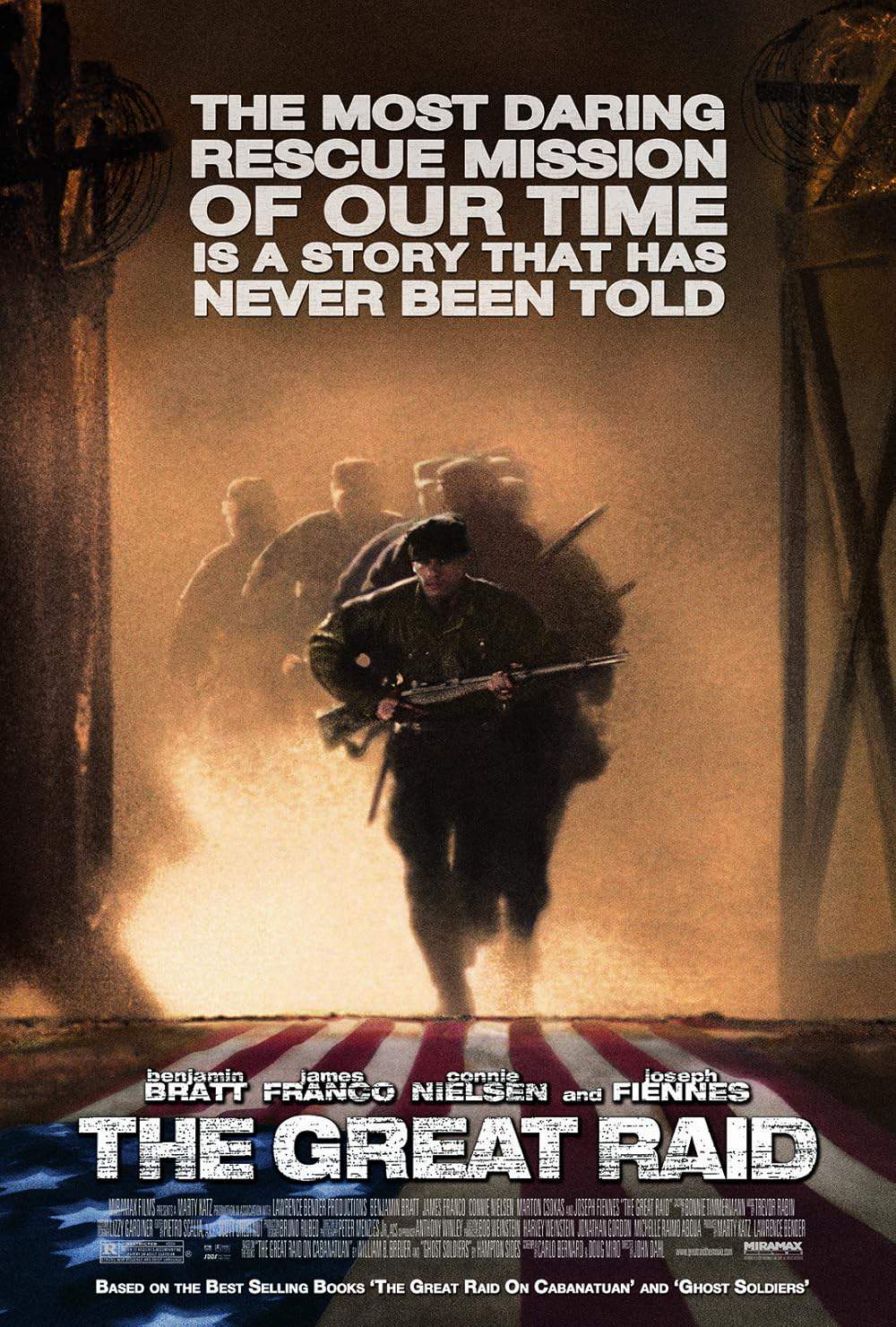
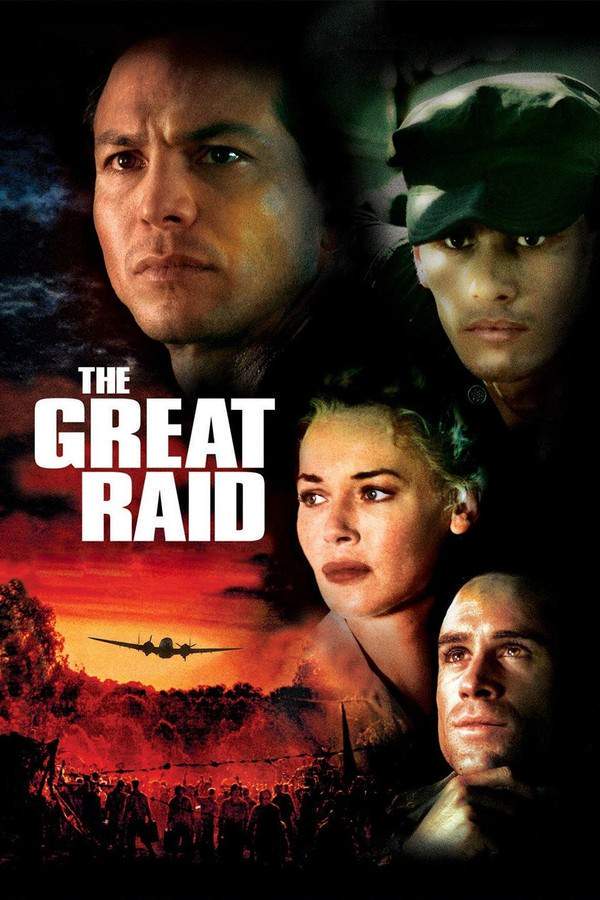
The Great Raid (2005) movie poster

Timeline

The Great Raid (2005) Timeline Explained – Every Event in Order

Release, runtime and language
2005 · 132 min · English
Directed by
John Dahl
Starring
James Franco, Benjamin Bratt
Budget
$80M

During World War II, a small team of U.S. Army Rangers undertakes a perilous mission to liberate over 500 American prisoners of war held at the Cabanatuan prison camp in the Philippines. Facing overwhelming enemy forces and treacherous terrain, these soldiers must overcome seemingly impossible odds to free their comrades. The raid is a desperate attempt to restore hope and demonstrate resolve amidst the brutal realities of war, testing the limits of courage and resilience.

On this page (6)
  1. 1 Where to watch
  2. 2 Events in order (14)
  3. 3 Timeline questions answered
  4. 4 Movie threads
  5. 5 Movies like The Great Raid
  6. 6 Every angle

Where to watch

Where to Watch The Great Raid (2005)

Where can you watch The Great Raid? Stream, rent or buy it in the US, including on Hoopla, Amazon Video and Apple TV Store: current JustWatch availability with up-to-date prices.

Streaming availability powered by JustWatch

14 events in order · contains spoilers

The Great Raid Timeline: Events in Chronological Order

Every key event of The Great Raid (2005) in order, scene by scene, with when and where it takes place. Use it to untangle flashbacks, time jumps and parallel storylines, to refresh your memory before the sequel or to find the exact scene you are thinking of.

  1. Attack on Pearl Harbor

    In December 1941, the United States was devastated by the sudden attack on Pearl Harbor, which prompted the nation to enter World War II. This attack led to a massive mobilization effort as Americans prepared for the global conflict that ensued.

    When
    December 1941
    Where
    Pearl Harbor, Hawaii
  2. Japanese Assault on the Philippines

    Just ten hours after the attack on Pearl Harbor, Japanese forces launched a swift military assault on the Philippines. This aggressive move signaled a broader plan by Japan to expand its territory in the Pacific.

    When
    December 1941
    Where
    Philippines
  3. Retreat to Bataan Peninsula

    Following the assault, 10,000 American soldiers and 60,000 Filipino troops retreated to the Bataan peninsula. They found themselves trapped, lacking the naval support necessary for a rescue effort as they awaited reinforcement.

    When
    December 1941
    Where
    Bataan Peninsula
  4. General MacArthur's Departure

    As the situation worsened, General MacArthur made the difficult decision to leave the Philippines for Australia. He vowed to return and liberate the captured troops, a promise that weighed heavily on him as he departed.

    When
    March 1942
    Where
    Philippines
  5. Surrender of American and Filipino Troops

    Four months after the retreat, the surviving American and Filipino forces surrendered to the Japanese Imperial Army. This surrender marked a tragic turning point in the Philippines during the early years of World War II.

    When
    April 1942
    Where
    Bataan Peninsula
  6. The Bataan Death March

    The forced march of 70,000 prisoners of war, known as the Bataan Death March, began after the surrender. The grueling trek was filled with brutality, leading to an estimated 15,000 deaths due to starvation, exhaustion, and execution.

    When
    April 1942
    Where
    Bataan to Camp O'Donnell
  7. Life in POW Camps

    Survivors of the Bataan Death March were placed in POW camps such as O'Donnell, Cabanatuan, and Palawan. Conditions were horrific, with many succumbing to starvation and disease while enduring constant brutality from their captors.

    When
    1942-1944
    Where
    Cabanatuan Camp
  8. The Shift of War Dynamics

    By 1944, the dynamics of World War II began to shift as the United States secured victories in Europe. The Japanese forces, recognizing their impending defeat, became increasingly desperate in their defensive strategies.

    When
    1944
    Where
    Pacific Theater
  9. Directive to Eliminate POWs

    In August 1944, the Tokyo war ministry issued a directive ordering the execution of all POWs to prevent them from being liberated. This chilling order highlighted the brutal lengths to which the Japanese would go to maintain control.

    When
    August 1944
    Where
    Japan
  10. The Planning of the Rescue Mission

    In 1945, as the war neared its end, Lieutenant Colonel Henry Mucci and Captain Robert Prince devised a daring plan to rescue over 500 American soldiers from the Cabanatuan POW camp. Their mission was deemed perilous, requiring them to travel thirty miles behind enemy lines.

    When
    1945
    Where
    Philippines
  11. Challenges Faced by the Rangers

    As Mucci and his team prepared for the mission, they faced numerous challenges, including the heavy presence of Japanese troops in the area. Each member was aware that the success of the mission could come at great personal risk.

    When
    1945
    Where
    Cabanatuan Region
  12. Rescue Operation at Cabanatuan

    The climactic raid on Cabanatuan took place amid intense combat. The 6th Ranger Battalion executed their plan with bravery and cunning, ultimately liberating 511 POWs, though the operation resulted in significant losses.

    When
    1945
    Where
    Cabanatuan POW Camp
  13. Awarding of Distinguished Service Cross

    Following their heroics during the rescue mission, Lt. Col. Mucci and Capt. Prince were awarded the Distinguished Service Cross. Their mission was not only a military achievement but a beacon of hope for those who suffered during the war.

    When
    Post-1945
    Where
    Philippines
  14. Reflection of Survivors

    In the aftermath, the survivors, including nurse Margaret Utinsky, reflected on their harrowing experiences in the camps. Their resilience and courage emerged as powerful symbols of hope amidst the devastation of war.

    When
    Post-1945
    Where
    Philippines

Last updated: October 27, 2024 at 20:34

Was this helpful?

Timeline questions answered

The Great Raid Timeline Explained: Your Questions Answered

When does it happen, and why in that order? The questions people ask about the chronology of The Great Raid (2005): time jumps, flashbacks, cause and effect between scenes and the correct order of events, each answered with spoilers.

Q1

Why did Japan order all POWs to be killed in 1944?

In August 1944, as the tide of WWII turned against Japan, the Tokyo war ministry issued a directive ordering the execution of all Allied prisoners of war. This came as Japanese forces faced impending defeat and feared that liberated POWs would reveal the brutal treatment they had endured. The order was intended to eliminate evidence of war crimes and prevent prisoners from being rescued by advancing Allied forces.

Foreshadowing: The film opens with the horrific implementation of this order on Palawan, where Japanese forces burned alive hundreds of POWs in caves.

  • japan directive
  • pow execution
  • tokyo war ministry
  • palawan massacre
  • 1944
Q2

How many prisoners were rescued in the Cabanatuan raid?

The Rangers successfully liberated 511 American prisoners of war from Cabanatuan POW camp. These survivors had endured the Bataan Death March and years of brutal captivity, suffering from malnutrition, disease (particularly malaria), and constant abuse from their Japanese captors.

  • 511 prisoners
  • cabanatuan rescue
  • pow liberation
  • ranger raid
  • rescued soldiers
Q3

Why was the Cabanatuan raid considered a suicide mission?

The mission was deemed a suicide operation because the 6th Ranger Battalion had to travel thirty miles behind enemy lines with minimal support, attacking a heavily defended Japanese camp housing thousands of enemy troops. The Rangers faced overwhelming odds with little chance of reinforcement or extraction if things went wrong. The plan required precise timing and absolute secrecy to succeed.

  • suicide mission
  • ranger battalion
  • enemy lines
  • cabanatuan
  • overwhelming odds
  • 6th ranger
Q4

Who was Margaret Utinsky and what role did she play?

Margaret Utinsky was an American nurse operating in the Philippines who secretly smuggled medicine and supplies into the POW camps to help the imprisoned American soldiers. After being arrested by the Japanese Kempeitai (secret police), she endured torture but refused to reveal information about the resistance network. Her efforts and subsequent suffering exemplified the dangerous work of civilians aiding the POWs.

  • margaret utinsky
  • nurse
  • medicine smuggling
  • kempeitai
  • filipino resistance
  • pow supplies
Q5

How did Filipino resistance fighters assist the Rangers?

Filipino resistance fighters, led by Captain Juan Pajota, provided crucial intelligence, local knowledge, and logistical support to the American Rangers. They guided the Rangers through unfamiliar terrain, helped them avoid Japanese patrols, and provided information about enemy positions and camp defenses. This partnership was essential for the mission's success.

  • juan pajota
  • filipino resistance
  • guerrilla fighters
  • ranger guide
  • intelligence
  • cabanatuan
Q6

What was the Bataan Death March and why does it matter?

The Bataan Death March was the forced transfer of approximately 70,000 American and Filipino POWs after the fall of Bataan in April 1942. Japanese forces marched prisoners sixty miles to detention camps under brutal conditions, resulting in an estimated 15,000 deaths from execution, starvation, and exhaustion. Most prisoners at Cabanatuan were survivors of this notorious march, making the rescue operation a critical act of redemption and justice.

Foreshadowing: The timeline establishes that surviving POWs from the Death March were subsequently held in Cabanatuan, explaining why freeing them was so urgent.

  • bataan death march
  • 1942
  • 15000 deaths
  • pow survivors
  • april 1942
  • japanese brutality
Q7

Why did General MacArthur leave the Philippines?

In March 1942, as Japanese forces overwhelmed the Philippines, General Douglas MacArthur was ordered to evacuate to Australia. Reluctantly leaving behind thousands of American soldiers, he famously vowed to return and liberate the Philippines. This departure marked a devastating moment for the trapped troops, but his promise became a rallying symbol that ultimately led to the 1945 rescue mission.

  • douglas macarthur
  • australia
  • vow to return
  • philippines evacuation
  • 1942
  • liberation promise
Q8

What challenges did the Rangers face during the Cabanatuan raid?

The Rangers faced numerous obstacles including traveling thirty miles through hostile territory, avoiding Japanese patrols, coordinating a complex assault on a fortified camp, and executing the rescue within a narrow time window before Japanese reinforcements could arrive. They also had to manage the physical condition of the emaciated POWs, many of whom were too weak to run or fight. The element of surprise was critical to their success.

  • ranger challenges
  • japanese patrols
  • surprise attack
  • weak prisoners
  • time constraint
  • enemy reinforcement
Q9

Who led the rescue mission at Cabanatuan?

The mission was led by Lieutenant Colonel Henry Mucci, who commanded the 6th Ranger Battalion, and Captain Robert Prince, who devised the operational plan. Both officers were responsible for the strategic decisions that enabled the raid's success. Among the POWs, Major Daniel Gibson provided internal leadership, coordinating prisoners for the rescue.

  • henry mucci
  • robert prince
  • 6th ranger battalion
  • major gibson
  • mission commander
  • rescue leaders
Q10

What happened after the raid? Were the leaders recognized?

Following the successful rescue of 511 POWs, Lieutenant Colonel Mucci and Captain Prince were awarded the Distinguished Service Cross for their heroism. The mission was celebrated as one of the most daring rescue operations in military history, demonstrating the Allies' commitment to freeing their comrades even against tremendous odds. The surviving POWs, including Margaret Utinsky, carried the trauma of their experiences but also became symbols of resilience.

  • distinguished service cross
  • mucci
  • prince
  • military honors
  • post-raid
  • recognition
  • aftermath

Movie threads

More Movies Like The Great Raid, by Mood & Story

Curated lists built around what makes The Great Raid tick: the same mood, the same kind of story or the same emotional payoff. Each list explains why these movies belong together.

Movies with daring rescue missions like The Great Raid

High-stakes military operations where courage faces overwhelming enemy forces. If you enjoyed the high-stakes military strategy and tense execution of the raid in The Great Raid, you'll find similar thrill in these films. This section features movies like The Great Raid that focus on desperate, against-all-odds rescue operations, often based on true historical events, where precision and courage are the only keys to success.

  • tense
  • urgent
  • resolute
  • grim
  • strategic
  • hopeful
  • Tone: tense, grim, resolute
  • Pacing: steady, building to climax
Why these movies?

The story pattern: These narratives often follow a clear three-act structure: establishing the dire situation of those trapped, detailing the complex and risky planning phase, and culminating in the tense, action-packed execution of the mission. The journey is one of focused determination, where success is measured in lives saved against a backdrop of significant danger.

Why they belong together: Movies are grouped here for their shared focus on a specific, high-stakes military objective—rescue. They share a tone of grim urgency, a steady pacing that builds towards a climactic operation, and a heavy emotional weight derived from the life-or-death stakes. The experience is defined by strategic tension and the catharsis of a hard-won victory.

Grim war dramas with heavy emotional weight like The Great Raid

Stories where survival comes at a profound cost, blending trauma with triumph. For viewers who appreciated the somber portrayal of war's cost and the bittersweet victory in The Great Raid, this section highlights similar movies. These films, like The Great Raid, explore themes of prisoner survival, war atrocities, and the heavy emotional residue that remains even after a mission is accomplished.

  • somber
  • grim
  • desperate
  • hopeful
  • traumatic
  • resilient
  • Tone: grim, somber, bittersweet
  • Pacing: steady, deliberate
Why these movies?

The story pattern: The narrative pattern involves characters enduring extreme hardship, often in captivity or under oppression, their spirits tested by violence and deprivation. The story builds towards a moment of liberation or escape, but the resolution is complex. The focus shifts to the psychological aftermath, acknowledging that freedom does not erase the trauma endured, resulting in an emotionally layered and realistic ending.

Why they belong together: These films are united by their heavy emotional weight, bleak depictions of war's reality, and a tone that balances grim tension with a thread of human resilience. The pacing is often steady, allowing the gravity of the situation to sink in, and they consistently deliver endings that are more contemplative and bittersweet than purely victorious.

If you liked this

Movies Like The Great Raid

Similar movies to The Great Raid: the same genre, themes or kind of story. Each one comes with its own plot summary, timeline and ending explained.

Browse all movie summaries

Every angle

The Great Raid (2005) Explained: Plot, Timeline & Characters

Everything about The Great Raid in one place: what happens in the plot summary, the timeline in chronological order, the characters and meaning and a spoiler-free summary. What's After the Movie adds the cast, box office and post-credit scenes.

Coming soon on iOS and Android

The Plot Explained Movie Summary App

Plot summaries, endings explained and timelines on your phone. Catch up on any movie in minutes, save your favorites and never miss a twist again.

Be the first to know when we launch. Your email stays private, always.

Learn more about the app