








Plot Explained Spoilers guaranteed!
Plot Explained

Browse by genre

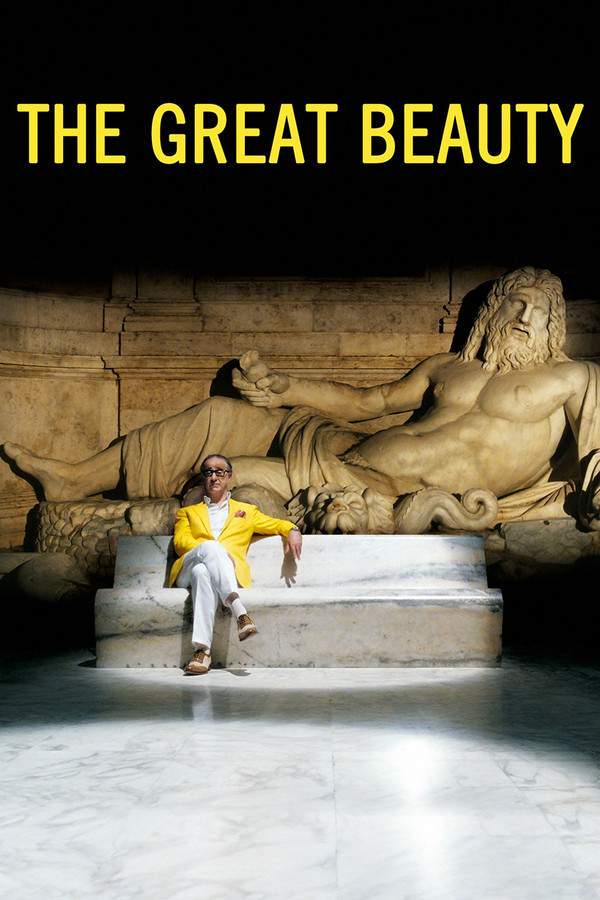
The Great Beauty (2013) movie poster

Timeline

The Great Beauty (2013) Timeline Explained – Every Event in Order

Release, runtime and language
2013 · 142 min · Italian
JustWatch #2,518 19
Directed by
Paolo Sorrentino

A writer in his sixties, disillusioned with the superficiality of Rome’s high society, reflects on his life and lost potential. Surrounded by extravagant parties and fleeting connections, he searches for meaning and beauty, confronting painful memories of his younger years and the vibrant artistic aspirations he abandoned. He finds himself grappling with regret and the ephemeral nature of youth and beauty.

On this page (6)
  1. 1 Where to watch
  2. 2 Events in order (15)
  3. 3 Timeline questions answered
  4. 4 The book behind the movie
  5. 5 Movie threads
  6. 6 Every angle

Where to watch

Where to Watch The Great Beauty (2013)

Where can you watch The Great Beauty? Stream, rent or buy it in the US, including on HBO Max, Amazon Video and Apple TV Store: current JustWatch availability with up-to-date prices.

Streaming availability powered by JustWatch

15 events in order · contains spoilers

The Great Beauty Timeline: Events in Chronological Order

Every key event of The Great Beauty (2013) in order, scene by scene, with when and where it takes place. Use it to untangle flashbacks, time jumps and parallel storylines, to refresh your memory before the sequel or to find the exact scene you are thinking of.

  1. Introduction to Jep Gambardella

    The film opens with a profound quote from Louis-Ferdinand Céline, establishing a theme of imagination versus reality. It introduces Jep Gambardella, a 65-year-old journalist and theater critic navigating the superficial social scene of Rome.

    Where
    Rome
  2. Jep's Past as a Writer

    Jep reflects on his earlier life when he achieved acclaim for his book titled *The Human Apparatus*. However, his journey into creativity is marred by a persistent writer's block, leading him to wander through the elite yet hollow circles of society.

    Where
    Rome
  3. Encounter with Friends

    Jep is surrounded by a diverse group of friends including Romano, a playwright, and Lello, a lively toy salesman. Their interactions reveal the complexities of friendship in a world populated by vanity and ambition, showcasing the intertwining lives in Jep's social sphere.

    Where
    Rome
  4. The News of Elisa's Death

    A pivotal moment occurs when Jep meets the husband of Elisa, his first love, who sadly informs him of her passing. This encounter forces Jep to confront his past and the unresolved emotions tied to Elisa, reminding him of his fleeting moments with her.

    Where
    Rome
  5. Reflections on Loss

    Upon learning about Elisa's death, Jep becomes introspective about his own life and the memories that shape it. He realizes that despite being absent, he remained a significant figure in Elisa's life, prompting him to revisit his own creative aspirations.

    Where
    Rome
  6. Meeting Ramona

    Jep's path crosses with Ramona, a stripper with hidden struggles. Their interaction illuminates Jep's growing sense of discontent and empathizes with Ramona's burdens, showcasing the shared sense of longing for meaning in their existences.

    Where
    Nightclub, Rome
  7. A Culinary Cardinal

    Jep encounters Cardinal Bellucci, a church leader passionate about gastronomy, which starkly juxtaposes his religious duties. This interaction underscores the absurdity and irony present in Jep's society, leading to further disillusionment.

    Where
    Rome
  8. Tragedy Strikes

    The tragedy of Ramona's illness and subsequent death deeply impacts Jep, further solidifying his feelings of futility. This loss shakes the foundations of his relationships and amplifies his isolation amidst the superficiality surrounding him.

    Where
    Rome
  9. Romano's Departure

    Romano decides to leave Rome in search of something more fulfilling, marking another loss for Jep. This event symbolizes the transient nature of their friendships and the quest for deeper meaning in life away from their superficial lifestyles.

    Where
    Rome
  10. Viola's Dedication

    In a turn of events, Viola dedicates her life to missionary work in Africa after the tragic death of her son, Andrea. This decision highlights the stark realities of loss and the search for purpose, contrasting Jep's drift into despair.

    Where
    Africa
  11. Jep's Moment of Despair

    As Jep grapples with the accumulation of loss and despair, he faces a critical point in his life. He contemplates the futility of his existence, unsure of how to reclaim joy or creative inspiration in his life.

  12. A Call for Opportunity

    Encouraged by Dadina, Jep seizes an unexpected opportunity to interview a Catholic missionary nun. This moment pushes him towards a journey that may reignite his passions and creative thoughts.

    Where
    Giglio Island
  13. Journey to Giglio Island

    Jep travels to Giglio Island, a site still grappling with the wreckage of the *Costa Concordia*. This journey serves as both a literal and metaphorical exploration of his own wrecked aspirations and the process of healing.

    Where
    Giglio Island
  14. Flashback to Elisa

    During his time on the island, Jep experiences poignant flashbacks of his first encounter with Elisa, rekindling memories of love and loss. This reflection becomes a catalyst for Jep, inspiring him to pursue his writing once more.

    Where
    Giglio Island
  15. Renewed Inspiration

    The contemplative moments on Giglio Island reignite Jep's passion for writing, steering him towards the completion of the novel he has long desired to finish. This signifies a hopeful turn in Jep's life as he embraces the act of creation once again.

Last updated: November 16, 2024 at 14:23

Was this helpful?

Timeline questions answered

The Great Beauty Timeline Explained: Your Questions Answered

When does it happen, and why in that order? The questions people ask about the chronology of The Great Beauty (2013): time jumps, flashbacks, cause and effect between scenes and the correct order of events, each answered with spoilers.

Q1

Why does Jep decide to start writing again?

Jep decides to return to writing after traveling to Giglio Island to interview a Catholic missionary nun. While there, he experiences flashbacks to his first encounter with Elisa, his first love, which reignites his passion for creation. The combination of confronting his past memories and witnessing the wreckage of the Costa Concordia, a literal representation of wreckage in his own life, provides the emotional catalyst he needed to finally complete his long-abandoned novel.

  • Jep Gambardella
  • writing
  • novel
  • Giglio Island
  • creativity
  • inspiration
Q2

What was in Elisa's diary that changed Jep?

Elisa's diary revealed that Jep was never truly replaced in her life, he remained a lingering memory throughout her years. Despite Jep having moved on and believing their relationship was just a youthful romance, Elisa kept him as an important figure in her heart. This realization that he had been significant to someone, combined with the news of her death, deeply affected Jep and sparked his introspection about his own unfulfilled potential.

Foreshadowing: The film earlier establishes Jep as someone who abandoned creative writing, suggesting his past relationships and achievements remained important to his identity.

  • Elisa
  • diary
  • Jep
  • first love
  • memory
  • past
Q3

Why does Romano leave Rome?

Romano, the playwright in Jep's circle, decides to leave Rome seeking something more fulfilling in life. Throughout the film, Romano is portrayed as someone who was often manipulated by a younger partner, suggesting he was searching for authenticity and purpose. His departure symbolizes the transient nature of the friendships in Jep's social world and reflects the film's theme of people searching for deeper meaning beyond the superficial Rome high society.

  • Romano
  • Rome
  • departure
  • fulfillment
  • search for meaning
Q4

Why does Viola go to Africa after Andrea's death?

Viola, a wealthy woman in Jep's circle, dedicates herself to missionary work in Africa after her son Andrea dies. The film presents this as her response to profound loss, having lost her mentally ill son, Viola channel her grief into helping others in need. This represents her attempt to find purpose and meaning after tragedy, contrasting with Jep's drift into despair.

  • Viola
  • Africa
  • missionary
  • Andrea
  • death
  • grief
Q5

Who is Ramona and why does her death affect Jep so deeply?

Ramona is a stripper whom Jep meets during his nights out in Rome. She carries her own dark secrets and burdens, forming a connection with Jep based on their shared sense of longing for meaning in life. Her illness and subsequent death represent another loss in Jep's life, further deepening his feelings of futility and mortality. Her death amplifies his existential crisis about the fleeting nature of beauty and life.

Foreshadowing: Earlier scenes establish Ramona as someone struggling with personal demons, hinting at her tragic fate.

  • Ramona
  • stripper
  • death
  • illness
  • loss
  • Jep
Q6

What does the Costa Concordia wreckage symbolize in the film?

The Costa Concordia disaster refers to the real-life shipwreck that occurred near Giglio Island in 2012. In the film, Jep travels to Giglio Island to interview a missionary nun, and the presence of the wrecked ship serves as a powerful metaphor for Jep's own life, the wreckage of his creative ambitions, his lost love, and his wasted years in superficial society. It represents both destruction and the possibility of recovery.

  • Costa Concordia
  • Giglio Island
  • shipwreck
  • metaphor
  • wreckage
Q7

Why is Jep so disillusioned with Roman high society?

Jep, a 65-year-old journalist and theater critic, has spent decades navigating Rome's elite social circles. Though he sought to be the "king of society," he came to see its extreme superficiality, relationships built on vanity, ambition, and fleeting connections rather than genuine meaning. His disillusionment stems from realizing he wasted his creative years in this environment while abandoning his artistic aspirations.

  • Jep
  • Rome
  • society
  • disillusionment
  • superficiality
  • elite
Q8

What was Jep's book "The Human Apparatus" about?

"The Human Apparatus" was Jep's sole literary work from his younger years that brought him acclaim and awards. The title suggests a meditation on humanity as a mechanism or system. Though the summary doesn't detail its contents, the book represents Jep's untapped creative potential, he achieved early success but then suffered from a relentless creative block, leaving him unable to produce further work.

  • The Human Apparatus
  • book
  • Jep
  • writer
  • creative block
Q9

What is the purpose of Jep's meeting with Cardinal Bellucci?

Jep encounters Cardinal Bellucci, a Catholic cardinal who is surprisingly passionate about culinary arts rather than religious duties. This meeting underscores one of the film's central themes: the absurdity and irony within Jep's social world, where even religious figures are consumed by superficial pursuits. It highlights the general emptiness and misalignment between appearance and substance in Roman high society.

  • Cardinal Bellucci
  • food
  • cooking
  • religion
  • irony
  • superficiality
Q10

Why does Stefania distance herself from Jep after being humiliated?

Stefania, a self-absorbed writer in Jep's circle, distances herself after Jep reveals her deceptions to others. The film doesn't specify exactly what Jep revealed, but it suggests that Stefania's self-centered nature and possible manipulations were exposed publicly. This humiliation causes her to break away from Jep's social group, representing another severed relationship in Jep's life.

  • Stefania
  • humiliation
  • deception
  • departure
  • friend group
Q11

What triggers Jep's existential crisis in the film?

Jep's existential crisis is triggered primarily by the news of Elisa's death and the revelation from her diary. This forces him to confront his past, his abandoned creative dreams, and the superficial way he's spent his adult life. Additional triggers include Ramona's death, Romano's departure, Viola leaving for Africa, and the accumulation of loss and meaninglessness that surrounds him.

Foreshadowing: The opening quote establishes the theme of journey from life to death, foreshadowing Jep's confrontation with mortality and meaning.

  • Jep
  • existential crisis
  • Elisa
  • death
  • meaning
  • life review
Q12

Why is the opening Céline quote important to understanding the film?

The opening quote from Céline's "Journey to the End of the Night" establishes the film's thematic foundation: life as an imaginary journey rather than lived experience. It suggests that true travel and meaning come from imagination, while "disappointment and fatigue" result from superficial living. This sets up Jep's arc, he's been living a superficial existence and must reconnect with deeper meaning through memory and creative renewal.

  • Céline
  • quote
  • opening
  • journey
  • imagination
  • meaning

Movie threads

More Movies Like The Great Beauty, by Mood & Story

Curated lists built around what makes The Great Beauty tick: the same mood, the same kind of story or the same emotional payoff. Each list explains why these movies belong together.

Movies about life reflections like The Great Beauty

Stories about characters looking back on their lives with a mix of regret and acceptance. Find movies like The Great Beauty that explore themes of retrospection and existential searching. These similar dramas feature characters in midlife or later, grappling with regret and the search for meaning in a life that feels superficially lived.

  • introspective
  • nostalgic
  • elegiac
  • regretful
  • disillusioned
  • atmospheric
  • Tone: melancholic, reflective
  • Pacing: slow, contemplative
Why these movies?

The story pattern: Narratives in this thread are typically character-driven and reflective, unfolding through memory and present-day contemplation rather than high-stakes action. The protagonist's journey is internal, marked by encounters that trigger nostalgia and force a confrontation with past choices, leading to a bittersweet or melancholic resolution.

Why they belong together: These films are grouped by their shared focus on a late-life existential crisis, a melancholic and reflective tone, and a slow, deliberate pacing that allows for deep introspection. They all feature a heavy emotional weight stemming from themes of lost potential and the passage of time.
Movies about opulent decay like The Great Beauty

Films set in a world of lavish beauty that masks spiritual emptiness and decay. Explore movies like The Great Beauty that use a stunning, lavish setting to critique the emptiness of high society. These films share a visual richness that contrasts with themes of superficiality, existential search, and the ephemeral nature of beauty.

  • atmospheric
  • disillusioned
  • decadent
  • visually stunning
  • critical
  • superficial
  • Tone: melancholic, atmospheric
  • Pacing: slow, atmospheric
Why these movies?

The story pattern: The narrative pattern involves a protagonist who is either a part of or an observer to a glamorous but hollow world. The plot unfolds through social rituals, parties, and artistic pursuits that ultimately reveal a deep sense of futility. The story is often a slow-burn character study where the environment itself is a central antagonist.

Why they belong together: These films are united by their specific vibe: a juxtaposition of breathtaking visual beauty with themes of spiritual decay. They share a melancholic tone, a slow, atmospheric pacing that drinks in the setting, and a focus on characters disillusioned by the world they inhabit.

Every angle

The Great Beauty (2013) Explained: Plot, Timeline & Characters

Everything about The Great Beauty in one place: what happens in the plot summary, the timeline in chronological order, the characters and meaning and a spoiler-free summary. What's After the Movie adds the cast, box office and post-credit scenes.

Coming soon on iOS and Android

The Plot Explained Movie Summary App

Plot summaries, endings explained and timelines on your phone. Catch up on any movie in minutes, save your favorites and never miss a twist again.

Be the first to know when we launch. Your email stays private, always.

Learn more about the app