Plot Explained Spoilers guaranteed!
Plot Explained

Browse by genre

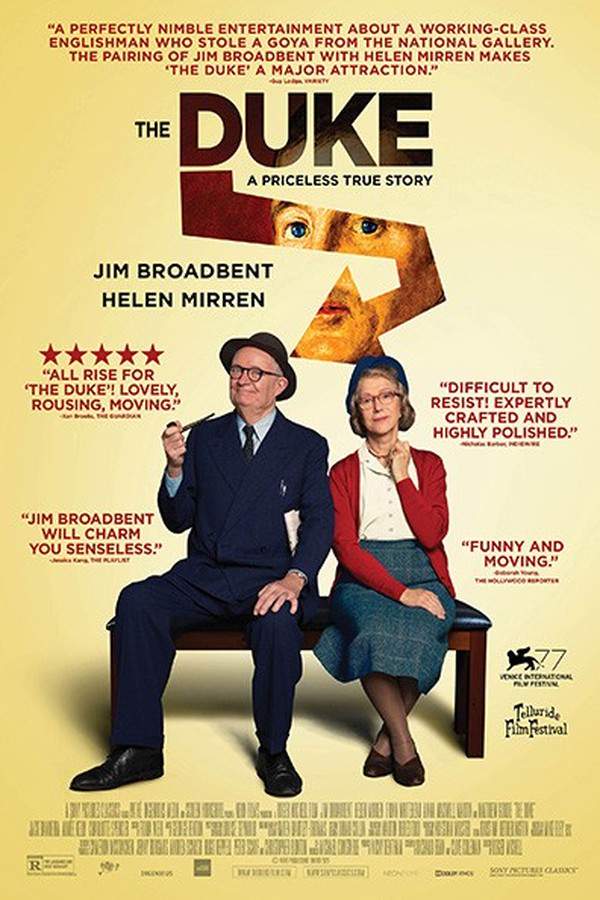
The Duke (2021) movie poster

Timeline

The Duke (2021) Timeline Explained – Every Event in Order

Release, runtime and language
2021 · 96 min · British english
Echo score 78
Loading streaming availability…
Starring
Helen Mirren, Matthew Goode, Jim Broadbent, Fionn Whitehead, Sian Clifford, James Wilby
Budget
$11M

In 1961, charismatic taxi driver Kempton Bunton makes headlines by stealing Goya’s portrait from the National Gallery in London. He proposes a daring deal: the painting will be returned only if the government provides free television for the elderly. This audacious act sets off a series of surprising events, revealing a story about family, personal relationships, and the ability of everyday individuals to challenge the status quo and fight for what they believe in.

On this page (6)
  1. 1 Where to watch
  2. 2 Events in order (15)
  3. 3 Timeline questions answered
  4. 4 Movie threads
  5. 5 Movies like The Duke
  6. 6 Every angle
Loading streaming availability…

15 events in order · contains spoilers

The Duke Timeline: Events in Chronological Order

Every key event of The Duke (2021) in order, scene by scene, with when and where it takes place. Use it to untangle flashbacks, time jumps and parallel storylines, to refresh your memory before the sequel or to find the exact scene you are thinking of.

  1. Kempton's Court Appearance

    Kempton Bunton pleads not guilty in Court Number 1 at the Old Bailey, facing charges for stealing Goya's Portrait of the Duke of Wellington. This pivotal moment sets the stage for the events that follow, underscoring his determination to advocate for the elderly.

    When
    Spring 1961
    Where
    Old Bailey, London
  2. Campaign for Pensioners

    In the spring of 1961, Kempton, a self-taught man from Newcastle, sends a script to the BBC as part of his efforts to raise awareness for pensioners. His campaigning spirit is fueled by personal convictions, demonstrating his commitment to social justice.

    When
    Spring 1961
    Where
    Newcastle upon Tyne
  3. Incarceration for TV License

    Kempton is incarcerated for 13 days in Durham for watching television without a license, reflecting his defiance against the system despite being financially able to pay. This experience further solidifies his resolve to stand up for the common man.

    When
    Spring 1961
    Where
    Durham
  4. Visit to Marion's Grave

    After his release, Kempton's son Jackie meets him and together they visit the grave of Marion, Jackie's late sister. This poignant moment highlights the family's grief and the bonds they share in the face of tragedy.

    Where
    Graveyard
  5. Kempton Fired from Taxi Job

    Kempton's career as a taxi driver ends abruptly when he is fired for his excessive chatter with passengers and for giving a free ride to a disabled veteran. This incident underscores his compassionate nature, yet also foreshadows further struggles.

    Where
    Newcastle
  6. Trip to London

    Determined to gain media attention for his campaign, Kempton convinces Dorothy to allow him a brief trip to London. He promises to abandon writing if he fails, showcasing his desperation and dedication to the cause.

    Where
    London
  7. Theft of the Painting

    Upon Kempton's return, a thief steals the Goya painting, prompting him and Jackie to create a hidden compartment for it in their wardrobe. This theft marks a turning point, intertwining Kempton's fate with the stolen artwork.

    Where
    Newcastle
  8. Ransom Notes Sent

    To generate support, Kempton sends ransom notes to the government, demanding that pensioners be exempt from TV license fees in exchange for the painting's return. This bold move highlights his unwavering commitment to his cause and stirs public interest.

  9. Complications with Kenny

    Kenny visits Kempton and Dorothy with his girlfriend Pammy, who discovers the secret of the painting's hiding spot. This revelation complicates matters, as Pammy seeks half of the reward offered for the painting, creating tension within the family.

  10. Confession to National Gallery

    In a rush of regret, Kempton decides to return the painting to the National Gallery and confess to the theft. This act of honesty signifies his internal conflict and desire to amend his actions, even if it means facing legal consequences.

    Where
    National Gallery, London
  11. Trial Proceedings

    During the trial, barrister Jeremy Hutchinson QC argues that Kempton never intended to deprive the gallery of the painting permanently. His enthusiastic testimony serves to bolster the defense, providing hope for Kempton's outcome.

    Where
    Newcastle
  12. Jackie's Revelation to Dorothy

    Jackie confesses to his mother, Dorothy, that he was the true thief, while Kempton heroically took the blame. This revelation adds complexity to the family dynamics and highlights themes of sacrifice and familial loyalty.

  13. Verdict and Consequences

    The jury finds Kempton not guilty of theft but convicts him only for the frame, which Jackie had misplaced. This result allows for some relief, yet signifies unresolved tensions and the emotional toll of the events.

    Where
    Newcastle
  14. Family Healing

    In the aftermath, Kempton and Dorothy reflect on their loss of Marion and find ways to heal through shared experiences. They watch Dr. No, laughing together at a scene that features the 'stolen' painting, symbolizing their gradual reconciliation.

  15. Jackie's Admission to Police

    Four years later, Jackie confesses to the police about his theft role, but the authorities decide not to press charges. This decision reflects on the film's themes of justice and public opinion, leaving a lasting impact on the family.

Last updated: November 15, 2024 at 18:47

Was this helpful?

Timeline questions answered

The Duke Timeline Explained: Your Questions Answered

When does it happen, and why in that order? The questions people ask about the chronology of The Duke (2021): time jumps, flashbacks, cause and effect between scenes and the correct order of events, each answered with spoilers.

Q1

Why was Kempton Bunton charged only for the frame and not the painting?

Kempton's barrister Jeremy Hutchinson argued that he never intended to permanently deprive the National Gallery of the painting, he only borrowed it temporarily to advance his campaign for free TV licenses for pensioners. The jury accepted this argument and acquitted him of stealing the portrait itself. However, Jackie had misplaced the £80 frame during the theft, so Kempton was convicted of stealing the frame.

Foreshadowing: Earlier ransom notes showed Kempton always intended to return the painting in exchange for policy changes.

  • frame
  • theft charges
  • acquitted
  • jury verdict
  • barrister
  • hutchinson
Q2

Who really stole the Goya painting in The Duke?

Jackie, Kempton's son, was the actual thief. He stole the painting from the National Gallery while his father was in London campaigning. Kempton took the blame to protect Jackie, and only admitted the truth during the trial when Jackie confessed to their mother Dorothy.

Foreshadowing: The timeline shows the painting was stolen upon Kempton's return from London, and Jackie was present when they hid it in the wardrobe.

  • jackie
  • kempton
  • son
  • thief
  • true thief
  • confession
Q3

Why did Kempton Bunton refuse to pay for a TV license?

Kempton believed it was unjust that pensioners, many of whom lived in poverty, should have to pay for a TV license when television was their primary source of company and entertainment. Despite being able to afford one, he refused on principle and served 13 days in prison for watching TV without a license to highlight his cause.

Foreshadowing: His campaign for pensioners and his self-described role as a champion of the common man establish his principled stance.

  • tv license
  • pensioners
  • campaign
  • principle
  • prison
Q4

What happened to the stolen Goya painting frame?

The frame was never recovered. Jackie had accidentally lost it during the theft, and despite extensive searches, it remained missing. This is why Kempton was ultimately convicted of stealing just the frame, valued at £80.

Foreshadowing: Jackie's nervous handling of the painting during the theft hints at his clumsiness with the frame.

  • frame
  • lost
  • missing
  • never recovered
Q5

Why was Kempton fired from his taxi job?

Kempton was fired for two reasons: he was overly talkative with passengers, and he gave a free ride to a destitute disabled veteran of the First World War. His employers considered both actions inappropriate, though the free ride reflected his compassionate nature.

Foreshadowing: His character is established early as someone who prioritizes helping others over profit.

  • taxi
  • job
  • fired
  • veteran
  • charitable
Q6

What was Kempton Bunton's real motivation for stealing the painting?

Kempton wanted to force the government to provide free television licenses for elderly pensioners. He saw TV as essential for lonely elderly people and believed they shouldn't have to pay for it. The painting theft was a strategic act to draw media attention and parliamentary focus to his campaign.

Foreshadowing: His earlier imprisonment for refusing to pay his own license shows his escalating tactics.

  • motivation
  • campaign
  • pensioners
  • tv license
  • protest
  • goya
Q7

Did Kempton Bunton actually go to prison?

Yes, Kempton served two prison sentences. He first spent 13 days in Durham prison for watching television without a license as a protest. After the trial, he also received a sentence for stealing the £80 frame, though the exact length isn't specified in the film.

Foreshadowing: His willingness to face legal consequences for his beliefs is established from the start.

  • prison
  • imprisonment
  • sentence
  • Durham
Q8

Why did Jackie confess to stealing the painting years later?

Four years after the trial, Jackie went to the police to clear his conscience and admit he was the true thief. However, the Director of Public Prosecutions declined to charge him, reasoning that another public case would be harmful to Kempton, who had already suffered enough publicity.

Foreshadowing: Jackie's guilt is hinted at during the trial when he struggles with the truth.

  • jackie
  • confession
  • police
  • years later
  • conscience
Q9

What happened to the TV license campaign for pensioners?

The film ends with the achievement of part of Kempton's goal: in 2000, TV licenses became free for people over 75. However, this policy was rescinded in August 2020, shortly before the film's premiere, adding a bittersweet note to the victory.

Foreshadowing: The ransom notes specifically demanded free TV licenses for the elderly.

  • tv license
  • free
  • pensioners
  • policy
  • 75
  • outcome
Q10

Why did the police not charge Jackie after his confession?

The authorities chose not to pursue charges against Jackie out of concern for Kempton. They strike a deal: if Jackie remains silent about his confession, he won't be prosecuted. The DPP wanted to avoid subjecting Kempton to another public spectacle and legal battle.

Foreshadowing: The family's healing after the trial made the authorities reluctant to disrupt their peace.

  • police
  • prosecution
  • no charges
  • jackie
  • dpp
Q11

Why did Kempton return the painting to the National Gallery?

After Kenny and Pammy discovered the painting's hiding place and Pammy demanded half the £5,000 reward, Kempton panicked and decided to end his plan. Rather than risk the painting being discovered or sold, he walked into the National Gallery to return it and confessed to the theft.

Foreshadowing: The arrival of Kenny and Pammy creates the crisis that forces Kempton's hand.

  • return painting
  • national gallery
  • confession
  • panic
  • kenny
  • pammy
Q12

What was Marion's death significance in The Duke?

Marion was Kempton and Dorothy's daughter who died at age 18 in a biking accident. Her death deeply affected the family, particularly Jackie who blames himself. The grief over Marion brings Kempton and Dorothy closer in the film's climax as they finally confront their shared loss.

Foreshadowing: Jackie's guilt and the visit to Marion's grave early in the film establish this emotional weight.

  • marion
  • daughter
  • death
  • accident
  • grief
  • family

Movie threads

More Movies Like The Duke, by Mood & Story

Curated lists built around what makes The Duke tick: the same mood, the same kind of story or the same emotional payoff. Each list explains why these movies belong together.

Movies about quirky activism and charming heists like The Duke

Quirky characters using unconventional methods to fight for a just cause. If you enjoyed the charming civil disobedience in The Duke, you'll like these movies featuring whimsical characters using unconventional methods to fight for what's right. These stories blend comedy and drama in tales of underdog triumphs and clever schemes.

  • whimsical
  • defiant
  • uplifting
  • quirky
  • heartfelt
  • optimistic
  • Tone: hopeful, whimsical
  • Pacing: steady
Why these movies?

The story pattern: Stories in this thread typically follow an optimistic protagonist who hatches an unconventional plan to protest an injustice. The plot revolves around the execution of this plan, which is more clever than malicious, leading to public attention, a moral quandary, and ultimately a sense of hopeful victory or meaningful change.

Why they belong together: Movies are grouped here for their shared tone of hopeful defiance, their focus on character-driven, low-stakes capers, and their blend of comedic whimsy with sincere social commentary. They offer an uplifting view of everyday people making a difference.

Bittersweet family dramas balancing grief and humor like The Duke

Families navigating loss find connection and healing through unexpected events. Fans of The Duke's heartfelt family story will appreciate these movies about families processing grief and finding reconciliation. These dramas blend tender, melancholic moments with uplifting humor, focusing on emotional healing and the strength of family bonds.

  • tender
  • melancholic
  • heartfelt
  • bittersweet
  • uplifting
  • grief
  • Tone: bittersweet, tender
  • Pacing: steady
Why these movies?

The story pattern: The narrative pattern involves a family coping with a past tragedy, often causing emotional distance. An external event or crisis forces them to interact and confront their shared pain. Through this process, which includes both tender and humorous moments, they begin to heal, resulting in a bittersweet but ultimately hopeful resolution.

Why they belong together: These films are united by their MODERATE emotional weight and BITTERSWEET endings, their focus on family reconciliation as a central arc, and their skillful tonal balance between heartfelt drama and gentle comedy. They explore how humor and shared purpose can aid in processing grief.

If you liked this

Movies Like The Duke

Similar movies to The Duke: the same genre, themes or kind of story. Each one comes with its own plot summary, timeline and ending explained.

Browse all movie summaries

Every angle

The Duke (2021) Explained: Plot, Timeline & Characters

Everything about The Duke in one place: what happens in the plot summary, the timeline in chronological order, the characters and meaning and a spoiler-free summary. What's After the Movie adds the cast, box office and post-credit scenes.

Coming soon on iOS and Android

The Plot Explained Movie Summary App

Plot summaries, endings explained and timelines on your phone. Catch up on any movie in minutes, save your favorites and never miss a twist again.

Be the first to know when we launch. Your email stays private, always.

Learn more about the app