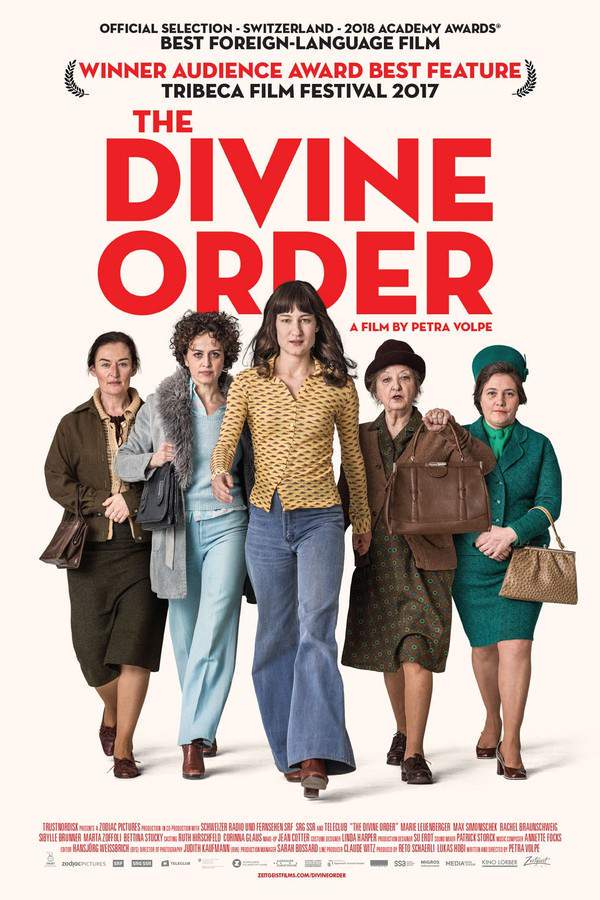
The Divine Order

The Divine Order

JustWatch#22,9131

Year: 2017

Runtime: 96 min

Language: German

Director: Petra Biondina Volpe

Echo Score: 68
DramaComedy

In 1971 Switzerland, Nora, a dedicated homemaker, challenges the country's traditional societal norms and becomes a prominent figure in the burgeoning women's suffrage movement. Her decision to fight for equality sparks controversy and resistance, leading to ridicule and threatening her established life and marriage. As Nora confronts the complexities of liberation, she inspires others to question the status quo and fight for a more equitable future.

Where to Watch The Divine Order?

Find where to stream, rent, or buy The Divine Order (2017) in the US with current JustWatch availability, up-to-date pricing, and platform listings for subscription, rental, and digital purchase options.

Warning: spoilers below!

Haven’t seen The Divine Order yet? This summary contains major spoilers. Bookmark the page, watch the movie, and come back for the full breakdown. If you're ready, scroll on and relive the story!

Timeline & Setting – The Divine Order (2017)

Explore the full timeline and setting of The Divine Order (2017). Follow every major event in chronological order and see how the environment shapes the story, characters, and dramatic tension.

Time period

1970s

The 1970s was a period marked by significant social change around the globe, including movements for women's rights and liberation. This decade saw a push for gender equality, with influential literature such as Betty Friedan's *The Feminine Mystique* inspiring a generation of women to seek independence and assert their rights.

Location

Swiss farming village, Zurich

The movie takes place primarily in a quaint Swiss farming village, known for its serene landscapes and traditional lifestyles. It also features Zurich, a bustling city in Switzerland, highlighting the contrast between rural and urban life, especially in the context of social movements.

🏡 Village 🏙️ City

Last updated: October 22, 2024 at 21:56

Was this helpful?

Main Characters – The Divine Order (2017)

Meet the key characters of The Divine Order (2017), with detailed profiles, motivations, and roles in the plot. Understand their emotional journeys and what they reveal about the film’s deeper themes.

Nora Ruckstuhl

Nora is a determined housewife who evolves from feeling trapped in her domestic duties to becoming a passionate advocate for women's rights. Her character embodies resilience as she confronts challenges not only from her husband but also within herself, ultimately finding her voice and purpose.

👩‍👩‍👦 Family 💪 Empowerment

Hans

Hans is Nora's husband, representing traditional masculine values that clash with Nora's emerging feminist ideals. While he is depicted as loving, his initial resistance to Nora's aspirations showcases the struggles many women faced during that era in balancing family expectations with personal desires.

👨‍👩‍👦‍👦 Family 🔒 Stagnation

Vroni

Vroni serves as a catalyst for change, drawing from her extensive experience and commitment to women's suffrage. Her determination and mentorship help guide Nora on her journey, making her a pivotal figure in the push for women's rights within the village.

🧓 Wisdom 🌍 Activism

Graziella

Graziella is an Italian immigrant character who brings enthusiasm and passion to the women's rights movement. Her entrepreneurial spirit and unwavering support for Nora help rally the women together, demonstrating the importance of community and collaboration in their struggles.

🇮🇹 Diversity 🌟 Community

Theresa

Theresa, Nora's sister-in-law, showcases the personal stakes tied to the women's rights movement. Her anger toward the injustices faced by her daughter compels her to join forces with Nora, illustrating the intersections of family, personal struggles, and social activism.

👩‍👧 Family 🔥 Passion

Last updated: October 22, 2024 at 21:56

Was this helpful?

Major Themes – The Divine Order (2017)

Explore the central themes of The Divine Order (2017), from psychological, social, and emotional dimensions to philosophical messages. Understand what the film is really saying beneath the surface.

✊ Feminism

The film explores the theme of feminism as Nora Ruckstuhl embarks on a personal journey towards empowerment and advocating for women's rights. It illustrates the obstacles women faced in the 1970s, including societal expectations and resistance from males, while showcasing the strength of community and solidarity among women.

🕊️ Personal Freedom

Personal freedom emerges as a central theme, particularly as Nora grapples with her confined role as a housewife. The narrative reveals her struggle to break free from traditional expectations, emphasizing the importance of self-discovery and the pursuit of one’s aspirations.

🏳️‍🌈 Rebellion

Rebellion against patriarchal norms is vividly portrayed as Nora, along with her fellow women, takes a stand for their rights. The women's strike symbolizes not only a fight for suffrage but also a broader rebellion against societal constraints, challenging the status quo in their village.

Last updated: October 22, 2024 at 21:56

Was this helpful?

The Divine Order (2017) Character & Theme Questions Answered – Info FAQ

Browse frequently asked questions about The Divine Order (2017) focused on characters, relationships, themes, symbols, setting, and story context. This movie info FAQ gives spoiler-aware explanations for character arcs, world details, and thematic interpretation so readers can better understand what the film is really about.

Q1

Where is The Divine Order set?

A.

The film takes place primarily in a small Swiss farming village, with some scenes set in Zurich to highlight the contrast between traditional rural life and the more modern urban environment. The tranquil village setting underscores the conservative nature of the community that Nora seeks to transform.

The opening scenes establish the village's quiet, traditional atmosphere as a deliberate contrast to the social upheaval to come.

settingSwiss villageZurichrural Switzerland
Q2

What time period does The Divine Order take place in?

A.

The movie is set in 1971 Switzerland, during a decade of significant social change globally. The 1970s was a pivotal era for women's rights movements, with literature like Betty Friedan's The Feminine Mystique inspiring women to challenge traditional gender roles.

Period details such as fashion and technology subtly place the story in a specific historical context that shaped the characters' opportunities.

1970sSwitzerlandhistorical setting1971women's rights era
Q3

What are the main themes of The Divine Order?

A.

The film explores feminism, personal freedom, and rebellion against patriarchal norms. Nora's journey illustrates the struggle for women's empowerment and the importance of solidarity among women challenging societal expectations. The story emphasizes how individual liberation often requires confronting established structures.

Early scenes depicting Nora's dissatisfaction with domestic life plant the seeds for the film's thematic exploration of personal freedom.

feminismpersonal freedomrebellionwomen's rightspatriarchy
Q4

Who is Nora in The Divine Order?

A.

Nora Ruckstuhl is a dedicated housewife who evolves from feeling trapped in her domestic duties to becoming a passionate advocate for women's rights. Her character embodies resilience as she confronts both external opposition and internal doubts, ultimately finding her voice and purpose through the suffrage movement.

Nora's initial restlessness and sense of confinement hint at her eventual transformation into a feminist leader.

Nora RuckstuhlprotagonisthousewifefeministMarie Leuenberger
Q5

Who is Hans in The Divine Order?

A.

Hans is Nora's husband, representing traditional masculine values that clash with Nora's emerging feminist ideals. While depicted as a loving partner, his initial resistance to Nora's aspirations illustrates the broader struggles women faced in balancing family expectations with personal desires during the 1970s.

Hans's traditional views are established early, creating tension that builds as Nora becomes more involved in the women's movement.

HansNora's husbandtraditional valuesMaximilian Simonischek
Q6

Who is Vroni in The Divine Order?

A.

Vroni is an experienced suffragist who serves as a catalyst for change in the village. Her extensive knowledge of the women's suffrage movement and her determination help guide Nora on her journey, making her a pivotal figure in rallying women together for the cause.

Vroni's references to past activism hint at a longer history of women quietly resisting gender constraints in the village.

VronisuffragistmentorSibylle Brunnerwomen's movement leader
Q7

Who is Graziella in The Divine Order?

A.

Graziella is an Italian immigrant whose entrepreneurial spirit and passion bring energy to the women's rights movement. Her unwavering support for Nora helps rally the women together, demonstrating how community and collaboration across different backgrounds strengthens their fight for equality.

Graziella's immigrant status suggests she brings perspectives from outside the traditional Swiss village culture.

GraziellaItalian immigrantMarta Zoffolicommunity support
Q8

Who is Theresa in The Divine Order?

A.

Theresa is Nora's sister-in-law, and her personal stake in the women's rights movement comes from anger over injustices faced by her daughter. Her decision to join forces with Nora illustrates how family relationships and personal struggles often intersect with broader social activism.

Theresa's protective nature toward her daughter hints at the generational impact of gender inequality the film explores.

Theresasister-in-lawTherese Affolterfamilyactivism
Q9

What does The Divine Order say about women's rights?

A.

The film portrays the women's suffrage movement in 1970s Switzerland as a struggle against deeply entrenched patriarchal norms. It highlights the obstacles women faced, including societal expectations and male resistance, while showcasing the power of solidarity and collective action in achieving political change.

The gradual building of the women's group demonstrates how small acts of resistance accumulate into a larger movement.

women's suffrageSwitzerlandgender equalityfeminist movementvoting rights
Q10

How does the setting reflect the story's themes?

A.

The contrast between the quiet Swiss farming village and bustling Zurich emphasizes the story's exploration of social change. The village represents traditional, conservative values resistant to progress, while Zurich represents the modern, urban environment where progressive ideas spread more freely.

The journey between village and city mirrors Nora's psychological journey from isolation to broader social awareness.

rural vs urbansocial changetraditionmodern Switzerland
Mobile App Preview

Coming soon on iOS and Android

The Plot Explained Mobile App

From blockbusters to hidden gems - dive into movie stories anytime, anywhere. Save your favorites, discover plots faster, and never miss a twist again.

Sign up to be the first to know when we launch. Your email stays private, always.

Explore Movie Threads

Discover curated groups of movies connected by mood, themes, and story style. Browse collections built around emotion, atmosphere, and narrative focus to easily find films that match what you feel like watching right now.

Movies about personal awakening and activism like The Divine Order

Quiet individuals finding their voice and challenging the status quo.If you liked The Divine Order, you'll appreciate these movies about ordinary people finding their political voice. This list features films where quiet characters challenge societal norms, inspiring community movements. Discover similar inspiring dramas and comedies about personal liberation, women's rights, and transformative social change.


empoweringtransformativehopefuluprisingfrustratingliberatinginspiringcommunity

Narrative Summary

This thread follows a linear, character-driven arc: a protagonist, content or complacent in their life, encounters an injustice that shakes their worldview. They move from initial reluctance through a period of education and self-doubt, before finding the courage to take a public stand. The central conflict is often between their new convictions and their established personal relationships, culminating in a victory that is both personal and collective.

Why These Movies?

Movies are grouped here for their shared focus on the 'awakening' narrative—the moment a character realizes their power to effect change. They share a hopeful, empowering tone, a steady pacing that builds to a climax of action or realization, and a medium emotional weight that balances struggle with triumph. The core similarity is the transformation of an 'ordinary' life into one of purpose and impact.

Movies about hopeful social justice movements like The Divine Order

Stories where collective action leads to hard-won, meaningful progress.Find more movies like The Divine Order that explore uplifting stories of social change. This collection features dramas and comedies about historical movements, women's rights, and political awakenings where collective struggle leads to a happy or hopeful ending. Perfect for viewers seeking inspiring stories about fighting for a better world.

hopefuluprisingfrustratingliberatinginspiringhistoricalcommunityvictorious

Narrative Summary

The narrative pattern involves a community or group recognizing a systemic injustice. The story follows their efforts to organize, facing setbacks, ridicule, and internal conflict. A key element is the personal cost paid by the protagonists, testing their relationships and resolve. Despite these challenges, the narrative arc is upward, building towards a significant event—a vote, a protest, a legal victory—that validates the struggle and ends on a note of accomplishment and forward momentum.

Why These Movies?

These movies share a specific emotional cocktail: the frustration of facing entrenched power, combined with the liberating joy of solidarity and the ultimate payoff of progress. They are united by a HOPEFUL tone and a HAPPY ending feel, ensuring the viewer is left inspired rather than drained. The pacing is steady, focusing on the step-by-step process of building a movement, and the intensity is medium, deriving drama from societal and interpersonal conflict rather than extreme violence.

Unlock the Full Story of The Divine Order

Don't stop at just watching - explore The Divine Order in full detail. From the complete plot summary and scene-by-scene timeline to character breakdowns, thematic analysis, and a deep dive into the ending - every page helps you truly understand what The Divine Order is all about. Plus, discover what's next after the movie.

The Divine Order Summary

Read a complete plot summary of The Divine Order, including all key story points, character arcs, and turning points. This in-depth recap is ideal for understanding the narrative structure or reviewing what happened in the movie.

The Divine Order Summary

The Divine Order Timeline

Track the full timeline of The Divine Order with every major event arranged chronologically. Perfect for decoding non-linear storytelling, flashbacks, or parallel narratives with a clear scene-by-scene breakdown.


The Divine Order Timeline

The Divine Order Spoiler-Free Summary

Get a quick, spoiler-free overview of The Divine Order that covers the main plot points and key details without revealing any major twists or spoilers. Perfect for those who want to know what to expect before diving in.

The Divine Order Spoiler-Free Summary

More About The Divine Order

Visit What's After the Movie to explore more about The Divine Order: box office results, cast and crew info, production details, post-credit scenes, and external links - all in one place for movie fans and researchers.

More About The Divine Order

Similar Movies to The Divine Order

Discover movies like The Divine Order that share similar genres, themes, and storytelling elements. Whether you’re drawn to the atmosphere, character arcs, or plot structure, these curated recommendations will help you explore more films you’ll love.