










Plot Explained Spoilers guaranteed!
Plot Explained

Browse by genre

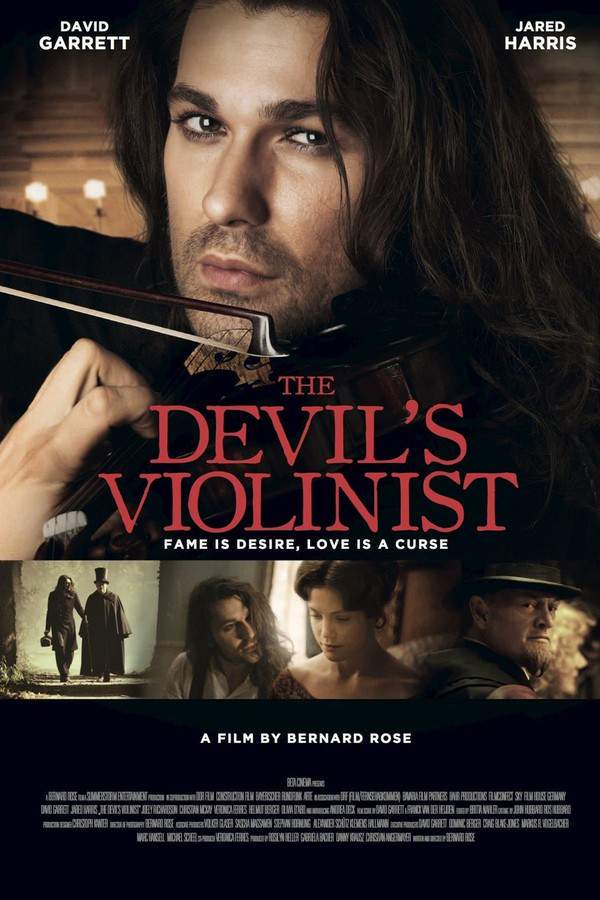
The Devil's Violinist (2015) movie poster

Timeline

The Devil's Violinist (2015) Timeline Explained – Every Event in Order

Release, runtime and language
2015 · 122 min · English
JustWatch #29,222 1
Directed by
Bernard Rose

In 1830, the incredibly talented violinist Niccolò Paganini captivates audiences across Europe, but his scandalous behavior precedes him. His manager, Urbani, actively promotes the rumors to increase Paganini's popularity and financial success. A plan is hatched to bring Paganini to London for his highly anticipated British debut, but unexpected complications arise. Reluctantly, Paganini travels to the capital, where glowing reviews from journalist Ethel Langham solidify his legendary status and propel him to even greater fame.

On this page (6)
  1. 1 Where to watch
  2. 2 Events in order (15)
  3. 3 Timeline questions answered
  4. 4 Movie threads
  5. 5 Movies like The Devil's Violinist
  6. 6 Every angle

Where to watch

Where to Watch The Devil's Violinist (2015)

Where can you watch The Devil's Violinist? Stream, rent or buy it in the US, including on Amazon Prime Video, fuboTV and Fawesome: current JustWatch availability with up-to-date prices.

Streaming availability powered by JustWatch

15 events in order · contains spoilers

The Devil's Violinist Timeline: Events in Chronological Order

Every key event of The Devil's Violinist (2015) in order, scene by scene, with when and where it takes place. Use it to untangle flashbacks, time jumps and parallel storylines, to refresh your memory before the sequel or to find the exact scene you are thinking of.

  1. Paganini's Promising Opportunity

    Niccolo Paganini is approached by a supporter who promises to finance his musical ambitions. This opportunity comes with the allure of a lavish lifestyle provided by his promoter, Urbani, enticing Paganini away from his financial troubles.

  2. Signing the Contract

    Eager to embrace this new path, Paganini signs a contract with Urbani that binds him to a demanding performance schedule. This agreement, although seemingly beneficial, starts to limit his artistic freedom.

  3. The Allure of Gambling

    Despite his new opportunities, Paganini's gambling addiction spirals out of control. He challenges Urbani's support and risks his financial security, showcasing the conflict between his aspirations and his vices.

    Where
    Local Gambling House
  4. Wagering His Violin

    In a reckless move, Paganini walks into a gambling house and wagers his cherished violin at the card table. His pride prevents him from accepting the suggestion to play for the patrons, further emphasizing his artistic integrity.

    Where
    Gambling House
  5. The Loss

    Paganini's gamble leads to a disastrous outcome as he loses his violin, the instrument that symbolizes his talent and career. This loss marks a deep low point for the struggling musician.

    Where
    Gambling House
  6. A New Violin in London

    During a practice session in London, Paganini borrows a violin from the orchestra's first violinist. This marks a pivotal moment as he prepares for a concert where he hopes to regain his stature.

    Where
    London
  7. A Royal Performance

    At an important concert, Paganini sees the King in attendance and takes a bold step by playing an impromptu version of 'God Save the King.' His unexpected performance captivates the audience and earns him significant applause.

    Where
    Concert Hall
  8. Gift of the Violin

    The success of his audition prompts the first violinist to gift Paganini his own violin. This gesture not only symbolizes a return to form but also re-establishes Paganini's presence in the music scene.

  9. Romance with Charlotte

    Paganini grows closer to Charlotte, the talented daughter of his manager, John Watson. Their artistic collaboration culminates in a stunning duet that puts Charlotte in the spotlight, intensifying their bond.

  10. The Turmoil of Their Affair

    As their romance blossoms, the authorities uncover their relationship, leading to Paganini's arrest for allegedly seducing a minor. This outrageous accusation threatens to destroy Paganini's life and career.

  11. Rescue by Urbani

    Urbani intervenes to help Paganini by providing evidence of Charlotte's age, leading to Paganini's release from custody. This incident highlights the precarious nature of his existence amidst success and scandal.

  12. Manipulation and Betrayal

    In an attempt to distract Paganini from his career, Urbani arranges a secret meeting between him and Charlotte. However, Urbani's cruel game results in Paganini mistakenly compromising his relationship when he is duped into thinking the courtesan is Charlotte.

    Where
    Paganini's Hotel Room
  13. The Fallout

    Charlotte discovers the betrayal, leading to a heated confrontation that irreparably damages their romance. This pivotal event shifts Paganini's focus back to his career, marked by disappointment and longing.

  14. Paganini's Decline

    With Charlotte leaving to start her own family and with his heart broken, Paganini returns to fulfilling his contractual obligations across Europe. His life unravels as he indulges in opium and a lifestyle of excess.

  15. The Tragic End

    Years of indulgence and personal vices take a significant toll on Paganini's health. He eventually succumbs to ailments stemming from his lifestyle, leading to a tragic end that closes the chapter on his extraordinary musical journey.

Last updated: November 08, 2024 at 03:42

Was this helpful?

Timeline questions answered

The Devil's Violinist Timeline Explained: Your Questions Answered

When does it happen, and why in that order? The questions people ask about the chronology of The Devil's Violinist (2015): time jumps, flashbacks, cause and effect between scenes and the correct order of events, each answered with spoilers.

Q1

Why does Paganini lose his violin at the gambling house?

Paganini loses his violin because his gambling addiction spirals out of control. Despite having signed a lucrative contract with Urbani that should have resolved his financial troubles, he cannot resist the temptation of the card table. In a moment of recklessness and pride, he wagers his cherished violin, the instrument that symbolizes his talent and identity, at the gambling house. When asked to play for the patrons to earn money, he defiantly refuses, declaring 'I am nobody's servant,' which leads to him losing the gamble and his beloved violin.

Foreshadowing: Earlier in the film, Paganini's tendency to challenge Urbani's ability to support him hints at his reckless financial behavior.

  • gambling addiction
  • violin
  • card table
  • loss
Q2

Why does Paganini play an impromptu version of God Save the King?

Paganini plays an impromptu version of 'God Save the King' when he notices the King has entered his box during a concert in London. This was a deliberate, audacious move to impress the royal audience and secure his standing in British high society. The performance is a success, earning explosive applause and helping solidify his legendary status in London, which propels him to even greater fame.

Foreshadowing: The film establishes early on that Paganini is willing to take bold risks to advance his career.

  • God Save the King
  • London
  • concert
  • King
  • royal performance
Q3

Why is Paganini arrested in London?

Paganini is arrested because authorities discover his romantic relationship with Charlotte, the daughter of his manager John Watson, and suspect she is a minor. The scandalous nature of their affair, combined with Charlotte's youthful appearance, leads to accusations that Paganini has been seducing a minor, which threatens to destroy his reputation and career.

Foreshadowing: The romance between Paganini and Charlotte develops publicly through their duet performance, drawing attention to their significant age difference.

  • arrest
  • Charlotte
  • minor
  • London authorities
  • scandal
Q4

Why does Urbani help Paganini after his arrest?

Urbani helps Paganini because maintaining Paganini's career is essential to Urbani's own financial success. As Paganini's promoter, Urbani has invested significantly in his star client and stands to lose everything if Paganini's career is destroyed by scandal. By presenting evidence that Charlotte is of age, Urbani ensures Paganini's release and protects his valuable investment.

Foreshadowing: Urbani's calculated nature is established from the beginning, as he actively promotes scandalous rumors about Paganini to increase his popularity and revenue.

  • Urbani
  • arrest
  • evidence
  • Charlotte's age
  • financial motivation
Q5

Why does Urbani send a courtesan to Paganini's hotel room?

Urbani sends a courtesan to Paganini's hotel room as a calculated act of manipulation. He arranges a secret meeting between Paganini and Charlotte after a show, intending to keep Paganini focused on his career. However, Urbani's cruel twist involves sending the courtesan to Paganini's dark room before Charlotte arrives, causing Paganini to mistakenly compromise his relationship when he believes he is with Charlotte. This deception is meant to sabotage their romance and redirect Paganini's focus entirely to his work.

Foreshadowing: Earlier, Urbani demonstrates his willingness to manipulate events for financial gain by actively promoting rumors about Paganini.

  • courtesan
  • Urbani
  • manipulation
  • deception
  • hotel room
Q6

What happens to Paganini and Charlotte's relationship after the courtesan incident?

After discovering the deception, Charlotte is furious and their romance is irreparably damaged. The betrayal, orchestrated by Urbani, destroys the trust between them. Charlotte eventually leaves to marry and start a family elsewhere, ending their relationship permanently. This heartbreak marks a turning point for Paganini, who returns to fulfilling his contractual obligations across Europe with renewed focus on his career, though his personal life remains unfulfilled.

Foreshadowing: The secret meeting arrangement itself hints at Urbani's ulterior motives, as he claims it will help keep Paganini focused.

  • Charlotte
  • relationship
  • breakup
  • marriage
  • betrayal
Q7

Why does Paganini's health deteriorate at the end of the film?

Paganini's health deteriorates due to years of indulgence in opium use and a life of excess. After his romance with Charlotte ends and he returns to performing across Europe, he spirals into vice and self-destruction. His decades of addiction to opium and reckless lifestyle take a severe toll on his body, ultimately leading to his premature death from ailments stemming from these habits.

Foreshadowing: The gambling addiction displayed early in the film establishes Paganini's susceptibility to vice and self-destructive behavior.

  • health
  • decline
  • opium
  • death
  • addiction
  • excess
Q8

Why does Urbani promote scandalous rumors about Paganini?

Urbani promotes scandalous rumors about Paganini because scandal increases public interest and, consequently, ticket sales. As Paganini's manager, Urbani understands that controversy and notoriety drive revenue. By actively spreading rumors about Paganini's scandalous behavior, Urbani heightens the violinist's fame and attracts more audiences to his performances, ultimately maximizing his own financial success.

Foreshadowing: The film opens by establishing that Paganini's scandalous behavior precedes him, thanks to Urbani's promotional efforts.

  • Urbani
  • rumors
  • scandal
  • promotion
  • manager
  • fame
Q9

Why can't Paganini resist gambling despite his success?

Paganini cannot resist gambling because it represents a deeper psychological compulsion rather than a financial necessity. Even after signing a lucrative contract with Urbani that should free him from money troubles, he is drawn to the risk and thrill of gambling. His pride prevents him from taking practical steps like playing for patrons to earn money, and his addiction leads him to challenge Urbani's support while putting his most precious possession, his violin, at stake.

Foreshadowing: The film establishes his financial troubles early on, showing he is drawn to opportunities that offer quick solutions regardless of risk.

  • gambling
  • addiction
  • pride
  • financial troubles
  • risk

Movie threads

More Movies Like The Devil's Violinist, by Mood & Story

Curated lists built around what makes The Devil's Violinist tick: the same mood, the same kind of story or the same emotional payoff. Each list explains why these movies belong together.

Tragic Genius Biographies like The Devil's Violinist

Haunting stories of brilliant artists whose personal lives end in ruin. If you were captivated by the story of Paganini, explore more movies like The Devil's Violinist. This collection features similar biographical dramas about brilliant but tormented artists, where soaring talent is undermined by personal tragedy, addiction, or manipulation.

  • tragic
  • melancholic
  • passionate
  • gripping
  • intimate
  • historical
  • Tone: melancholic, tragic
  • Pacing: steady, chronological
Why these movies?

The story pattern: These films typically follow a linear biographical arc, charting the rise to fame of a genius against a backdrop of growing internal or external pressures. The narrative conflict arises from the clash between their immense gift and their human vulnerabilities, often culminating in a downfall that underscores the cost of greatness.

Why they belong together: Movies in this thread share a melancholic tone, a steady pacing that builds towards tragedy, and a medium-to-heavy emotional weight. They are united by the central theme of the 'cursed artist' and evoke a specific mix of awe for the artistry and sorrow for the person.
Scandalous Period Dramas like The Devil's Violinist

Historical stories where public fame and private scandal dangerously collide. For viewers who enjoyed the themes of scandal and manipulation in The Devil's Violinist, this list features similar period dramas. Discover movies about famous historical figures whose brilliance is shadowed by gossip, exploitation, and the intense pressure of public life in a bygone era.

  • scandalous
  • romantic
  • gripping
  • historical
  • dramatic
  • tragic
  • Tone: melancholic, romantic, tense
  • Pacing: steady, character-driven
Why these movies?

The story pattern: The narrative pattern involves a famous individual arriving in a new social setting, where their pre-existing reputation—often carefully manufactured—precedes them. The story explores the consequences of this reputation, the tension between authenticity and performance, and the high-stakes game of maintaining status in a judgmental world.

Why they belong together: This grouping prioritizes a specific mood blend: the romanticism and grandeur of a period setting combined with the gripping, intimate tension of a personal scandal. The pacing is generally steady, focusing on social dynamics and character-driven conflict rather than action.

If you liked this

Movies Like The Devil's Violinist

Similar movies to The Devil's Violinist: the same genre, themes or kind of story. Each one comes with its own plot summary, timeline and ending explained.

Browse all movie summaries

Every angle

The Devil's Violinist (2015) Explained: Plot, Timeline & Characters

Everything about The Devil's Violinist in one place: what happens in the plot summary, the timeline in chronological order, the characters and meaning and a spoiler-free summary. What's After the Movie adds the cast, box office and post-credit scenes.

Coming soon on iOS and Android

The Plot Explained Movie Summary App

Plot summaries, endings explained and timelines on your phone. Catch up on any movie in minutes, save your favorites and never miss a twist again.

Be the first to know when we launch. Your email stays private, always.

Learn more about the app