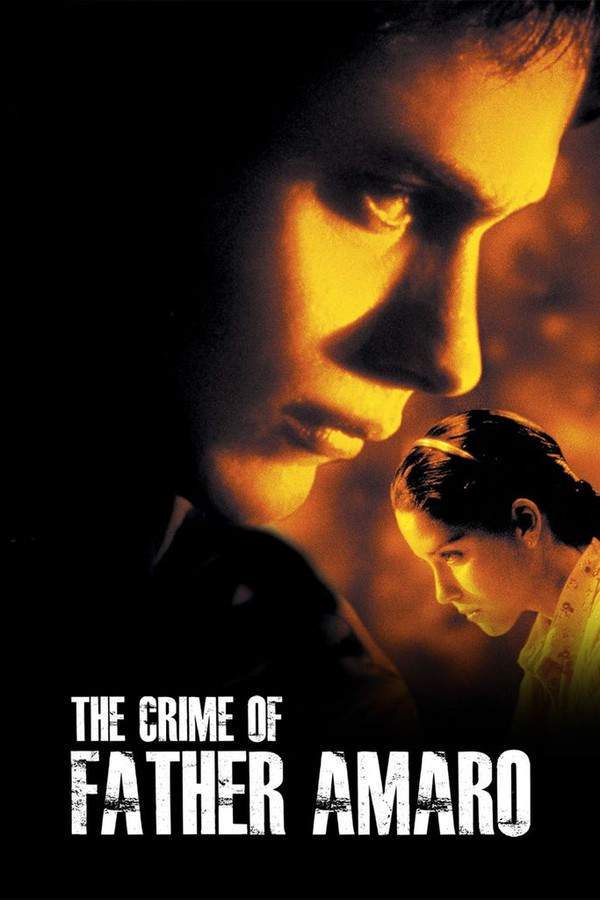
In a quiet Mexican town, the arrival of the spirited young priest, Father Amaro, disrupts the established order. He assists the elderly Father Benito but soon finds himself drawn into the older man's hidden past and confronted with his own internal conflicts. A passionate and forbidden romance develops between Amaro and the lovely teenager Amelia, leading to devastating consequences that challenge his faith and threaten to tear apart the community.
Find where to stream, rent, or buy The Crime of Padre Amaro (2002) in the US with current JustWatch availability, up-to-date pricing, and platform listings for subscription, rental, and digital purchase options.
Warning: spoilers below!
Haven’t seen The Crime of Padre Amaro yet? This summary contains major spoilers. Bookmark the page, watch the movie, and come back for the full breakdown. If you're ready, scroll on and relive the story!
Trace every key event in The Crime of Padre Amaro (2002) with our detailed, chronological timeline. Perfect for unpacking nonlinear stories, spotting hidden connections, and understanding how each scene builds toward the film’s climax. Whether you're revisiting or decoding for the first time, this timeline gives you the full picture.
Last updated: November 08, 2024 at 01:46
Find frequently asked questions about the The Crime of Padre Amaro (2002) timeline, including chronological order, nonlinear jumps, cause-and-effect links, and scene sequence clarifications. This timeline FAQ helps explain when key events happen, how moments connect, and why the story unfolds in that specific order.
Father Amaro's pursuit of Amelia stems from his struggle with the moral complexities of priesthood. As a recently ordained young priest, he is drawn to Amelia's innocence and faith, which contrasts with the corruption he witnesses in the church. Their interactions during confession and at the restaurant create an intimate connection that ignites his forbidden desires, leading him to quote the Song of Songs to woo her, ultimately overriding his vows.
Earlier moments during confession show Amelia exploring themes of love and sin, hinting at the emotional turmoil that would follow.
Amelia becomes pregnant as a result of her secret affair with Father Amaro. Their relationship escalates from innocent interactions at the restaurant to a full romantic entanglement, despite Amaro's priestly vows. The pregnancy occurs during their ongoing clandestine meetings, creating a dangerous situation that threatens to expose their sin.
The increasing intensity of their interactions and the charged conversations during confession hint at the physical relationship developing between them.
Amelia concocts this plan to protect Father Amaro from scandal and exposure. Desperate to maintain Amaro's priesthood and shield him from the consequences of their affair, she attempts to convince the town that Rubén is the father. This deception is meant to preserve Amaro's secret and allow them to escape together without social ruin.
Amelia's earlier decision to end her relationship with Rubén after his exposé shows her prioritization of protecting Amaro over her own future.
Amelia dies from complications from a backstreet abortion that Father Amaro arranges. The procedure goes tragically wrong, causing her to bleed profusely. Despite Amaro's desperate race to get her to a city hospital, she dies before they can reach medical help, marking the film's devastating climax.
The escalating tension around the pregnancy and Amaro's proposal to flee together foreshadows the desperate measures they will take.
The community blames Rubén because Amelia deliberately crafted this false narrative to protect Father Amaro. When she approached Rubén asking him to claim paternity, he refused. The town, unaware of the truth, accepts the lie that Rubén impregnated Amelia and abandoned her, allowing the community to uphold their facade of religious morality while the real perpetrator walks among them.
The plan was established when Amelia approached Rubén to convince him he was the father, a scheme designed to shield Amaro.
Father Benito ends up wheelchair-bound after his confrontation with Father Amaro. When Benito threatens to expose Amaro's affair and resulting pregnancy, a physical altercation occurs during which Benito is injured in a fall. At the funeral, he sits in his wheelchair and turns away in disgust, knowing the truth but choosing not to reveal it, symbolizing the church's complicity in maintaining lies.
The confrontation scene where tensions escalate between the two priests directly leads to Benito's injury.
Father Amaro arranges the abortion as a desperate attempt to conceal their affair and preserve his priesthood. Faced with the reality of Amelia's pregnancy threatening to expose his sin and destroy his career, he opts for a dangerous illegal procedure rather than face the consequences. This choice reflects his moral decay and willingness to commit greater sins to maintain his facade.
Amaro's earlier proposal to flee the town shows his desperation to escape the consequences of their relationship.
Rubén exposes Father Benito's hospital scandal because his father, an outspoken anti-clerical atheist, provides him with evidence of the hospital's corrupt funding from a drug lord. Motivated by justice and his journalistic ambitions, Rubén publishes the truth about Benito's involvement with criminal money. However, this act backfires when the Catholic establishment pressures the newspaper to dismiss him.
Rubén's anti-clerical background and his relationship with Amelia, who is the daughter of Benito's mistress, create the perfect storm for this conflict.
The town allows the drug lord's funding because Father Benito actively oversees the hospital construction while secretly accepting the criminal money. The community's complicity reflects the pervasive corruption within the religious institution. Benito even baptizes the drug lord's newborn, demonstrating how deeply entangled the church has become with criminal elements.
The timeline establishes early that Benito is embezzling drug money while serving as the local priest.
Father Benito's disgust at Amelia's funeral represents his recognition of the complete moral corruption surrounding him. Though he himself is guilty of scandal and hypocrisy, he is revolted by the community's celebration of Amaro as a hero while they all perpetuate a deadly lie. His silent departure symbolizes the church's decay reaching even those who embody its corruption.
The confrontation between Benito and Amaro earlier establishes Benito's knowledge of the truth.
Father Amaro quotes the Song of Songs, a biblical book celebrating romantic love, to justify and romanticize his forbidden attraction to Amelia. By using sacred religious text to support his sinful desires, he demonstrates how he manipulates faith to serve his personal wants, reflecting his moral hypocrisy and internal conflict between duty and desire.
His confession sessions with Amelia, where they discuss love and sin, establish his pattern of religious rationalization.
Amelia ends her relationship with Rubén because his exposé of Father Benito directly threatens the world she knows. As Benito's mistress's daughter and a devout Catholic, Amelia is caught between her feelings for Rubén and her loyalty to the church. His attack on the priest represents an attack on everything she was raised to believe, forcing her to choose her faith over their relationship.
The tension between Rubén's atheism and Amelia's Catholic faith was established early in their relationship.
Discover curated groups of movies connected by mood, themes, and story style. Browse collections built around emotion, atmosphere, and narrative focus to easily find films that match what you feel like watching right now.
Intense, illicit love affairs that challenge oppressive structures and end tragically.If you liked the tragic, illicit love story in The Crime of Padre Amaro, explore more films where characters risk everything for a passion that defies a powerful, repressive system. These movies depict intense, morally complex romances that often end in heartbreak and scandal.
Stories in this thread typically follow a protagonist who enters a restrictive system and forms a covert, deeply passionate bond with another. Their affair challenges the established order, forcing them to navigate secrecy, guilt, and escalating risk. The narrative arc is one of rebellion and subsequent punishment, culminating in a tragic outcome that underscores the system's power.
These films are grouped by their shared focus on a high-stakes, illicit romance as the central conflict. They create a similar emotional experience of intense passion shadowed by dread, moral conflict, and the crushing inevitability of a bleak conclusion, all set within an oppressive societal or institutional backdrop.

Stories of idealistic figures whose convictions are eroded by hypocrisy and desire.Explore films similar to The Crime of Padre Amaro that focus on a character's moral downfall within a compromised system. These stories depict a steady erosion of ideals, grappling with themes of religious hypocrisy, personal weakness, and the heavy consequences of ethical failure.
The narrative pattern follows a protagonist entering a system with strong ideals, only to discover its underlying corruption. Tempted by power, desire, or convenience, they begin to make compromises, rationalizing each step. The journey is a character study of a gradual moral collapse, leading to a climax where their hypocrisy is exposed, resulting in tragic fallout and a shattered sense of self.
These movies are united by their intense focus on a protagonist's internal moral conflict and eventual corruption. They share a dark, oppressive tone, a steady pacing that builds dread, and a heavy emotional weight centered on guilt, scandal, and the devastating cost of losing one's ethical compass.
Don't stop at just watching - explore The Crime of Padre Amaro in full detail. From the complete plot summary and scene-by-scene timeline to character breakdowns, thematic analysis, and a deep dive into the ending - every page helps you truly understand what The Crime of Padre Amaro is all about. Plus, discover what's next after the movie.
Read a complete plot summary of The Crime of Padre Amaro, including all key story points, character arcs, and turning points. This in-depth recap is ideal for understanding the narrative structure or reviewing what happened in the movie.
Discover the characters, locations, and core themes that shape The Crime of Padre Amaro. Get insights into symbolic elements, setting significance, and deeper narrative meaning - ideal for thematic analysis and movie breakdowns.
Discover movies like The Crime of Padre Amaro that share similar genres, themes, and storytelling elements. Whether you’re drawn to the atmosphere, character arcs, or plot structure, these curated recommendations will help you explore more films you’ll love.
The Crime of Padre Amaro (2002) Plot Summary & Movie Recap
The Crime of Padre Amaro (2002) Scene-by-Scene Movie Timeline
The Crime of Padre Amaro (2002) Spoiler-Free Summary & Key Flow
Movies Like The Crime of Padre Amaro – Similar Titles You’ll Enjoy
Corpus Christi (2020) Spoiler-Packed Plot Recap
Battle in Heaven (2006) Story Summary & Characters
The Padre (2018) Full Summary & Key Details
Roma (2004) Full Summary & Key Details
The Curse of Father Cardona (2005) Detailed Story Recap
Monsignor (1982) Detailed Story Recap
Last Rites (1988) Spoiler-Packed Plot Recap
Pecado de amor (1961) Spoiler-Packed Plot Recap
The Priest (1978) Film Overview & Timeline
The Priest and the Girl (1966) Full Movie Breakdown
Herod’s Law (1999) Ending Explained & Film Insights
Amador (1965) Film Overview & Timeline
La mujer de mi padre (1968) Story Summary & Characters
Amar (2009) Spoiler-Packed Plot Recap
The Bishop’s Bedroom (1977) Film Overview & Timeline