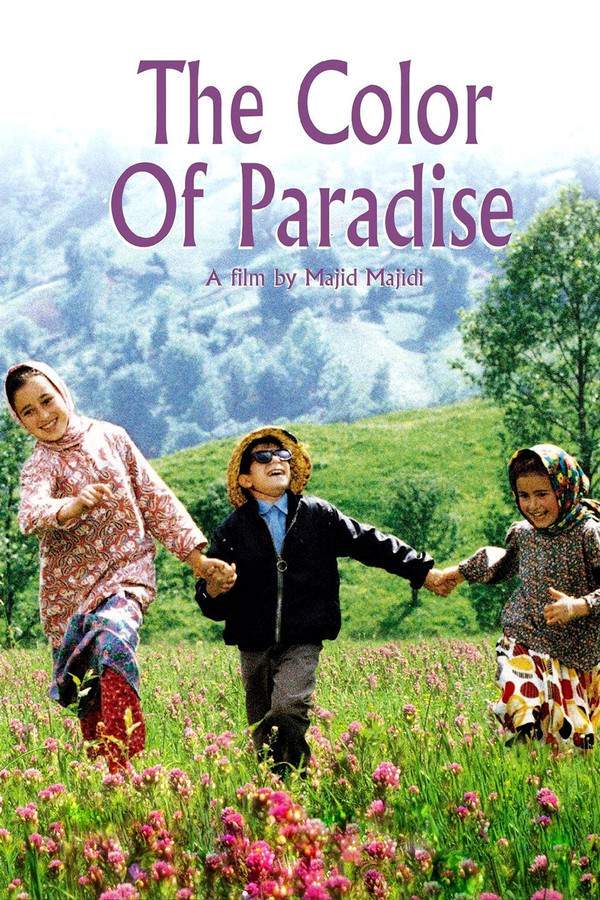
Year: 2000
Runtime: 90 min
Language: Persian
Director: Majid Majidi
A young boy with impaired vision perceives the world in a way others cannot, finding solace and wonder in nature. When he is sent away to a special school, he struggles to adapt to the rigid environment and the pressures to conform. Through his experiences, the film explores themes of faith, acceptance, and the importance of embracing individuality, highlighting the profound connection between a father and son.
Warning: spoilers below!
Haven’t seen The Color of Paradise yet? This summary contains major spoilers. Bookmark the page, watch the movie, and come back for the full breakdown. If you're ready, scroll on and relive the story!
Trace every key event in The Color of Paradise (2000) with our detailed, chronological timeline. Perfect for unpacking nonlinear stories, spotting hidden connections, and understanding how each scene builds toward the film’s climax. Whether you're revisiting or decoding for the first time, this timeline gives you the full picture.
Last updated: November 16, 2024 at 15:28
Find frequently asked questions about the The Color of Paradise (2000) timeline, including chronological order, nonlinear jumps, cause-and-effect links, and scene sequence clarifications. This timeline FAQ helps explain when key events happen, how moments connect, and why the story unfolds in that specific order.
Hashem feels ashamed because he views his son's blindness as a burden and a source of disgrace in his community. As a widower seeking to remarry, he believes Mohammad's blindness will be seen as an ill omen and ruin his chances of finding a new wife. This shame drives many of his decisions throughout the film, including hiding Mohammad's condition and sending him away.
Early scenes show Hashem arriving late to pick up Mohammad and pleading with the headmaster to keep him at school, revealing his desire to avoid caring for his son.
Hashem fears that if the bride's family learns about Mohammad's blindness, they will view it as a bad omen and refuse to allow their daughter to marry him. He hopes that by concealing the truth, he can secure the marriage and maintain his honor in the village.
When Hashem approaches the woman's parents with gifts, he deliberately avoids mentioning his son's disability.
Hashem sends Mohammad to the blind carpenter to remove him from the village and keep his blindness hidden from the community. By placing him with another blind person, Hashem hopes to manage his son's care without the shame of having a blind child visible to potential marriage prospects.
This decision follows Hashem's failed attempt to keep Mohammad at the Tehran school for the summer.
Mohammad struggles with the contradiction between his teacher's lesson that God loves blind children and his own experience of living without sight. He questions why, if God loves him, he would be denied the ability to see God. This reflects his deep spiritual longing and confusion about his place in the world.
The carpenter's training includes religious lessons about God's love for the blind, which directly contrast with Mohammad's feelings of rejection.
The bride's family interprets the grandmother's sudden death while holding Mohammad's hairpin as a dire omen connected to the family. In their superstition, this tragic event seems to confirm their fears about Mohammad's blindness bringing misfortune, leading them to call off the wedding.
The grandmother becomes emotionally distressed upon learning about Mohammad's situation, foreshadowing her fatal accident.
Hashem experiences a moment of paralysis as he watches Mohammad fall into the rushing water. He is torn between his instinct to save his son and his lingering feelings of burden and shame. For a brief, haunting moment, he considers whether letting Mohammad drown would free him from the weight he has carried. However, his love for his son ultimately prevails, and he dives in to rescue him.
Throughout the film, Hashem's conflicting emotions about Mohammad are established through his attempts to hide and distance himself from his son.
The film leaves Mohammad's fate deliberately ambiguous. After the bridge collapses and he is submerged in the river, Hashem finds him unconscious on the Caspian Sea shore. When Hashem cradles him in grief, Mohammad's fingers begin to twitch, suggesting he may still be alive. However, this moment could also represent a spiritual experience, with Mohammad finally connecting with the divine he yearned for throughout the film.
Mohammad's constant longing to see God and his belief that sensing God should be enough foreshadow this ambiguous final moment.
The woodpecker's sound represents a potential moment of divine connection for Mohammad. Since he cannot see, he has developed other senses to perceive the world. The sound may be his way of 'reading' the world through touch and hearing, similar to how he reads Braille. This moment suggests he has found the spiritual connection he desperately sought throughout the film.
Throughout the film, Mohammad demonstrates an extraordinary ability to connect with nature through his non-visual senses.
The title refers to Mohammad's spiritual understanding of paradise rather than visual perception. Despite being blind, he experiences the world and nature deeply through his other senses. The 'color' may represent the emotional and spiritual richness he perceives, and the ending suggests he finally experiences a form of paradise or divine presence that transcends physical sight.
Mohammad's profound sensory experiences with nature throughout the film establish his unique way of 'seeing' the world.
The hairpin symbolizes Mohammad's connection to his family and his identity as Hashem's son. When the grandmother accidentally drops it into the pond while grieving over Mohammad's situation, it becomes the catalyst for her death. The loss of this personal object represents the breaking of family bonds and triggers the chain of events that leads to the wedding cancellation and Hashem's decision to bring Mohammad home.
The hairpin is introduced earlier in the story as one of Mohammad's few personal possessions from his mother.
Mohammad uses his other senses, touch, hearing, and smell, to perceive the world in ways sighted people cannot. He feels the rhythms and textures of nature, listens to sounds most people overlook, and experiences a profound sensory awareness that compensates for his lack of sight. This ability allows him to find beauty and solace in the natural world where others might see only limitations.
From his first moments of freedom outside the school, Mohammad eagerly explores the hills and engages with his surroundings using his non-visual senses.
Discover curated groups of movies connected by mood, themes, and story style. Browse collections built around emotion, atmosphere, and narrative focus to easily find films that match what you feel like watching right now.
Films that immerse you in the unique sensory experience of a character living with a disability.Explore movies like The Color of Paradise that center on characters with disabilities, offering a sensory-driven perspective. These films are often quiet, melancholic dramas that focus on personal perception and the struggle for acceptance against societal prejudice.
The narrative follows a protagonist with a disability, often a child or young person, as they navigate a world not designed for them. The conflict arises from societal misunderstanding or rejection, while the protagonist finds solace and strength through their unique connection to the world, whether through nature, art, or memory.
These films are grouped by their shared focus on sensory immersion and the internal world of a character with a disability. They prioritize emotional authenticity and a melancholic, intimate tone over fast-paced plotting, creating a poignant and reflective viewing experience.

Emotional stories of flawed fathers struggling to accept and connect with their sons.If you were moved by the strained father-son dynamic in The Color of Paradise, discover more movies about paternal failure and fragile redemption. These heavy dramas explore themes of grief, acceptance, and the sacrifices of fatherhood, often ending on a bittersweet note.
The plot hinges on a father's failure to love or accept his child, often due to societal pressure, personal shame, or grief. A crisis—often involving the child's safety—forces the father to confront his failings. The journey is painful, and the resolution is typically bittersweet, focusing more on the father's emotional awakening than a perfectly happy ending.
Movies in this thread share a specific, heavy emotional arc: a father's journey from rejection toward a fragile acceptance of his child. They are characterized by melancholic tones, slow pacing, and powerful, often heartbreaking, performances that explore the weight of parental responsibility.
Don't stop at just watching - explore The Color of Paradise in full detail. From the complete plot summary and scene-by-scene timeline to character breakdowns, thematic analysis, and a deep dive into the ending - every page helps you truly understand what The Color of Paradise is all about. Plus, discover what's next after the movie.
Read a complete plot summary of The Color of Paradise, including all key story points, character arcs, and turning points. This in-depth recap is ideal for understanding the narrative structure or reviewing what happened in the movie.
Discover the characters, locations, and core themes that shape The Color of Paradise. Get insights into symbolic elements, setting significance, and deeper narrative meaning - ideal for thematic analysis and movie breakdowns.
Discover movies like The Color of Paradise that share similar genres, themes, and storytelling elements. Whether you’re drawn to the atmosphere, character arcs, or plot structure, these curated recommendations will help you explore more films you’ll love.
The Color of Paradise (2000) Plot Summary & Movie Recap
The Color of Paradise (2000) Scene-by-Scene Movie Timeline
The Color of Paradise (2000) Spoiler-Free Summary & Key Flow
Movies Like The Color of Paradise – Similar Titles You’ll Enjoy
Paradise: Hope (2013) Complete Plot Breakdown
The Beautiful Country (2005) Story Summary & Characters
The Son (2003) Plot Summary & Ending Explained
Disgrace (2009) Full Summary & Key Details
Wonder (2017) Complete Plot Breakdown
Cape of Good Hope (2005) Story Summary & Characters
Return to Paradise (1998) Ending Explained & Film Insights
I Am David (2004) Full Summary & Key Details
Local Color (2008) Film Overview & Timeline
Strange Colours (2017) Movie Recap & Themes
The Color of Milk (2004) Full Movie Breakdown
Positive (2007) Story Summary & Characters
A World Apart (1988) Story Summary & Characters
Special Education (1977) Detailed Story Recap
Somewhere I Have Never Travelled (2009) Full Summary & Key Details